|
Hello ,
Today marks the beginning of Autism Science Month, a time to highlight the latest developments in autism research and reaffirm our commitment to evidence-based progress. At ARI, we stand with advocates around the world to advance understanding and ensure that research translates into meaningful support for autistic individuals and their families.
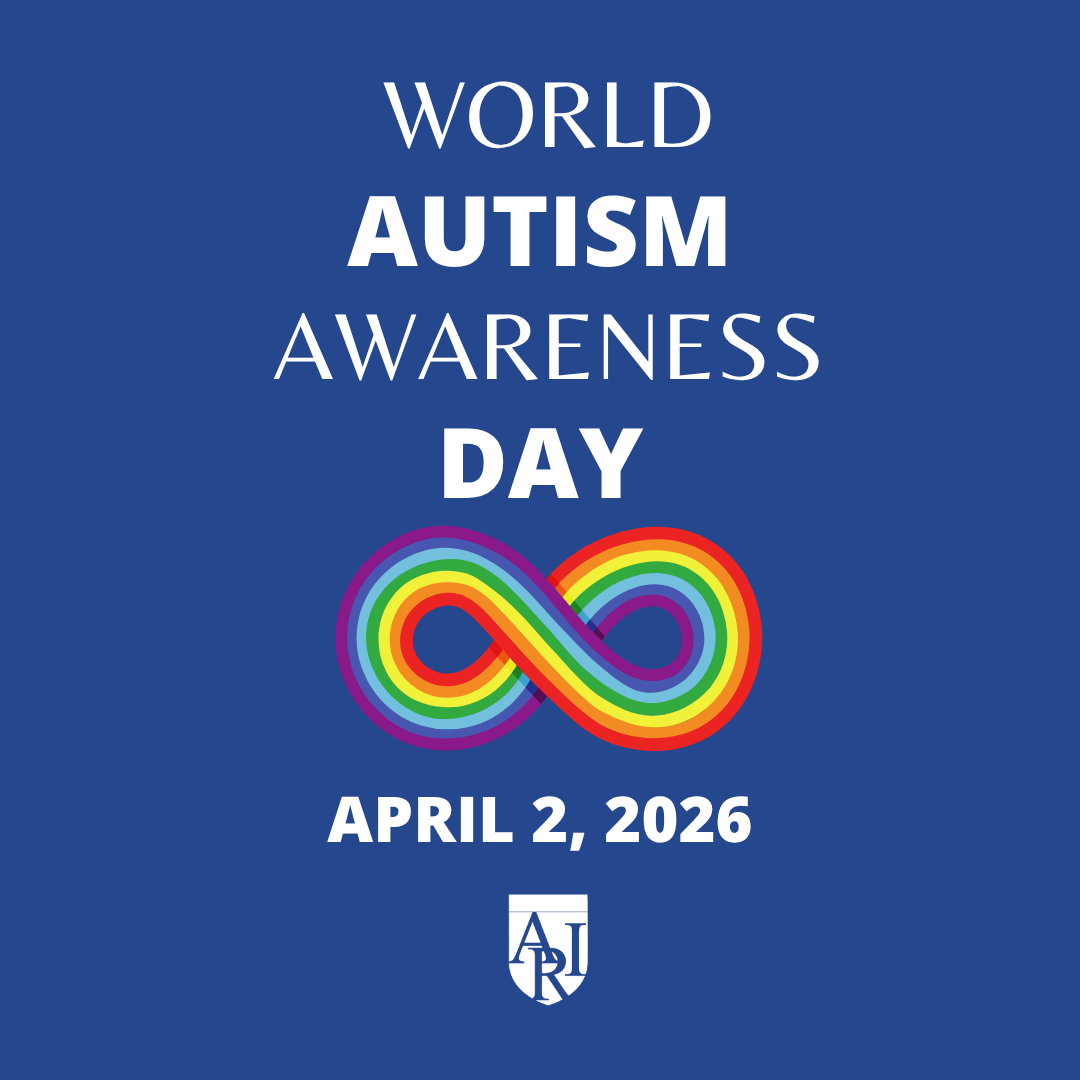
Tomorrow, World Autism Awareness Day will bring global attention to autism, encouraging informed discussions about early screening, diagnosis, and intervention. But awareness alone is not enough—rigorous science must guide the way forward.
In a time of complex discussions around autism research, we remain committed to transparency, collaboration, and investigations that make a real difference. Science must serve the community it studies, and we continue to work to ensure that it does.
Stephen M. Edelson, Ph.D.
Autism Research Institute
| | April 2nd is World Autism Awareness Day | | | | |
On World Autism Awareness Day—and every day—we honor the commitment of families, caregivers, and advocates who support autistic individuals in numerous ways.
In the coming weeks, we will highlight recent research and educational initiatives that we’ve funded over the past year. This will include advances in research and popular webinars we’ve hosted, along with links to valuable resources on our website at Autism.org.
Meaningful progress occurs when science and community collaborate, and we are proud to be part of this journey with you.
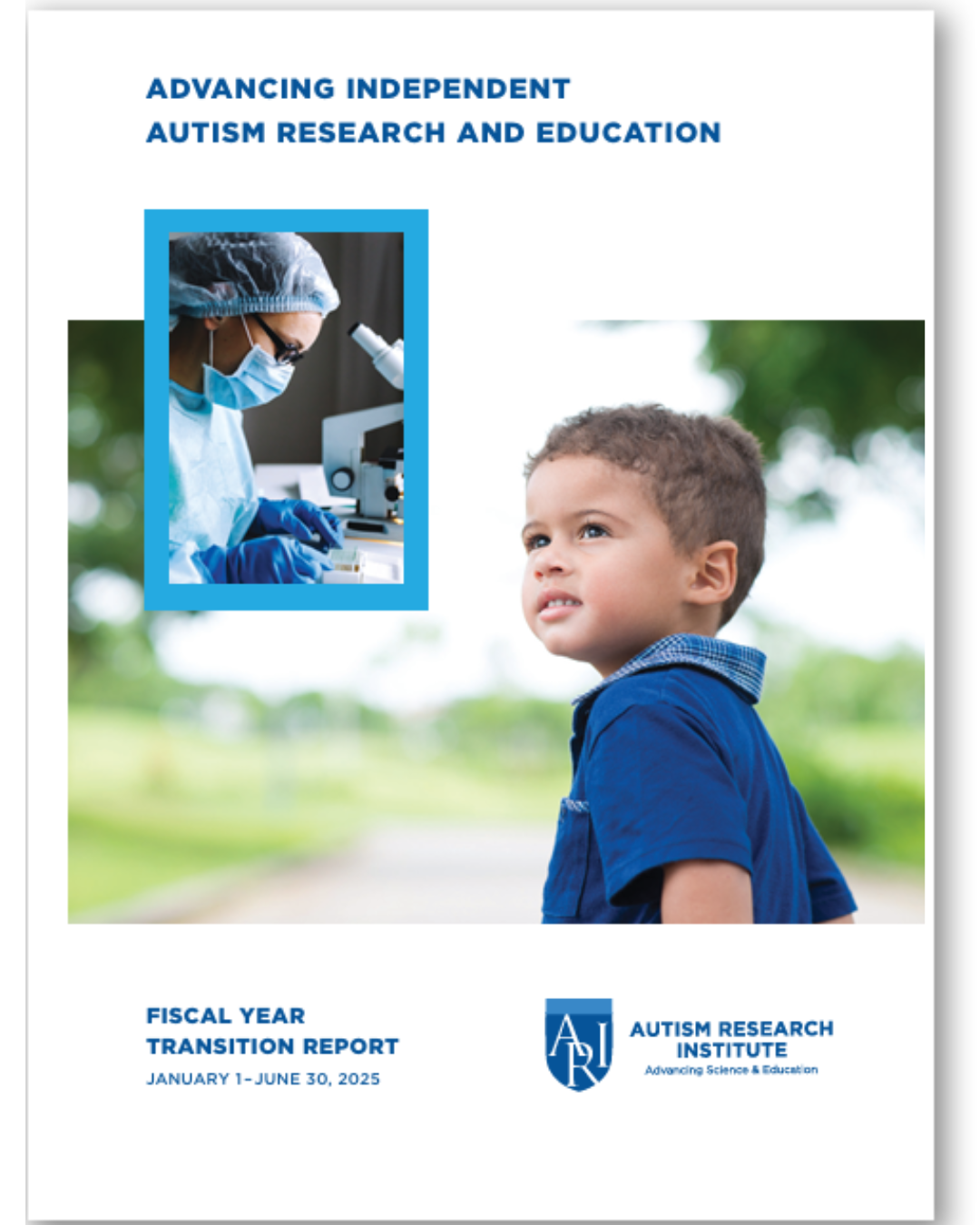
| | Read ARI's 2025 Stub-Year Report (Fiscal Transition Period) | | In 2025, the Autism Research Institute transitioned its fiscal year from the calendar year to a July 1-June 30 cycle. This booklet reflects a six-month transition (“stub-year”) impact report covering January 1 through June 30, 2025, highlighting key initiatives during this period. | | |
Advocating for Independent Research and Education
For more than half a century, the Autism Research Institute has worked alongside autistic individuals, their families, clinicians, and researchers to advance biomedical understanding of autism and improve care. We equip physicians, caregivers, and families with tools that support more personalized and compassionate approaches. Moments like this remind us how important independent autism research and education are now—for autistic people and their families, clinicians providing care, and communities working to better understand the medical aspects of autism.
We are deeply grateful to our donors, volunteers, board members, researchers, and supporters, whose generosity and dedication make this work possible.
| | ARI Continues to Earn Top Marks: Candid/Guidestar | | | | |
The Autism Research Institute’s strong financial health and commitment to accountability and transparency have once again earned it Charity Navigator’s highest rating (“4 stars”), Candid GuideStar’s highest rating (“Platinum”), and Great NonProfits’ highest rating (“Top Rated”).
| |
Dr. Edelson's Editorial: What we breathe matters – Rethinking air pollution and autism
| | | | |
In this editorial, I focus on particulate matter, which is commonly referred to as PM. PM is a mixture of solid particles and liquid droplets, much of which is produced by vehicle exhaust and other combustion sources. These particles range widely in size.
Most people think of air pollution only when it is visible as haze or smog on certain days. But PM is present even when the air appears clear. It settles on cars and sidewalks, and, more importantly, it is inhaled continuously—exposure is not occasional. It is daily, and, for many people, unavoidable.
| | New Continuing Medical Education Series Now Online | | | | |
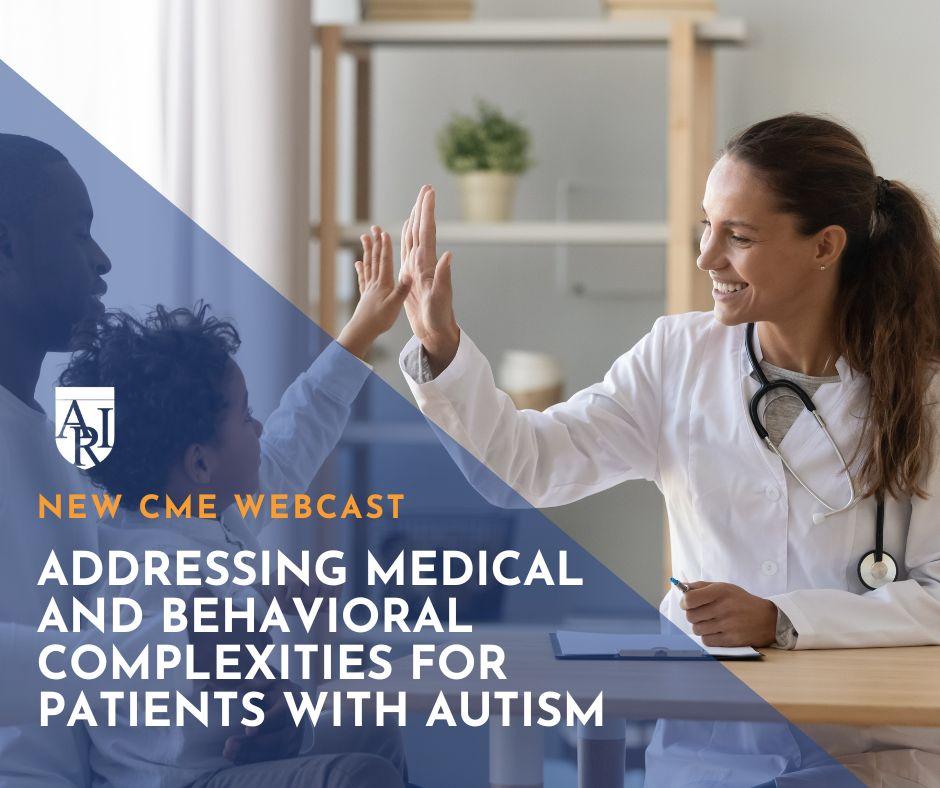
Our newest free continuing medical education series offers current guidance on mood dysregulation, sleep challenges, nutrition and gut–brain interactions, behavioral concerns, and psychopharmacologic care for co-occurring conditions, along with practical strategies for coordinated, patient-centered care.
The series is offered in joint providership with Haymarket Medical Education, hosted on MyCME, and made possible at no cost, through generous donor support.
| | ARRI: Research Updates at Your Fingertips | | |
Expanding access to evidence-based autism research is a key priority for ARI. Under the leadership of Dr. Stephen Edelson and ARI’s staff and boards, we have significantly expanded the reach of our award-winning quarterly journal, The Autism Research Review International (ARRI), over the past 18 months. To ensure maximum accessibility, ARRI is now available online at ARRIOnline.org, while the print edition remains available by subscription for those who prefer a hard copy.
We invite you to explore ARRI online and stay informed about the latest developments in autism research.
| | From ARRI: Elevated rates of PTSD seen in parents of children with autism | | | | The researchers say, “The results underscore the importance of targeted support strategies for parents, considering their key role in early interventions…. Further, our results highlight the relevance of recognizing the presence of significant autistic traits in the mothers and fathers, as these seem to represent a risk factor for PTSD symptomatology.” | | From ARRI: Service dogs get high marks from caregivers of autistic children | | | | Service dogs can enhance the lives of children with autism spectrum disorders (ASD) in multiple ways, according to a study by U.S. researchers. | | | Participants needed: Dr. Gregory Wallace, a past ARI webinar presenter on autism in adulthood, including executive functioning differences, eating behaviors, and aging well, is seeking autistic adult participants to complete an online study. For more info visit the study website or contact the investigators. | | |
University-based researchers often contact ARI for help finding research participants to add valuable data to our understanding of autism.
Research topics range from sibling differences to school experiences, trauma, adult issues, and more.
| | Register Now: Free Upcoming Webinars | | |
ARI Webinar 4/15:
Sustained Potential as a Biomarker of Language Functioning in Autism
| |
Sustained potential (SP) is a neural response to periodic auditory stimuli registered with EEG 40Hz Auditory Steady-State Response. The talk addresses the potential to define different language subgroups in autism and to use this biomarker in clinical trials.
Presented by
Vardan Arutiunian, PhD
University of Montreal
1 p.m. Eastern Time (U.S.)
4/15/26
| | |
ARI Webinar 4/22:
Emerging Research on Autism Rates and Covid
|
| |
Tune in to hear about the COVID-19 Mother Baby Outcomes Initiative, which resulted in the first report demonstrating that birth during the COVID-19 pandemic, but not prenatal exposure to maternal SARS-CoV-2 infection, was associated with infant neurodevelopment.
Presented by
Dr. Morgan Firestein
Rutgers University
1 p.m. Eastern Time (U.S.)
4/22/26
| | |
ARI Webinar 5/13:
Nutritional Neurobiology of Autism: Revisiting the Zinc Hypothesis
| |
This talk critically evaluates the hypothesis that autism reflects a developmental zinc deficiency. The presentation will integrate molecular, genetic, nutritional, and translational evidence and address inconsistencies and methodological limitations in the field.
Presented by
Dr. Andreas Grabrucker
University of Limerick
1 p.m. Eastern Time (U.S.)
5/13/26
| | Making a Difference in 2026 | | | | |
At ARI, we continue to focus on education while funding and supporting research into immune, gastrointestinal, metabolic, and neurologic factors. Research and education are the foundations of meaningful progress.
When you support ARI, you send a powerful message—that you value our independent legacy and believe in objective research conducted free from outside influence.
| | | | | |