Volume 124 | Thursday, December 11, 2025

Jump Seat Logo _New_.png

One Plan Case Study with Viasat 

Welcome back to Jump Seat. The business aviation landscape is evolving rapidly, and with it, the operational demands on flight departments are becoming increasingly complex. At ARINCDirect, we recognize these challenges and are working to adapt alongside our customers. 


In this update, we’ll focus on recent developments in Cabin Connectivity — a key area undergoing significant change. We’ll outline what’s new, what it means for operators, and how ARINCDirect is positioned to support you in navigating these updates effectively.  

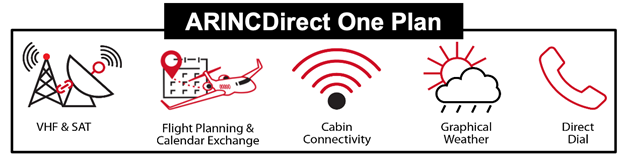
Two years ago ARINCDirect launched and sold their first One Plan. The One Plan package was geared at providing all the highly sought after ARINCDirect services coupled with our best prices to position operators with a firm monthly budget from a single vendor with a single invoice.  

Our One Plan packages offer Cabin Connectivity plans from Viasat on their Ka-band networks: JetConneX and Viasat Ka. This said, it’s been a busy year with lots of announcements, so we would like to help navigate what these updates mean to you.


Viasat and Collins have been delivering SATCOM services together to both the cabin and cockpit for more than 30 years. While JX has been the reference service when it comes to cabin connectivity, delivering fast, reliable, and consistent service to VIP passengers, Viasat continues to invest in the solution in order to meet growing expectations from passengers and operators.

Here are examples of what is being done: 


JetXP


With the introduction of JetXP, Viasat has made significant changes to the network that enhance the passenger experience. This includes network priority to business aircraft, uncapped speeds for all plans (already effective on some plans now and on all remaining plans early 2026), and expanded capacity. With all these changes, the passenger experience will reach new levels through stable, consistent, and swift connections. 


Satellite Roadmap


Viasat has a solid and funded roadmap. ANIK-F2 capacity is being deployed in CONUS to multiply available capacity by 5 times. GX-10 is already in space to extend coverage to the North pole (to be effective early 2026). And five VS3 and GX satellites will be launched in the next three years. Again, these additional satellites enhance the experience now while ensuring the robustness of the network for the future.


Introduction of Viasat In-flight Quality of Experience (IQE) Metrics


While speed will always be critical to the passenger experience, it is definitely not the only parameter that matters. To have a better assessment of the passenger experience, Viasat is introducing iQe which more accurately evaluates the overall passenger experience in a single score via granular network metrics that define reliability and performance. The iQe score will be available in early 2026 to passengers and operators through an intuitive app and via a browser-based version, both during and after the flight. 

Did You Know?

  • Over 200 operators have signed up for the One Plan to date. 

Useful Links

  • Learn more about the seamless experience here: A collaboration built on connection | Viasat
  • Want more details on what’s included in the ARINCDirect One Plan? Check out our webpage for more information. 
  • The Viasat webpage on CollinsAerospace.com features a partnership video as well as details on a Case Study recently released. 
  • Check out the report from Massachusetts Institute of Technology (MIT) that calls for a shift from singular network metrics like speed to a Quality of Service (QoS) approach: Viasat MIT White Paper