Volume 60 | Tuesday, December 6, 2022

Jump Seat Logo _New_.png
small-Collins_Aerospace_logo_k_rgb.jpg

Winter Weather Reminders

Welcome back to Jump Seat. This week, we will be covering winter weather reminders to get you through this winter season. With volume approaching pre-COVID levels, we can expect air traffic to bolster in the holiday season, causing longer delays. Winter hazards, such as reduced visibility, snow- and ice-covered runways, and aircraft icing also heavily impact delays.

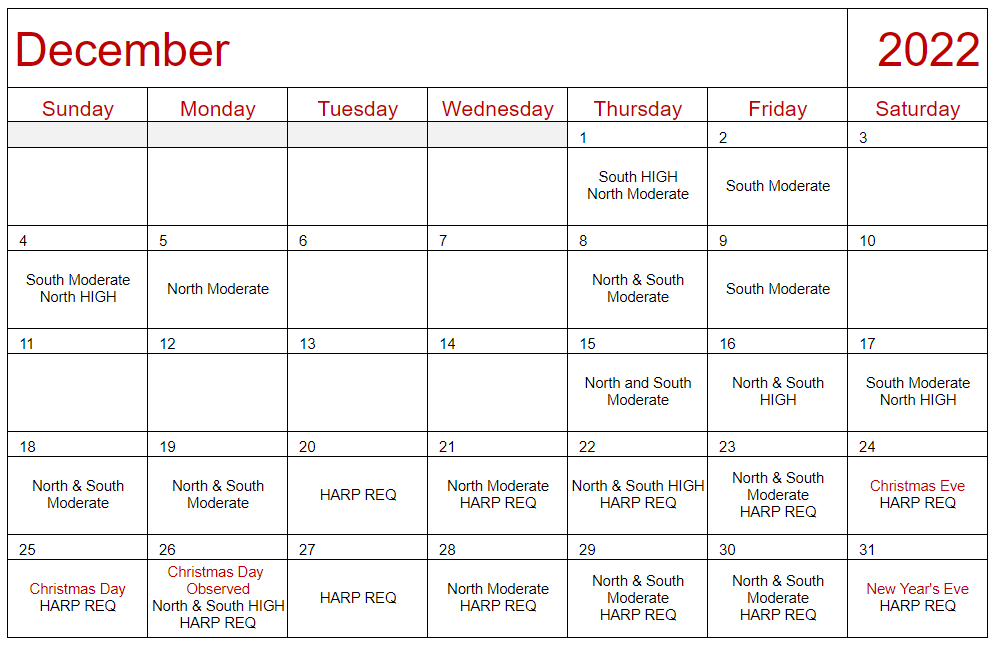
During peak holiday travel days, the FAA utilizes established Holiday Airspace Release Program (HARP) routes. On the days listed in the calendar below, HARP routes will be required. It is important to note that WATR and HARP routes will be exempt from most reroutes. However, East Coast HARP routes are complete packages and cannot be modified. Refer to the FAA Routing Playbook for HARP and Snowbird routes. Snowbird routes will be required on high volume days during the winter season, and the routes may be implemented the day before if volume is projected to be high enough. Remember to pay attention to the FAA Current Reroutes page to see if you are affected by these routes. If the President of the United States is in Wilmington or Rehoboth, DE, the FAA has established procedures during the HARP implementation period.

Figure 1: Calendar view of anticipated routing events throughout the month of December

Key Destinations


Ski Country: Popular holiday destinations include Ski Country (EGE, ASE, and nearby airports). These airports are very limited, and it is recommended to contact the FBOs in advance to reserve ramp space. During peak travel days it is common for these airports to enter into a Ground Delay Program due to traffic constraints. The FAA intends to implement a Dual Airspace Flow Program (AFP) this season as well to help mitigate volume into ASE and EGE. Winter storms can also cause those airports to have poor braking action or to temporarily close. Pay attention to NOTAMs to stay up to date. Especially in late December and most of January, ensure you are using the correct Ski Country Route as there are now three: Ski Country 1 (ASE, EGE), Ski Country 2 (MTJ, TEX, GEC, GJT, HDN), and Ski Country 3 (RIL). These routings will typically go into effect day of, as needed.


Jacksonville Center: Whether you are traveling North or South from the Caribbean and/or Southern Florida, always pay close attention to the Jacksonville (KZJX) Center. Most of the traffic to and from the Caribbean and Southern Florida transits through the JAX Center. This intensity of traffic can cause Airspace Flow Programs (AFP), which can cause very lengthy delays. We recommend filing a Snowbird route, when applicable, and keeping an eye on the FAA’s Flow Control Advisories (FCAs) for required reroutes. Convective weather and staffing triggers in the JAX Center, separately or conjunction with AFPs, can cause even longer delays. Remember, you can always contact one of our Flight Coordinators if you need any assistance.


Key Weather Concerns


Lake Effect is common over the Great Lakes region, where cold air from Canada moves across the Lakes, causing large amounts of snowfall. The affected area usually is 20-40 miles, but, depending on wind, can be widespread. Lake effect will generally generate 2-3 inches of snow but can be greater when conditions are favorable.


Nor’easters develop between Georgia and New Jersey within 100 miles of the East Coast. Cold Arctic air and warm Atlantic coastal waters fuel these storms, pushing the storm northeast along the I-95 corridor (Washington D.C. to Boston). These storms create heavy precipitation, gale force winds, and even coastal flooding. Nor’easters are most common this time of the year through April. This year we anticipate an increase in the number of seasonal Nor’easters, with the largest impact being in the New England area.


Dense fog can cause reduced visibility and Low Instrument Flight Rules (LIFR) conditions, leading to lengthy delays. Significant areas of concern include the greater San Francisco Bay area, the Pacific-Northwest, and the greater London area in the United Kingdom. Dense fog can cause ground delays due to reduced visibility and volume, and it can even cause ground stops. For more information regarding fog formation and forecasting, read up on our previous Jump Seat article: Fog Forecasting.


Icing can affect your aircraft in many ways. Icing on the runways can greatly decrease braking action and require you to utilize more runway than you usually would. Always be sure to monitor NOTAMs for field conditions to determine your braking action. Aircraft icing can also pose a threat to the safety of the flight. Whether it is rime or clear icing, be sure that your de-icing equipment is functioning properly, and when possible, fly above and clear of the freezing level. To minimize freezing, avoid flying through warm fronts and stratiform clouds.

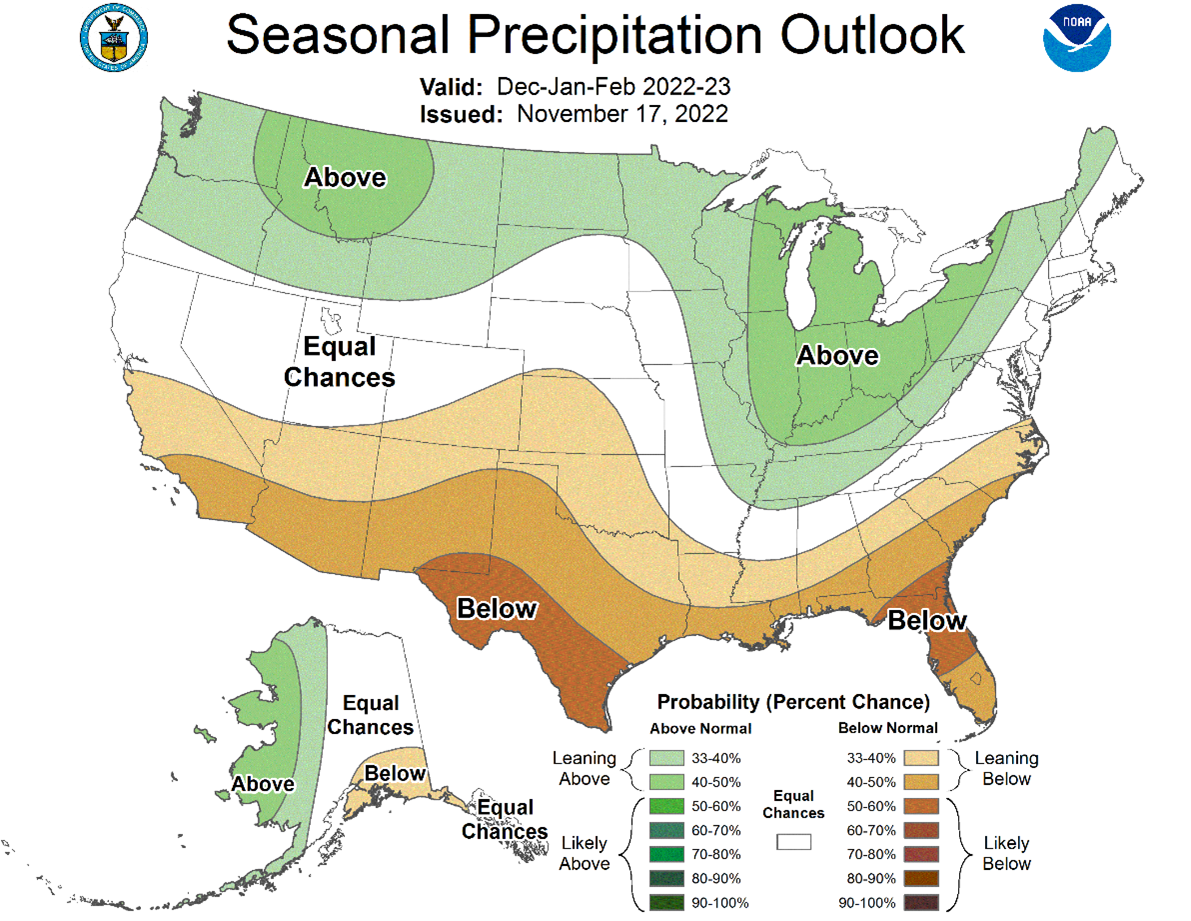
Figure 2: 2022-2023 Seasonal Precipitation Outlook courtesy of the National Oceanic and Atmospheric Administration (NOAA)

Best Filing Practices


Whether you are planning on filing to one of the key destinations or not, you can follow some of the best practices while filing your holiday flight plans. The best thing you can do to mitigate a delay is to file at least 24 hours ahead of time. This will ensure that your flight is known traffic; this will reduce your delay as much as possible if traffic management initiatives is implemented. Having some flexibility in your plans can also aid in the mitigation of air traffic delays. The use of alternative airports and routings (such as the HARP) may aid in mitigating or avoid delays all together. Make sure to add an email to the “EDCT/CTOT Notifications” at the bottom of the filing page. This will send a notification if Expect Departure Clearance Times (EDCTs) are issued. Consulting the PERTI (Plan, Execute, Review, Train, and Improve) Next Day Plan can be a helpful in considering routing options. The PERTI Plan is issued by the FAA daily at approximately 2030Z. If you would like a second set of eyes, contact a flight coordinator for assistance at +1 410-266-2266 or email us at flightops@arinc.com.  

Did you know?

  • ARINCDirect is a Collaborative Decision Making (CDM) member. We participate in the daily operation plans and the PERTI plan meetings with the FAA. 
  • The PERTI Next Day Plan is available on the Create FPL page under the link for “FAA/ATC NEXT DAY PLAN”. This can help you determine where the FAA may plan traffic management initiatives. 

Useful Links


Additionally, the following past Jump Seat articles may prove helpful during the upcoming season:


Thank you for reading!

Please note, in our recent article titled "Contrail Busters" we incorrectly attributed Business Aviation's impact on global warming to be 0.4%. It is actually 0.04%. We apologize for the error.

Contact Jump Seat
Past Jump Seat Articles

We've updated our support Contact Information page. For coverage maps and more, navigate below.

ARINCDirect Support

Sign up for Izon, the Collins Connected Platform today!

Izon Setup Guide
https://collinsizon.com