|
In June, ASI’s office building was sold and ASI staff were notified that a move was required by October 1. ASI staff have been busy packing up the office to prepare for the move next week. If trying to contact the office, please be patient as our staff moves from one building to another and settles into the new office.
As of September 24, ASI’s new address will be:
American Sheep Industry Association (ASI)
9781 S. Meridian Blvd.
STE 200
Englewood, CO 80112
Because of the office move, there will not be an ASI Weekly Newsletter next week on September 24.
| | |
201 TRADE CASE UPDATE
CASE MILESTONES
On September 16, ASI sent a Call-to-Action email to ASI members to reach out to their Members of Congress about the 201 Trade Case by Friday, September 18. If you are a member and did not receive the notice, please respond to this email with the preferred email address and we will send you the information.
| | |
ASI OUTREACH
ASI sent state association leaders templates for a letter of support. This letter will be used in ASI’s brief that will be presented to ITC. ASI is hoping for 100% participation from our state partner organizations. Letters are due back to ASI on September 18.
ASI's legal council, Kelley Dreye & Warren LLP is preparing for the International Trade Commission (ITC) hearing on October 16 to determine injury. The October 16 ITC hearing will be available to view online. That link will be shared to ASI members as the date approaches.
ASI FUNDRAISING
ASI is raising funds through the ASI Guard Dog Fund to support the legal and economic work necessary to pursue the Section 201 case. Producers and industry supporters who want to help strengthen this effort can contribute specifically to the Section 201 Trade Case.
To stay informed of developing information, follow ASI on social media (Facebook, Instagram, LinkedIn) and on our website.
| | Biotech Firm to Build Research Hub in San Antonio to Fight New World Screwworm | | |
A biotech company specializing in pest management has chosen San Antonio as its base of operations against New World screwworm and other pests threatening American agriculture.
Flyttr, formerly known as Oxitec, is a private U.S.-owned biotech company with an international footprint. In July, Texas Biomedical Research Institute announced it was partnering with Flyttr, which is using the research institute’s labs to develop improved methods of combating the parasitic fly.
Now, Flyttr is also building a 130,000-square-foot facility on the East Side of San Antonio. Here, the company will host its research and development operations and aid in the fight against New World screwworm by producing sterile flies, a method known as sterile insect technique, or SIT.
| |
ASI continues to be in regular communications with federal leaders at USDA's Animal and Plant Health Inspection Service (APHIS) and the FDA's Center for Veterinary Medicine (CVM) regarding issues that have arisen since the first detection.
ASI developed a NWS sheep producer guide and treatment info resource that you may access here. The guide is also available in Spanish.
All of ASI’s resources and links to additional information at USDA and FDA can be found on our website here.
Current Status (as of September 16):
- 2 active cases
- 47 inactive cases
- Most recent detection: September 9, 2026
Find more information at screwworm.gov.
| | Livestock Imports Set to Resume at New Mexico Border Port | |
The U.S. Department of Agriculture is preparing to reopen a New Mexico port of entry to livestock trade with Mexico next week, continuing a phased return of cross-border cattle movement as officials manage New World screwworm risks.
Agriculture Secretary Brooke Rollins announced the planned reopening Wednesday during remarks at the National Association of State Departments of Agriculture conference in Portland, Maine, according to Reuters. Rollins said she planned to travel to New Mexico Wednesday night.
“We’re getting ready to reopen that New Mexico port next week,” Rollins said.
The USDA has not yet publicly identified which New Mexico port will reopen next week. The agency’s phased reopening plan calls for the Santa Teresa and Columbus ports to follow Douglas, Arizona. As of Sept. 15, the USDA’s New World screwworm status page still listed both New Mexico ports as under consideration rather than open.
| | ASI Visits 98th Wyoming State Ram Sale | |
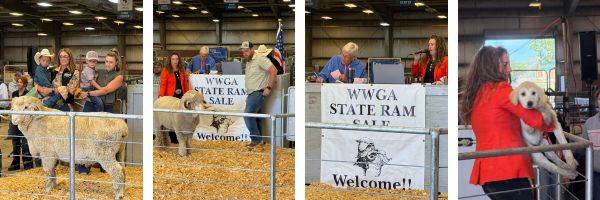
ASI Executive Director Mike Michener joined sheep producers, seedstock breeders and buyers in Douglas this week for the 98th Wyoming State Ram Sale, hosted by the Wyoming Wool Growers Association.
The visit began Monday evening at the annual Consignor-Buyer Dinner at the Douglas Moose Lodge, providing an opportunity to visit with producers and consignors ahead of Tuesday’s sale. Michener had previously joined Wyoming producers at the WWGA summer meeting in Powell and enjoyed reconnecting with many familiar faces as well as meeting additional members of the state’s sheep industry.
Tuesday’s sale at the Wyoming State Fairgrounds brought together consignors and buyers from Wyoming and across the country, with more than 300 rams representing a variety of breeds offered for sale. Before bidding began, WWGA Executive Director Alison Crane invited Michener to briefly welcome attendees and wish consignors and buyers a
successful sale.
“The Wyoming State Ram Sale is a great example of the investment producers continue to make in genetics and in the future of the sheep industry,” Michener said. “Just as important for me was the opportunity to spend time with producers, hear what is happening in their operations and continue building relationships with our state association partners.”
The Wyoming visit is part of Michener’s continuing effort during his first year as ASI executive director to spend time with sheep producers and state associations around the country and hear firsthand about the opportunities and challenges facing the industry.
| | Last Chance: Join the 2026 ASI Young & Emerging Entrepreneur Tour | | Join us October 9–12 in Pennsylvania for a tour designed for young and emerging sheep industry entrepreneurs looking to learn, connect, and gain new perspectives from innovative agricultural operations and businesses. Participants will explore Pennsylvania’s sheep industry, build connections with fellow producers, and see the many ways entrepreneurs are growing and diversifying their operations. | | Upcoming Sheep Shearing Schools | | Shearing schools are getting rolling all across the U.S. and several have let ASI know their plans. | Reach out to ASI to add your shearing school to our list and to order educational shearing materials at heather@sheepusa.org! | | H-2A Wage Ruling Creates Uncertainty for
Agricultural Employers | | |
A recent federal court decision has created uncertainty for agricultural employers who rely on the H-2A program after the court found several parts of the Department of Labor’s wage methodology unlawful.
The court found several important parts of the methodology unlawful under the Administrative Procedure Act. However, the court did not immediately eliminate the
existing wage rates. Instead, the court ordered the Department of Labor to develop a
new methodology.
| | Can Sheep Save The Glaciers? | | |
As Switzerland struggles to contain the shrinking of its glaciers, researchers are conducting an unusual experiment in the Alps to see whether one of its less valued natural resources can help: sheep's wool.
For years now, synthetic tarpaulins have been laid in summer over areas of ice and snow to reflect sunlight and reduce heat absorption as global warming melts away the ice sheets that have defined the high Alpine landscape for millennia.
But those tarpaulins are typically made from plastic and can shed polluting microfibres. The "Keep It Wool" project, led by the environmental group Summit Foundation and the University of Lausanne, is instead using wool to slow the melting. The team wanted to explore a biodegradable alternative while finding a use for Swiss wool, 40-70% of which is discarded each year.
| | Wait, Why Is PETA Protesting Wool Clothes? | |
In case you missed it, PETA protestors crashed a New York Fashion Week show to decry the use of wool, which they said was abusive to sheep. The incident made headlines after videos of Steven Kolb, CEO and president of the Council of Fashion Designers of America, forcibly restraining two activists went viral.
While the images of Kolb taking down animal rights activists are quite sensational, what can we make of the issue central to this altercation? PETA has a firm stance against the use of wool. The organization has also said that “no certification can protect sheep from the inherent cruelty of the wool industry.”
But others argue that there are ways to procure wool that are beneficial to people, animals, and the environment. After centuries of selective breeding to produce as much wool as possible, many sheep need to be sheared because they cannot regulate the excess on their own. As a result, some countries, such as Sweden and Australia, require farmers to shear their sheep at least once a year in order to abide by animal welfare laws. But beyond that, wool has the potential to be a regenerative textile, meaning certain production methods can increase soil health, improve biodiversity, and reduce carbon emissions.
“As long as we have sheep, they’re going to be growing wool,” said Lisa Bergstrand, founder and director of sustainability firm Bergstrand Consultancy. “I think we should use the wool. But of course, I think we should make sure that we farm the sheep in the best way possible, both for the sheep welfare and also for the land, because there's a huge potential there.”
| | ASI promotes the training of proper sheep handling and shearing. America’s sheep farmers and ranchers are dedicated to caring for their animals and keeping them healthy. Find sheep care handling resources on the ASI website. | | Utah Farmers are Getting Paid Not to Develop Their Wide
Open Spaces | |
Every week, Sheri Schiess says she hears from people who are grateful she’s holding onto her farm. Her property sits near rapidly developing parts of the town.
But Schiess’ vast, open farmland couldn’t feel more different from the nearby hustle and bustle. And because she entered into a conservation easement with the nonprofit Bear River Land Conservancy, that’s not likely to change.
The nonprofit, which was founded in 2011 to preserve land at the banks of the Bear River near Trenton, uses a mix of government and donor money to buy the development rights of properties like Schiess’ farm.
| |
North Dakota Farmers Increasingly Rely on
Foreign Labor
| |
As demand for agricultural labor grows, North Dakota farmers are looking abroad to fill their vacant positions. There were just under 500 unfilled agricultural jobs across North Dakota in August, according to Job Service North Dakota. Most of those positions were in the northeastern and south-central parts of the state.
So far this year, 478 employers in North Dakota were approved to hire seasonal foreign workers through the H-2A visa program, according to U.S. Citizenship and Immigration Services. The program connects agricultural employers with workers when they’re unable to fill their positions with Americans.
“It has grown substantially, the need for these workers, because there aren’t enough folks here in the state to go up and do that work,” said Dustin Hillebrand, a workforce center manager for Job Service North Dakota, during a Wednesday panel on agricultural labor during the Big Iron Farm and Construction Show in Fargo.
| Career Opening: Director of Livestock / Ohio Sheep Improvement Association & Ohio Sheep and Wool Program Executive Director | The Ohio Farm Bureau Federation is seeking an experienced agricultural professional to serve as Director of Livestock and Executive Director of the Ohio Sheep Improvement Association (OSIA) and Ohio Sheep and Wool Program (OSWP). | | ASI is working year-round to advance producer priorities across the country. Here’s what’s happening, what it means, and what’s next. | | Senate Ag Committee Advances Farm Bill | | |
On Wednesday, September 17, the Senate Committee on Agriculture, Nutrition, and Forestry reconvened and favorably reported the Agricultural Act of 2026 out of the committee by a 12-11 party line vote. This action advances the so-called Farm Bill 2.0 to the full Senate for consideration and concludes the markup that Chairman John Boozman (R-AR) indefinitely recessed on August 6, 2026. Yesterday's business meeting featured an unexpected debate when Sen. Joni Ernst (R-IA) attempted to offer a new amendment targeting California’s Proposition 12. Chairman Boozman ruled the amendment out of order on procedural grounds, noting that the committee had formally closed Title XII during the initial August markup. Sens. Chuck Grassley (R-IA) and Ben Ray Luján (D-NM) opposed the chairman’s refusal to reopen the title to consider the measure. Furthermore, Democratic members used the reconvened session to reiterate their opposition to the Supplemental Nutrition Assistance Program (SNAP) state administrative cost-sharing provision under current law. They continued to advocate for a two-year implementation delay of the provision rather than the one-year delay included in the bill.
For more information or to watch the full business meeting, follow this link.
| |
|
Solar Grazing Is Opening New Doors for American Lamb Producers
Across the country, a growing renewable energy industry is creating an unexpected opportunity for sheep producers. As more solar installations become part of the rural landscape, sheep are proving they can do more than produce high-quality American Lamb. They can also provide an efficient, sustainable solution for managing vegetation beneath and around solar panels.
For Virginia sheep producer Eric Bronson, solar grazing has become an important part of building a resilient and profitable livestock operation.
Bronson, a first-generation producer in Charles City, Virginia, has been raising sheep for about 15 years. He began his livestock career with cattle, but in a region where land is competitive and available acreage can be fragmented, he saw an opportunity to do things differently. Sheep gave him the flexibility to make productive use of smaller and more varied parcels of land.
Then solar development began expanding across Virginia and another door opened.
Solar sites need ongoing vegetation management, and sheep are uniquely suited to the job. They can graze beneath and around panels in areas that can be difficult or costly to maintain mechanically. For producers like Bronson, those acres also represent access to forage and a new source of revenue.
| | | | Your weekly snapshot of key market rates and reports (U.S. and global) to help you stay ahead of pricing and demand shifts. | | |
Wool Market Pulls Back
The EMI retracted this week, finishing $0.15 lower than last week. Losses were felt in all microns and ranged from -$0.10 to -$0.25 per pound clean.
About the EMI: The AWEX Eastern Market Indicator (EMI) is the key benchmark index of Australian wool auction prices and is widely used as a global wool market indicator.
| | LDP Payments Available This Week | | Ungraded Wool, Grease Prices in $ Per Pound | | | Ungraded Wool | $0.2358 LDP Available | | | Unshorn Pelts, Prices in $ Per Pelt | | | Unshorn Pelt | $1.619 LDP Available | | | Note: Producers must visit their Farm Service Agency office and fill out the appropriate paperwork before the wool or unshorn lambs are sold to claim the Wool LDP (when available). | |
|
USDA Weekly Sheep, Lamb, & Wool Market Summary
The report is generally updated on Friday afternoon.
| | |
|
ASI is so thankful for our industry partners and magazine advertisers! Their support not only strengthens our work in Washington, D.C. but also supports a number of programs that are important to the sheep industry.
Want to support ASI and reach American wool and lamb producers? Contact our Director of Communications, Morgan Young at Morgan@sheepusa.org.
| | |
Sep 17-18: Newell Ram Show and Sale, Newell, SD - More info
Sep 18: Statewide Ohio Sheep Shearing School, Hebron, OH - More info
Sep 21-22: Ag Outlook Forum, Kansas City, MO - More info
Sep 23-24: Grazing the Heartland Bus Tour, Sioux Falls, SD - More info
Sep 25: Virginia Tech Southwest AREC Forage Based Ram Test Sale and Field Day,
Glade Spring, VA - More info
Sep 25-26: SD Sheep Growers Annual Convention, Brookings, SD - More info
Sep 26-27: Spokane Fleece and Fiber Festival, Spokane, WA - More info
Oct 2: North Dakota Lamb & Wool Annual Convention, Bottineau, ND- More info
Oct 2: National Ram & Ewe Sale, Herber City, UT - More info
Oct 8: Roswell Wool Sale - More info
Oct 8: Utah Ram Sale, Spanish Fork, UT - More info
Oct 8: Optimizing sheep nutrition – Virtual Series – Session 1- More info
Oct 10: Texas LGD Association Field Day, Texas Ranger Hall of Fame - More info
Oct 10: Sheep, Lamb, Wool, and Ewe!, Univ. of ID - More info
Oct 14: Sheep & Goat Nutrition Webinar with UMN and OSU - More info
Oct 14: Montana Wool Harvesting School Beginner School, Billings, MT - More info
Oct 15: Optimizing sheep nutrition – Virtual Series – Session 2- More info
| | |
New Sponsorship Opportunities Available!
ASI is so thankful for our industry partners and magazine advertisers! Their support not only strengthens our work in Washington, D.C. but also supports a number of programs that are important to the sheep industry. Want to support ASI and reach American wool and lamb producers? Contact our Director of Communications, Morgan Young at Morgan@sheepusa.org
| |
| |
|
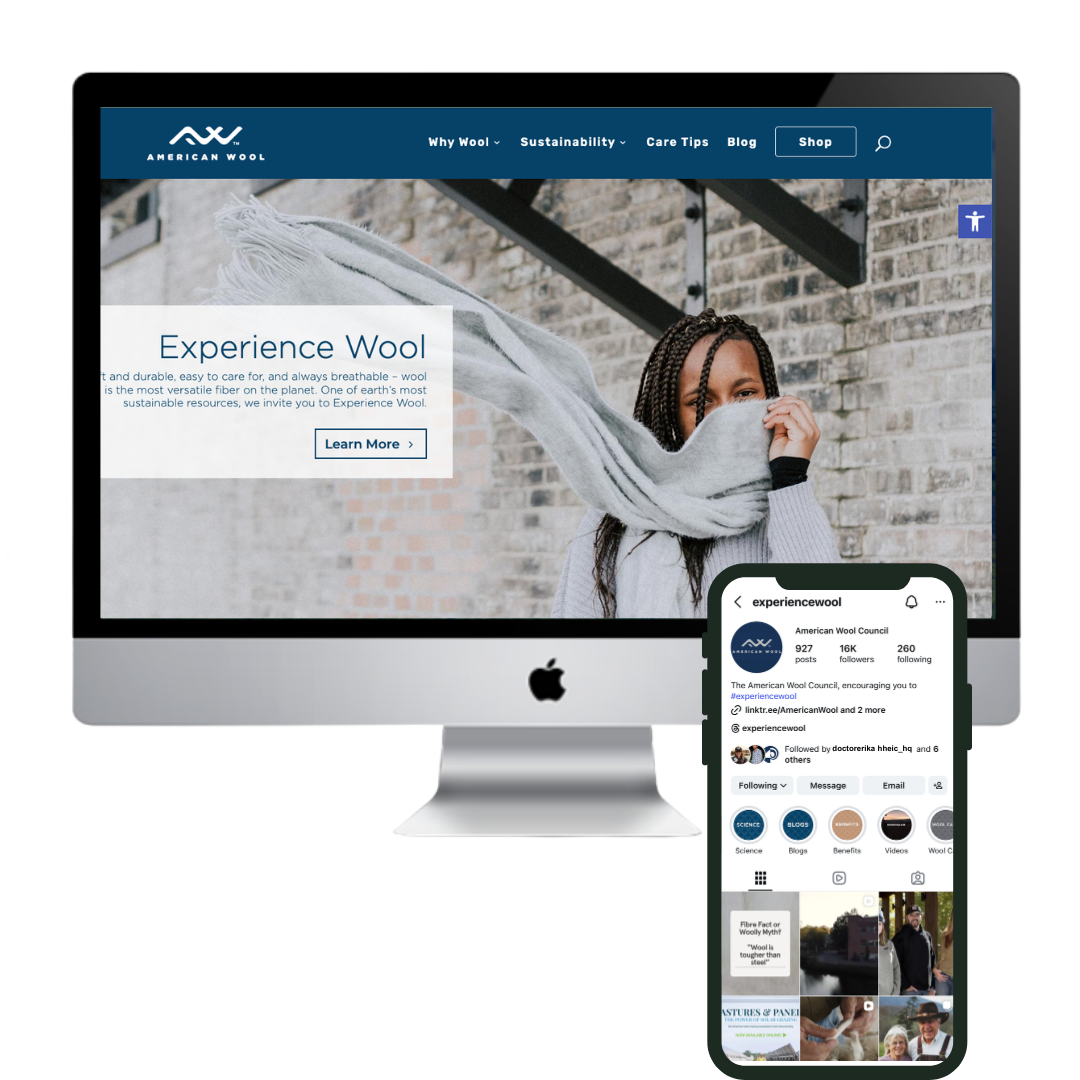
Experience Wool is ASI’s consumer hub: wool education, product inspiration, and American wool stories in one place.
Explore at americanwool.org and follow @experiencewool.
| | | | | | |
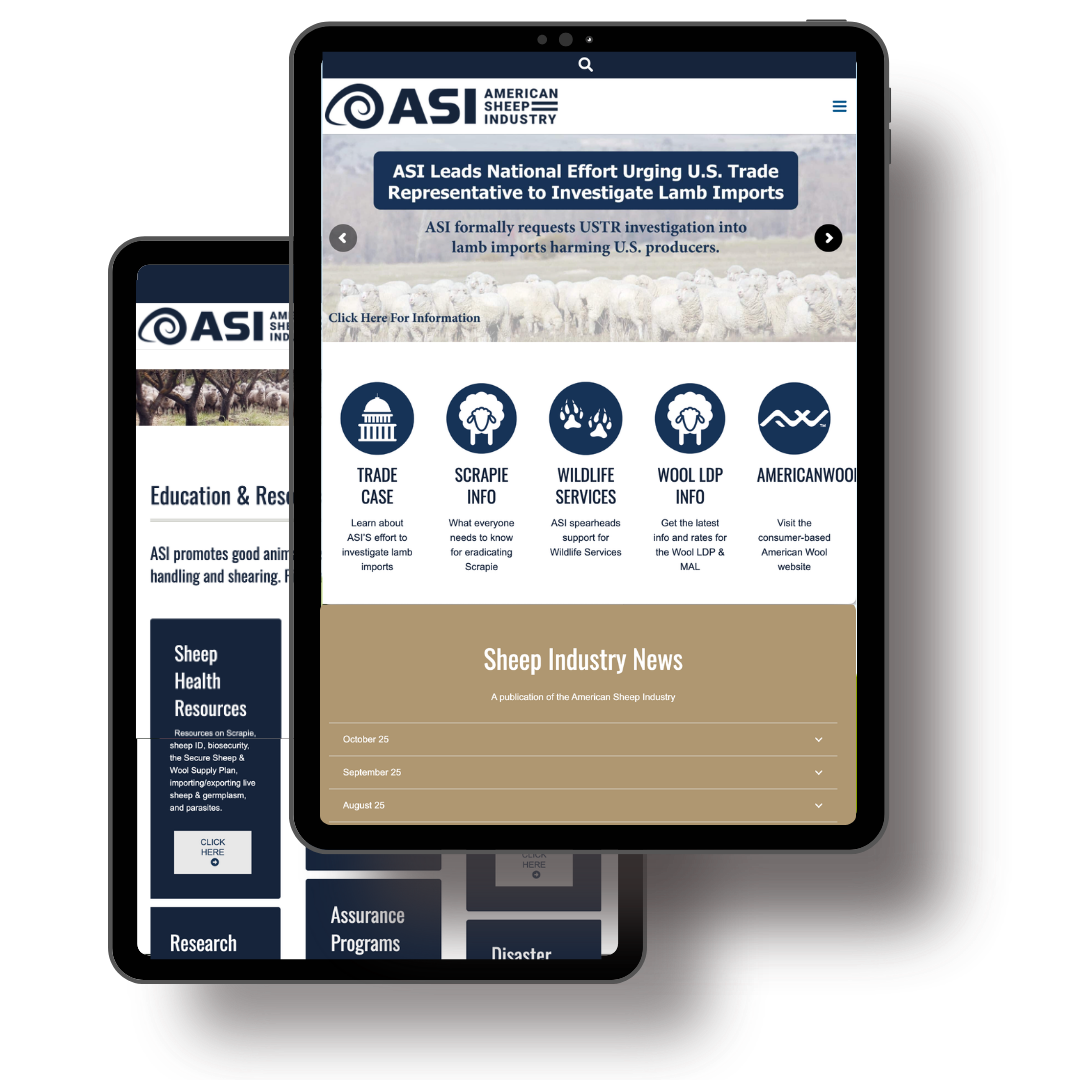
Get educational info, industry contacts, policy updates, breeder information, and more at sheepusa.org
| | | ASI operates in accordance with Federal civil rights law and U.S. Department of Agriculture civil rights regulations and policies, and complies with all equal opportunity, non-discrimination and affirmative action measures applicable to it under these. ASI is an equal opportunity employer and provider. |
| | | |