|
201 TRADE CASE UPDATE
The deadline for the ASI Growers and Feeders Injury Questionnaire was last week. Thank you to all the ASI members for sharing their information for the 201 Trade Case.
| | |
ASI OUTREACH
Templates for a letter of support have been sent to ASI’s state association leaders. Letters are due back to ASI on September 18. Every state association should submit a letter for ASI to use during ITC’s hearing on October 16.
ASI FUNDRAISING
ASI is raising funds through the ASI Guard Dog Fund to support the legal and economic work necessary to pursue the Section 201 case. Producers and industry supporters who want to help strengthen this effort can contribute specifically to the Section 201 Trade Case.
To stay informed of developing information, follow ASI on social media (Facebook, Instagram, LinkedIn) and on our website.
| | Reimagine Wool: Poster Competition Now Open | The ASI Wool Council and the American Sheep Industry Association (ASI), have launched the 2026 Reimagine Wool Digital Poster Contest. This contest is a nationwide call for creative thinkers, designers, students, and industry professionals to help unlock the untapped potential of American wool. The deadline for entries is November 15, 2026. Learn more here. | |
USDA Shares Roadmap for New World Screwworm Response | | |
The U.S. Department of Agriculture’s (USDA) Animal and Plant Health Inspection Service (APHIS) is sharing a new roadmap outlining how the agency will regularly review the New World Screwworm (NWS) Response Playbook. The roadmap establishes a quarterly cycle for inviting and reviewing stakeholder feedback, incorporating lessons learned, and as needed, refining guidance to ensure the Playbook remains an agile, science‑based resource for responders across the United States.
“We are committed to ensuring our domestic response tools evolve as quickly as the situation does,” said Under Secretary for Marketing and Regulatory Programs, Dudley Hoskins. “The Response Playbook has already proven to be an outstanding and highly effective guide for our nationwide efforts, as reflected in the low number of cases seen in the United States. We especially acknowledge the strong partnership of the Texas Animal Health Commission and the New Mexico Livestock Board, whose close collaboration with APHIS has been vital in effectively implementing the Playbook during the current response. The Playbook was always intended to be a living document, and continued insights provided by states, producers, veterinarians, wildlife experts, and other partners remain essential to strengthening our readiness.”
The NWS Response Playbook outlines critical science-based strategies for Federal, State, Tribal, and local responders, including how to:
- Coordinate response operations
- Reduce spread and prevent establishment of NWS in new areas
- Manage the pest in infested animals
- Implement NWS fly surveillance and control measures
- Maintain continuity of business
- Support efficient information flow and situational awareness
| |
ASI continues to be in regular communications with federal leaders at USDA's Animal and Plant Health Inspection Service (APHIS) and the FDA's Center for Veterinary Medicine (CVM) regarding issues that have arisen since the first detection.
ASI developed a NWS sheep producer guide and treatment info resource that you may access here. The guide is also available in Spanish.
All of ASI’s resources and links to additional information at USDA and FDA can be found on our website here.
Current Status (as of September 2):
- 3 active cases
- 45 inactive cases
- Most recent detection: August 31, 2026
Find more information at screwworm.gov.
| | Mexico Bans U.S. Lamb and Sheep Offal Over Scrapie Case | | |
In late July, USDA’s Animal and Plant Health Inspection Service (APHIS) surveillance program detected a case of classical scrapie in a single sheep at a slaughter facility in Oregon. It was the first such detection in the U.S. in more than five years. Although APHIS has not found any additional scrapie cases, Mexico has implemented a ban on U.S. sheep and lamb offal and viscera.
U.S. Meat Export Federation (USMEF) Director of Technical and Export Services Courtney Heller said scrapie is a degenerative prion disease of sheep and goats that is not shown to show risk to human health.
| | Pyrograzing turns ordinary livestock into fire prevention heroes, so why isn’t it used on public lands more often? | |
In grasslands across the American West, four-legged fire prevention crews are busy at work, helping keep wildfire risk under control. These cattle, goats and sheep stomp down tall grasses as they munch their way through plants that could otherwise burn, lowering the risk of catastrophic fires in the process.
When livestock are intentionally used for wildfire control like this, the practice is known as targeted grazing. And it’s gaining attention as severe wildfire seasons push firefighters and public land budgets to the brink.
Strategically removing trees, shrubs and grasses can help alter the trajectory of future wildfires, but it is complex and expensive work that often involves intentional burning, herbicides and heavy machinery to thin forests or create fuel breaks. Livestock can do some of this work instead, simply by grazing in the right places.
| | Wyoming Judge Allows 500 Cow-Calf Pairs Onto Contested Federal Grazing Land | |
A federal judge has allowed cattle to return, for now, to a long-idled stretch of public land in Wyoming. The decision could influence how the Bridger-Teton National Forest weighs ranching, wildlife protection, and the interests of nearby communities.
While the lawsuit moves ahead, 500 to 550 cow-calf pairs may graze between mid-August and mid-October of 2026 and 2027 on four allotments in the Elk Ridge Complex near Bondurant and the Gros Ventre Range. The 30,500-acre area had gone without livestock since 2016, until last year when grazing was permitted because of the Dollar Lake fire.
In 2016, conservation groups bought out a sheep-grazing permit there to reduce disease transmission to bighorn sheep and lessen conflicts between livestock and large carnivores.
| | Ranchers, Conservationists Clash Over Federal Orders To Remove Mexican Gray Wolves | | |
Officials with the U.S. Fish and Wildlife Service recently announced the removal of two Mexican gray wolves after the predators killed and injured livestock in the American Southwest. The decision has drawn criticism from conservation advocates who say this type of removal represents a slippery slope. Redacted copies of the removal orders do not specify the exact locations where the wolves are being taken from, but the documents note that one wolf was killed in May in the same area. Officials noted that the May action only temporarily ended depredations, or the killing of livestock.
| | 2026 ASI Young & Emerging Entrepreneur Tour | | Join us October 9–12 in Pennsylvania for a tour designed for young and emerging sheep industry entrepreneurs looking to learn, connect, and gain new perspectives from innovative agricultural operations and businesses. Participants will explore Pennsylvania’s sheep industry, build connections with fellow producers, and see the many ways entrepreneurs are growing and diversifying their operations. | |
Colorado River Plan To Cut Water Amid Drought Brings Uncertainty For Cities And Farmers | |
While El Niño could bring intense moisture to the northern Rockies and the Southwest in the coming months, it won’t erase decades of drought. “Drought is a slow-moving phenomena and it can take some time to come into it and also come out of it,” said David Mocko, senior research scientist who authored a recent U.S. Drought Monitor map.
In the U.S. West, water is stored primarily in reservoirs, aquifers and snowpacks. But a record snow drought means there’s far less water to recharge those sources.
The two largest reservoirs in the country serve as barometers of health for the Colorado River system: Lake Mead and Lake Powell. Both hit record lows this month. Eight other reservoirs recently recorded the lowest levels in at least the last 30 years. Among them is Elephant Butte Lake in New Mexico that’s critical for supplying water for crops in southern New Mexico, Texas and Mexico. The Green Mountain Reservoir serves the western part of Colorado, and the Guernsey Reservoir in Wyoming funnels water to farmers in the eastern part of the state and western Nebraska.
California, Nevada and Arizona will collectively reduce water use by 1.25 million acre-feet — enough to fill over 600,000 Olympic-sized swimming pools — annually in the next two years, with the possibility of larger cuts depending on conditions. Colorado, Utah, Wyoming and New Mexico are not required to make cuts for now but could voluntarily reduce water.
| | Judge strikes down H-2A interim final rule | |
Last week, a U.S. federal district court ruled that the interim final rule on farmworker wages from October 2025 must be rewritten.
The decision found that the U.S. Department of Labor interim final rule did not meet the good cause standard for bypassing the required notice and comment period, in violation of federal law. Federal law requires the DOL to ensure hiring temporary foreign farmworkers under H-2A visas doesn’t drag down wages for U.S. farmworkers doing the same jobs.
The court remanded the IFR to DOL without vacating it. For employers that use the H-2A program, that means the status quo remains in effect until something replaces it. However, the court did not restore the previous, pre-IFR H-2A system.
| Career Opening: Director of Livestock / Ohio Sheep Improvement Association & Ohio Sheep and Wool Program Executive Director | |
The Ohio Farm Bureau Federation is seeking an experienced agricultural professional to serve as Director of Livestock and Executive Director of the Ohio Sheep Improvement Association (OSIA) and Ohio Sheep and Wool Program (OSWP).
This unique leadership position combines agricultural advocacy, policy development, industry relations and association management. The successful candidate will serve as a subject-matter expert on livestock and animal-related issues while building strong relationships across Ohio's agricultural community.
| | ASI is working year-round to advance producer priorities across the country. Here’s what’s happening, what it means, and what’s next. | | USDA Announces Ranchers First Initiatives | | |
On Monday, August 31, Agriculture Secretary Brooke Rollins announced USDA's new Ranchers First Initiative, a package of policies and investments aimed at strengthening the livestock sector and rebuilding the U.S. cattle herd. The initiative includes a new risk management tool to encourage herd retention, expanded disaster recovery flexibility for producers utilizing Grassland Conservation Reserve Program acres, and a new guaranteed loan program to support regional meat processing facilities. USDA also announced plans to prioritize procurement of locally processed beef, expand support for beginning and veteran ranchers, and strengthen domestic processing capacity and supply chain resilience. The initiative builds on a series of USDA actions over the past year focused on expanding grazing access, supporting processing infrastructure, and strengthening opportunities for livestock producers.
For more information, find the official USDA press release here.
| |
|
Register Now: Sheep IQ Workshops Coming This Fall
The American Lamb Board’s Sheep IQ workshop series kicks off this fall with three producer-focused events designed to help sheep producers improve productivity, strengthen management decisions and increase profitability—while supporting the domestic supply of high-quality American Lamb to meet growing consumer demand.
Sheep IQ brings practical education directly to producers, with two days of learning, discussion and hands-on opportunities focused on one central goal: improving production efficiencies for stronger operations and better returns.
2026 Fall Sheep IQ Workshops will include Utah, Missouri, and West Virginia.
| | | | Your weekly snapshot of key market rates and reports (U.S. and global) to help you stay ahead of pricing and demand shifts. | | |
Wool Prices Continue to Climb
The EMI rose $0.09 (clean basis) this week with prices rising across most microns. Fine wool saw the largest rises with 17 micron seeing a $0.20 increase and finishing at $8.51 per pound. 21 micron wool rose $0.01 to finish at $6.61 per pound and 28 micron rose $0.07 and concluded the week at $2.79 per pound.
About the EMI: The AWEX Eastern Market Indicator (EMI) is the key benchmark index of Australian wool auction prices and is widely used as a global wool market indicator.
| | LDP Payments Available This Week | | Ungraded Wool, Grease Prices in $ Per Pound | | | Ungraded Wool | $0.2684 LDP Available | | | Unshorn Pelts, Prices in $ Per Pelt | | | Unshorn Pelt | $1.843 LDP Available | | | Note: Producers must visit their Farm Service Agency office and fill out the appropriate paperwork before the wool or unshorn lambs are sold to claim the Wool LDP (when available). | |
|
USDA Weekly Sheep, Lamb, & Wool Market Summary
The report is generally updated on Friday afternoon.
| | |
|
The Sheep & Goat Innovation Fund encourages innovation and efficiency in the sheep and goat industries by providing credit to eligible and qualified entities.
The NLPA Sheep and Goat Fund is a revolving fund established within NLPA to assist the U.S. sheep and goat industries by strengthening and enhancing the production and marketing of sheep and goats and their products in the United States.
| | |
Sep 8: Virginia Tech 27th Annual NSIP Production Sale (online) - More info
Sep 8: The Ultimate Grazing School, Lindley, NY - More info
Sep 11-13: Hall of Breeds Showcase, Jefferson, WI - More info
Sep 11-13: Pen of 3 Commercial Carcass Evaluation, Jefferson, WI - More info
Sep 11-13: Wisconsin Sheep & Wool Festival, Jefferson, WI - More info
Sep 12-13: 31st Sheep & Fiber Festival, Ringoes, NJ - More info
Sep 12: Indiana Sheep Association Annual Lambing School, Lafayette, IN - More info
Sep 15: Wyoming State Ram Sale, Douglas, WY - More info
Sep 16: Montana Annual Ewe Sale, Miles City, MT - More info
Sep 17-18: Newell Ram Show and Sale, Newell, SD - More info
Sep 21-22: Ag Outlook Forum, Kansas City, MO - More info
Sep 23-24: Grazing the Heartland Bus Tour, Sioux Falls, SD - More info
Sep 25: Virginia Tech Southwest AREC Forage Based Ram Test Sale and Field Day,
Glade Spring, VA - More info
Sep 25-26: South Dakota Sheep Growers Annual Convention, Brookings, SD - More
info
Sep 26-27: Spokane Fleece and Fiber Festival, Spokane, WA - More info
Oct 2: North Dakota Lamb & Wool Annual Convention, Bottineau, ND- More info
| | |
New Sponsorship Opportunities Available!
ASI is so thankful for our industry partners and magazine advertisers! Their support not only strengthens our work in Washington, D.C. but also supports a number of programs that are important to the sheep industry. Want to support ASI and reach American wool and lamb producers? Contact our Director of Communications, Morgan Young at Morgan@sheepusa.org
| |
| |
|
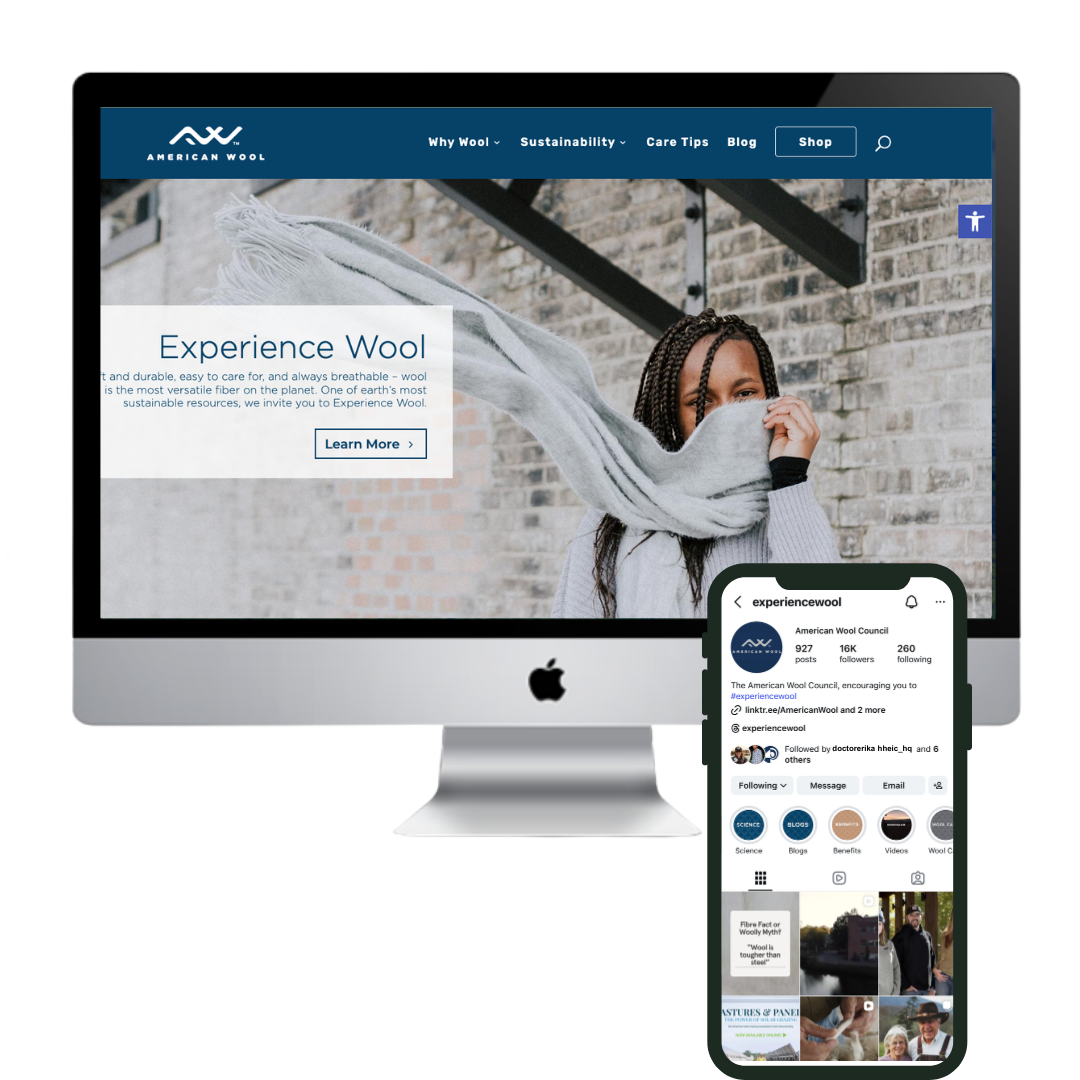
Experience Wool is ASI’s consumer hub: wool education, product inspiration, and American wool stories in one place.
Explore at americanwool.org and follow @experiencewool.
| | | | | | |
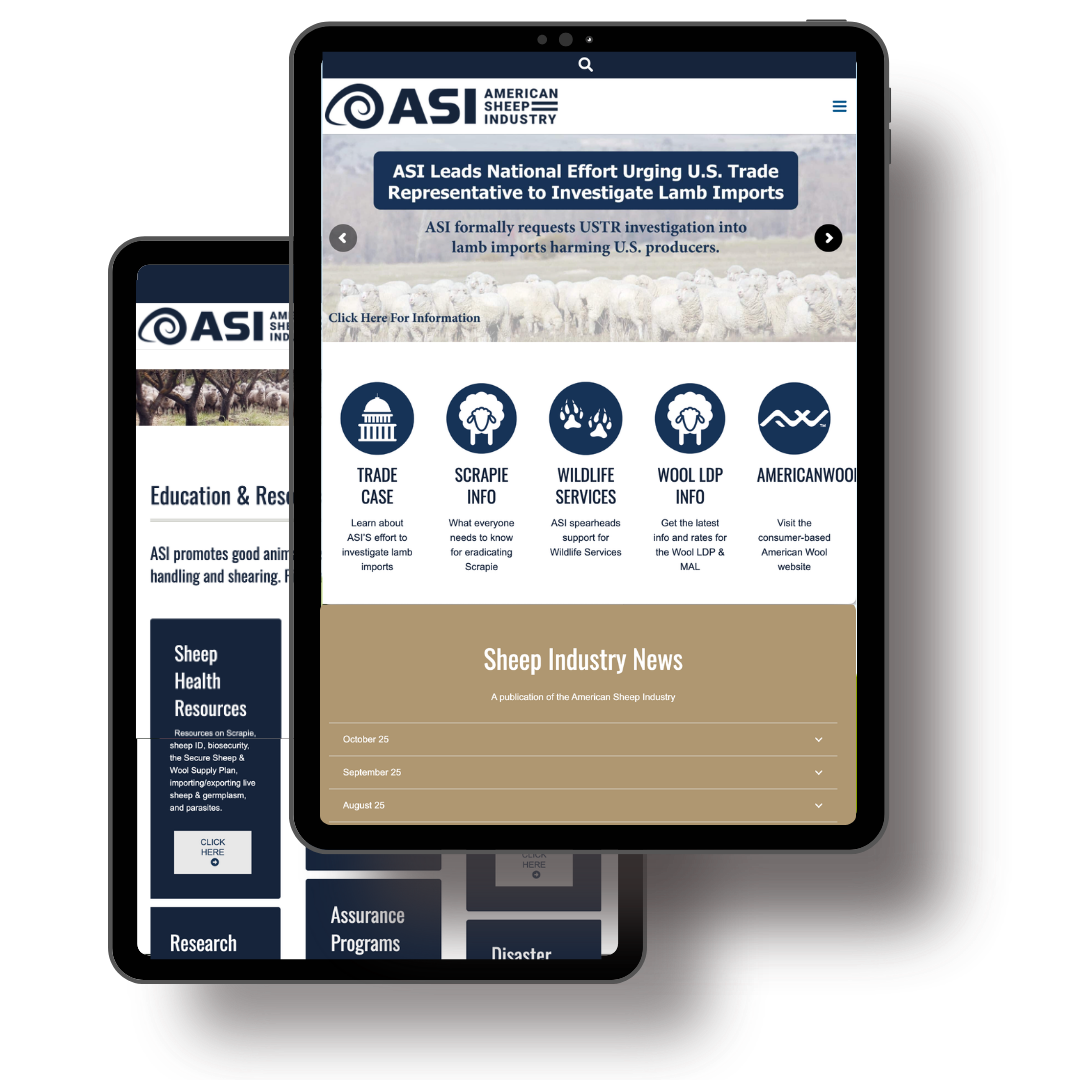
Get educational info, industry contacts, policy updates, breeder information, and more at sheepusa.org
| | | ASI operates in accordance with Federal civil rights law and U.S. Department of Agriculture civil rights regulations and policies, and complies with all equal opportunity, non-discrimination and affirmative action measures applicable to it under these. ASI is an equal opportunity employer and provider. |
| | | |