|
201 TRADE CASE UPDATE
Last week, ASI distributed a Growers and Feeders Injury Questionnaire to our members for U.S. sheep producers to share their information for the 201 Trade Case.
The information collected in this questionnaire is strictly business confidential. Individual responses, operational metrics, and financial details provided in this survey will be accessed exclusively by the administering economists at Georgetown Economic Services and will only be submitted under applicable statutory confidentiality protections. ASI's survey will be submitted to ITC as part of ASI's documentation for the ITC hearing on October 16.
To date, ASI has received 80 completed surveys. Thank you to our producers for taking the time to complete the survey and send it to our partners at Georgetown Economic Services LLC. The deadline to complete the questionnaire is Friday, August 28, 2026. For assistance completing the questionnaire, please review the instructions.
| | |
ASI OUTREACH
Templates for a letter of support were sent to ASI’s state association leaders last week. Letters are due back to ASI on September 18. Every state association should submit a letter for ASI to use during ITC’s hearing on October 16.
The October 16 ITC hearing will be available to view online. That link will be shared to ASI members as the date approaches.
ASI FUNDRAISING
ASI is raising funds through the ASI Guard Dog Fund to support the legal and economic work necessary to pursue the Section 201 case. Producers and industry supporters who want to help strengthen this effort can contribute specifically to the Section 201 Trade Case.
To stay informed of developing information, follow ASI on social media (Facebook, Instagram, LinkedIn) and on our website.
| | New World Screwworm Updates at the Border | | |
Mexican Cattle Imports Resume
The United States has resumed importing cattle from Mexico after an outbreak of the flesh-eating parasite, the New World screwworm, paused shipments. Starting Monday, the U.S. Department of Agriculture began allowing about 700 cattle per day from Mexico to enter the U.S. through a border crossing in Arizona.
Experts said the cattle will be screened with additional measures to ensure they are free of screwworm, a fly larva that burrows into living flesh and can expose cattle to deadly infections.
"[The USDA is] looking for any problem that we wouldn't want coming in, and once the animal's okayed by the veterinarian, it goes through what's called a dipping vat. The animal jumps into this deep vat with an insecticide in it. They swim to the other side and walk out the other side after being fully immersed to make sure that anything that comes in doesn't have anything on it that we don't want coming in," David Anderson, a professor and extension economist at Texas A&M University, said about the process. "This process adds another layer to that. They go into a separate set of holding pens, where we're going to let some time go by with inspection to make sure that the animals don't have screwworms."
| | USDA Outlines Plan To Reopen US-Mexico Border
On Wednesday, August 26, Agriculture Secretary Brooke Rollins outlined USDA’s plan to continue the phased reopening of additional U.S.-Mexico border ports to cattle imports following more than a year of restrictions related to the spread of New World screwworm (NWS). The plan builds on the August 24 reopening of the Douglas, Arizona, port of entry and includes preparations for reopening the Santa Teresa and Columbus, New Mexico, ports if risk assessments remain favorable and Mexico continues to meet commitments under a joint action plan. USDA emphasized that all animals entering through reopened ports will undergo full federal inspection for signs of NWS and stated that further reopenings will remain contingent on disease surveillance, biosecurity safeguards, and ongoing evaluation of conditions in Mexico. | |
ASI continues to be in regular communications with federal leaders at USDA's Animal and Plant Health Inspection Service (APHIS) and the FDA's Center for Veterinary Medicine (CVM) regarding issues that have arisen since the first detection.
ASI developed a NWS sheep producer guide and treatment info resource that you may access here. The guide is also available in Spanish.
All of ASI’s resources and links to additional information at USDA and FDA can be found on our website here.
Current Status (as of August 26):
- 2 active cases
- 45 inactive cases
- Most recent detection: August 25, 2026
Find more information at screwworm.gov.
| | ASI Receives 2026 QSP Grant Funding to Expand Markets for American Wool | | |
The American Sheep Industry Association has been awarded 2026 grant funding through the U.S. Department of Agriculture Foreign Agricultural Service’s Quality Samples Program (QSP) to support continued market development for American wool.
QSP grant funds allow prospective international customers to trial American wool in their own processing systems before making larger commercial purchases, helping reduce risk and introduce U.S. wool to new buyers.
While ASI continues to support and grow domestic wool processing and manufacturing, the United States does not currently have the capacity to process and consume the entire American wool clip. Programs such as QSP are therefore an important tool for opening additional markets, creating more competition for U.S. wool, and expanding opportunities for American wool producers.
Successful QSP trials can lead to long-term commercial relationships and provide additional outlets for a wide range of American wool types. ASI appreciates USDA-FAS’ continued partnership in helping strengthen demand for American wool.
| | Ticks Increasingly Threaten The Health And Livelihood
Of Ranchers | |
Certain parts of the country are about to be hit with a massive new hatch of lone star ticks. Those are the much more aggressive ticks that can give you alpha-gal syndrome — the dangerous red meat allergy. Those creepy crawlies can have serious costs. There’s the toll on public health and mental wellbeing and lost tourism in tick hot spots. But livestock and agriculture take a spendy hit too.
Biology Professor Holly Gaff leads Old Dominion University’s tick lab. “You do get these larval bombs,” Gaff said. “It sounds awful — and is pretty awful.”
With climate change, ticks — and their germs — are exploding into more areas. One study said it’s easily a $13 billion hit to the livestock industry. Shaun Cross, a public health professor at University of Nebraska Medical College said ranchers can be particularly vulnerable.
| | Idaho Wool Growers Association Names
Patxi Larrocea-Phillips as New Executive Director | |
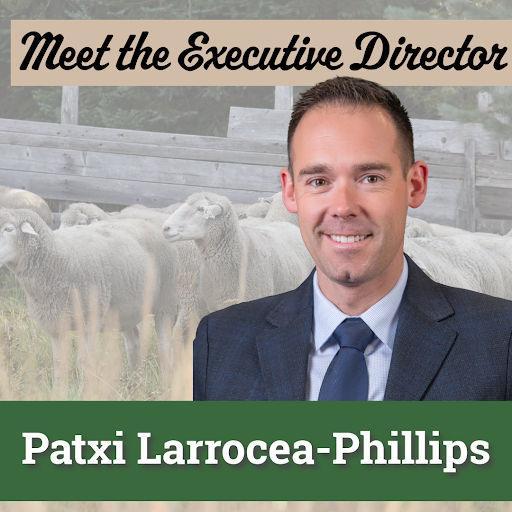
The Idaho Wool Growers Association Board of Directors is pleased to announce the hiring of Patxi Larrocea-Phillips as the new Executive Director. Patxi is no stranger to the Idaho Wool Growers Association or sheep industry, having served as the Director of Policy and Government Affairs since fall 2021.
“The IWGA is excited for Patxi to step into this role to continue building the footprint and impact of the Idaho Wool Growers Association, furthering our mission, and strengthen Idaho’s sheep industry,” said President Jack Blattner.
Patxi attended the University of Idaho and earned his bachelor’s degree in Agricultural Economics in 2015 and Juris Doctor degree in 2018. Since 2018, Patxi started a business, LP Associates and Agriculture, LLC, to assist clients with the complexities of state government and supporting those clients with government relations and administrative services. Patxi has lobbied on behalf of the IWGA since the fall of 2021. Additionally, Patxi works part time for Sawtooth Law Offices assisting mainly with transactional work comprising of business law and estate planning. When he is not in the office, Patxi is part of the fourth generation to play an active role with his family’s commercial beef cattle ranch and diversified row crop farm. Patxi has served on the Ada County Farm Bureau Board of Directors since 2019. Patxi and his wife Alex reside in Meridian with their two daughters.
Over the next few weeks, Patxi and Liz will work closely to ensure a successful transition. Liz Wilder’s last day is set for September 30.
| | 2026 ASI Young & Emerging Entrepreneur Tour | | |
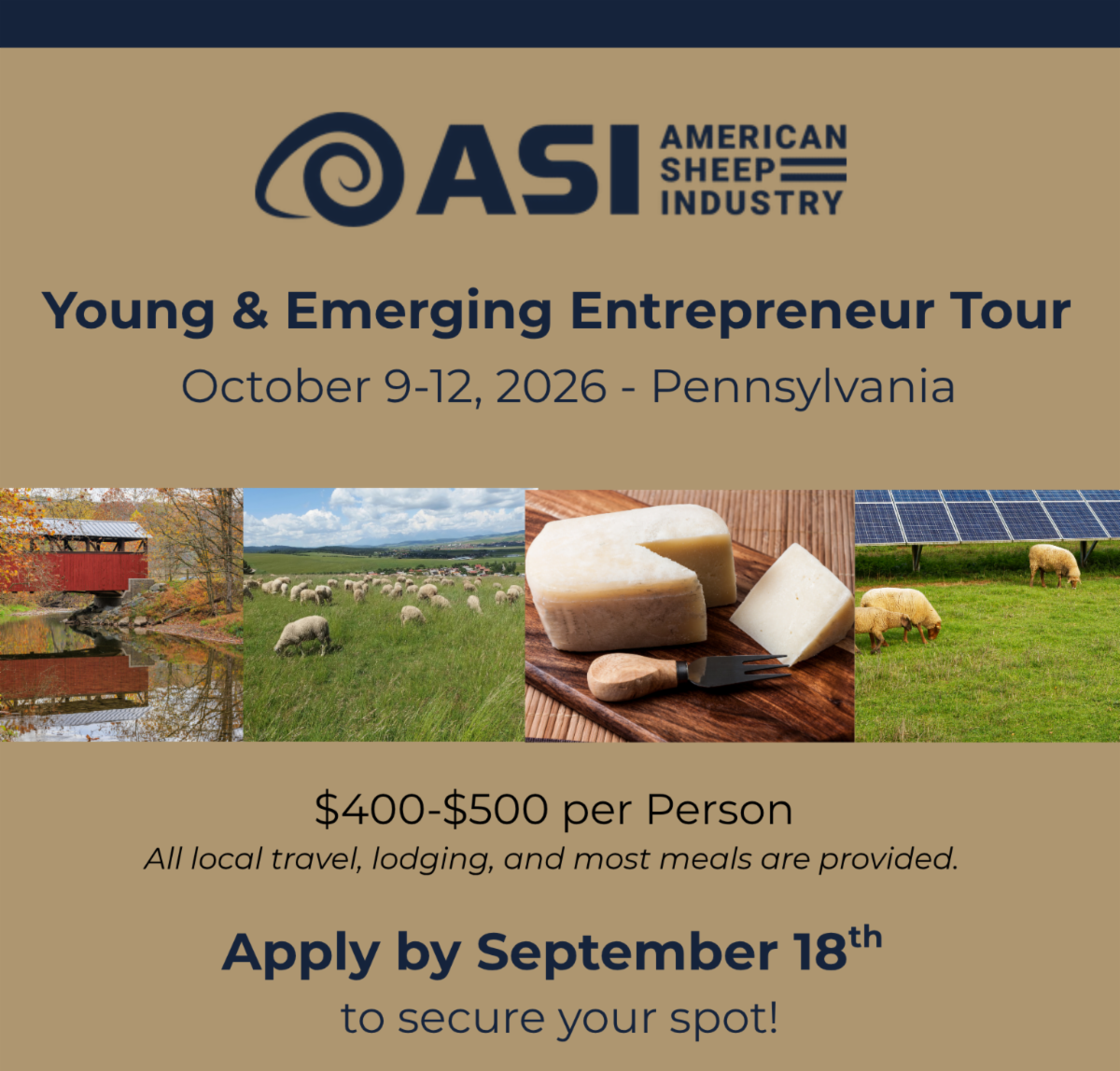
Join us October 9–12 in Pennsylvania for a tour designed for young and emerging sheep industry entrepreneurs looking to learn, connect, and gain new perspectives from innovative agricultural operations and businesses.
Participants will have the opportunity to explore Pennsylvania’s sheep industry, build connections with fellow producers, and see firsthand the many ways entrepreneurs are growing and diversifying their operations.
| |
USDA Disaster Assistance Tool
| Have you experienced disaster related losses due to wildfires or drought this year?
The USDA is offering disaster assistance programs to help eligible producers recover. Visit the USDA Disaster Assistance Discovery Tool to learn more about how the USDA can support you. | | ASI is working year-round to advance producer priorities across the country. Here’s what’s happening, what it means, and what’s next. | | President Trump Announces Beef Import Plan | | |
On Wednesday, August 26, President Trump signed an Executive Order, intended to reduce ground beef prices by temporarily increasing imports of foreign beef. The action removes tariffs on up to 300,000 metric tons of imported lean beef trimmings for a 90-day period. The imported beef, which is primarily used for ground beef production, will enter the U.S. in three 30-day tranches beginning September 1. The Administration has defended the plan as a temporary measure aimed at providing consumer price relief while continuing longer-term efforts to expand the U.S. cattle herd.
For more information, see the official White House fact sheet here.
Read more on this story from Politico: Trump Signs Controversial Beef Import Plan Despite Ranchers' Backlash
| | Canada Announces Retaliatory Tariffs On U.S. Goods | | |
On Tuesday, August 25, Canada announced a new round of retaliatory tariffs in response to the Trump Administration’s recent decision to impose 50% tariffs on approximately $20 billion of Canadian imports. Canadian officials stated that the country will implement countermeasures beginning September 8, applying tariffs of 15%, 25%, and 50% on more than 700 U.S. products, including steel, aluminum, appliances, clothing, agricultural and other manufactured goods. While Canada is not a major importer of U.S wool products, there are some wool products that could be subject to 25% or 50% tariffs.
The full list of products subject to tariffs can be found here.
| |
|
Sheep IQ Connects Producers with Real-World Knowledge and Stories
The New Sheep IQ website is helping sheep producers find practical information, industry resources and real-world insights all in one place. Designed with producers in mind, Sheep IQ provides tools and educational content to support everyone from those considering their first flock to experienced producers looking for new ways to strengthen and grow their operations.
An important part of Sheep IQ is sharing the experiences of producers from across the country. Producer Profiles highlight the different paths people take into the sheep industry, the challenges they have overcome and the lessons they have learned along the way. These stories show there is no single path to becoming a successful
sheep producer.
| | | | Your weekly snapshot of key market rates and reports (U.S. and global) to help you stay ahead of pricing and demand shifts. | | |
Wool Markets Rebound
Price increases were seen across all microns in the EMI this week. Notably, 21 micron and below saw increases of $0.08 to $0.30 (clean basis) while 26 micron and above saw prices rise $0.05 to $0.18. Overall, the EMI rose $0.21.
According to an AWEX report, "Buyer interest centered on good style, low vegetable matter (less than 1.0%) wool and the largest price rises were seen in these types. However, all types and descriptions enjoyed rises as buyers fought hard to secure meaningful quantity in the small than normal sale."
About the EMI: The AWEX Eastern Market Indicator (EMI) is the key benchmark index of Australian wool auction prices and is widely used as a global wool market indicator.
| | LDP Payments Available This Week | | Ungraded Wool, Grease Prices in $ Per Pound | | | Ungraded Wool | $0.2772 LDP Available | | | Unshorn Pelts, Prices in $ Per Pelt | | | Unshorn Pelt | $1.903 LDP Available | | | Note: Producers must visit their Farm Service Agency office and fill out the appropriate paperwork before the wool or unshorn lambs are sold to claim the Wool LDP (when available). | |
|
USDA Weekly Sheep, Lamb, & Wool Market Summary
The report is generally updated on Friday afternoon.
| | |
Sep 11-13: Hall of Breeds Showcase, Jefferson, WI - More info
Sep 11-13: Pen of 3 Commercial Carcass Evaluation, Jefferson, WI - More info
Sep 11-13: Wisconsin Sheep & Wool Festival, Jefferson, WI - More info
Sep 12-13: 31th Sheep & Fiber Festival, Ringoes, NJ - More info
Sep 12: Indiana Sheep Association Annual Lambing School, Lafayette, IN - More info
Sep 15: Wyoming State Ram Sale, Douglas, WY - More info
Sep 16: Montana Annual Ewe Sale, Miles City, MT - More info
Sep 17-18: Newell Ram Show and Sale, Newell, SD - More info
Sep 21-22: Ag Outlook Forum, Kansas City, MO - More info
Sep 23-24: Grazing the Heartland Bus Tour, Sioux Falls, SD - More info
Sep 25: Virginia Tech Southwest AREC Forage Based Ram Test Sale and Field Day,
Glade Spring, VA - More info
Sep 25-26: South Dakota Sheep Growers Annual Convention, Brookings, SD - More info
Sep 26-27: Spokane Fleece and Fiber Festival, Spokane, WA - More info
| |
| |
|
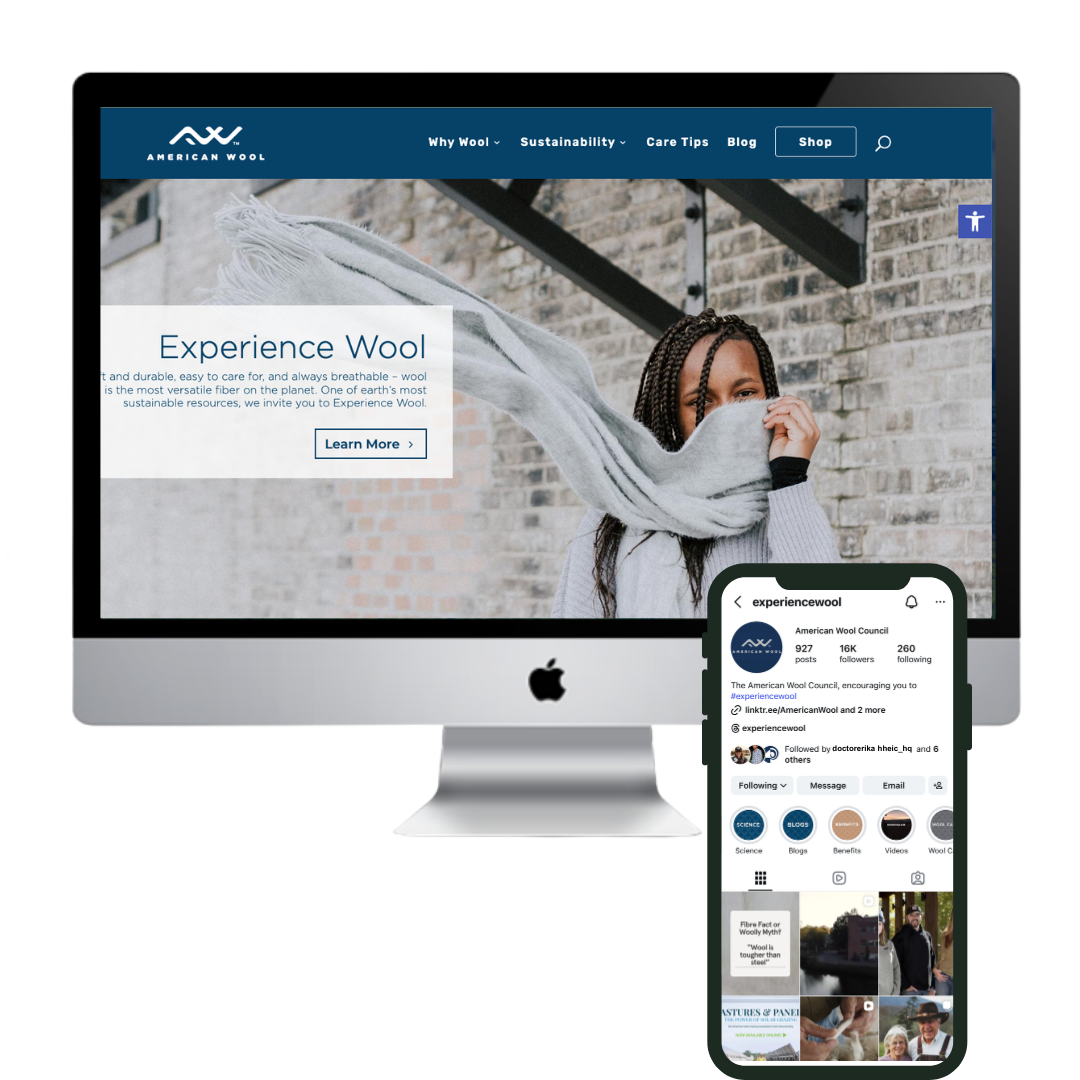
Experience Wool is ASI’s consumer hub: wool education, product inspiration, and American wool stories in one place.
Explore at americanwool.org and follow @experiencewool.
| | | | | | |
Get educational info, industry contacts, policy updates, breeder information, and more at sheepusa.org
| | | ASI operates in accordance with Federal civil rights law and U.S. Department of Agriculture civil rights regulations and policies, and complies with all equal opportunity, non-discrimination and affirmative action measures applicable to it under these. ASI is an equal opportunity employer and provider. |
| | | |