|
Dear ASL Friends,
This year has been one of transition and reflection for the ASL. As we continue to celebrate the first 10 years of our program, we are inspired by the resilience, innovation, and dedication of the people and communities working to protect the Amazon.
This milestone is not just a moment to look back on our achievements, but an opportunity to renew our commitment and focus on the next decade of collaboration, conservation, and sustainable development. We are pleased to welcome our new regional coordinators, Aurélie Rossignol and João Moura, who will help lead the ASL into its next chapter.
This edition of our newsletter highlights key project updates, the release of the 10-year report, and insights from our national projects across the region, from sustainable livelihoods to biodiversity conservation and ecological connectivity. As COP30 demonstrated, the Amazon continues to be central to global discussions on climate, biodiversity, and sustainable development, underscoring the importance of local leadership and partnerships in driving meaningful change.
As we look ahead, we remain committed to fostering inclusive leadership, supporting local communities, and promoting solutions that balance conservation and development. Here’s to the next decade of shared progress, impact, and dedication to the Amazon.
As always, we welcome your insights and contributions to enrich our community and encourage you to contact us via email or through our website.
Warm regards,
The ASL Regional Team
| | Products from the ASL regional program | | |
Celebrating a Decade of Connections:
ASL 10-Years’ Special Report
| | |
ASL 10 Years: A Decade of Connections – People, Institutions, and Landscapes in the Amazon 2015–2025 captures a decade of collaborative action to conserve, manage, and restore the Amazon. Authored by Vanessa Corlazzoli and Ana María González Velosa, with support from the ASL team, the report highlights the people and institutions driving this transformative work across the region. We launched the publication during our October webinar—watch the recording here in case you missed it.
Read the report and explore the dedicated 10-year celebration page.
| | New StoryMap: The Burning Amazonia | | This quarter, the ASL team joined key regional events advancing forest conservation. | | |
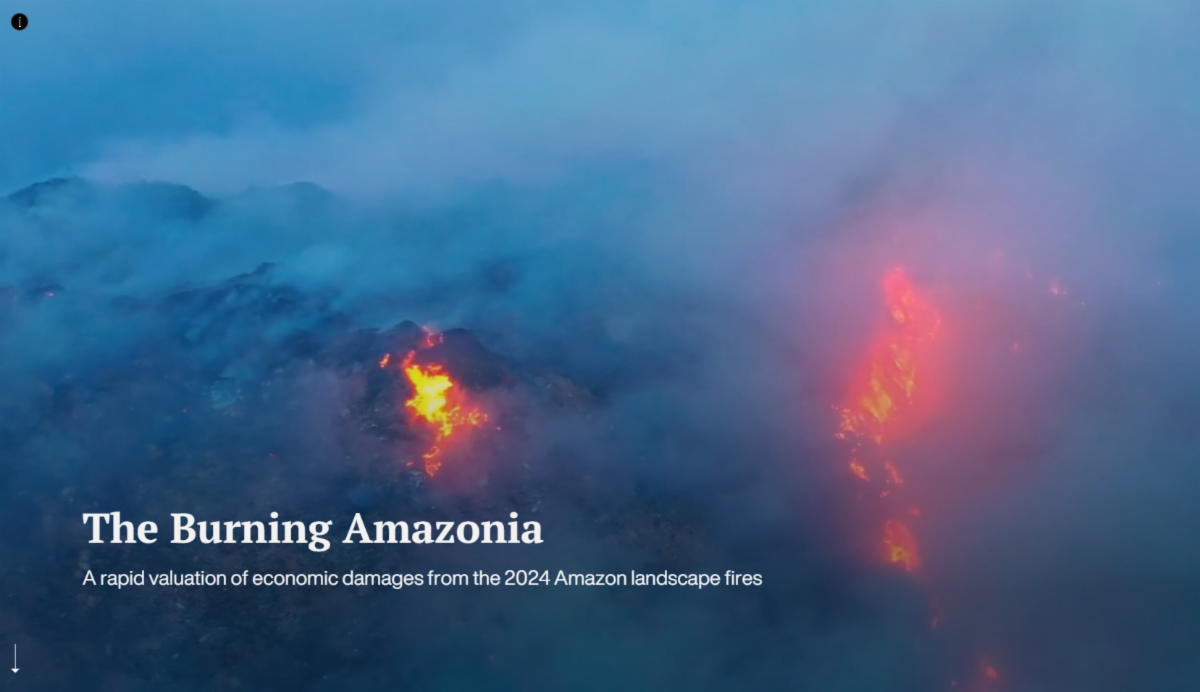
We recently launched The Burning Amazonia, a StoryMap developed in collaboration with GFDRR, the ASL, and Amazonia Viva. It visualizes key findings from the new World Bank report Consequences of the 2024 Fires in the Amazon: A Rapid Valuation of Damages by Mariana Conte Grand and Nicolás Borchers Arriagada, highlighting the scale and impacts of this year’s unprecedented fires (available in English).
| | ASL at COP30: Advancing regional collaboration for the Amazon | | |
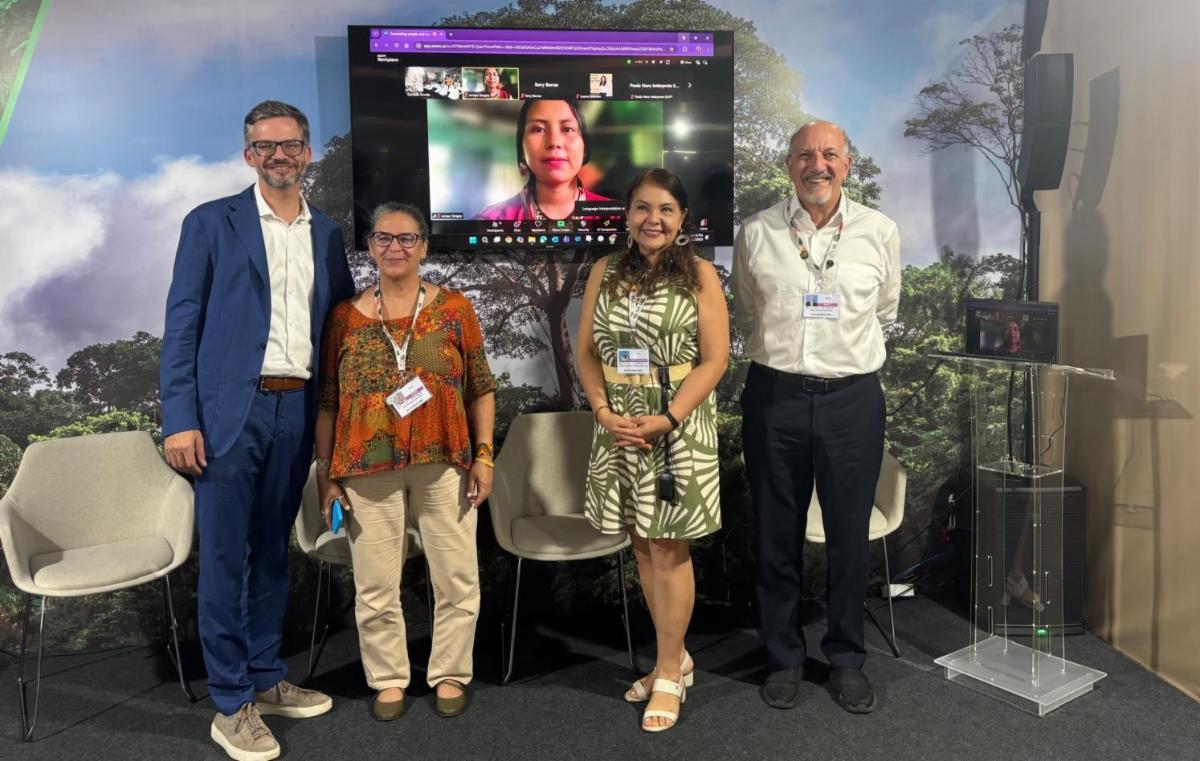
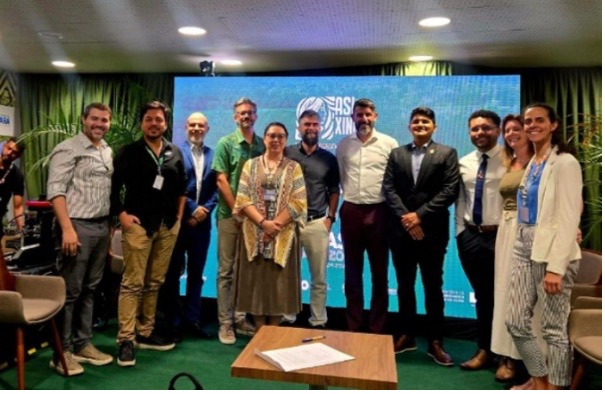
The ASL participated in several events at COP30 in Belém, sharing lessons from 10 years of Amazon collaboration. Our featured event, Connecting people and countries to connect landscapes in the Amazon as a strategy to tackle climate change, took place November 17th at the Forest Pavilion. Photo: Daniella Arruda, World Bank
| | Other ASL & partner activities at COP30 | | |
10 Years of Heart of the Amazon
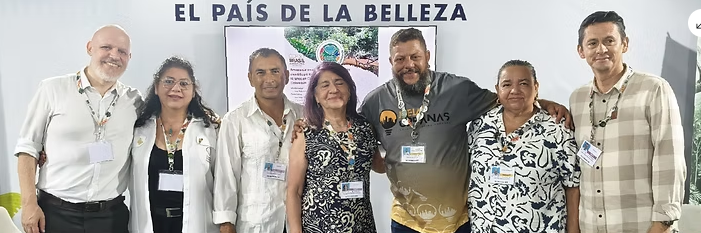
The Heart of the Amazon project marked a decade of work at the “Amazon at the Limit” event, emphasizing how science, conservation agreements, and participatory land-use planning strengthen territorial governance with community leadership, especially women. Read more (in Spanish)
Civil Society Against Nature Crime – Amazon Conservation & ASL
At the InfoAmazonia Journalism House, the ASL and Amazon Conservation (ACCA) presented early findings from a regional survey of civil society organizations working to combat nature crime across the eight Amazonian countries. Discussions highlighted the role of evidence sharing, public transparency, and regional platforms, such as ACTO’s Amazon Regional Observatory, in driving government action and accountability.
Amazon Food Atlas Pre-Screening – Amazon Conservation Team
The Amazon Conservation Team hosted a pre-screening of six short documentaries from the Amazon Food Atlas, an initiative commissioned by the ASL to highlight Amazonian food systems. With opening remarks by Indigenous leader Derrick John (Guyana), the screening celebrated the diversity of food traditions, cultural practices, and ancestral knowledge across the region.
| | | Youth Voices from the Amazon | | |
The Jaguar:
Key to the Amazon’s balance
| | |
Indigenous youth from ASL national projects in Brazil, Colombia, Ecuador, and Peru share their hopes, priorities, and visions for the future of the Amazon in the context of COP30. We invite you to hear directly from the next generation of leaders about what inspires them to protect their territories.
| |  | |
To celebrate International Jaguar Day, we highlighted transboundary conservation efforts supported by the ASL across Colombia, Ecuador, and Suriname. This short video showcases how national projects are working to protect jaguar habitats and strengthen landscape connectivity.
| | Stories from our active national projects | | ASL Xingu launches at COP30 + ASL results spotlight – Amazon Sustainable Landscapes Brazil | | |
Brazil announced the new ASL Xingu project at COP30, an $8.5-million initiative that will support conservation, sociobioeconomy, and territorial governance across 4.3 million hectares in the Baixo and Médio Xingu. At a parallel COP30 event, the Ministry of Environment highlighted ASL Brazil’s broader results—strengthened landscape governance, expanded restoration, and improved support for rural producers across Acre, Amazonas, Pará, and Rondônia. Photo: MMA
Read about the ASL Xingu launch and learn more about ASL Brazil’s COP30 panel
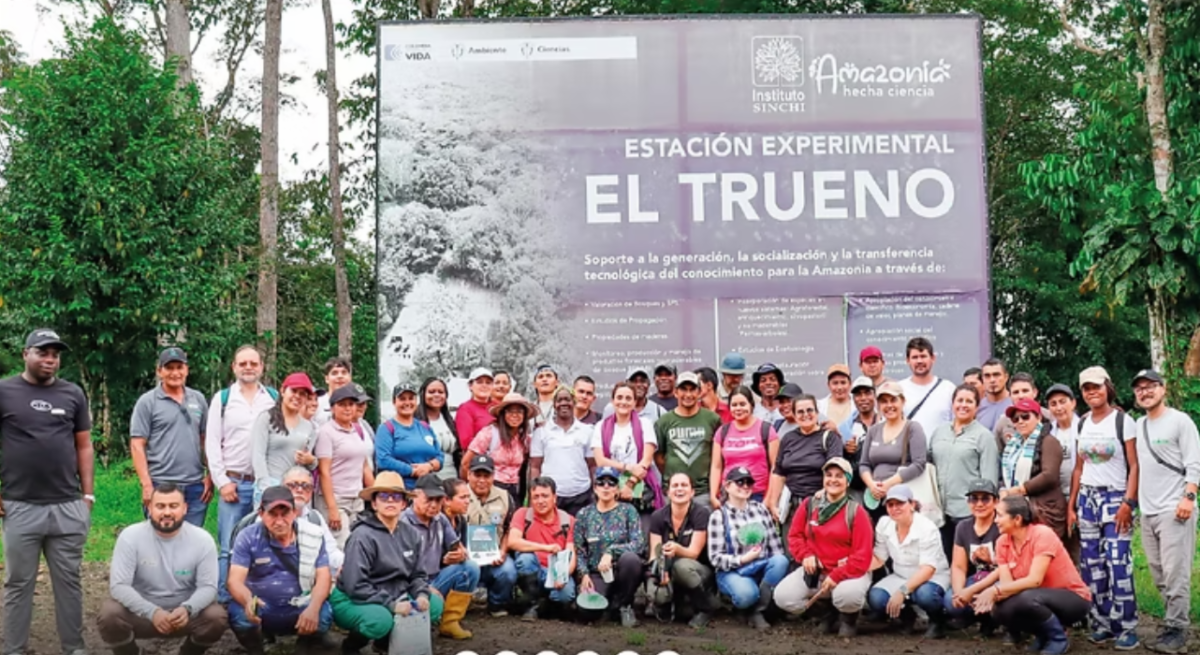
| | Forests as the foundation for local sustainable development – Heart of the Amazon, Colombia | | The Heart of the Amazon project, together with SINCHI and CDA, hosted 31 community associations in Guaviare to strengthen sustainable management of non-timber forest products. The course highlighted ecological benefits, updates to wild flora regulations, and advances in scientific research for conservation and community well-being. Participants shared territorial knowledge and discussed how to influence public policy and innovation in value chains. | | Chiwias strengthens its community planning instruments – Amazon Connectivity Corridors, Ecuador | | |
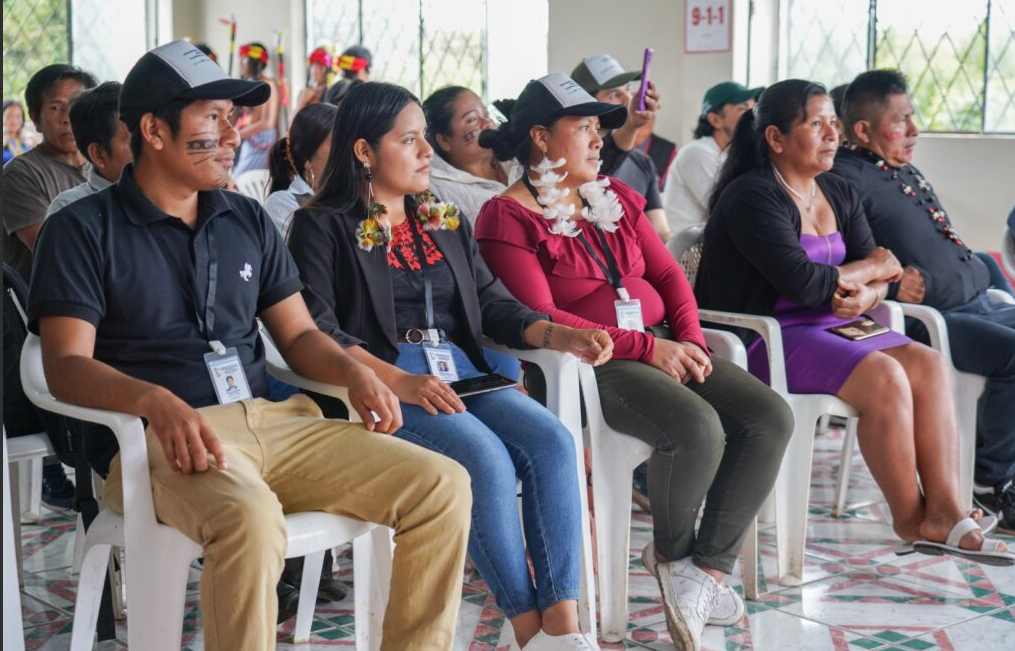
In Morona Santiago, the Association of Shuar Communities of Chiwias advanced the collective development of its life plan (Plan de Vida), a long-term roadmap grounded in cultural, spiritual, environmental, and social priorities. Supported by the Connectivity Corridors project, the process brought together leaders for six months of workshops and community dialogue, reinforcing governance across 32 communities within the Palora–Pastaza Connectivity Corridor. Photo: Liz Jurado / CI Ecuador
| | Women artisans strengthen sustainable economies in the Amazon – Building Human Well-being and Resilience in Amazonian Forests, Peru | | |
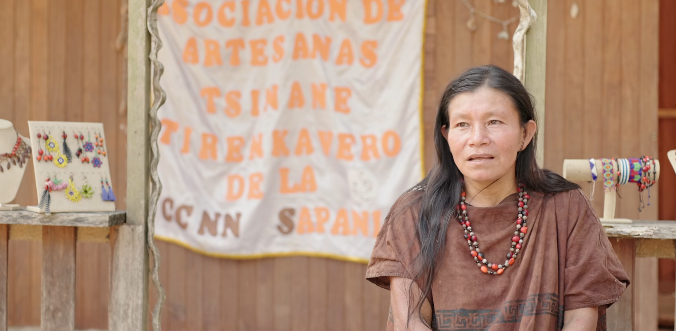
In Atalaya, Ucayali, women artisans are building economic independence by combining ancestral craftsmanship with new technological tools. Across communities such as Sapani, Aerija, Rosa de Laulate, and Sepahua, associations are diversifying their work in textiles, jewelry, carving, fiber, and ceramics while maintaining cultural and sustainable practices. Supported by the Amazonian Forests project, this effort links forest conservation with livelihood resilience for Amazonian families. Video: Profonanpe
| | Reinforcing partnerships for ASL2 implementation – Strengthening Management of Protected and Productive Landscapes in the Surinamese Amazon, Suriname | | |
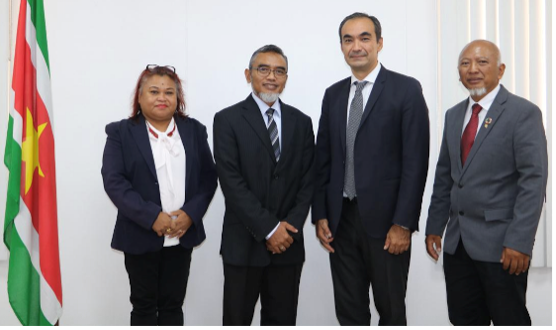
UNDP Suriname and the Ministry of Land Policy & Forest Management reaffirmed their partnership to advance forest governance, climate action, and the ASL2 project. The collaboration supports sustainable forestry, improved protected area management, and community-based livelihoods in the Saamaka–Matawai and Coeroeni–Paroe landscapes. Photo: UNDP Suriname
| | ASL-recommended publications, news & resources | | * ASL partners and teams: Please share with us your publications to showcase in future newsletters. | | La Silla Vacía covers ASL’s 10-year achievements across the Amazon | | |
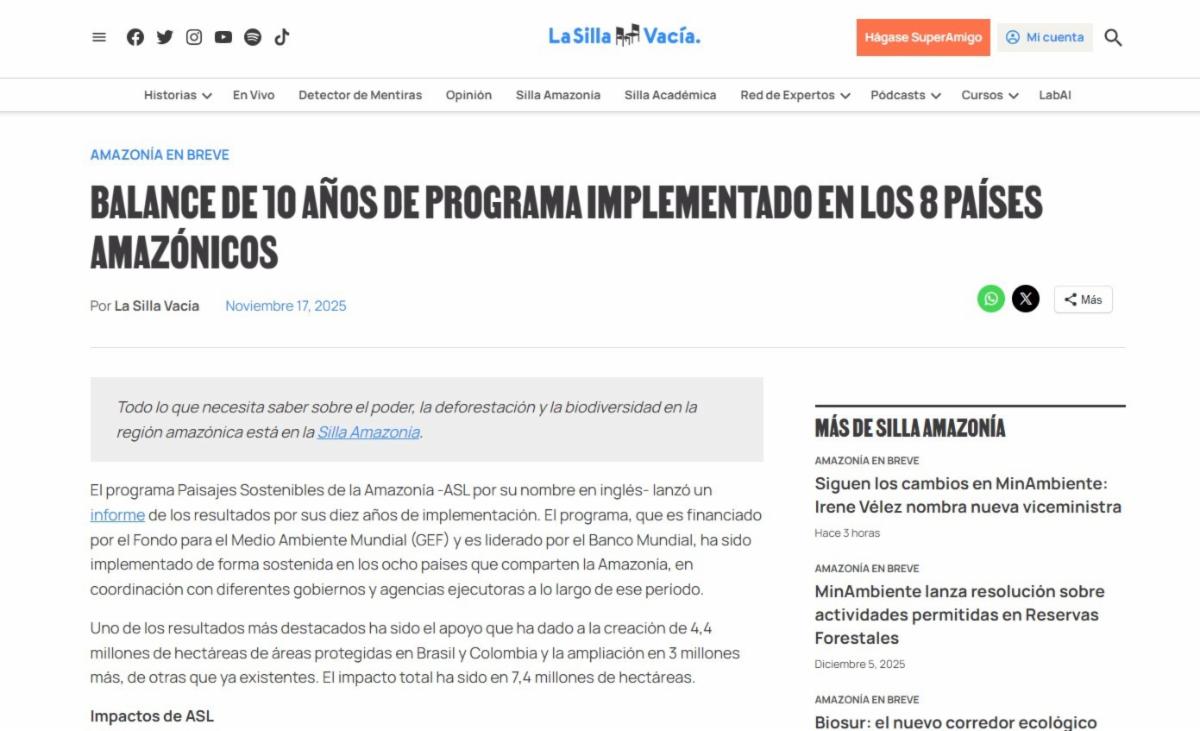
Colombian outlet La Silla Vacía published an in-depth overview of the ASL and its results after a decade of implementation across the eight Amazonian countries. The article highlights major achievements, most notably the expansion of Colombia’s Chiribiquete National Park, now the world’s largest tropical protected area. It also features ASL’s contributions to restoration efforts, community nurseries, fisheries agreements in Brazil, and the adoption of a mining-impact calculator across the tri-border region. The piece underscores how long-term coordination with governments, Indigenous peoples, local communities, and civil society has been essential to the program’s impact and adaptive management.
| | |
The Amazon Regional Observatory launches new policy briefs & data tools
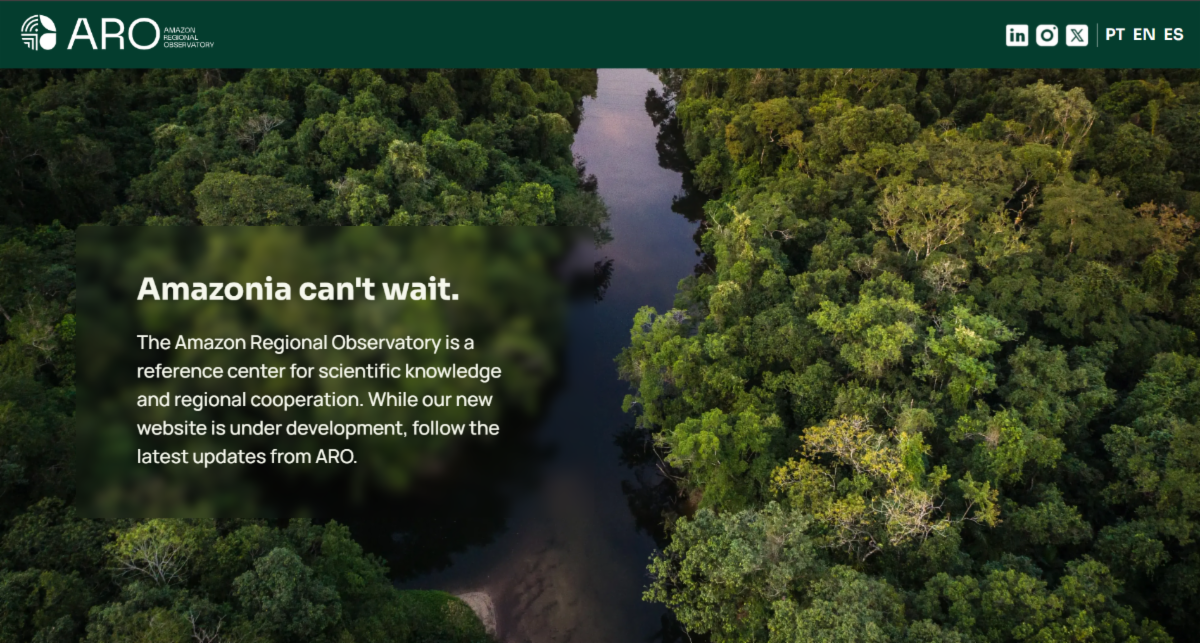
The Amazon Regional Observatory (ARO) of the Amazon Cooperation Treaty Organization (ACTO) has released nine new policy briefs offering concise, science-based insights on climate risks, biodiversity loss, fire dynamics, flying rivers, Indigenous leadership, river monitoring, and other critical themes. Developed by ACTO with support from the ASL, these briefs synthesize essential data to guide decision making across the region.
| | | |
Amazon underworld series: The Price of Progress
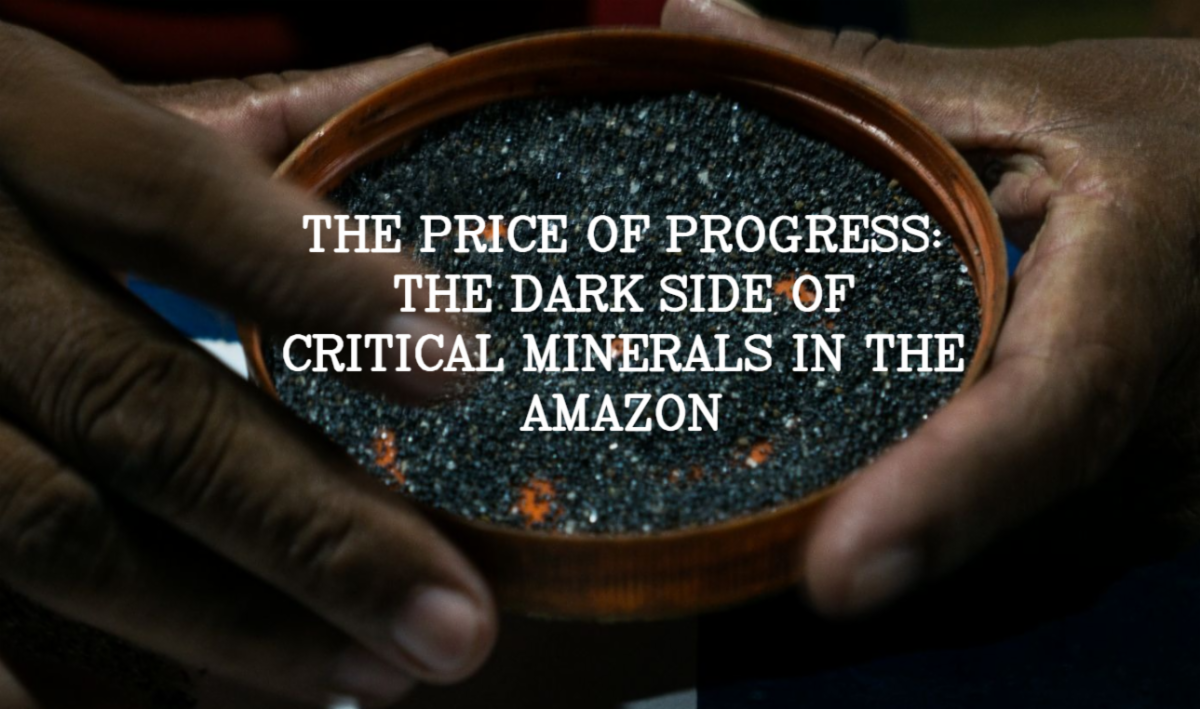
A powerful piece from Amazon Underworld examines the escalating pressures of critical mineral extraction in the Amazon, essential for global clean-energy and security demands, yet deeply harmful to Indigenous communities and fragile ecosystems. This regional investigation exposes how the pursuit of these minerals is reshaping territories, driving conflict, and revealing the hidden costs behind the technologies fueling the world’s transition.
| | | This edition highlights inspiring leadership from Brazil and Ecuador, showcasing stories of stewardship, resilience, and the deep connections between people and the forest. | | |
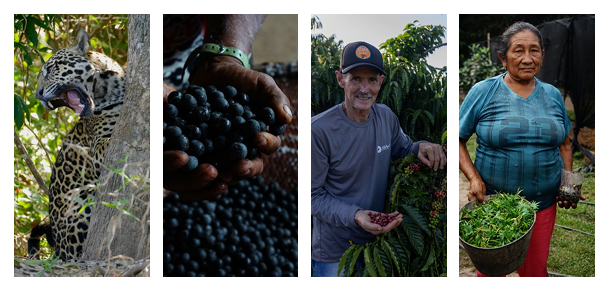
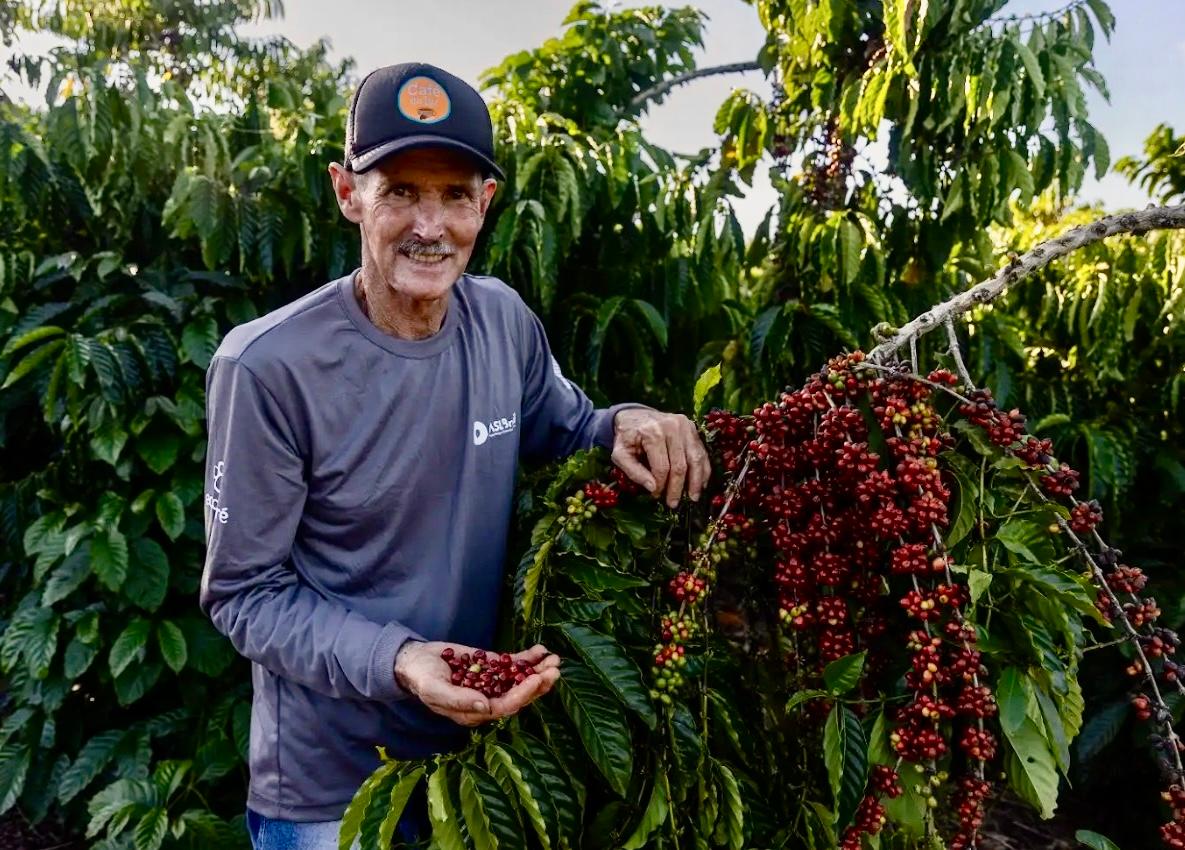
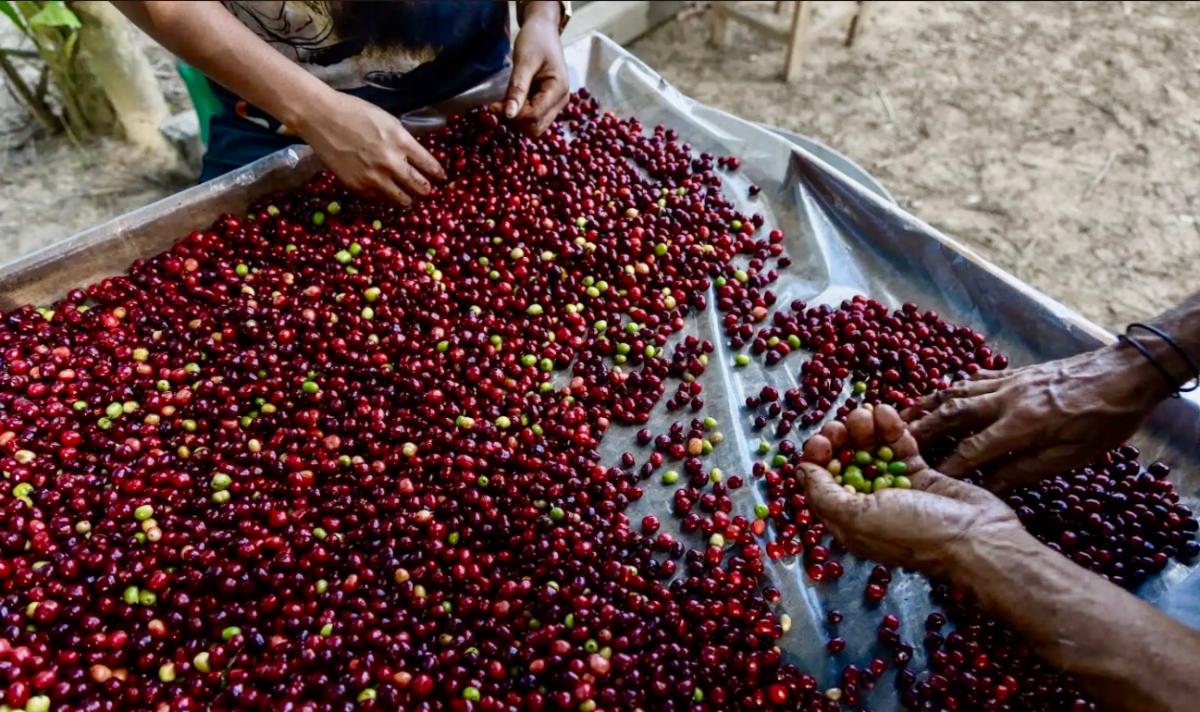
João, an award-winning coffee producer from Cacoal, Rondônia, has become a national reference for sustainable specialty coffee. Originally from Espírito Santo, he moved to Rondônia nearly 40 years ago in search of better opportunities, eventually transforming his small property into a model of high-quality, forest-friendly coffee production.
Winner of Coffee of the Year Brazil 2022, João and his family produce high-quality robusta using techniques that protect soil, water, and surrounding forest—all while hand-selecting each bean. After witnessing the impacts of deforestation over four decades, João embraced restoration.
| | "This is paradise. For us who came from other regions, when we arrived here, this was something out of this world.” | | |
Through support from the ASL Brazil project and Emater/RO, he brought his property up to code, restored degraded riverbanks, and strengthened water security, crucial during the severe drought of 2025. João said that "Now, we see the need to restore springs and riverbanks to have water."
Today, João continues expanding forest recovery under a new environmental compliance agreement. For João, coffee and conservation are inseparable.
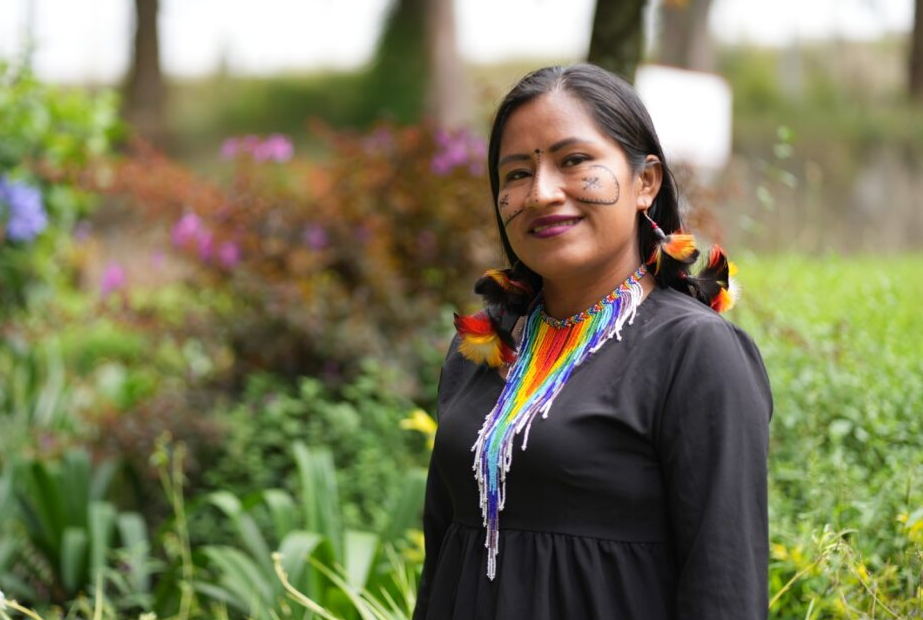
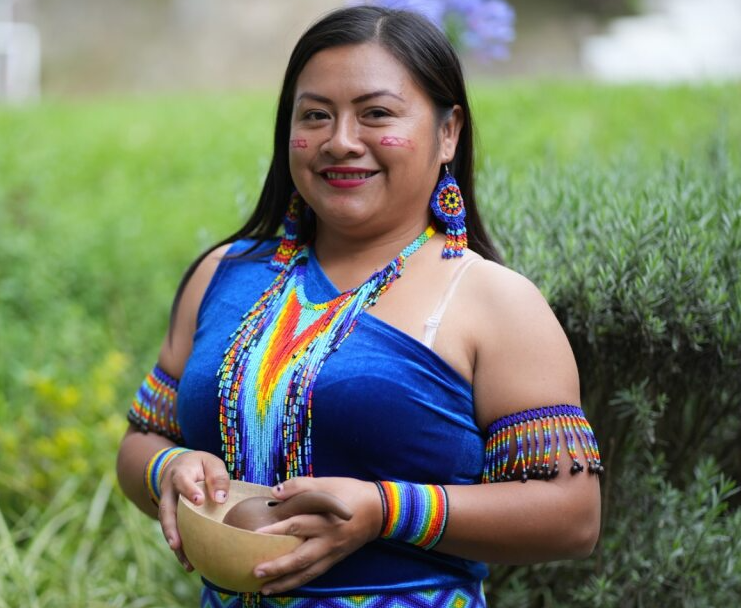
| | Betty Vargas & Carlina Ankuash – Ecuador | | Two Ecuadorian Indigenous women, Shuar and Achuar leaders, are revitalizing ancestral knowledge and strengthening ecological connectivity in the Palora–Pastaza Corridor. Both participated in Conservation International’s Indigenous Women’s Program with support from the Amazonian Connectivity Corridors project. | | |
Betty works in the heart of Pastaza, leading efforts to strengthen the ancestral “aja” system, a traditional agroforestry method used to grow yuca, plantain, camote, medicinal plants, fruit trees, and palms.
Alongside 20 women in her community, Betty integrates cultural rituals, songs, and amulets into daily agricultural practices to ensure abundance and maintain spiritual ties with the forest. Her work promotes food security, the transmission of ancestral knowledge, and cultural pride.
Betty engages her community through workshops, collaboration with Indigenous organizations like the Asociación de Mujeres Agroproductoras ARAK, and by creating spaces that allow mothers to participate fully while caring for their children.
| | |
Carlina leads the Shakaim Biological Station in Warints, a 1,000-hectare property dedicated to monitoring biodiversity and restoring forest areas. Working closely with her community and biologists, she uses camera traps to track wildlife and promotes sustainable use of native plants.
Carlina’s project also empowers 10 women in her community to learn ecological monitoring, seed conservation, and forest restoration techniques.
Located in the Palora–Pastaza connectivity corridor near the Kutukú–Shaimi Protected Forest, Carlina’s work is crucial for maintaining ecological corridors and protecting high-value ecosystems.
| | |
Join the ASL's Community of Practice to access publications, resources, and engage in collaborative discussions with fellow members.
BECOME A MEMBER
* Upon completing this form, you will receive an email invitation with instructions.
| | The Amazon Sustainable Landscapes Program (ASL), funded by the Global Environment Facility (GEF) and led by the World Bank, adopts an integrated regional approach across Bolivia, Brazil, Colombia, Ecuador, Guyana, Peru, Suriname, and Venezuela. Its primary objective is to enhance integrated landscape management and ecosystem conservation in priority areas of the Amazon. | | | | | |