|
Resources
Plants are most resilient to climate change when planted with other members of their local plant communities. Local mycorrhizal fungi networks connect these plants to create resilience to extreme weather conditions. Some native plants are members of multiple plant communities, which makes them extremely resilient to climate change. Info about plant communities across California are available at Las Pilitas and the National Park Service.
https://www.laspilitas.com/comhabit/california_communities.html
https://www.laspilitas.com/comhabit/zipcode.htm
https://map.hidden-nature.org/explore
https://www.nps.gov/prsf/learn/nature/native-plant-communities.htm
http://sfplantfinder.org/glossary.html#plantCommunities
https://www.calscape.org/garden-nature
https://www.ebparks.org/natural-resources/biodiversity/plants-checklist
Calscape offers species of butterflies and moth caterpillar species fed by each native plant’s leaves. Calscape data is available for plants at the species level, as opposed to the NWF database that only includes plants at the genera level. Cultivar leaves’ ability to feed caterpillars are not included in the Calscape database. The Calscape database can be searched by plant name, location, and butterfly and moth names. Calscape is CNPS’s plant selection tool with California native plant pictures, plant size at full growth, soil types, sun/shade needs, water needs, butterfly and moth caterpillar value (chewed leaves are good!) and nurseries with plant availability. Introduced plants fail to feed caterpillars and pollen specialist bees that are required for heathy ecosystems to function.
https://www.calscape.org/
https://www.calscape.org/california-butterflies-and-moths
San Francisco Estuary Institute (SFEI) developed Making Nature's City: A Science-based Framework for Building Urban Biodiversity, which summarizes the key indicators supporting urban biodiversity, local native plants and the wildlife that depend on local native plants.
SFEI's key urban biodiversity success indicators are described in the “Making Nature’s City” report
Native Plants
Connections/Green corridors
Habitat diversity
Patch size
Matrix quality (no invasive plants, no lawn, no pesticide, reduced introduced plants)
Special Resources - Water/Aquifers/Reservoirs/Creeks, Large Trees
Management - Vegetation, Soil, Invasive Plants, Infrastructure and Land
https://www.sfei.org/news/building-cities-better-support-biodiversity
https://www.sfei.org/projects/making-natures-city
Please avoid using non-local and/or introduced plant species from elsewhere. 68% of San Francisco is paved. Of the remaining unpaved 32%, less than 1% of our plants are local native plants, the foundation of our food web, clean air and clean water. Native pollinators are vital to pollinating plants in our landscape so that we have plants to produce the oxygen that we breathe, clean our water, clean our air and produce food for people to eat. 80% of food people eat is pollinated by wildlife. # lepidoptera (butterfly and moth) caterpillar species fed by this native plant’s leaves are included. San Francisco has 35 butterfly species with 1 butterfly already extinct, the Xerces blue butterfly.
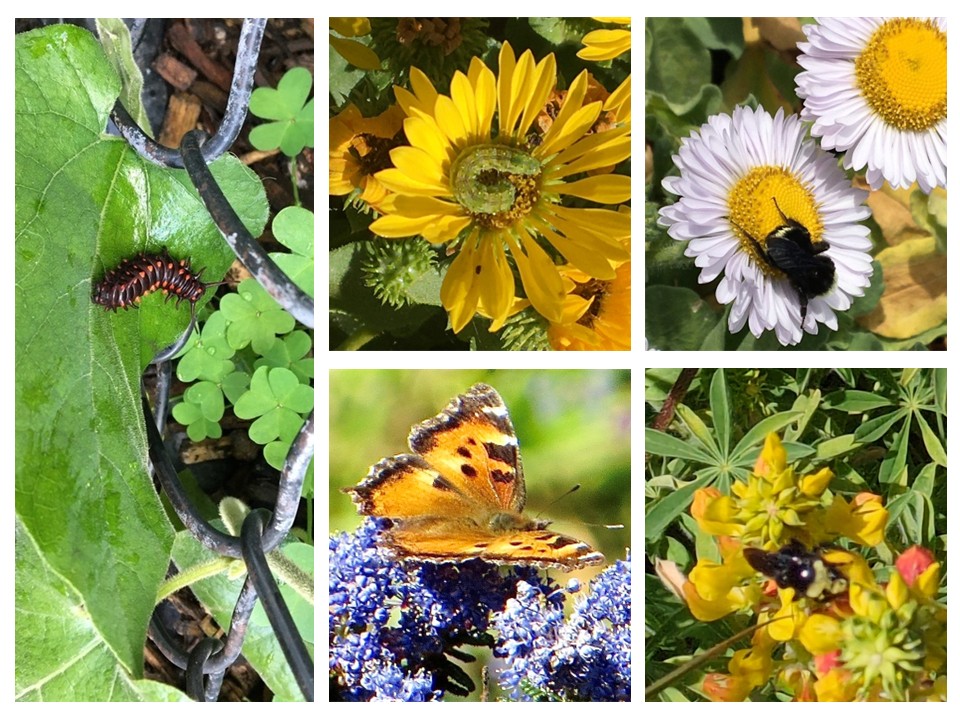
Impacts of adding native plants in public and private spaces can be seen in this San Francisco and San Mateo counties native ecosystems iNaturalist project, which maps wild and planted local native plants and the butterfly caterpillars and some pollen specialist bees that use these native plants for food and habitat.
https://www.inaturalist.org/projects/san-francisco-san-mateo-native-ecosystems-plants
Impacts of adding native plants in public and private spaces can be seen in this Contra Costa-Alameda counties native ecosystems iNaturalist project, which maps wild and planted local native plants and the butterfly caterpillars and some pollen specialist bees that use these native plants for food and habitat.
https://www.inaturalist.org/projects/contra-costa-alameda-counties-native-ecosystems-plants
Impacts of adding native plants in public and private spaces can be seen in this Marin, Sonoma, and Mendocino counties native ecosystems iNaturalist project, which maps wild and planted local native plants and the butterfly caterpillars and some pollen specialist bees that use these native plants for food and habitat.
https://www.inaturalist.org/projects/marin-sonoma-mendocino-native-ecosystems
California Native Plant Society Yerba Buena (San Francisco) chapter offers free plant lists & biodiversity resources, free hikes and free speaker series
http://cnps-yerbabuena.org/
http://cnps-yerbabuena.org/biodiversity/biodiversity-resources/
California Native Plant Society Santa Clara Valley chapter offers free plant lists & biodiversity resources, free hikes and free speaker series
https://www.cnps-scv.org/
Native plant ethnobotany database includes how Indian tribes use native plants for food, medicine and tools. Out of print.
Daniel Moerman’s Native American Ethnobotany
http://naeb.brit.org/
http://www.timberpress.com/books/native_american_ethnobotany/moerman/9780881924534
Maintenance for California native plant gardens
California Master Gardener Handbook - Dennis Pittenger
California Gardener's Handbook: Your Complete Guide: Select - Plan - Plant - Maintain - Bruce Asakawa
The California Native Landscape: The Homeowner's Design Guide to Restoring Its Beauty and Balance - Greg Rubin, Lucy Warren
https://www.cnps.org/gardening/bewaterwise/seasonal-maintenance
https://ucanr.edu/sites/default/files/2025-03/care-and-maintenance-of-native-plants.pdf
https://www.laspilitas.com/groups/oaks/oak_tree_help.html
MET, the water wholesaler for southern California, partnered with its retail water agencies in a new native plants and lawn removal program, Be Water Wise, for landscape recommendations for 19 million people. Their website includes access to installation and maintenance training
http://www.bewaterwise.com/california-native-plants.html
Caterpillars are the preferred soft food for baby birds. 6000-9000 caterpillars are required to fledge one nest of baby chickadees. Most introduced plant leaves feed ZERO local caterpillars and therefore fail to feed our ecosystem.
Narango DL, Tallamy, Marra 2017 Native plants improve breeding and foraging habitat for an insectivorous bird Biological Conservation
https://repository.si.edu/bitstream/handle/10088/33595/NZP_Marra_2017-Native_plants_improve_breeding_and_foraging_habitat_for_an_insectivorous_bird.pdf
Narango DL 2018 Nonnative plants reduce population growth of an insectivorous bird Proceedings of the National Academy of Sciences USA
https://www.pnas.org/content/115/45/11549
Adult birds have food preferences per bird species that include eating insects, fruit and/or seeds. Predator birds reduce rodent populations. Bird species have nesting preferences in heights and nest types, including ground nests and cavity nests. Native trees can provide cavity nests. Introduced trees not only fail to feed multiple caterpillar species with their leaves but many also fail to provide adequate nesting cavities.
For use outside California (because Calscape includes data at plant species level), National Wildlife Federation (NWF) has a native plant database which includes native and non-native lepidoptera (butterflies and moths) at the species level and native and non-native plants at the genera level that feed lepidoptera caterpillars. Search is at the county level using zip codes, so will include multiple native plant communities. National Wildlife Federation hosts a database of plants and lepidoptera (butterflies and moths). NWF’s data is only available at the plant genera level, not the species level, example: Quercus (oaks) genera, not Quercus agrifolia species.
https://www.nwf.org/NativePlantFinder
|