A New Approach to Teaching U.S. History
This past July, social studies teacher Art Delgado participated in a rigorous, two-day teacher training event in Boston hosted by the Harvard Business School's Case Method Institute. The training focused on reinventing instruction to be more student-centered through the use of case studies.
The case method is a structured form of discussion-based learning. The method boils down to three things: case, questions, and whiteboard—rigorous case document, challenging questions, and a whiteboard for capturing the strongest points in real time.
Students in Art's U.S. History classes read, discussed, and debated questions related to the 1786 Rhode Island paper money crisis, threats to our early republic, and the role of our founders, including James Madison, to create a more perfect union under the U.S. Constitution.
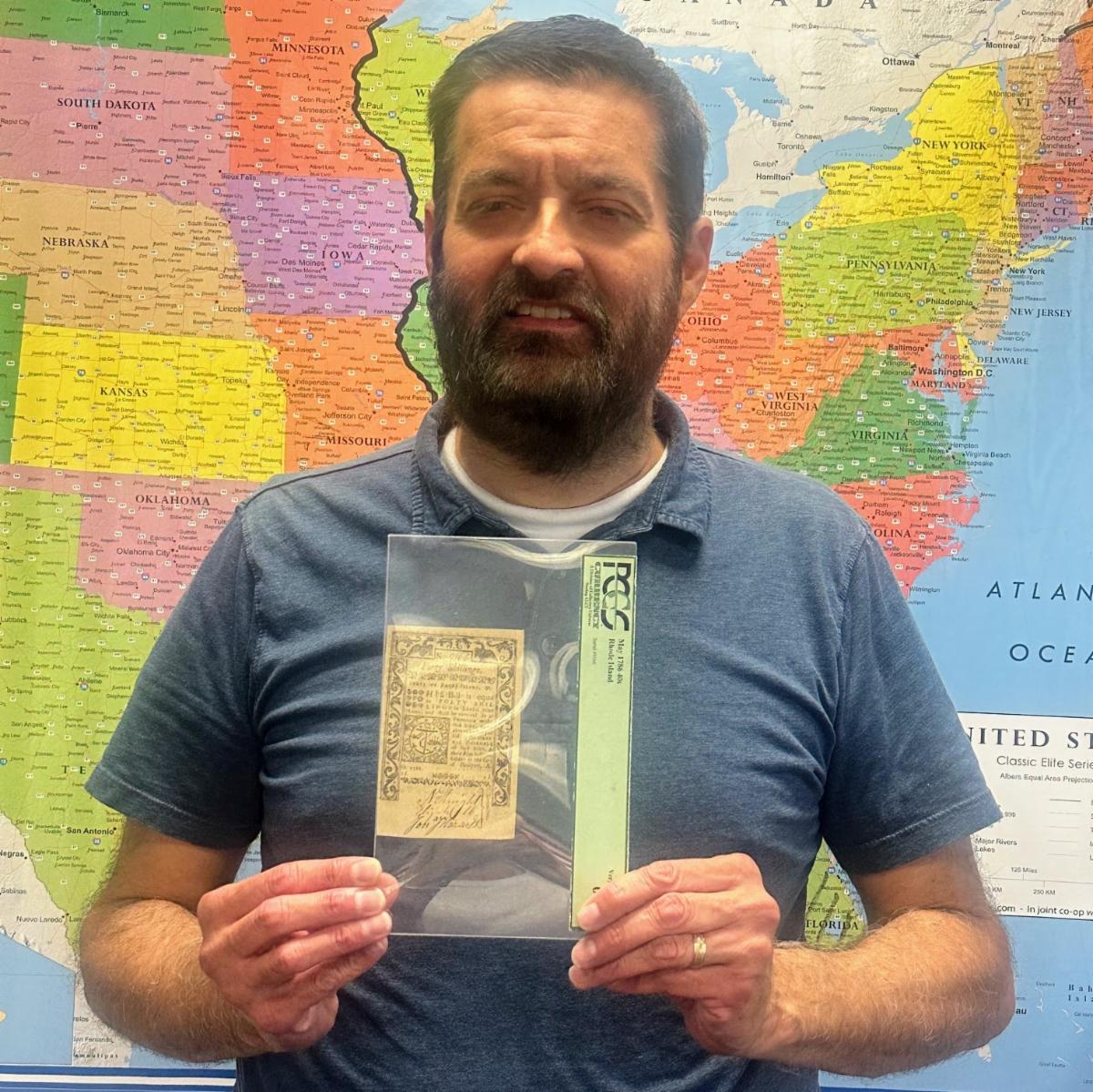
Pictured here, Art holds a 1786 Rhode Island currency note that was the subject of a fierce Supreme Court case (West v. Barnes) between debtors (paying in depreciated paper currency), and creditors (wanting payment only in gold or silver coins.) His students did a simulation of the case using the case method process in class.
Art plans to continue using the case method to spark thoughtful discussion, deepen historical understanding, and give students a more active role in the classroom.
|