|
THE BIWEEKLY
OCTOBER 1, 2026
Published every two weeks by
The Alberta Society of Professional Biologists
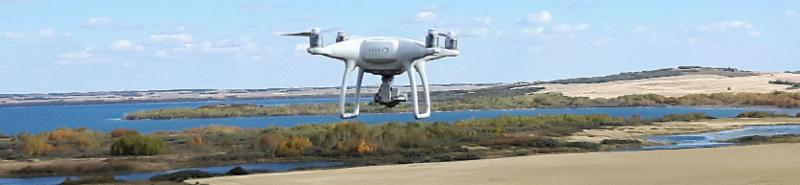
| | Mapping the uplands at Redberry Lake | | |
Supporting Biologists:
In the Field and Beyond
The ASPB Annual Conference will be held
November 4-6, 2026
at Edmonton's Fantasyland Hotel
REGISTER HERE
| | |
SPONSORSHIPS ARE STILL AVAILABLE
FOR THE ASPB 2026 CONFERENCE!
CLICK HERE
| | |
ASPB MEMBERS!
Sign up to help with our most important committees:
(Regulatory, Practice Review, and Disciplinary)
Be part of leading the growth of your professional organization!
More information is available HERE, and you can contact
Registrar Dean Falkenberg or Director of Operations Jessica Koehli for more information and to volunteer.
| | |
Blast from the Past!
a new
ASPB BROWN BAG LUNCHEON WEBINAR
ON NOVEMBER 20 !
Putting Wetland Data to Work
See our Calendar (below, under November)
| | |
Artificial Intelligence:
Coming Soon to a Business Near You
“What should an effective workplace AI-use policy include to support responsible and consistent implementation?” Join Laura MacFarlane, Joël Michaud, Evie Maldonado and Austin Ward at Field Law for a complimentary session on artificial intelligence, which is moving into the workplace faster than many policies and processes can keep up.
From drafting emails and summarizing documents to screening candidates and supporting day-to-day decisions, AI can improve efficiency, but it can also create legal and operational risks for employers.
This session will be of interest to employers, HR professionals, executives, in-house counsel, managers, and operational leaders responsible for workplace policies, people management, privacy, risk, or technology adoption.
The session is scheduled for Wednesday, October 14, 2026, between noon and one p.m. mountain time. The session is being recorded; if you are unable to attend at the scheduled time, please register to receive a link to the recording.
REGISTER
| |
Opportunities for Students
at the ASPB 2026 Conference!
Don’t miss your chance to take part in this year’s student activities, connect with Alberta’s professional biology community, and make the most of the
ASPB 2026 Conference & AGM!
View Conference Details
Student Scholarship Essay Contest — Deadline October 5
Submit an essay for a chance to receive one of three student awards: $2,000 from AltaLink, $2,000 from ASPB, or $1,500 from Ecosis. Each award also includes complimentary conference registration and two nights’ accommodation. Students may submit separately for all three opportunities.
View Essay Contest Details
Student Photo Contest — Deadline October 5
Show us biology through your lens! ASPB student members can submit up to five photos taken this year, with top entries showcased at the conference and prizes awarded to winning submissions. You do not need to attend the conference to participate in the photo contest!
View Photo Contest Details
| | |
Notes from the Summer:
Alberta Biodiversity Monitoring Institute
For more information: ABMI Website
| | |
At the ASPB, we gather snippets of relevant biology information from a variety of sources such as The Conversation (Canada), Nature (UK) and Scholar Alerts (Google), which we select and share in the BIWEEKLY. Here is the latest batch (the links are HOT):
WETLANDS, WATERSHEDS & FISHERIES
BC-Arranges-Road-Trips-Live-Fish/
Climate‐driven changes in wetland hydroperiods predict losses in habitat suitability for amphibian breeding
First-Nations-Fisheries-Salmon-Genomics-Testing/
Evaluating Regional Variation in Establishment Traits of the Emergent Wetland Plant Sagittaria platyphylla (Englem.) JG Sm.: Implications for Wetland Restoration
Testing the Effect of Glow Sticks on Amphibian Captures: A Literature Review and Case Study from Vernal Ponds in Iowa
AVIAN WILDLIFE
Structure and Assembly of Avian Communities Associated with Black-Tailed Prairie Dog Ecosystems
Host-associated mitochondrial structure and broad geographic connectivity in Drepanocephalus associated with migratory cormorants
Nest survival of Common Pochard Aythya ferina and Tufted Duck Aythya fuligula: the effect of nest site selection in artificial floating and natural islands
NON-AVIAN WILDLIFE
MoveBench: A Benchmark for Global-Scale Wildlife Movement Forecasting
Integrating cryobanks into conservation frameworks: The case of boreal caribou in Ontario
Pronounced and consistent selection of deciduous shrub habitats near waterways during migration, summer, and winter by moose
Why wolves walk–drivers of daily movement in a social large carnivore
SIMoNA: Sky Island Mammals of North America
Genomics taps into why bats are so cool
Landscape-dependent roost and foraging resource selection by little brown bats (Myotis lucifugus) in a grassland-forest interface
Meningeal worm (Parelaphostrongylus tenuis) and other parasites as stressors and indicators of health in cervids in Northwestern Canada
Shifts in resource selection by mule deer and bighorn sheep in response to shed-antler hunting
PROTECTED AREAS and MANAGEMENT
Understanding conservation easement motivations in Albertan landowners and land trusts
Selecting non-target species for risk assessment of an entomophagous biological control agent using a semi-quantitative decision-support tool: a North American perspective
GRASSLANDS
Long-term Evaluation of a Rhizomatous Grass Conversion Project Designed Around the Conservation Reserve Program
Microbial mediated carbon and nitrogen feedbacks to elevated CO2 and switchgrass establishment in grassland ecosystems
Monitoring Woody Plant Encroachment in Canadian Prairies Using Remote Sensing (Tracking the Spread of Shrubs and Trees in Canada's Grasslands)
FORESTRY
A dataset of drought-induced tree mortality in Canada's boreal forests from 1970 to 2020
patterns and trait-based mechanisms of vegetation recovery over three time periods after low-impact seismic line construction in boreal uplands of northern Alberta
Permafrost supports post-fire recovery of black spruce dominance in subarctic boreal forests
BOTANY
Photovoltaic panels affect arthropod and plant communities: a systematic review
Trace elements in Sphagnum moss from remote bogs in northwestern Canada: establishing contemporary reference values
Direct and trait-mediated pathways link elevation, climate, and soil to leaf functional traits and species richness in mountain plant communities
Prairie sunflower (Helianthus petiolaris)
AGROLOGY AND SOILS
EU should be bold with gene-edited crops
Bridging economics and social psychology in farm animal health decision-making: a systematic review and conceptual framework
INDIGENOUS KNOWLEDGE
Conservation toward anti‐colonial, action‐orientated futures for just and inclusive worlds: Insights from a conservation biology interactive workshop, June 2024
Indigenous led biodiversity litigation in the extractives context
A Geodatabase of Historical Indigenous Fire Practices in the Pacific Northwest
Development and implementation of an Indigenous data governance framework and stewardship tool to document, store, and apply Indigenous environmental data
HUMAN COMMUNITY IMPACT
There are no cities without countryside
Yes, the Anthropocene is its own epoch
An assessment of the Cumulative Effects Review prepared by Stantec for Beacon s Indus AI/Data Center
EDUCATION
Walking With: Encountering the More-Than-Human in Elementary School
Climate change education in early childhood: a pan-Canadian document analysis of early learning curriculum frameworks
ARTIFICIAL INTELLIGENCE
AI-Enabled Predictive Beacon-Based Non-Invasive Bird Distraction System for Industrial Environments
Deep Learning-based Identification and Change Detection of Oil/Gas Well Pads Using Satellite Imagery
Integrating Artificial Intelligence into IFRS-Aligned Wildfire Risk Management: Case Study for the Boreal Forest of Alberta
| | |
ASPB at the 2026 AGM of the
Entomological Society of Alberta:
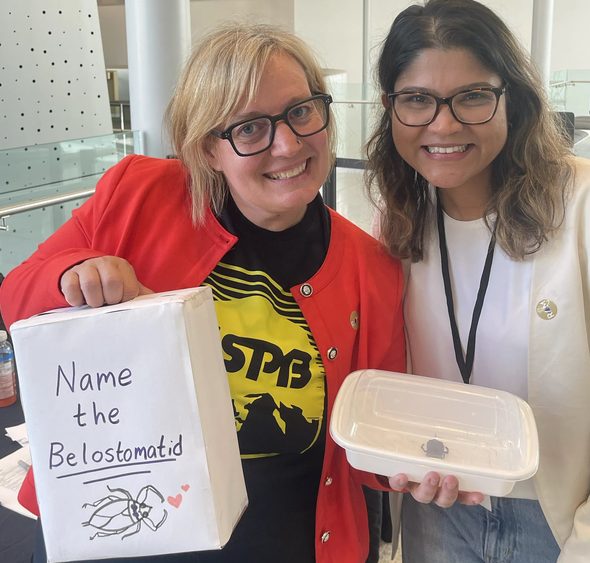
ASPB Board member Kristie Derkson was a plenary speaker at the 2026 Annual General Meeting of the Entomological Society of Alberta held on September 17 - 19 at the Royal Alberta Museum in Edmonton, where she spoke about role of the ASPB as a professional regulatory organization, the importance of regulated professionals, why entomologists may benefit from professional regulation, and the central role of trust in sharing scientific information. She also introduced ASPB membership categories and led a conversation about how students can get involved early and begin working toward a professional designation. In the photo, Derkson (left) is joined by Dr Asha Wijerathna (ASPB Regulatory Coordinator) taking part in the “Name the Belostomatid” draw.
| |
|
CALENDAR
UPCOMING COURSES, WEBINARS, AND
LEARNING OPPORTUNITIES
| | |
Fish Rescue is back again!
With its most popular event on the horizon, the Freshwater Conservation Canada (FCC) Team is calling all Fish Rescue volunteers to sign up for another year. The FCC is offering 11 field days spread throughout October, with some locations taking place in southern Alberta. Locations, dates and sign-up information are available here: Eventbrite
| | |
2026 ALMS Annual Workshop
ALMS is a registered Alberta charity dedicated to promoting the understanding and effective management of Alberta’s lakes and watersheds through monitoring, education, public engagement, and collaboration.
This year, the annual conference will be held October 1-2, 2026, at SAIT in Calgary, in partnership with the Bow River Basin Council. The two-day event brings together professionals, researchers, government representatives, consultants, municipalities, stewardship groups, and other partners from across Alberta to learn, network, and collaborate on important water issues.
Conference information and registration:
https://www.eventbrite.ca/e/2026-workshop-in-calgary-alberta-tickets-1990666070805
| |
Indigenous Business Formation
and Corporate Readiness
a five-day online course, Oct. 5th-9th
This course provides Indigenous leaders, Economic Development Corporation representatives, senior administrators, and Indigenous entrepreneurs with the practical skills to launch, structure, and operate a compliant, financially organized business within an Indigenous context for long-term success. Cost = $1,837.50 (taxes in). Register HERE.
| | |
Grassland Restoration Forum
Field Tour on October 7, 2026
This one-day field tour on multiple-use landscapes in the Dry Mixedgrass of SE Alberta, together with the Orphan Well Association and Jorgensen Land Management, showcases reclamation projects near Manyberries, with a focus on achieving native prairie land equivalency in critical sage grouse habitat.
https://grasslandrestorationforum.ca
| | |
Whitebark Pine Ecosystem Foundation Events
The Whitebark Pine Ecosystem Foundation of Canada has upcoming events that may be of interest to professional biologists. For more details, you can contact: Science and Management Conference - Collaboration for Recovery: Active Management in a Changing Climate October 14-15, 2026, Radium, BC. https://whitebarkpine.ca/conferences/
| | |
DFO Amendments Published
Fisheries and Oceans Canada (DFO) is pleased to announce that the Amendments to the Authorizations Concerning Fish and Fish Habitat Protection Regulations (‘the Regulations’) have now been published in the Canada Gazette Part II. These amendments will come into force on October 15, 2026.
| | |
fRI Research:
Healthy Landscapes Program
fRI Research is mounting the Healthy Landscapes Program Showcase on October 14 and 15 at the Chateau Lacombe in Edmonton. Registration is free; for more information, registration, and hotel reservations, please go HERE
| | |
ASPB BROWN BAG LUNCH WEBINAR ON NOVEMBER 20 !
Putting Wetland Data to Work
The Bow River Regional Wetland Datasets project provides four spatial datasets (wetland inventory, restorable wetland inventory, historical wetland inventory, and land cover dataset), along with an interactive data viewer, and practical resources to support wetland planning, management, and conservation across the Bow River region.
This webinar will introduce the available datasets and highlight real-world applications, including their use in ecological connectivity and municipal planning, as well as identifying opportunities for wetland restoration and enhancement. It will also introduce a wetland condition index based on hydrological and ecological characteristics.
The webinar is intended for biologists and other practitioners working with wetlands in the Bow River region who are interested in incorporating regional wetland data into their work. TEAMs registration link
| | |
Hinton Training Centre
Forest Health Course
This course at the Hinton Training Centre, to be held on November 4-5, 2026, and led by Marc Mayhew, will lead natural resource managers and practitioners to a basic understanding of forest health issues and current best practices. For course registration information, please write an email to Marc Mayhew@gov.ab.ca
| | |
GRF Fall Information Session:
Restoration and Ranching Solutions
Grassland Restoration Forum’s annual event at the Community Hall in Claresholm Alberta will take place on November 19, 2026. Save the date... Registration will open soon!
https://grasslandrestorationforum.ca
| | |
The ASPB Mentorship Program Opens in December
Registration for the 2027 Mentorship Program opens December 1, 2026, as part of the annual membership renewal process.
See the webpage for more details.
| | |
From Seeds to Stewardship workshop
will be held Feb. 10 to 11 in Saskatoon
The 12th Native Prairie Restoration/Reclamation Workshop will be held from February 10 to 11, 2027 in Saskatoon. The event theme is “From Seeds to Stewardship” and the Call for Abstracts is now open. Detailed information about the event, presentation categories and the Call for Abstracts can be found here: https://saskpcap.org/native-prairie-restoration-reclamation-workshop/
| | |
BSc & MSc degrees in Ecological Restoration
at
THE BC INSTITUTE OF TECHNOLOGY
If you’re passionate about helping ecosystems recover and thrive, the BSc & MSc Programs in Ecological Restoration at BCIT are worth exploring. The programs blend scientific knowledge with practical, field-based experience and offer both part-time and full-time options. Learn more about how the programs can support your career goals:
https://www.bcit.ca/programs/ecological-restoration/
| | |
NATURAL RESOURCES
TRAINING GROUP
Indigenous Business Formation and Corporate Readiness - Online - October 5th-9th, 2026
Land Guardian Program - October 5th - November 6th, 2026
Organic Contaminants in the Aquatic Environment — Sampling and Laboratory Techniques - Online - October 5th & 8th, 2026
Marine Mammal Observation – Online – October 5th & 7th, 2026
Species at Risk – Online – October 6th – 7th, 2026
Applied Tree Identification – Online – October 6th, 2026
Soil Fundamentals and Field Description – Online – October 7th-8th, 2026
Bat Habitat Assessment – Online – October 13th – 14th, 2026
Planning and Designing Fish Habitat Assessments - Online - October 13th, 2026
Introduction to Forest Composition and Structure – Online – October 13th & 15th, 2026
Drone Applications in Environmental Monitoring - Online - October 14th, 2026
Registration will open up after September 24th - Check our Electrofishing webpage here
Fish Habitat Restoration — Stream Morphology Assessment - Online - October 16th, 2026
Foundations of Ecological Restoration - October 19th-21st & October 26th-27th, 2026 - Online
Erosion and Sediment Control on Construction Sites - Online - October 20, 2026
Understanding How Site Factors Shape Forests - Online - October 20th, 2026
Fish Habitat Restoration — Primer on Stream Hydrology - Online - October 22nd, 2026
Environmental Project Management - Online - October 23rd & 30th & November 6th, 2026
Heavy Metals in the Aquatic Environment — Sampling and Laboratory Techniques - Online - October 26th & 29th, 2026
Assessing Tree and Forest Health - Online - October 27th, 2026
For the ongoing calendar of upcoming courses and details, follow this link:
https://nrtraininggroup.com/schedule/
| |
|
KCM ENVIRONMENTAL
online plant ID courses
These 3-day courses (approx. 11 hours total volume) provide excellent opportunities for those seeking to expand their understanding of Alberta plants as well as those pursuing continuing competency credits for their professional designations. Unless otherwise specified, the difficulty level of these courses is intended for those with at least a moderate level of experience with plant identification.
The default delivery of courses is via Zoom. In-person delivery and field exercises can be arranged. Registration is $75 + GST per person, per course. Course info, species lists, and registration are available through the company website: https://www.kcmenvironmental.ca/courses
Major Plant Families & Genera of Alberta
Description: this course explores the identification, taxonomy, biology, and habitats of the major vascular plant families and genera in Alberta. The full version of this course addresses the province’s largest ~40 families and 120+ genera, by number of species. There is an optional module that addresses the basics of key botanic terminology, as well as key Latin and Greek species epithets. This course addresses vascular plants and does NOT cover bryophytes, algae, or cyanobacteria.
October 26, 1-4:30PM, October 28, 1-4:30PM, October 30, 1-4:30PM
Weeds of Alberta
This course explores the identification, taxonomy, biology, and basics of control of non-native plant species in Alberta, with an emphasis on the 95 noxious and prohibited noxious weeds listed under the Weed Control Act, as well as the powers and functions of the WCA. Including unregulated species, up to 180 weedy species are covered. Differentiation from look-alike species is also addressed.
November 2, 1-4:30PM, November 4, 1-4:30PM, November 6, 1-4:30PM
Aquatic Plants of Alberta
This course explores the roles of aquatic and riparian vegetation in supporting aquatic wildlife; plants for erosion control and improving water quality; and identification of up to 100 species and genera of submerged, floating, and deeper-growing emergent aquatic plants. Also covered are aquatic invasive plants and laws, regulations, and approvals associated with aquatic and shoreline vegetation.
November 9, 1-4:30PM, November 10, 1-4:30PM, November 13, 1-4:30PM
KCM ENVIRONMENTAL
https://www.kcmenvironmental.ca/courses
| | |
RECENT
EMPLOYMENT POSTINGS
Fisheries Biologist
Terrestrial Biologist
Environmental Scientist & Project Manager
Senior Environmental Water Scientist/Engineer
Genetics and Tree Improvement Technologist
Senior Environmental Professional
Intermediate Hydrologist
Genetics and Tree Improvement Technologist
Environmental Monitor
TO FIND INFORMATION
ON THESE AND OTHER POSITIONS, GO TO THE
JOB BOARD
| | |
BANNER PHOTO
Mapping the uplands of Redberry Lake, Saskatchewan
(photo by Peter Kingsmill)
In Alberta, Professional Biologists are registrants of the Alberta Society of Professional Biologists (ASPB), and are subject to a code of ethics, continuing competency requirements, and a disciplinary process. The ASPB is a self-regulated organization under legislation in the Province of Alberta, meaning its purpose is to protect the public of Alberta by ensuring biologists are qualified to practice biology in accordance with that legislation. The society is governed by a Board of Directors elected by its registrants.
PROFESSIONAL BIOLOGISTS PROTECT THE PUBLIC INTEREST
You are probably receiving this newsletter because you are an ASPB Registrant. This newsletter provides relevant information and professional development opportunities for our members, as well as essential member-related society business; if you are registered with the Alberta Society of Professional Biologists, please DO NOT unsubscribe.
For more information about the Society or to contact the administration, please visit the website: https://www.aspb.ab.ca
Opinions and general news published in this e-newsletter
do not necessarily reflect the opinions or policies of the Society or its Board of Directors.
ASPB may use AI-assisted tools in the development of communications, administrative correspondence, website content, and other documentation.
2026
| | | | |