|
THE BIWEEKLY
SEPTEMBER 1, 2026
Published every two weeks by
The Alberta Society of Professional Biologists
| | |
Supporting Biologists:
In the Field and Beyond
The ASPB Annual Conference will be held
November 4-6, 2026
at Edmonton's
FANTASYLAND HOTEL
REGISTRATION IS NOW OPEN!
| | |
The 2026 ASPB Awards Nominations
will close September 15th
The ASPB Awards celebrate the outstanding achievements, leadership, volunteerism, and contributions of biologists across Alberta. If you know someone who has made a meaningful impact on the profession or the ASPB, we encourage you to submit a nomination. Learn more about our awards, the eligibility criteria, and access the nomination forms, on the ASPB Awards webpage:
ASPB Scholarships and Awards.
We look forward to recognizing the exceptional individuals
who strengthen our profession!
| | |
Next Round of the ASPB Mentorship Program
Set to Open on December 1st, 2026
Registration for the 2027 Mentorship Program opens December 1, 2026 as part of the annual membership renewal process. Mentorship pairs are matched on a first-come, first-served basis; please note that in previous years we have received significantly more mentee applications than mentor applications. To give yourself the best opportunity to participate, the committee encourages members to sign up early; see the webpage for more details.
| | |
SPONSORSHIPS ARE STILL AVAILABLE
FOR THE ASPB 2026 CONFERENCE!
CLICK HERE
| | |
Megan Hanacek
will deliver ASPB keynote
In November, the ASPB welcomes professional biologist Megan Hanacek (RPBio) as the Society’s annual conference Keynote Speaker. More than a biologist, she is a professional forester (RPF), a business owner and a TV personality (one of the longest-standing female finalists on the History Channel survival show Alone!)
Ms Hanacek is the CEO of the non-profit Private Forest Landowners Association and owner of an environmental assessment firm. For over 25 years, she has led project work with the provincial and federal governments, private industry, First Nations, non-governmental organizations and academia throughout British Columbia. She currently lives in Port McNeill with her husband and children, and continues to be a strong voice for rural communities and sustainable resource-sector management and development. For the past five years she has served as a government appointee and Treasurer on the $70 million Island Coastal Economic Trust and is a government appointee on the Minister’s Wildlife Advisory Council.
| | |
At the ASPB, we gather snippets of relevant biology information from a variety of sources such as The Conversation (Canada), Nature (UK) and Scholar Alerts (Google), which we select and share in the BIWEEKLY. Here is the latest batch (the links are HOT):
WETLANDS, WATERSHEDS & FISHERIES
Pumpkinseed fish species has recently been confirmed in Cardiff Trout Pond near Edmonton. Report sightings to epa.ais@gov.ab.ca
eDNA Analysis of Aquatic Microcosms Reveals the Effects of a Copper Pollution Event on Sedimentary Microbial Assemblages in Freshwater Wetlands
Hesitation to Participation: Farmer Engagement in Best Management Practices and Wetland Restoration
https://www.crowsnestheadwaters.ca/p/oldman-river-food-and-sport-fisheries
Effects of wildfires on freshwater biota and aquatic fuel phenology: a bibliometric overview
Why seaweed is everywhere
WASTEWATER
Scaling up biochar based remediation: continuous column adsorption of toxic elements from oil sands wastewater and sequential valorization of spent biochar …
Water Balance and Flow Tracer Application Using a Fully Integrated Hydrologic Model in a Pilot-scale Oil Sands Pit Lake Catchment
AVIAN WILDLIFE
Genetic Links to Gut Microbiome Variation in the Yellow‐Rumped Warbler Hybrid Zone
12 Amazing Facts About the American Bald Eagle Bird
Biome-scale spatial patterns of avian abundance reveal proactive conservation opportunities in North American grasslands
Dissertationes Forestales 190 Duck habitat use and reproduction in boreal wetlands: importance of habitat quality and population density Sari Holopainen
Franklin’s gulls feeding on water fleas at shallow Cooking Lake, Alberta
Post-fledging Ecology of Burrowing Owls in Alberta and Saskatchewan: Dispersal,~ Survival, Habitat Use, and Diet.
Masked Bandits Swarm the Crowsnest
NON-AVIAN WILDLIFE
The Influence of Habitat and Individual Specialization on Mountain Lion (Puma concolor) Hunting Strategy in a Multi-Prey System
Managing expectations in nature-based restoration: Macroinvertebrate responses to beavers and beaver dam analogs
High-severity shoreline wildfire triggers near-collapse of beaver lodge occupancy on a boreal lake
Emergence of alveolar echinococcosis in Canada: a warning for the USA
Assessing contributions from big-game hunting to lead (Pb) ingestion by Canadian wildlife scavengers
Review of the ecological role of the American bison (Bison bison) to identify the potential effects of its reintroduction in the ecosystems of Northern Mexico
Responses of mesofauna in native grassland soils to residues of eprinomectin and chlortetracycline in cattle dung
Native and introduced megafauna have convergent effects on animals and ecosystems: a meta-analysis
Infrastructure and sound: oil wells and predator-prey assemblages in the Northern prairies
Effects of Petroleum Industry Emissions in Richardson's Ground Squirrels
Incentives and motivational crowding to address chronic wasting disease: An experiment with Alberta hunters
Limited capacity of habitat features to buffer grassland bird declines
Conflict and Coexistence: Addressing Wildlife Challenges in Expanding Human Landscapes
PROTECTED AREAS and MANAGEMENT
Data, politics, and funding cause uncertainty for conservation practitioners
Environment and Society: Concepts for a Just Transformation
Multi-species Action Plan for Banff National Park of Canada
Denning coyotes (Canis latrans) select fine-scale habitat characteristics that promote den stability in a protected area
Listening for extinction: Range‐wide occupancy highlights critical risks and priorities for northern spotted owls
The effect of severe wildfire on microhabitat structure varies over fine-scale distances away
FORESTRY
Deadwood structure and decomposition dynamics in a long-term protected temperate forest under long-term management influence
A network optimization framework for fuel break planning in wildfire-prone landscapes: Accounting for fuel break failures and wildlife conservation goals
Insect communities of late Pleistocene steppe–tundra and Holocene boreal forest ecosystems in central Yukon Territory, Canada
Small mammal responses to vegetation recovery on seismic lines in Alberta's boreal forest
BOTANY
August Heat Prairie Renewal
Effects of Indaziflam Control of Annual Grasses on Biodiversity, Biocrusts, Perennial Vegetation, and Fire Probability
Microscopic reproductive characters enable discrimination of cattail taxa in a highly admixed hybrid zone
Plant-Insect Interactions in Great Plains Restoration and Invasion Ecology
https://bcinvasives.ca/wp-content/uploads/2020/12/Giant_Hogweed_TIPS_2017_WEB.pdf
The crusty coating that protects deserts
Limits to Non-Native Plant Invasions in the Canadian Subarctic
Physiological characterization on seed aging of six native shrub species
Pine Monoterpenes Drive Growth, Competition, and Volatile Metabolism of Symbiotic Fungi Associated with the Mountain Pine Beetle
ENGINEERING & DESIGN
Sodium transport and attenuation in soil cover materials for oil sands mine reclamation. Applied …
GEAR
Researchers have invented a properly biodegradable party balloon
ARTIFICIAL INTELLIGENCE
Twelve quick tips for applying deep learning to animal sounds
Can AI ever be conscious?
THE PROFESSIONAL WORKPLACE
5 ways the internet is disappearing
PRE-HISTORY
Life on Earth began twice (and wasn’t alive)
INDIGENOUS KNOWLEDGE
Camelina Sativa: Low Input Crop for Biofuel and Climate Resilience
Wa-Ter You Waiting For? Incorporating Indigenous Knowledge into a Unit on Aquatic Ecosystems and Water Quality
A Comprehensive Overview of Traditional Indigenous Foods in Canada: Analysis of Grey Literature and Public Information Sources
HUMAN COMMUNITY IMPACT
Understanding Ambient and Settled Dust in Communities Near Intensive Resource Development to Improve Monitoring and Mitigation
| |
Multi-species Action Plan for
Alberta At-risk Native Trout
Fisheries and Oceans Canada has posted the final version of the Multi-species Action Plan for the Alberta At-risk Native Trout on the Species at Risk Public Registry, prepared by DFO in collaboration with various partners. Due to their overlapping geographical areas and common threats, the following three native at-risk trout species in Alberta have been included in this action plan:
- Rainbow Trout (Athabasca River populations), listed as Endangered in 2019
- Bull Trout (Saskatchewan - Nelson Rivers populations), listed as Threatened in 2019
- Westslope Cutthroat Trout (Alberta population), listed as Threatened in 2013
The action plan outlines measures to help achieve the population and distribution objectives described in the species’ recovery strategies: Multi-species Action Plan for the Alberta At-risk Native Trout in Canada - Document search - Species at risk registry
| | |
CALENDAR
UPCOMING COURSES
AND WEBINARS
| | |
Grassland Assessment Training workshop
at Antelope Creek Ranch in Brooks
This GRF course on September 10, 2026, offers field-based training on common plant identification, use of soils and landscape mapping (AGRASID and GVI) in relation to Alberta’s Range Plant Community Guides and Range Health Assessment Manuals.
https://grasslandrestorationforum.ca
| | |
Track & Sign Certification (FIERA)
September 12 & 13, 2026 at Hinton, Alberta
This 2-day field-based workshop is open to all skill levels and offers the opportunity for participants to earn certifications in Track & Sign from Levels 1 to Professional (Level 4).
Learn more here
| |
Explore the Science
Behind Healthy Forests
The 2026 CIF-IFC National Conference & Annual General Meeting will be held September 27-29, 2026 in Edmonton, Alberta. Professional biologists are invited to join hundreds of researchers and natural resource professionals from across Canada, where they can discover the latest science and practical approaches in forest ecology, biodiversity conservation, wildlife habitat, ecosystem restoration, climate adaptation, Indigenous stewardship, and sustainable land management. The conference features technical presentations, workshops, networking opportunities, and discussions that connect biological science with real-world management and policy.
Students and early-career professionals will also benefit from interactive workshops focused on science communication, career development, job-search strategies, and building professional networks, providing practical skills that complement a career in biology and natural resource management. Learn more and register here: https://conference.cif-ifc.org/
| | |
Grassland Restoration Forum
Field Tour on October 7, 2026
This one-day field tour on multiple-use landscapes in the Dry Mixedgrass of SE Alberta, together with the Orphan Well Association and Jorgensen Land Management, showcases reclamation projects near Manyberries, with a focus on achieving native prairie land equivalency in critical sage grouse habitat.
https://grasslandrestorationforum.ca
| | |
2026 ALMS Annual Workshop
ALMS is a registered Alberta charity dedicated to promoting the understanding and effective management of Alberta’s lakes and watersheds through monitoring, education, public engagement, and collaboration.
This year, the annual conference will be held October 1-2, 2026, at SAIT in Calgary, in partnership with the Bow River Basin Council. The two-day event brings together professionals, researchers, government representatives, consultants, municipalities, stewardship groups, and other partners from across Alberta to learn, network, and collaborate on important water issues.
Conference information and registration:
https://www.eventbrite.ca/e/2026-workshop-in-calgary-alberta-tickets-1990666070805
| | |
Whitebark Pine Ecosystem Foundation Events
The Whitebark Pine Ecosystem Foundation of Canada has upcoming events that are relevant to Alberta Society of Professional Biologists. Please get in touch if you require more details.
| | |
DFO Amendments Published
Fisheries and Oceans Canada (DFO) is pleased to announce that the Amendments to the Authorizations Concerning Fish and Fish Habitat Protection Regulations (‘the Regulations’) have now been published in the Canada Gazette Part II. These amendments will come into force on October 15, 2026.
| | |
Hinton Training Centre
Forest Health Course
This course at the Hinton Training Centre, to be held on November 4-5, 2026, and led by Marc Mayhew, will lead natural resource managers and practitioners to a basic understanding of forest health issues and current best practices. This course aims to provide attendees familiarity with forest health issues, concerns, and solutions, which is necessary to integrate them into effective land management practices. For course registration information, please write an email to Marc Mayhew@gov.ab.ca
| | |
GRF Fall Information Session:
Restoration and Ranching Solutions
Grassland Restoration Forum’s annual event at the Community Hall in Claresholm Alberta will take place on November 19, 2026. Save the date... Registration will open soon!
https://grasslandrestorationforum.ca
| | |
BSc & MSc degrees in Ecological Restoration
at
THE BC INSTITUTE OF TECHNOLOGY
If you’re passionate about helping ecosystems recover and thrive, the BSc & MSc Programs in Ecological Restoration at BCIT are worth exploring. The programs blend scientific knowledge with practical, field-based experience and offer both part-time and full-time options. Learn more about how the programs can support your career goals:
https://www.bcit.ca/programs/ecological-restoration/
| | |
NATURAL RESOURCES
TRAINING GROUP
Electrofishing Certification – Online (self-paced) & Prince George, September 4th, 2026
Construction Monitoring — Wildlife Mitigation - Online - September 8th, 2026
Avenza Maps for Planning, Navigating & Collecting Data for Environmental Use Online - September 11th, 2026
Birding 101 — Foundations of Field Bird Identification - Online - September 16th, 2026
Ecological Land Classification for Southern Ontario - Online & Cambridge - September 21st-25th, 2026
Winning Proposals — Writing to Secure Funding - Online - September 25th, 2026
Wetland Assessment - Online - September 29th - 30th, 2026
For the ongoing calendar of upcoming courses and details, follow this link:
https://nrtraininggroup.com/schedule/
| | |
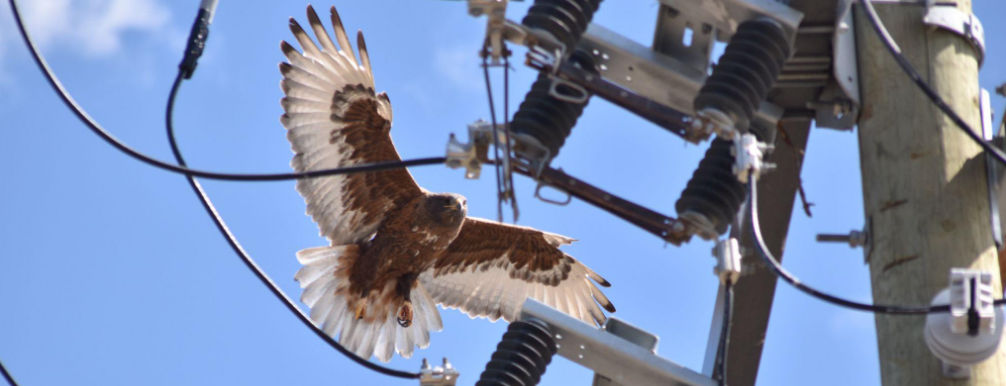
Banner photo from the ASPB Collection
In Alberta, Professional Biologists are registrants of the Alberta Society of Professional Biologists (ASPB), and are subject to a code of ethics, continuing competency requirements, and a disciplinary process. The ASPB is a self-regulated organization under legislation in the Province of Alberta, meaning its purpose is to protect the public of Alberta by ensuring biologists are qualified to practice biology in accordance with that legislation. The society is governed by a Board of Directors elected by its registrants.
PROFESSIONAL BIOLOGISTS PROTECT THE PUBLIC INTEREST
You are probably receiving this newsletter because you are an ASPB Registrant. This newsletter provides relevant information and professional development opportunities for our members, as well as essential member-related society business; if you are registered with the Alberta Society of Professional Biologists, please DO NOT unsubscribe.
For more information about the Society or to contact the administration, please visit the website: https://www.aspb.ab.ca
Opinions and general news published in this e-newsletter
do not necessarily reflect the opinions or policies of the Society or its Board of Directors.
ASPB may use AI-assisted tools in the development of communications, administrative correspondence, website content, and other documentation.
2026
| | | | |