|
Summer conference season is here! Read below to see where you’ll find your fellow AWARD Network members presenting their work. We hope to see you at AcademyHealth, ASHEcon, IAGG, and AAIC this summer – and at our next Annual AWARD Network Meeting at GSA in November!
Please keep sharing your promotions, job changes, and any personal news you want with us! Let us know if it’s just for our leadership team or if we can also share in this newsletter. (Hint: we love baby photos!) You can email to AWARDNetwork@ucsf.edu or to Joanne.Spetz@ucsf.edu.
Read on for more resources to advance your research on the workforce that serves people living with dementia! Be sure to check out all the latest news at the AWARD Network website.
| | Grantwriting Groups for October Deadlines | | |
The AWARD Network is organizing grantwriting groups for grants to be submitted late winter. These will be groups of 3-5 people and will provide an intensive, supportive period for preparing proposals to NIH or similar proposals to other funders.
The groups will run for about 3-4 months before the submission deadline.
Feedback will be within a group of peers who will be matched based on their career stage and type of proposal. Some feedback can be provided by leaders of the AWARD Network, but most of the feedback will be within the group, which will help develop skills in self-critique alongside generating useful ideas for improvement.
Participants should expect to commit 6 hours of time per week. Two hours will be for synchronous group feedback sessions. Four hours will be for writing, which can be done in two 2-hour synchronous sessions or on your own time.
If you are interested in joining a group, please sign up using our application form.
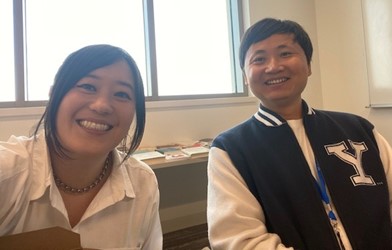
| | Summer Conference Presentations | | We look forward to seeing you this summer! AWARD Network members are presenting at AcademyHealth, American Society of Health Economists, International Association of Gerontology and Geriatrics, and Alzheimer’s Association International Conference in June and July! Here are some of the presentations by AWARD Network members, as well as other workforce-relevant papers. | | Jarmin Yeh and Huiwen Xu met up at a CaN-D Network meeting at Emory University | |
AcademyHealth Annual Research Meeting, May 30 – June 2, Seattle
Saturday May 30
- 2:15-3:30pm: The Impact of Benefits Cliffs on Financial Stability for the Direct Care Workforce, by Sarah Angell, Stephen McCall, & Susan Chapman, Room 608
- 4-5:15pm: Community Clinician Dementia Care Practices: Findings from the National Dementia Workforce Study, by Elizabeth White, Room 602-603
- 4-5:15pm: A Profile of the Assisted Living Direct Care Workforce Training Requirements in the United States, by Erh-Chi Hsu, Room 605-606
Sunday May 31, 8-9:15am, Poster Session A:
- Age-Friendly Health Systems Uptake and Its Association with Quality Measures Among U.S. Nursing Homes, by Jenny Kwon & Joanne Spetz
- Skilled Nursing Facility Network Capacity and Hospital Length of Stay for Dual and Non-Dual Eligible Medicare Beneficiaries, by Rachel Prusynski
Monday June 1
- 8-9:15am, Poster Session C:
- Therapy Staff Turnover In Skilled Nursing Facilities: Facility Characteristics and Associations with Resident Outcomes, by Rachel Prusynski
- Growth In the Share of Advanced Practice Registered Nurses Educated at for-Profit and Distance-Only Programs, by Hannah Neprash, Michael Barnett, Elizabeth White, et al.
- A Comprehensive Review of Personal Care Aide (PCA) Training Regulations across the US and Implications for Policy, by Jessica King, Kezia Scales, & Susan Chapman
- 1:45-3pm: The Long-Term Care Nursing Pipeline, by Erh-Chi Hsu, Room 605-606
- 5-6:15pm, Poster Session D
- Is Declining Therapy Provision In Skilled Nursing Facilities a Mediator for Worse Patient Outcomes? by Rachel Prusynski
- Changes In Nursing Home Staffing Instability throughout the COVID-19 Pandemic, by Micah Segelman, Nathan Rowan, Dana Mukamel, Laura Wagner
Tuesday June 2
- 10:15-11:30am: Is More Time at Home Better? Measuring Value In Dementia, Disability, and Aging Populations, by Brystana Kaufman, Room 615-617
American Society of Health Economists, June 7-10, Minneapolis
Monday June 8
- 1:45-3:15pm: The Effects of Nursing Home Staffing on the Quality of Nursing Home Care: Evidence from Employee Absences, by Ljubica Ristovska, Ashvin Gandhi, David Grabowski, and Brian E. McGarry, room Lakeshore B
- 3:30-5pm: The Effect of Private Versus Shared Rooms on Nursing Home Resident Health Outcomes, by Dianne McWilliam, room Lakeshore A
Tuesday June 9
- 8:30-10am: Workforce Dynamics In Long-Term Care: Training, Retention, and Financial Sustainability, Lakeshore B
- Do Training Requirements for Nursing Home and Assisted Living Staff Improve Workforce Preparation In Long-Term Care? by Joanne Spetz, Lei Chen, and Donovan Maust
- The Financial Viability of Hospice Providers By Rurality, 2015-2018, by Katherine Miller, Norma B. Coe, Lindsay White, and David Rosenkranz
- Strengthening Workforce Stability In Dementia Care: The Role of Scheduling, Training, and Benefits, by Fangli Geng, Yutong Lu, Pedro Gozalo, Mireille Jacobson, and Yulya Truskinovsky
- 10:15-11:45am: The State of Direct Care Workers Across Long Term Care Settings, Lakeshore A
- Job Transitions In the Direct Care Workforce, by Yulya Truskinovsky, Karen Shen, and Krista Ruffini
- Medicaid Reimbursement Rates and Home Care Worker Wages: Evidence from a New Multi-State Panel, by Amanda Kreider, Natalie Davoodi, Katherine Miller, Kimi Li, and Pilar Gonalons-Pons
- On-the-Job Travel of Home Care Workers, by Emmaline Keesee and Laura Keohane
- 3:30-5pm: Health Economics of Home and Community Based Services (HCBS) Among Elderly Adults and Their Caregivers, Lakeshore B
- Impacts of Paying Family Caregivers on Older Adults’ Receipt of Personal Supports and Households’ Economic Stability, by Yiqing Kuang
- Impacts of Integrated Dual Eligible Special Needs Plans on Home and Community-Based Care across Medicare and Medicaid, by Quan Qi
- Estimating Time Spent In the Community Among Dually Enrolled Older Adults with LTSS Needs In Managed Long-Term Services and Supports, by Katherine Miller
- 3:30-5pm: Ownership, Regulation, and Health Outcomes across Long-Term and Post-Acute Care Settings, Lakeshore A
- Impact of Private Equity Acquisitions of Medicare Home Health Agencies on Use, Quality, and Costs, by Deepon Bhaumik, David Grabowski, and Tyler Braun
- Health Outcomes after Admission to Memory-Care Assisted Living: Evidence from a Differential-Distance Instrumental Variable Analysis, by Fangli Geng, Momotazur Rahman, Gauri Gadkari, Kali Thomas, and Eric Jutkowitz
- Union Dues or Patient Blues: Effects of Right-to-Work Laws on Staffing and Resident Outcomes In Nursing Homes, by Sujatha Changolkar, Edward C. Norton, Michael Shepherd and Sumit Agarwal
Wednesday June 10
- 8:30-10am: Healthcare Providers Responses to Shocks: Evidence from Snowstorms, by Ashvin Gandhi and Anastasia Karpova, room Lakeshore B
- 10:15-11:45am: Economic Aspects of Health Care and Long-Term Care Provided in the Home, Lakeshore A
- The Impact of Formal Home Care on Health Outcomes Among Medicaid Beneficiaries with Cognitive Impairment, by Wenhan Zhang, Chuxuan Sun, Norma B. Coe, and Courtney H. Van Houtven
- The Effects of Comprehensive Caregiver Supports on Aging-In-Place and Health Care Costs, by Josephine Jacobs, Katherine Miller, et al.
- Home-Based Primary Care and Emergency Department Use Among Veterans with Dementia, by Katherine Miller, Megan E. Price, and Melissa Garrido
International Association of Gerontology and Geriatrics, July 5-8, Amsterdam
Sunday 5 July, 14:30-16:00
- The Effect of the Green House Model of Nursing Home Care on Patient Outcomes, by Norma Coe, Room G102
- Advanced Medical Workforce Specialization and Outcomes of Patients in Skilled Nursing Facilities, by Kira Ryskina, Room G102
- Living alone with cognitive impairment: a common source of inequality, by Elena Portacolone, Room E107
Monday 6 July
- 07:30-08:45: Services, regulations, and staffing in U.S. residential care facilities, by Joanne Spetz, room E102
- 13:30-15:00: Racial and Ethnic Disparities in Access to Alzheimer’s Special Care Units: 2012-2019, by Huiwen Xu, Room E106
- 13:30-15:00: Re-Imagining Age-Friendly Cities and Communities Through an Emancipatory Sciences Lens, by Jarmin Yeh, Auditorium
- 15:30-17:00 – Poster Session 1
- How Financial Challenges Affect the Health and Lived Experiences of Adults With Long-Term Services and Supports Needs, by Lei Chen, Qianyun Wang, Kathryn Kietzman
- Evaluation of the CalGrows Innovation Fund Direct Care Training and Stipends Program, by Joanne Spetz
- 17:15-18:45: The Science of Dementia Care Environments: Evidence and Research Priorities, by Marie Boltz, Room E105
Tuesday 7 July
- 15:30-17:00 – Poster Session 2
- Preliminary findings from the National Dementia Workforce Study in the U.S.: Characteristics of the Dementia Care Workforce in Nursing Homes and Assisted Living Communities, by Lei Chen & Joanne Spetz
- The influence of payer reimbursement structure on dementia care pathways, by Joanne Spetz
Wednesday 8 July
- 13:30-15:00: Implementation and Spread of the Age-Friendly Nursing Home in the US, by Howard Degenholtz, Room Elicium 1
Alzheimer’s Association International Conference, July 12-15, London, UK
July 12, Poster session: Current Requirements for Dementia Care Training, by Laura Wagner
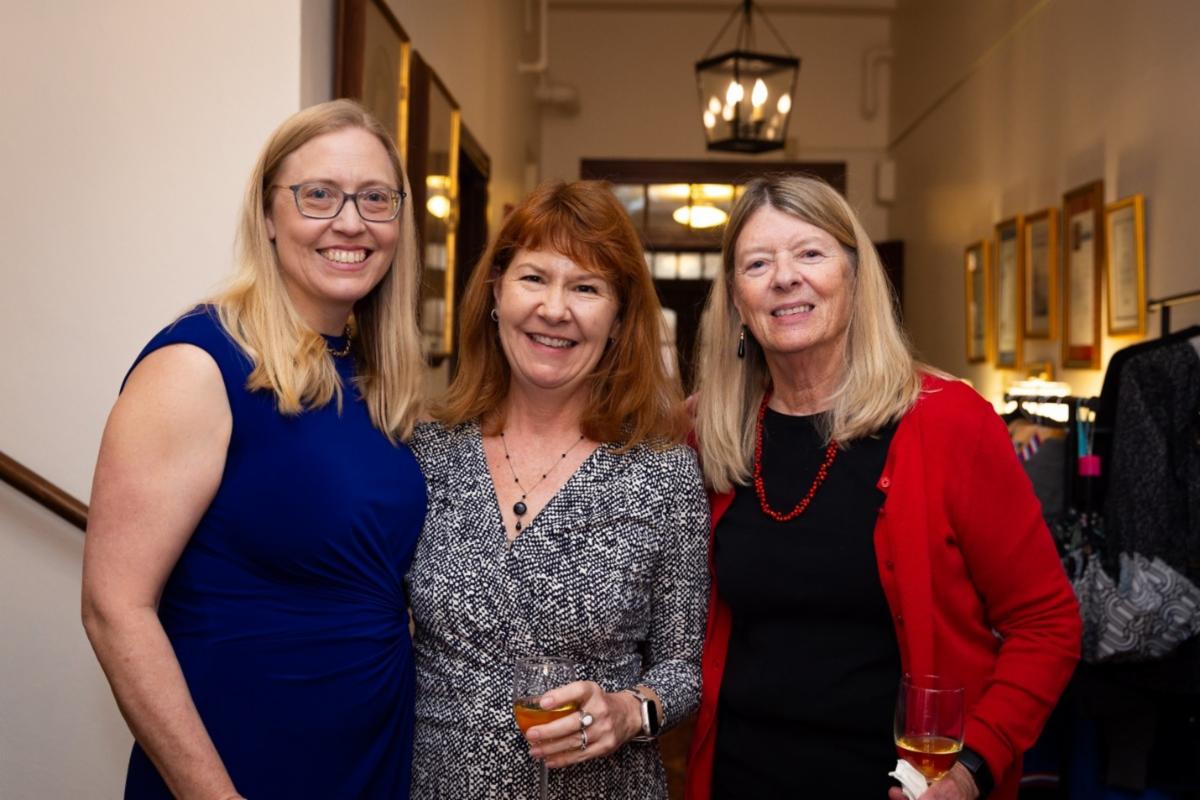
| | Congratulations to Laura Wagner for Being Appointed the Montgomery Endowed Chair in Aging | | Laura M. Wagner (left), celebrated her Winnifred Montgomery Endowed Chair in Aging investiture on March 31, 2026 with Joanne Spetz (center) and Susan Chapman (right). | | Congratulations the AWARD Network Pilot Awardees | | |
We are pleased to announce the recipients of the 2026 Pilot Awards. Recipients were selected from an impressive group of competitive applications.
Heather Brom, PhD, RN, University of Pennsylvania
Sherif Olanrewaju, PhD, PGDE, MPS, University of Pennsylvania
“State Direct Care Workforce Policies and Nursing Home Quality Outcomes: Implications for Dementia Care”
Direct care workers provide the majority of hands-on care in nursing homes, yet despite their critical role, little research has examined how state-level policies governing their work affect care quality. This study investigates whether state policies, such as wage pass-through and staffing regulations, are associated with nursing home quality outcomes (e.g., overall star ratings, pressure ulcers, antipsychotic use, and hospitalizations) and whether these associations differ in facilities serving higher proportions of residents with Alzheimer's disease and related dementias.
| |
Ayse Malatyali, PhD, MBA, RN, University of Central Florida
“Recognizing the Warning Signs: A Needs Assessment of Rapid Pattern Recognition Skills among Dementia Direct Care Workers”
This project addresses a critical gap in dementia care workforce research: the extent to which frontline dementia care workers can recognize subtle pre-fall behavioral and physical warning signs exhibited by people living with dementia in long-term care institutions. Our objective is to characterize baseline rapid pattern recognition knowledge and training gaps among direct care workers, and to explore the contextual barriers to timely pre-fall cue recognition.
Tingzhong Xue, PhD, RN, University of Massachusetts Amherst
"Impacts of Nursing Home Closures on the Direct Care Workforce for Older Adults with Alzheimer’s Disease and Related Dementias"
Nursing home (NH) closures have complex impacts on the direct care workforce that provides care services to people with dementia. We first aim to conduct a scoping review on the impacts of NH closures on employment outcomes of the direct care workers that serve people living with dementia and the capacity of the direct care workforce to provide dementia care. Then we will explore and compare the impacts of NH closures on the direct care workforce that serves people with dementia in selected counties in the New England area with and without NH closures in the last 15 years.
Dajung Jun, PhD, MA, University of Texas San Antonio
"Wage Floors and Dementia Care: The Effect of State Minimum Wage Laws on the Direct Care Workforce, Medicare Beneficiaries with ADRD, and Their Family Caregivers"
This study examines whether state minimum wage laws can stabilize the direct care workforce and improve outcomes for people with Alzheimer’s disease and related dementias and their family caregivers. Using Medicare claims and Health and Retirement Study data with causal difference-in-differences methods, it assesses how wage increases affect patient health outcomes and caregiver burden, employment, and well-being, testing whether higher wages enhance care continuity or shift care responsibilities onto families.
Erh-Chi Hsu, MPH, RN, Johns Hopkins University
"Direct Care Worker Training Requirements in Assisted Living and Their Impact on Resident Emergency Department and Hospital Utilization" (Mini-Award)
Assisted living (AL) communities serve approximately 1 million older adults daily in the United States, yet direct care workers—who are unlicensed and governed only by state minimum training requirements—provide essential care with limited standardized training. This study aims to characterize AL communities that invest in direct care worker training beyond state minimums and evaluate whether dementia-specific training improves care quality, including emergency department admissions and hospitalizations, for residents with dementia. This research will provide critical insights into how workforce training investments are associated with care quality in AL communities.
| | AWARD Network Monthly Webinars | | |
June 3, 2026
NDWS Pilot Award Updates
Hear updates from the National Dementia Workforce Study's pilot grant awardees about their current projects. Register Here
August 5, 2026
Strengthening the CNA Workforce
| |
Kirsi Toivanen- Atilla, MSN, BSN, RN, is an early-career nurse scientist focused on moral distress, nursing home care, and healthcare workforce dynamics. She is completing her PhD in Nursing at UCSF, where her dissertation explores moral distress among Certified Nursing Assistants working in nursing homes. Her background in clinical nursing and leadership across acute and long-term care settings both in the U.S. and Europe informs her research on workforce well-being, organizational dynamics, and care quality. Register Here
Watch our Webinar webpage to register for future webinars and view recordings of past webinars.
| | |
Innovation in Aging – Special Issue on Qualitative Research
The journal Innovation in Aging is seeking submissions for a special issue on Innovating Qualitative Research in Gerontology. This issue focuses on methodological innovation in qualitative research, including design, data collection, analysis, and engagement with older adult populations. Authors should clearly articulate how their work advances qualitative methods in gerontology. Submission details are available here. The deadline for manuscript submission is August 31, 2026. Note that this is an open-access journal with publication charges.
National Bureau of Economic Research (NBER) conference on Emerging Challenges in Long-Term Care and Caregiving.
The National Bureau of Economic Research (NBER) invites submissions on long-term care, caregiving, and related policy topics, including Medicare/Medicaid, labor markets, and disease-specific care needs. Interdisciplinary and novel data approaches are encouraged. More information is available here. Conference date: October 2, 2026. Submission deadline: July 31, 2026.
| | AWARD Network Data Compendium | | |
The AWARD Network is developing a research-ready harmonized dataset of topics and programs that affect the demand, supply, working conditions, and skills of direct care workers. The data compendium is accompanied by detailed documentation that includes references to primary data sources. Research-ready data files are available to download to support your research on these topics or to use as control variables in your research.
We have released the topic descriptions and harmonized datasets for seven topics:
· State Medicaid waiver programs
· Wage pass-through laws
· Consumer-directed models of care
· Training regulations for direct care workers
· Staffing regulations for nursing homes and assisted living facilities
· Medicare-Medicaid Enrollees (Dual Eligibles)
· Regulations regarding the tasks that direct care workers can provide
You can download materials from the data compendium webpage, where we will continue to share updates on the data compendium. If you have ideas for additions to the data compendium, please write to us at AWARDNetwork@ucsf.edu.
| | Congratulations to AWARD Network Members | | |
Emily Franzosa, DrPH, was promoted to Associate Professor at the Icahn School of Medicine at Mount Sinai. She also is a Research Health Science Specialist at the James J. Peters VA Medical Center.
-
Please send us your transitions, awards, and new grants so we can share them with the AWARD Network!
| | Join Other Networks Related to Dementia Care Workforce Research | | | | The Age-Friendly Health Systems Research Network has the mission of advancing the evidence base for Age-Friendly Health Systems and the 4Ms. All individuals interested in AFHS evidence generation are welcome to join the network. Activities include webinars and resources to support research on age-friendly care. You can sign up on their website. | | | | The Advancing the Science of Palliative Care Research Across the Lifespan (ASCENT) Consortium has launched with funding from NIA. The ASCENT Consortium will be a national consortium of experts in palliative care that will advance innovative, high-quality research to improve care for people living with serious illness by providing resources and expertise in a coordinated manner. Individuals can sign up to directly receive information and updates from the ASCENT Consortium. ASCENT is expected to release requests for applications for the initial round of pilot grant and research scholar awards in the next month or so, with due dates in fall 2025. | | | | Community Care Network for Dementia (CaN-D) seeks to foster knowledge sharing to advance innovative dementia home and community-based services (HCBS) research, generate data tools on structure, process, and outcome measures of dementia HCBS, grow and diversify the bench of dementia HCBS researchers, and facilitate translation of research into dementia HCBS policy changes. | | | | The Nursing Home EXplanatory Clinical Trials Supporting Transformation by Enhancing Partnerships (NEXT STEPs) Network is a National Institute on Aging-funded initiative started in September 2024 that supports high-quality research by advising on research design, sharing best practices, and sharing findings to improve the lives of nursing home residents, their families, and staff. Resources are available for researchers and nursing home leaders, including a terminology guide, nursing home data sources compendium, best practices guide, norms of engagement, research studios, pilot funding, and more to come. You can sign up for the network on their website. | | |
NIA Supported Centers and Networks Funding Opportunities
Please check to make sure opportunities have not been withdrawn or expired before applying.
-
Advancing Healthcare for Older Adults from Populations that Experience Health Disparities (R01 - Clinical Trial Optional) (PAR-24-273) – expires January 28, 2028.
-
The Role of Work in Health Disparities in the U.S. (R01 Clinical Trials Optional) (PAR-25-292) – expires January 8, 2028.
· NIH Collaborative International Research Project (PA-26-002) — Supports collaborative international research projects across NIH mission areas (Parent PF5, Clinical Trial Optional). Multiple receipt dates through May 7, 2029. (Link to be added)
To learn more about federal funding opportunities, visit this website.
Other Funding Opportunities
-
RRF Foundation for Aging funds research that seeks to identify interventions, policies and practices to improve the well-being of older adults and/or their caregivers. Three application cycles per year.
| | New Publications from AWARD Network Members | | |
Jun, J, et al. (2026). Trends in occupational mobility of health care support workers. JAMA Health Forum, 7 (4), e260285. https://pmc.ncbi.nlm.nih.gov/articles/PMC13069453/
Kotwal, A., et al. (2026). The palliative care paradox: Investigating unexpected outcomes in dementia care. Journal of the American Geriatrics Society. Advance online publication. https://pubmed.ncbi.nlm.nih.gov/41697865/
Kotwal, A., et al. (2026). Social participation before and after long-term care entry (reply). JAMA Internal Medicine. Advance online publication. https://pubmed.ncbi.nlm.nih.gov/41587067/
Prusynski, R. A., et al. (2026). The role of declining therapy volumes in skilled nursing facility outcomes: A mediation analysis. Health Affairs Scholar. Advance online publication. https://pmc.ncbi.nlm.nih.gov/articles/PMC12927502/
Prusynski, R. A., et al. (2026). Skilled nursing facility network capacity and hospital length of stay. JAMA Network Open. Advance online publication. https://pubmed.ncbi.nlm.nih.gov/42060304/
Reckrey, J. M., et al. (2026). Does switching to consumer-directed personal care impact health and service utilization among Medicaid enrollees in the New York metropolitan area? Journal of the American Medical Directors Association. Advance online publication. https://pubmed.ncbi.nlm.nih.gov/41692032/
Please share your latest publications with us! Email awardnetwork@ucsf.edu.
| | Press Mentions of AWARD Network Members | | |
Rachel Prusynski, DPT, PhD, NCS, was quoted in the Kitsap Sun on how recent immigrant policies may affect staffing shortages in Washington state.
Kezia Scales, PhD, co-leader of the AWARD Network, was quoted in The American Prospect on the potential impact of mass deportations on the direct care workforce. She also contributed to a New York Times story on immigration and the long-term care workforce
| | | | |