Vol. 57 | April 2026 – 10 minute read | | Discovery at UT Southwestern | | |
The 2026 edition of Discovery at UT Southwestern will be mailed this month to faculty and offices throughout our campus. It features our institution’s latest developments in biomedical science and clinical research.
For the second year in a row, we open our report with a profile on our most recent Albert Lasker Basic Medical Research Award recipient. This edition includes stories on scientists who are unveiling how an FDA-designated orphan drug may enhance the response to radiotherapy for lung cancer patients; studying how interconnected circuits in a critical region of the songbird brain offer a viable model for better understanding how humans learn to speak and what goes wrong in communication disorders; and preparing to launch a large-scale whole-exome sequencing program.
A story on an 18-year scientific partnership between a biomedical engineer and a head and neck surgeon illustrates how basic scientists and clinicians work together to find solutions to clinical challenges. This issue also covers how our faculty are developing artificial intelligence tools to increase the efficiency and accuracy of medical student performance evaluations and taking advantage of improved access to technologies to enhance postpartum care.
Discovery at UT Southwestern serves as a valuable recruitment tool. If you would like additional copies of the scientific report, email your request to the Office of the Provost with the number of copies you wish to receive and a mail code.
| | |
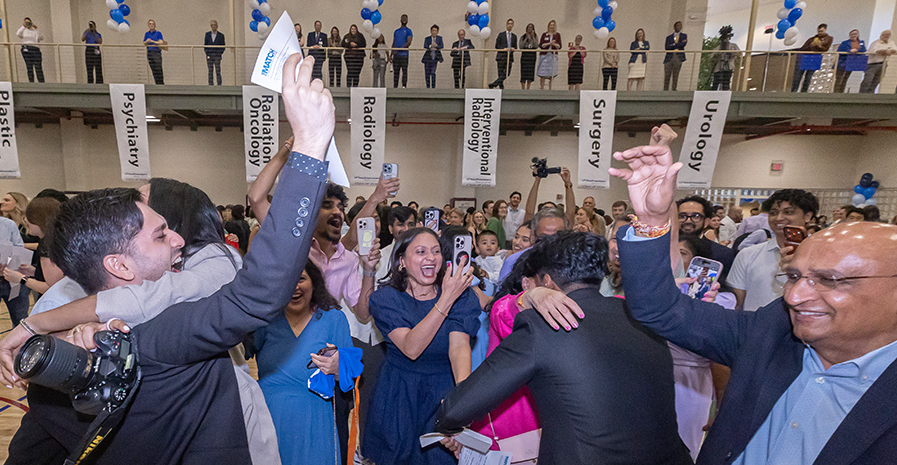
At UT Southwestern, Match Day is both a send-off of our Medical School students who will step into residency and a welcome of trainees who will pursue their graduate medical education (GME) in our clinical departments.
Student Match
Roughly 98% of UT Southwestern Medical School students matched to residency programs – well above the national average of 93.5%. Of the 239 students who matched in the Class of 2026,171 will complete residencies at top-ranked medical schools including UT Southwestern, which is 72%. The most popular specialty selections for UT Southwestern students included internal medicine, pediatrics, psychiatry, anesthesiology, and family medicine.
GME Match
UT Southwestern offered 344 GME positions across 41 GME program tracks. Almost half of the positions, 157 in total, were filled by students from top-ranking medical schools across the United States.
PSTP Match
This year, 15 M.D. and M.D./Ph.D. graduates matched into the Department of Internal Medicine’s Physician Scientist Training Program (PSTP) – setting an all-time record. These future physician-scientists will join programs in gastroenterology, hematology/oncology, infectious diseases, pulmonary and critical care medicine, and rheumatology.
| | Announcing the New Faculty Assembly | | |
Thirty-five members from the Medical School, the Graduate School, the School of Health Professions, and the Peter O’Donnell Jr. School of Public Health have been appointed to the newly established Faculty Assembly.
The faculty body will serve as an advisory group to institutional leadership and ensure faculty engagement in compliance with Regents’ Rules and Texas Senate Bill 37.
Self-nominations were open to full-time faculty in good standing from any track and rank. Chairs reviewed and forwarded submissions to the Provost Leadership Team, who made recommendations to the UTSW President for final selection.
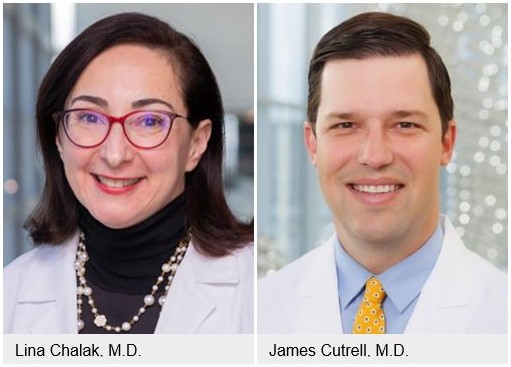
The Faculty Assembly will be co-chaired by Lina Chalak, M.D., Professor of Pediatrics and Psychiatry, and James "Brad" Cutrell, M.D., Professor of Internal Medicine. Members include:
| | |
Salman Allana, M.D.
Hamid Baniasadi, Ph.D.
Brandon Bruns, M.D.
Brian Chapman, Ph.D.
Kevin Dean, Ph.D.
Kara Goss, M.D.
Justin Jordan, M.D., M.P.H.
Suganthi Kandasamy, D.P.M.
Melissa Kirkwood, M.D.
Jeannie Kwon, M.D.
Jayanthi Lea, M.D.
| | |
Minh Nguyen, M.D.
Vania Nose, M.D., Ph.D.
Yuuki Obata, Ph.D.
Eric Ortigoza, M.D.
Abby Ortiz Dominguez, M.D.
Aaron Plitt, M.D.
Jessica Porembka, M.D.
Sawsan Rashdan, M.D.
Sarah Rebstock, M.D., Ph.D.
Guadalupe Reyna, D.O.
Jose Rizo-Rey, Ph.D.
| | |
Avi Ruderman, M.D.
Aitua Salami, M.D., M.P.H.
Rinarani Sanghavi, M.D., M.B.A.
Irina Stanasel, M.D.
Jim Stimpson, Ph.D.
Sidarth Wakhlu, M.D.
Angelique Whitehurst, Ph.D.
Chien-Ting Wu, Ph.D.
Jin Ye, Ph.D.
Jason Zafereo, M.P.T., Ph.D.
John Zimmerman, M.S.
| | Dr. Hobbs Honored by the American College of Cardiology | | |
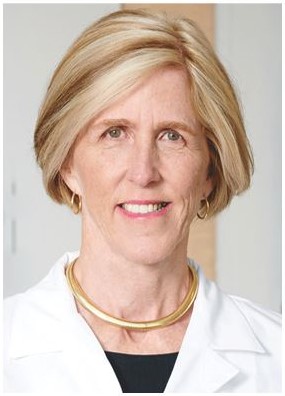
Helen H. Hobbs, M.D., Professor in the Eugene McDermott Center for Human Growth and Development and of Internal Medicine and Molecular Genetics, has been named the recipient of the 2026 Valentin Fuster Award for Innovation in Science by the American College of Cardiology. This honor reflects her contributions to cardiovascular science and her role in advancing research that has directly improved patient care.
An internationally renowned physician-scientist, Dr. Hobbs has used human genetics to identify key proteins and pathways in lipid metabolism. Her work has had far-reaching implications for prevention and treatment of both cardiovascular and metabolic liver disease. Research by Dr. Hobbs and her scientific partner, Jonathan Cohen, Ph.D., Professor in the Center for Human Nutrition, the McDermott Center, and of Internal Medicine, has focused on identifying genetic variants that protect against disease rather than those that cause it.
Dr. Hobbs is a member of both the National Academy of Medicine and the National Academy of Sciences as well as a Howard Hughes Medical Institute Investigator. She has received numerous national and international honors. Read more.
| | Inaugural UTSW Medical Student Research Mentor of the Year | | |
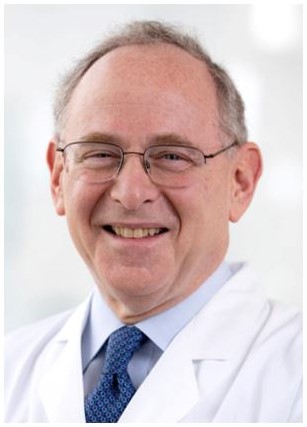
In recognition of his exemplary mentoring skills and exceptional impact on students, Philippe Zimmern, M.D., Professor of Urology, has been selected as the inaugural UT Southwestern Medical Student Research Mentor of the Year.
The new award, established by the Office of Medical Student Research, highlights the importance of mentoring medical students. The office received thoughtful submissions for 17 faculty members.
Mentees pointed to Dr. Zimmern’s strong support of both their clinical learning and research development. Offering line-by-line feedback on drafts, he encouraged them to think beyond the numbers and shared his insight on how to anticipate criticism, turn raw data into a compelling narrative, defend the logic of their methods, and communicate complex ideas concisely. Read more.
| | SPARC Starts Initial Recruitment Phase | | |
Last fall, UTSW announced plans for the Sequencing Populations to Accelerate Research and Care (SPARC) – a research initiative designed to establish one of the largest genetically sequenced biobanks in the country, with up to 150,000 participants enrolled over the next three years. By linking these genetic and other biological data to longitudinal clinical information, SPARC will empower our research community to pursue a wide range of biomedical research studies, enable new discoveries about the drivers of disease and treatment response, and help advance disease screening, prevention, and patient care.
SPARC is now beginning its initial recruitment phase. Starting today, UTSW faculty and staff over 18 years of age are eligible to sign up for SPARC. Over time, SPARC will extend enrollment to all patients seen by our Health System.
Those joining and consenting to SPARC will have an opportunity to get their DNA screened for various disease-causing genes (such as those linked to colon or breast cancer). Genetic and clinical data will be de-identified and stored in a secure database for research use. Additionally, participants can receive information on their genetic ancestry and, most importantly, will be contributing to our mission to further science and improve care. There is no cost to participate in SPARC, but it does require a blood sample.
Read about the vision for the program in the 2026 edition of Discovery at UT Southwestern and visit the SPARC website (VPN or campus connection required).
| | Championing Clinician Well-Being and Resilience | | |
UT Southwestern has been selected to join the 2026 Change Maker Accelerators, a national program led by the National Academy of Medicine through its Action Collaborative on Clinician Well‑Being and Resilience. UT Southwestern is one of 26 organizations nationwide chosen for the second cohort of this yearlong initiative focused on advancing evidence‑based strategies that support clinician well‑being and address workforce burnout.
The program will be implemented by the Office of Faculty Wellness and Engagement over the next year. As part of this initiative, UTSW will engage in peer‑to‑peer learning with health systems and organizations from across the country, sharing insights and best practices.
Contact the Faculty Wellness team to learn more about programs and resources designed to empower all of our faculty to reach their full academic and personal potential, including executive coaching, counseling, and parental and caregiver support. Save the date for the 2026 Wellness Week, May 11-15.
| | Peer Parental Partner Program: A Call for Faculty Participation | | |
The Office of Wellness and Engagement is launching a new parental support program designed to help faculty parents navigate the complexities of parenthood while maintaining their roles as clinicians, educators, and researchers.
Whether you are expecting a child, adjusting to life with a new addition to your family, or trying to manage the parental leave process, this program provides a supportive space for shared experience, practical insight, and collegial connection through structured check-ins and resource navigation tips.
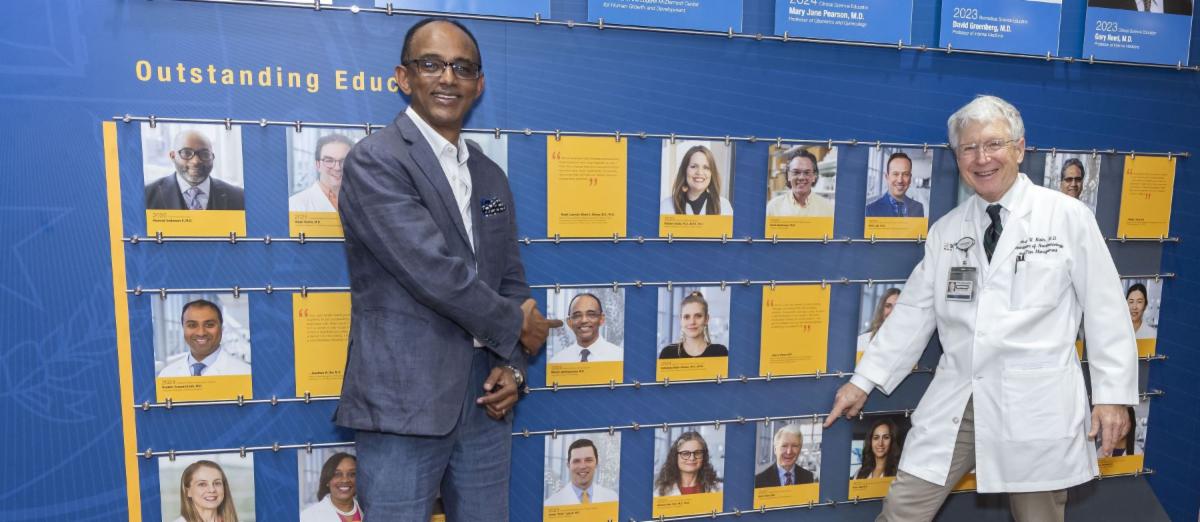
| | Call for Nominations: SWAT and ROTA | | A vibrant wall installation honoring 42 of UT Southwestern’s most impactful educators was unveiled during the annual Celebrating Excellence in Education ceremony last month. Past SWAT Outstanding Educator honorees Mehari Gebreyohanns, M.D., Associate Professor of Neurology (left), and Kevin Klein, M.D., Professor of Anesthesiology & Pain Management and Otolaryngology – Head & Neck Surgery, point to their profiles on the wall honoring exceptional UTSW educators. | | Southwestern Academy of Teachers | | |
The Southwestern Academy of Teachers (SWAT) facilitates the exchange of ideas and provides a platform for enhanced interactions among educators from all four UT Southwestern schools.
Nominees for SWAT membership must have a proven record of excellence in at least two of the following five areas: direct teaching; instructional development, curriculum design, and assessment of learner performance; advising and mentorship; educational administration and leadership; and educational scholarship and research.
Deans, Department Chairs, Center Directors, Program and Course Directors, and SWAT members are invited to nominate faculty by submitting a letter to Jason Zafereo, M.P.T., Ph.D., Chair of the SWAT Membership Committee, by April 25.
| |
2026 Regents’ Outstanding Teaching Award
| | |
The UT System is seeking nominations for the 2026 Regents’ Outstanding Teaching Awards (ROTA), which honor faculty who demonstrate exceptional teaching excellence and a commitment to the highest standards in all aspects of instruction.
The awards are bestowed in recognition of those who serve our students in an exemplary manner and as an incentive for others who aspire to such service. Detailed information on eligibility and required materials are available online.
Complete nomination packets should be combined into a single PDF file and emailed to Pamela Guerrero by May 1. An internal evaluation committee will review and recommend the top two nominees to the President’s Office for submission to the UT System. Award recipients will be notified in the fall.
| | Dr. James Luby (1935-2026) | | |
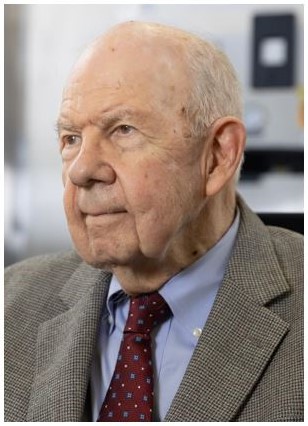
James Luby, M.D., Professor Emeritus of Internal Medicine, a widely respected infectious disease specialist and epidemiologist and a dedicated educator, passed away over the weekend.
Dr. Luby spent over 55 years at UTSW serving in numerous leadership roles, including Chief of the Division of Infectious Diseases, head of the viral diagnostics laboratory, and Medical Director of Infection Control at Parkland and UT Southwestern hospitals. In these capacities, he helped advance our clinical programs and strengthen our response to emerging infectious diseases, reflecting his deep commitment to patients and public health. His clinical and research work spanned a range of topics, including clinical virology, herpes viruses, arboviral infections, HIV, hospital-acquired infections, and histoplasmosis.
A cherished educator, Dr. Luby found great satisfaction in training generations of physicians and scientists. He was recognized with multiple teaching honors throughout his distinguished career, and his impact was further acknowledged through the establishment of the James P. Luby, M.D. Professorship in Infectious Diseases, as well as an Internal Medicine ward service bearing his name at William P. Clements Jr. University Hospital.
| | Complete Compliance Training by April 15 | | |
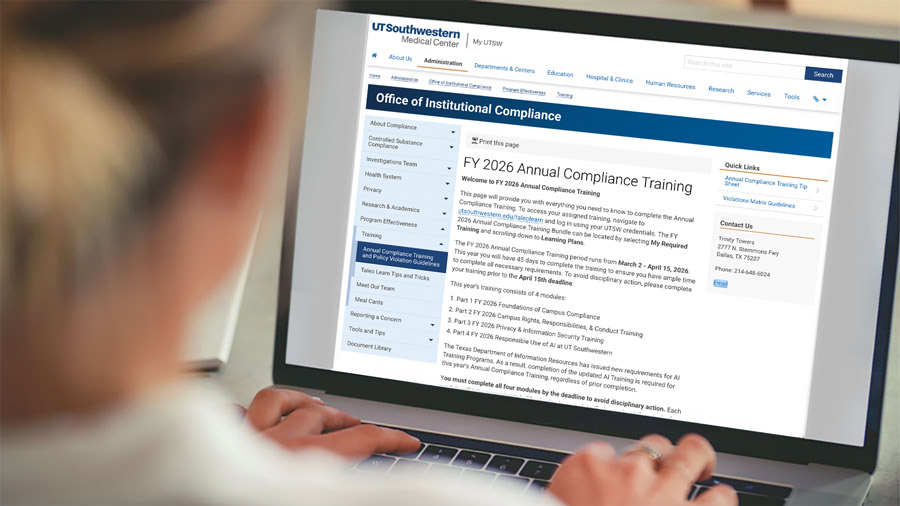
The annual mandatory compliance training consists of four modules that take approximately 90 minutes to complete.
To access your assigned training, navigate to utsouthwestern.edu/taleolearn and log in using your UTSW credentials, select My Required Training, and scroll down to Learning Plans.
Those who do not finish all modules by the April 15 deadline will have email access restricted and face disciplinary action up to termination. New hires from Jan. 1, 2026, onward are exempt. Additional information is available on the Office of Institutional Compliance & Audit Services website (VPN or on-campus connection required).
| | Monthly Accessibility 101 Sessions | | |
To support UT Southwestern’s move toward compliance with federal digital accessibility requirements by April 24, the Accessibility 101 training series will continue as a standing monthly offering in 2026.
Sessions begin April 8 and repeat the second Wednesday of each month throughout 2026.
Through real examples and guided discussion, participants will learn how to make documents, presentations, and meetings accessible. Register for a session.
| | Important Dates and Upcoming Events | | |
Researchers Beware! Avoiding Predatory Journals and Conferences Workshop
Explore resources like the Predatory Publishing Guide and Cabells’ Predatory Reports.
Women’s Health Research Seminar
Hear Florence Haseltine, M.D., Ph.D., a leading advocate for integrating sex differences into clinical research, present “Progress in Women’s Health Research: A Personalized Perspective.”
Show Me the Money: Finding Funding Opportunities through the Library
This session will highlight the Grants and Funding Guide and discuss how to search for and manage funding opportunities in the Pivot and Candid databases.
Clinical Scholar Track Workshop
Join this interactive discussion of criteria evaluated for promotion in the Clinical Scholar Track, including research independence, national reputation, and teaching excellence.
President’s Lecture Series
The campus community is invited to the next lecture, presented by Deborah Farr, M.D., and Heather McArthur, M.D. M.P.H., titled “Innovations in Breast Cancer Care: Advancing the Future of Medicine and Surgery, Today.”
Didactic Session: “Fundamentals of Launching and Managing a Clinical Study” Workshop*
This session is designed for research coordinators, new investigators, study staff, and anyone looking to strengthen their operational expertise in clinical trials.
Charles Morris Ginsburg Simulation-Based Quality Improvement and Research Forum
This hybrid event will feature the latest in health care simulation, quality improvement, and research.
*Sponsored by the UT Southwestern Clinical and Translational Science Award Program
| | | | |