Vol. 64 | November 2026 – 9 minute read | | Incentive Programs Support Growth in Federal Funding | | The Special Grant Incentive (SGI) and the Collaborative Research Grant Incentive (CRGI) programs support faculty as they secure federal research grants. The programs set a record by awarding a total of 44 incentives in the last quarter of FY26 – the highest number in a single quarter. | | |
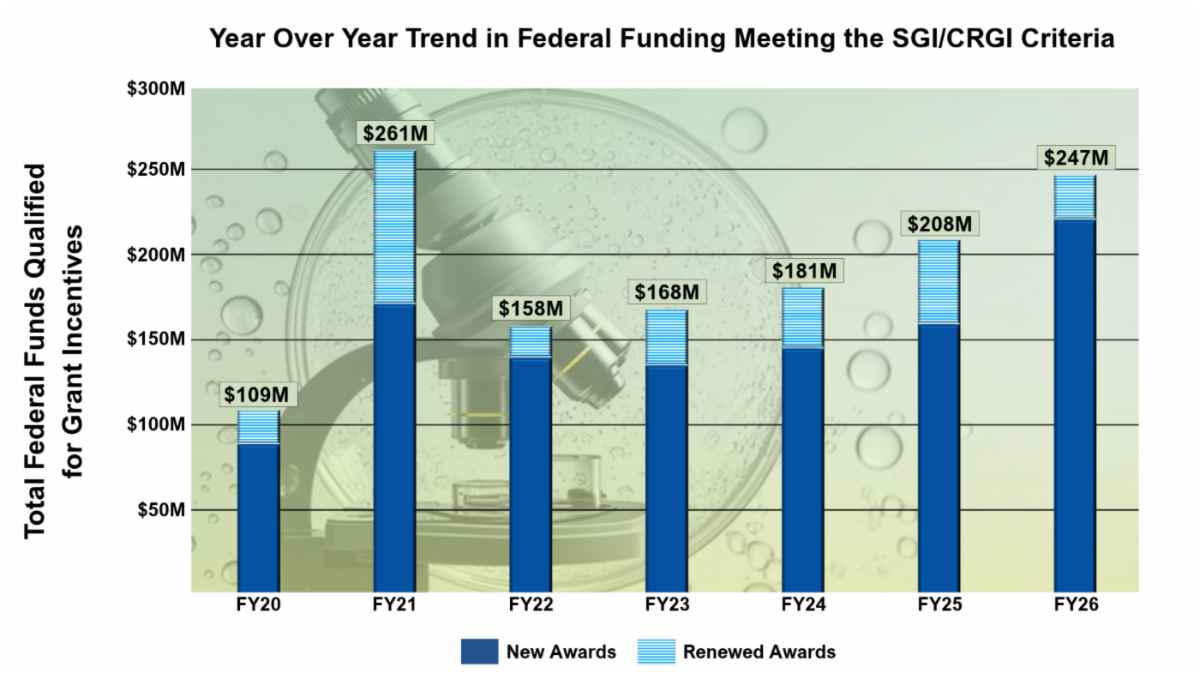
In FY26, UT Southwestern faculty obtained more than $247 million in federal grants that met the programs’ criteria, including grants from the National Institutes of Health (NIH), the Department of Defense, and the National Science Foundation. Over 90% were new grants signaling growth in new projects and funding streams.
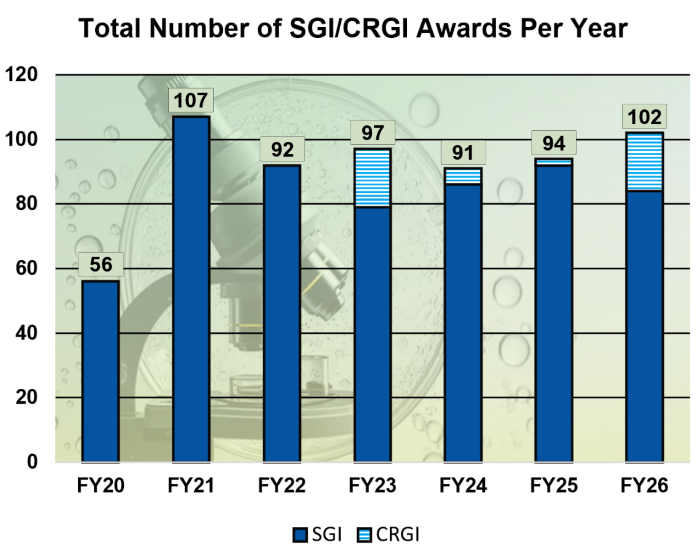
A total of 102 SGIs and CRGIs were allocated to 85 faculty members across 26 departments and centers in FY26 and two faculty members earned the maximum three incentives per fiscal year. The top departments and centers receiving awards were Internal Medicine, Children’s Medical Center Research Institute at UT Southwestern, Biophysics, and Pharmacology.
From FY20 to FY26, the SGI and CRGI programs awarded 639 incentives to UT Southwestern faculty, totaling more than $6.4 million. The SGI provided nearly $5.9 million of that total, and the CRGI contributed over $500,000.
| | |
About the SGI Program
Established in FY20, the SGI provides an incentive of $10,000 – either as personal compensation or as discretionary academic or laboratory funds – to faculty who are awarded a second, third, or fourth federally funded research grant. SGI eligibility criteria
| | |
About the CRGI Program
Launched in FY23, the CRGI awards incentives ranging from $15,000 to $40,000 to the Contact PI of NIH program projects (P), cooperative research agreements (U), or collaborative program grants for multidisciplinary teams (RM). CRGI eligibility criteria and payment tiers
| | Final Week: AAMC StandPoint Faculty Engagement Survey | | |
Faculty members have until Nov. 10 to complete the Association of American Medical Colleges (AAMC) StandPoint Faculty Engagement Survey. As of late October, UTSW’s response rate is approximately 34%, and we hope to reach 70% or higher before the survey closes next week.
Check your email for your personalized survey link and make your voice count. Reminder emails come from StandPoint Surveys each Tuesday until your survey is completed.
UTSW will receive results in January, with debrief sessions scheduled by department and large division in the spring. Following these discussions with faculty, results will inform action plans developed with leadership and revisited next year to assess progress and continue improving the faculty experience.
| | Dr. Collins Appointed Chair of Pharmacology | | |
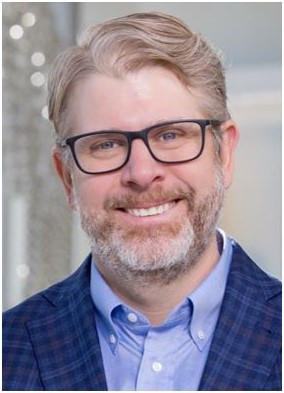
James Collins, Ph.D., has been named permanent Chair of the Department of Pharmacology.
Dr. Collins joined UT Southwestern in 2014 as an Endowed Scholar and was named a Howard Hughes Medical Institute Investigator in 2024. He has established himself as a highly respected scientist and leader, serving most capably as Interim Chair of Pharmacology following the unexpected passing of David J. Mangelsdorf, Ph.D., last year.
His research focuses on the parasitic disease schistosomiasis. Second only to malaria as the most lethal parasitic disease, schistosomiasis progresses as female parasitic worms lay millions of eggs inside the host, causing debilitating inflammatory responses and scarring. Dr. Collins was the first to set up the culture conditions to monitor the reproductive cycle of the worms without having to pass it through a host. In doing so, he discovered and isolated the pheromone, or signal, that male worms use to control female sexual development and egg production, unlocking an important new direction for the field that may bring relief to millions of people worldwide.
Dr. Collins is a rigorous and accomplished scientist who combines effective leadership with a highly impactful research program of his own. Under his leadership, the Department of Pharmacology will build on its illustrious past and sustain UT Southwestern’s tradition of scientific excellence well into the future. Read more.
| | Dr. Liang Named Chair of the Lyda Hill Department of Bioinformatics | | |
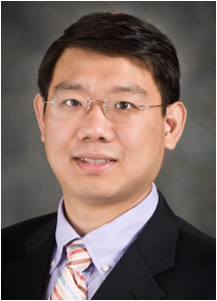
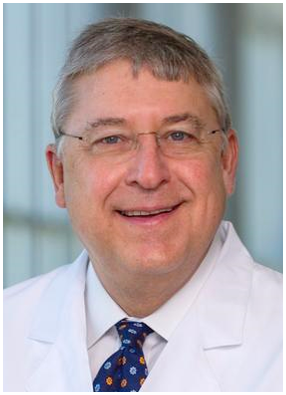
Han Liang, Ph.D., has been appointed Chair of the Lyda Hill Department of Bioinformatics, effective Dec. 1., and also will serve as the Scientific Director for AI-Enabled Discovery in the Office of the Chief Artificial Intelligence Officer.
Dr. Liang will join UT Southwestern from the University of Texas MD Anderson Cancer Center, where he is the Barnhart Family Distinguished Professor in Targeted Therapies, Interim Chair of the Department of Bioinformatics and Computational Biology, Professor of Systems Biology, and an affiliate member of the Institute for Data Science in Oncology.
His research focuses on AI-driven integration of multimodal data to elucidate cancer biology and identify novel therapeutic strategies. His team has been at the forefront of developing AI-enabled and natural language-based platforms for omics data analysis and has pioneered agentic AI approaches for biomedical research. Collectively, these bioinformatics tools have more than 200,000 users worldwide.
Dr. Liang brings extensive experience building multidisciplinary research programs and advancing artificial intelligence for biomedical discovery. In his dual roles, he will lead the continued growth of the Lyda Hill Department of Bioinformatics while helping shape UT Southwestern’s broader strategy for AI-enabled scientific discovery, strengthening connections among data science, basic research, and precision medicine. Read more.
| | UT System Honors our Educators | | Dr. Trello-Rishel Recognized with Outstanding Teaching Award | | |
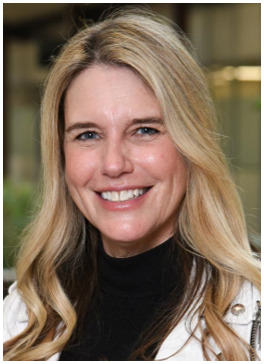
Kathlene Trello-Rishel, M.D., Professor of Psychiatry, received the 2026 Regents Outstanding Teaching Award (ROTA). Established in 2008, ROTA honors faculty who demonstrate extraordinary classroom performance and innovative teaching.
Dr. Trello-Rishel has served as Program Director of the Child and Adolescent Psychiatry Fellowship for the last five years, doubling the size of the program through state grants. She also secured state grant funding to establish a Triple Board Residency Program – pediatrics, general psychiatry, and child psychiatry – the only one in Texas.
Her teaching philosophy incorporates team-based learning, active learning that integrates technology and simulation cases, and curriculum development that takes into account the mental health needs of the communities where trainees serve. This approach has been recognized with various accolades, including induction into the UT System’s Kenneth I. Shine, M.D., Academy of Health Science Education in 2022. Read more.
| | Drs. Cullum and Kleinschmidt will join Shine Academy | | |
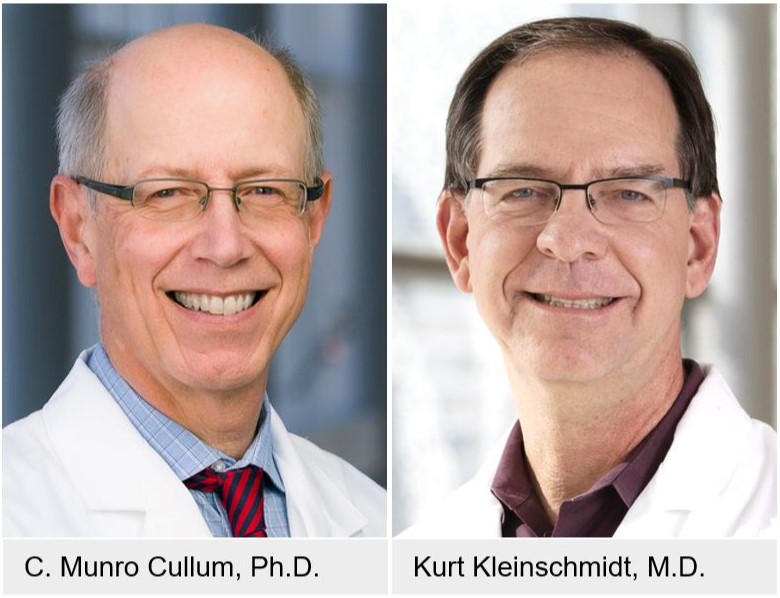
C. Munro Cullum, Ph.D., Professor of Psychiatry, Neurology, and Neurological Surgery, and Kurt Kleinschmidt, M.D., Professor of Emergency Medicine, have been inducted to the UT System’s Shine Academy, which supports excellence in health science education, scholarship, and leadership.
To date, more than 200 UT System educators have been inducted into the organization, including over 40 current and former faculty members from UTSW. The induction ceremony and celebration will take place at the conclusion of the 2027 Innovations in Health Science Education Conference on Feb. 12, 2027 in Austin.
| | Dr. Sanghavi Named Woman Disruptor of the Year | | |
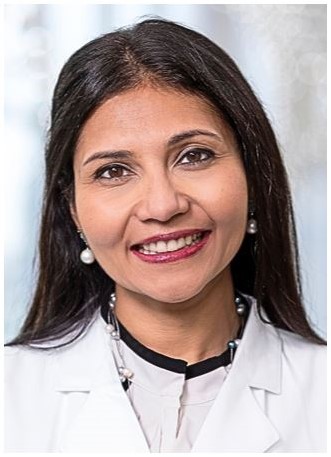
Rinarani Sanghavi, M.D., M.B.A., Professor of Pediatrics, received the Healio Gastroenterology Disruptive Innovators’ 2026 Woman Disruptor of the Year Award during the American College of Gastroenterology Annual Meeting in Nashville.
The award honors physicians who are making a positive impact through intentional leadership, scientific advancements, and innovation. Dr. Sanghavi is the first pediatric gastroenterologist to be nominated and chosen by her peers to receive the award.
A renowned neurogastroenterologist, Dr. Sanghavi and her team treat patients with motility issues, aerodigestive disorders, and anorectal malformation. She is part of the Chronic Abdominal Pain Clinic and Multidisciplinary Pediatric Aerodigestive Center, one of the few centers in the United States with the ability to diagnose and treat the full range of motility issues in children. She serves as secretary-treasurer of the North American Society for Pediatric Gastroenterology, Hepatology, and Nutrition. Read more.
| | Dr. Barlow Receives Murray Davidson Award | | |
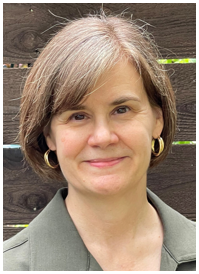
Sarah E. Barlow, M.D., M.P.H., Professor of Pediatrics and Public Health has been recognized with the 2026 Murray Davidson Award from the American Academy of Pediatrics Section on Gastroenterology, Hepatology and Nutrition, for her significant contributions to pediatric gastroenterology and nutrition.
Dr. Barlow’s research advances childhood and adolescent obesity management, care for nonalcoholic fatty liver disease, and population health approaches to obesity. She also leads an integrated obesity care program connecting primary care, specialty services, and community programs to improve children’s health.
Established in 1989, the award honors Dr. Murray Davidson, whose pioneering work helped establish pediatric gastroenterology as a distinct clinical specialty. Dr. Barlow accepted the award at the North American Society for Pediatric Gastroenterology, Hepatology and Nutrition Annual Meeting in San Diego. Read more.
| | Dr. Argenbright Accepts the Texans Conquer Cancer Award | | |
Keith Argenbright, M.D., Director of the Moncrief Cancer Institute at UT Southwestern Medical Center, received the 2026 Texans Conquer Cancer Award in Population Health from the Cancer Prevention and Research Institute of Texas (CPRIT) at the organization’s 2026 conference in Galveston.
The award recognizes his nearly two decades of visionary leadership in expanding cancer screening and prevention services to underserved communities across Texas. The Moncrief Cancer Institute/Harold C. Simmons Comprehensive Cancer Center programs provide breast, cervical, colorectal, lung, and prostate cancer screenings for approximately 30,000 uninsured and underinsured Texans annually.
Since 2010, Dr. Argenbright and UTSW have received 17 CPRIT Prevention grants, totaling $32 million. Read more.
| | White Coat and Lab Coat Ceremonies | | Medical School’s White Coat Ceremony | | Graduate School’s Lab Coat Ceremony | | |
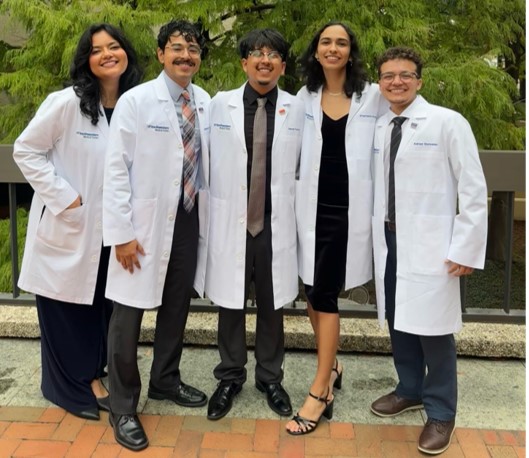
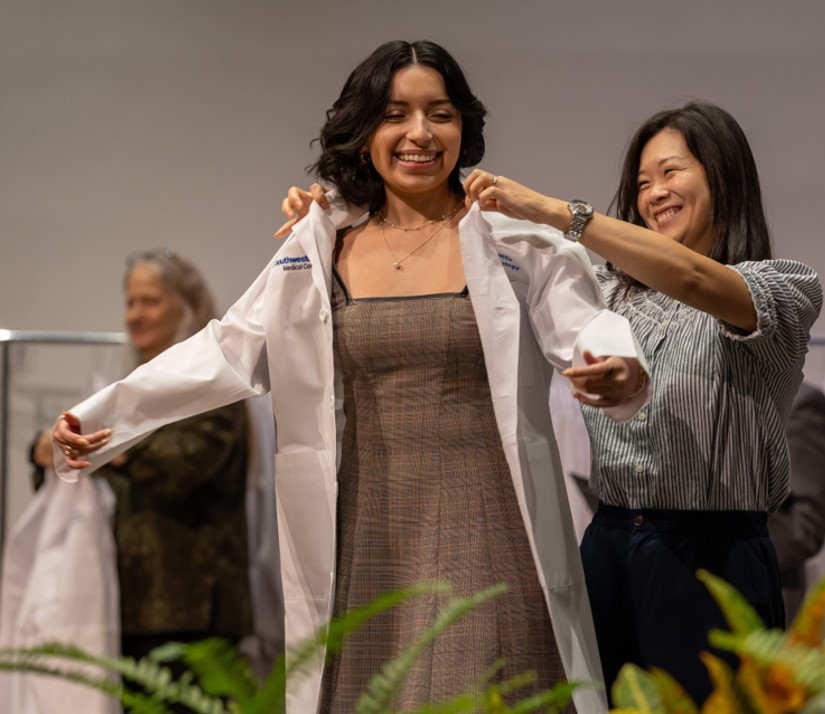
Last month, first-year medical students put on their white coats for the very first time during the White Coat Ceremony. This beloved tradition marks the beginning of their journey as future physicians – a lifelong commitment to healing and inspiring. More than a symbol, the white coat embodies trust and respect.
Meanwhile, graduate students took part in the inaugural Lab Coat Ceremony. Unlike the White Coat Ceremony that marks the beginning of professional training, the Lab Coat Ceremony recognizes a significant milestone already earned.
Each of the graduate students honored had successfully completed the rigorous coursework and examinations required by their program and advanced to doctoral candidacy. As candidates, they are no longer simply students of science, they are becoming creators of new knowledge. Congratulations!
| | Dr. Raymond Fowler (1952-2026) | | |
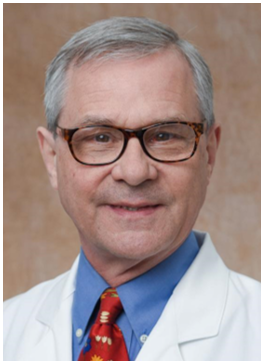
Raymond Fowler, M.D., FACEP, FAEMS, Professor Emeritus of Emergency Medicine, and one of the most respected emergency medicine and EMS physicians of his generation, passed away on Oct. 16.
For almost half a century – the last 25 years at UT Southwestern and Parkland Health – Dr. Fowler helped shape the field of emergency medical services as a physician, scientist, educator, author, and disaster-response expert. He coordinated medical care and relief services in Dallas following hurricanes Katrina, Gustav, and Harvey.
After joining the UT Southwestern faculty in 2001, Dr. Fowler began practicing emergency medicine at Parkland Health, one of the busiest ERs in the country, and served as an Emergency Department medical director and manager at UT Southwestern. Additionally, he held the James M. Atkins, M.D. Distinguished Professorship in Emergency Medical Services. Beyond his clinical and academic work, Dr. Fowler helped shape the practice of EMS medicine nationally.
In 2012, Dr. Fowler received the Physician Lifetime Achievement Award in Emergency Medical Services from the American College of Emergency Physicians. And just this year, he was presented with the 2026 Annual Ronald D. Stewart Award for Longstanding Excellence in Emergency Medical Services, the highest honor from the National Association of EMS Physicians. Read more.
| |
Professional Development for Educators
| | | | |
The Office of Faculty Development, in partnership with the Southwestern Academy of Teachers (SWAT), is offering an Educator Development at UTSW (EDU) course to provide faculty members at all levels with helpful tips to become better educators, scholars, and academic medicine professionals.
The course contains 10 modules, with a total duration of less than 2.5 hours.
| |
Teaching in Busy/High-Pressure Clinical Environments
Learn how effective teaching can happen in minutes, even in the busiest clinical settings, in this EDU module featuring Larissa Velez, M.D., Associate Dean for Graduate Medical Education. She shares core principles of efficient clinical teaching, high-yield teaching models, and tools to help educators teach while managing clinical responsibilities.
Access it on Taleo Learn by searching for “EDU 2026.”
Note: Taleo Learn will be retired on Dec. 6. Content will soon be active on the new platform UTSW Learn. All module progress will transfer seamlessly.
| | Important Dates and Upcoming Events | | |
TOMORROW: Leaders in Clinical Excellence Awards
Celebrate the outstanding contributions of our clinical faculty to patient care, education and training, and the continued advancement of UTSW. Read about the honorees.
School of Health Professions Awards Ceremony
Six students will be honored for achievements in leadership, innovation, research, and clinical excellence.
- Nov. 7 at 8 a.m. in the Excellence in Education Foundation Auditorium (NB2.EEF)
Grand Rounds Expert Panel
Join Internal Medicine and the Clinical Informatics Center for “The Learning Health System of 2035: Designing Healthcare That Learns.”
New Faculty Research Forum
This year’s forum will feature a keynote by Helen Hobbs, M.D., and highlight the work of 17 of UTSW’s newest faculty members.
Show Me the Money: Finding Funding Opportunities Through the Library
This session will highlight the Grants and Funding Guide and discuss how to search for and manage funding opportunities in the Pivot and Candid databases.
HHMI Hanna H. Gray Fellows Program
Applications are open for the Hanna H. Gray Fellows Program, which aims to recruit and retain early-career scientists to become leaders who inspire, train, and mentor future generations.
| | | | |