|
| |
School Hours
Monday through Thursday
9:30 a.m. to 5:00 p.m.
Friday 9:30 a.m. to 2:00 p.m.
| | |
|
Upcoming Events
April
4/12/26 "Wonderland Tea at the Fitzroy" Fundraiser
4/22/26 Student Awards Night- All students' attendance strongly encouraged
May
5/15 Field Day
5/21 Last day of school!- End of Year Activity
5/22 Graduation Day
| | |
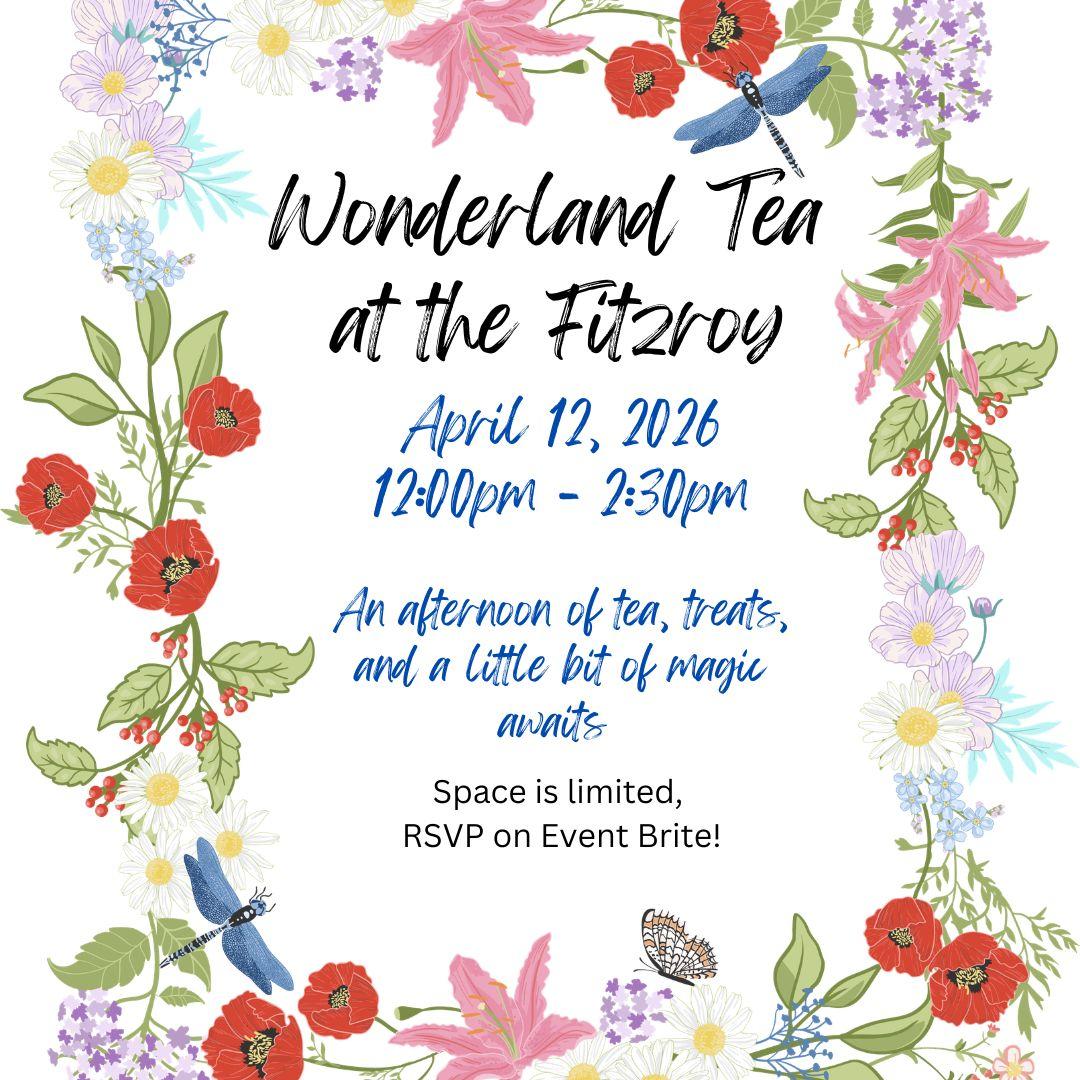
Accelerated Schools presents the 3rd Annual Wonderland Tea at the Fitzroy Mansion!
Join us for an enchanting afternoon filled with delicious tea, delectable treats, and whimsical entertainment.
Step into the magical world of Wonderland as you sip on tea in the beautiful surroundings of the historic Fitzroy Mansion. Get ready to be transported to a land of wonder and delight!
Date: Sunday, April 12th 2026
Time: 12:00 PM - 2:30 PM
Location:
Fitzroy Mansion
2160 S Cook St. Denver, CO, 80210
Come dressed in tea attire and immerse yourself in the charm of Wonderland. Don't be late for this important date!
Seating is limited, so reserve your spot now for an unforgettable experience at the Wonderland Tea at the Fitzroy Mansion.
Ticket Price includes: bottomless N/A beverages (tea, water, cocoa, and juice), finger sandwiches and select desserts.
- Mimosas for purchase at the event for guests 21+ with a valid ID.
**All proceeds from this event go towards fixing and restoring the beautiful Fitzroy Mansion**
Purchase tickets here!: PURCHASE TICKETS
Use code FITZROY for a special discount on tickets!
Students who attend will get a homework pass for one night's homework
| | |
Decluttering?
Accelerated Schools is always looking for gently used items we can use, such as sports equipment, art supplies, books, bikes, ski/snowboard gear, or even fresh ingredients for our cooking class! Please keep us in mind if you are downsizing or clearing out your space.
We also rely on donations for our silent auctions during annual fundraising events such as our event in December!
Email us at info@acceleratedschools.org for more information. We provide receipts for tax purposes for donations.
| |
Midday Math
Josh Warren, Mathematics Instructor
I have been thinking about how often math quietly shows up in the middle of an ordinary day. Not the classroom kind, but the small comparisons and quick calculations that shape how we see things.
Take precipitation. By this point in the year, a place like Denver typically has around 2 to 3 inches of total precipitation since January, depending on the mix of snow and rain. If we have only seen, say, 1.5 inches so far, that puts us at roughly 50 to 75 percent of normal. That gap is not just a statistic. It shows up in dry lawns, lower reservoirs, and that constant sense that we are waiting for a real storm to arrive.
Temperature works the same way. If the average high this time of year is about 55°F and today hits 65°F, that is a 10-degree difference. That might not sound like much, but it is nearly a 20 percent increase relative to the baseline. Over a week, those differences add up. Warmer days melt snow faster, shift planting schedules, and change how people spend their afternoons.
Then there is tipping, which is basically everyday percentage math. A $20 meal with a 20 percent tip turns into $24. Bump that to 25 percent and now it is $25. That extra dollar does not seem like much in isolation, but over ten meals it becomes $10. Over a year, depending on habits, it can easily reach a few hundred dollars. Small percentages, repeated often, become real money.
The same thinking applies when paying in cash versus paying at a store with taxes. A listed price of $10 feels simple, but add a sales tax of around 8 percent and the total becomes $10.80. If you hand over a $10 bill, you are short. If you budget exactly the sticker price in your head, you will always come up just behind. Multiply that across a full grocery trip and the difference can jump from a couple of dollars to ten or more.
None of this is complicated math, it is just awareness. A few percentages here, a couple of averages there. But these small calculations shape how we understand the world around us. Weather feels different when you know how far off normal it is. Prices feel different when you see the percentages behind them.
Midday math is not about solving problems, it is about noticing them.
| |
Community Partnerships for Student Growth
Kate Oh, Instructor and Enrollment Counselor
As an enrollment counselor, I have the opportunity to meet many professionals in our community who serve individuals with different learning needs. Through these conversations, I am able to learn from their experiences and gather valuable insights on how we can better support our students and families at Accelerated Schools.
Recently, I had the opportunity to connect with Kathy Kurzman, CEO of Nothing But Possibilities, to explore ways we can further support the well-being and success of our students.
Kathy is an academic executive function coach, parent coach, and educational trainer who works with students, families, and schools to strengthen essential skills such as time management, organization, planning, task initiation, and self-regulation. These executive functioning skills are critical for helping students succeed academically while also building confidence and independence.
Her work also focuses on supporting students who may experience challenges such as anxiety, procrastination, disorganization, or difficulty starting and completing tasks. Through coaching and practical strategies, she helps students build tools that allow them to approach learning with greater confidence and resilience.
During our conversation, we discussed several ways her expertise could benefit our school community, including professional development for teachers on supporting executive functioning skills in the classroom, workshops for students on study skills and managing academic stress, and coaching opportunities that help parents support their children’s learning and emotional well-being at home.
Partnerships like this help us continue strengthening our commitment to supporting the whole student not only academically, but also socially and emotionally. I look forward to sharing more as we explore the possibility of welcoming Kathy to our campus as a guest speaker for our students, teachers, and families.
| |
Earth Day 2026
Debby Sharp, Middle School Instructor
“April showers bring May flowers” but for us here in Denver, the showers are scarce or non-existent. What is the cause of this warm, waterless winter? In fact, the unusually warm and dry weather we are experiencing is a combination of a persistent La Nina pattern and a high-pressure ridge. These two phenomena contribute to prolonged droughts and heat waves. Global warming is also a major contributor to record breaking temperatures.
So, what can we do about this? April 22 is Earth Day. It is one of my favorite days to teach to because I get to educate the kiddos on how we can be proactive in saving our planet throughout the year, not just on one day.
Usually on Earth Day we go outside and pick up trash on the school grounds. Before we go outside we watch videos and discuss what the difference between recycle, reduce and reuse is so that when we go outside to pick up trash we know what can be recycled, reused, or reduced and what can not.
This year we have an added teaching opportunity. We inherited a compost tub so students will be educated on what can and can not be composted and what the benefits of composting are.
Finally, there is the problem of climate change. How can we as a class combat global warming? As far as energy conversation goes we can turn off lights, computers, and appliances when not in use, and use power strips to prevent "vampire" energy drain. We will work and plant food in our garden to promote local food. We can bike, walk, or use public transportation to reduce the number of personal vehicles on the road. One last fun project we can do is to use the EPA’s climate tools to calculate the school’s carbon footprint and therefore, be more able to educate others on climate change.
These are just a few of the things we can do to reduce our negative impact on the environment.
| |
Attachment Discussions in Psychology Class
Raechel Kimsey, Instructor
In March, Psychology students learned about Attachment Theory as a part of our unit on Human Development. Attachment theory was developed by Mary Ainsworth and John Bowlby in response to questions about how and why children attach to their caregivers. Together, they formulated an experiment to observe attachment in infants. In this experiment, sometimes called the Strange Situation experiment, the reaction of infants was observed before , during, and after being left in a room with a stranger present. They observed that while almost every child was distressed when their mother left the room, they tended to have different reactions when she returned. It was this response rather than the reaction to the mother leaving that would come to determine attachment style.Ainsworth and Bowlby determined four types of attachment style: secure, anxious, avoidant, and mixed.
Since then, the findings of the Strange Situation Experiment have been expanded upon. It is commonly accepted by many in the field of psychology that attachment style is established during the first critical period of life and continues affecting relationships with others throughout the lifespan, with secure attachment style being the most common type, comprising between 40-60% of the population, and the other three types (considered insecure) being less prevalent, but still common. Attachment style can develop a certain way for a variety of reasons. It is often used to describe the quality of romantic relationships but it not limited to that. Attachment style can affect friendships, workplace relationships, and any other type of relationship with other people that occurs throughout life.
I teach my students that when it comes to psychology, there is no single theory that provides a magical answer to the complex circumstance of being human, and therefore, it is important to understand that attachment theory is not the only perspective on such matters. However, reflecting on it can help us all to understand ourselves and others better.
Attachment style, self-report inventories are available online and if you have never taken one, it may be an experience that provides insight. However be aware that not all inventories available are of the same quality, and many are not true to the original inventory created by the researchers of adult attachment styles.
| |
Notes from the Lab
Julia Potocnjak-Overn , Science Instructor
In the past month, students in Biology have been learning more (and practicing) identifying different parts of the skeletal system, body planes, anatomical terms and structure. Why is it important to know, understand these relationships? Having this knowledge can be helpful when trying to understand information given by a health care professional, and understanding how our bodies repair bone injury. We are also learning about the different layers of bone, the importance of bone marrow and blood cell production.
Students in Environmental Science are continuing our studies on water, its importance in our daily lives and on a global scale. Students are working in research teams to explore solutions to issues impacting water like climate change, human impact factors and potentially creating new ways for us to filter, reuse and repurpose the water we have available. I am excited to see what our teams propose to tackle sustaining such an incredibly valuable but limited resource.
Middle schoolers have also been learning about the human body. We are identifying, analyzing and understanding why anatomical structures are important and why we observe skeletal differences between genders. For example, students are learning that differences in the width of the pelvis are designed in order for women’s bodies to accommodate bearing a child.
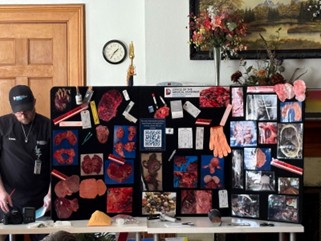
Lastly, students had a unique opportunity to attend a presentation by the Denver Medical Examiner’s office. Ryan White and his team of investigators, forensic assistants and autopsy technicians met with students and talked with them about the work they are doing in our community. They brought along some cool items like insects they commonly find, a skull and tools that are used during an autopsy. Students had some really great questions and provided great feedback and perspectives in the reflection assignments they completed afterwards.
| |
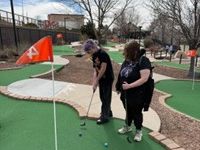
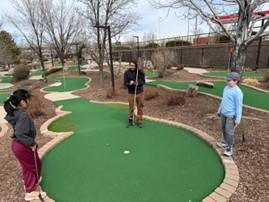
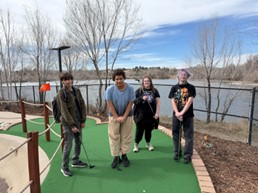
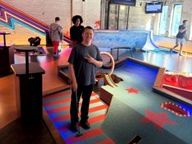
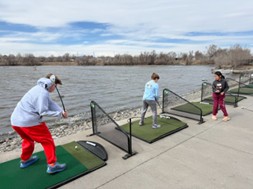
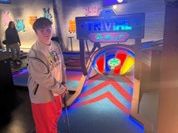
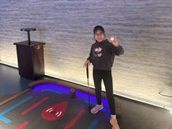
Mini Golf Activities to Puttshack and Aqua Golf
Kyle Pepper, Instructor and Enrollment Counselor
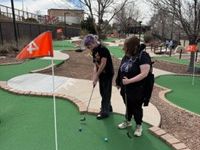
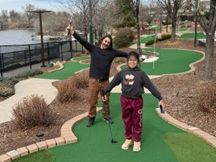
On Thursday, February 26th and March 12th, qualified students at Accelerated Schools went to Puttshack (indoor) and Aqua Golf (outdoor) for a day of rewarding fun and mini golf. Mini golf, also known as putt-putt golf, is an excellent activity for neurodiverse students, offering a low-pressure, sensory-rich environment that promotes physical, cognitive, and social development. It encourages motor skill development (hand-eye coordination), patience, and strategic thinking in a fun, flexible, and inclusive setting that can be tailored to various abilities and needs.
- Low-Pressure Environment: Unlike competitive sports, mini-golf offers a relaxed, imaginative atmosphere where mistakes are part of the fun. It reduces anxiety through engaging, non-threatening play.
- Sensory-Rich Experience: The game provides positive tactile and visual input, such as brightly colored balls, themed obstacles, and the auditory feedback of the ball landing in the cup.
- Accessible and Customizable: It is an inclusive, low-impact activity that allows for flexibility in rules, such as allowing extra "do-overs" or starting at a closer point to accommodate individual needs.
- Develops Motor Skills: Playing helps refine fine and gross motor skills, including hand-eye coordination, balance, and spatial awareness, through the motions of putting.
- Fosters Social and Emotional Skills:The game promotes patience, turn-taking, and cooperation, especially when playing in teams.
- Cognitive and Strategic Thinking: Each hole presents a new puzzle, encouraging problem-solving as students plan their shots around obstacles.
- Increases Confidence: Successfully navigating obstacles and achieving "small victories" boosts self-esteem and provides a sense of accomplishment.
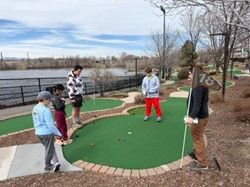
Mini golf also acts as a natural break from routine, offering calming, repetitive motions (mindfulness) that can help improve focus and concentration. I have included some photos from both the Puttshack and Aqua Golf activities below.
| |
Bad Bunny and Cultural Learning Through Music
Zach Saipe, Instructor
Something happens to this nation when someone like Bad Bunny plays a super bowl halftime show completely in Spanish. Sure, some viewers become infuriated by the anti-American blasphemy, substituting their own, patriotic halftime show with rock’n’roll cowpolk dressed in cutoff jean shorts and fur coats. But for the vast majority of us, it’s a reminder and an acknowledgement that the cultural heritage of the United States is as much Latinx as anything. Though often all too obscured in the day to day, a quick road trip through Colorado (or any other state in the american southwest) would reveal city after city carrying Spanish names–a vista to when nearly half the country (by landmass) literally was Mexico, until 1848 and the end of the United States' war that annexed a large chunk of Mexico for itself. Further punctuated by generations of Latinx immigrants travelling north to find work, it’s obvious that the U.S. is a Latinx nation, truly part of the Americas.
For my students and I, Spanish class is one part language acquisition, one part cultural studies, and a few parts pattern recognition. This year we’ve been taking a hard look at the role that western countries such as the United States have played in shaping Latin America through colonisation, industrialization, and CIA backed coups that have played a heavy hand in shaping the Latin America of today. One major example that we’ve studied has been the U.S. extraction of Venezuelan leader Nicolás Maduro and the fraught US-Venezuela relationship, using this as a jumping off point to explore the roles of communism and oil that drive the U.S. operations in foreign countries.
Music is the great relator; it hits levels intellectual, poetic, and vibrational. So, we listen to a lot of Latinx songs, translate and dissect their lyrics, and explore their root meaning. Bad Bunny’s latest album, Debi Tirar Mas Fotos, is a cultural synopsis of how colonization changes its clothes, trading rifles and tanks for suits, bank accounts, and loans. His song Lo Que Paso A Hawaii is a love letter to his nation, Puerto Rico, asking it not to succumb to western forces, but to stay unique in character and heritage. His comparison to Hawaii, a once territory now U.S. state, urges that Puerto Rico retain its autonomy, be a sovereign nation not burdened by debt to global super powers, that can make decisions for itself. It’s half the words he uses to construct his argument, half the sentiment communicated through art, that helps us learn through his song.
|
‘Revered’ Bullwer-Lytton legacy a big hit for high-school ELA students
Jessica Machetta, Instructor
Word nerds have loved the annual Bullwer-Lytton contest for years, which awards winners for how badly they can string words together to form a lead into a story. That’s right, the more “cringe”, the better. Using some of these “winners” as inspiration for creative writing, my ELA kids went to town! And … there’s a caveat. After a certain amount of time, they had to switch their copy with other students and pick up where the previous kiddo left off.
The results are, of course, hilarious.
Sadly, the contest has come to an end as of 2024. “When I initiated the competition in 1983, inviting entrants to submit bad opening sentences to imaginary novels, I never dreamed that we would receive thousands of entrants from all over the U.S. and the globe, or that the contest would survive for over four decades,” says the founder, Scott Rice.
WIth that, I invite you to enjoy the collective stories from Christian, Lars, Nora and Nathan, all at once and in no particular order at all! Keep in mind, each story has three writers in sequence and less than one class period to finish! This kind of exercise helps students flex their creative muscle without worrying about grammar, context, punctuation or even a flow of events. It’s a ready, set, GO lesson plan that reminds them they’ve got amazing writing skills, even under the most preposterous of circumstances.
LINK to doc (HERE)
|
Welcome Mr. John!
John Jarvinen is a Colorado native who recently returned to Colorado after spending the last few years overseeing sales for a major renewable energy firm. He brings a dynamic and diverse background having worked as the Varsity Chess Coach for a city-wide chess program, a youth mentor in outdoor education, and a nationally touring musician. John’s leadership extends to the non-profit sector, where he directed fundraising efforts for organizations such as The Nature Conservancy and Rocky Mountain PBS. He studied Film at Montana State University and attended Berklee College of Music with a focus in piano performance. In his free time, John enjoys skiing, playing music, and spending time with his wife watching sumo wrestling.
|
Finishing Strong as the School Year Winds Down
Kayla Presnal, Office Manager
As we move into the final weeks of the school year, we are excited to see all the growth, progress, and accomplishments our students have made during this school year. With the last day of school on May 21st (graduation on May 22nd), this is an important time for students to stay focused, stay motivated, and finish strong!
While the end of the year is in sight, learning is still in full swing here at Accelerated Schools. These final weeks are filled with important lessons, projects, and opportunities for students to demonstrate everything they’ve worked so hard to achieve. We encourage all students to “dig deep,” give their best effort, and take pride in finishing the year on a high note. Even as we approach the end of the year, daily attendance in every class (yes, even electives!) remains essential. Every school day provides valuable learning experiences, and missing class time can make it harder for students to stay on track. Being present helps students stay engaged, complete assignments, and feel confident as they wrap up the year.
Our Awards Night will take place on April 22nd, where we will celebrate the hard work, achievements, and dedication of our students. Every student will receive an award tailored specifically to their achievements this year, so student attendance is strongly requested by Accelerated Staff. We look forward to recognizing so many of their successes and sharing this special evening with our Accelerated families.
Let’s work together to support our students in these final weeks. With continued effort, strong attendance, and a positive mindset, we know our students will finish the school year strong and be ready for what comes next!
| | Helpful Forms and Links for Accelerated Families | | | |  | |
For more than 40 years, concerned parents have turned to Accelerated Schools for individualized learning programs helping students overcome challenges, and excel academically. The fact is, a traditional school system is not designed to meet the needs of every child. When a student is not being successful, or is not thriving in a traditional environment, parents must often look elsewhere for a solution. This is were Accelerated Schools comes in.
Accelerated Schools begins by creating a learning program designed specifically for a student. Our work points are toward changing the ratio of failure to success and by cultivating an environment of accountability. Our students are given attainable goals and are rewarded by celebrating their accomplishments. Once a student starts experiencing success, their attitude, motivation and effort improve dramatically. This ends the negative cycle and leads to positive academic progress and positive self-esteem.
| | If you have comments and/or suggestions about our newsletter, email Kayla Presnal | | | | |