Starting today, we will begin sending INNovation every other Friday through August. Keep up with what’s new in nonprofit news by following us on Twitter. Happy summer! ☀️
|
|
How WyoFile accelerated growth with community buy-in |
|
In 2008, recognizing the rapid decline in resources among traditional, local news outlets, a small group of veteran journalists and investors founded the nonprofit WyoFile. Back then, there were no full-time staffers, and the organization faced periods of insolvency.
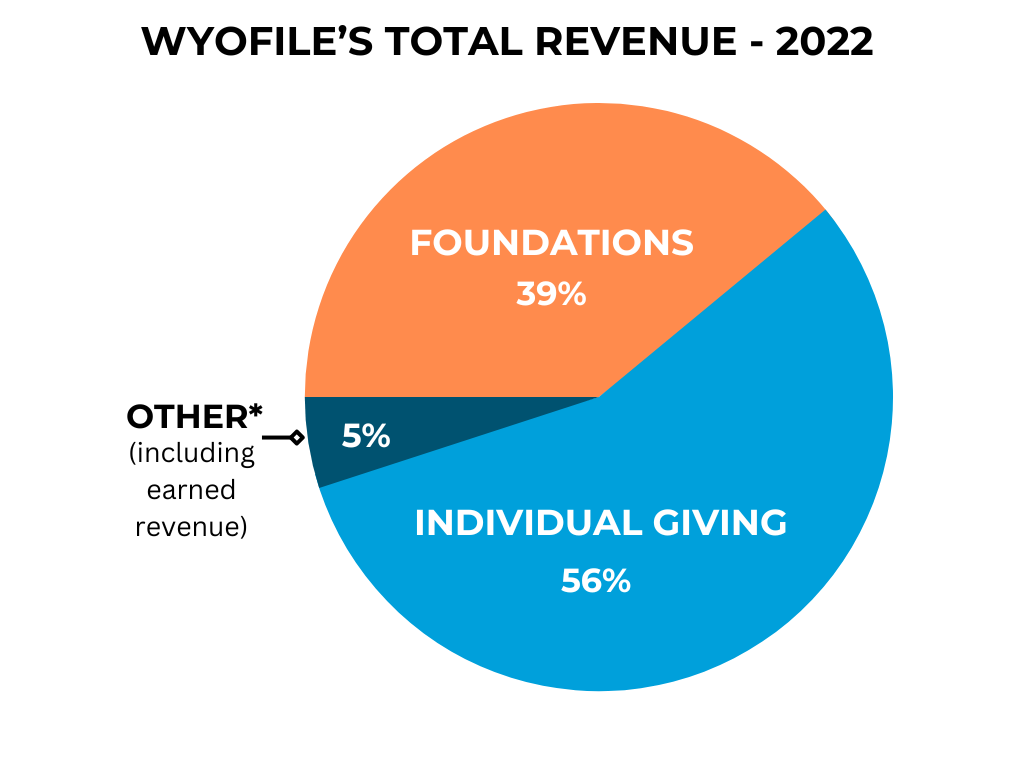
Today, in a state with no daily print newspapers left, WyoFile has a staff of 13 producing hundreds of stories a year while bringing in about half of its annual revenue from individual giving — with an impressive mix of major, mid-range and small-dollar donors.
How did they grow? Slowly, at first, and then rapidly with a significant three-year grant that allowed them to make three key hires in the areas of development and membership — leading to new, sustainable revenue streams and more individual support. Read the case study.
|
|
Tell us how we’re doing: What would you like to see in INNovation? Take our 5-minute survey to let us know how we can make our newsletter work even better for you. You’ll automatically be entered to win a $50 Barnes & Noble gift card! |
|
Enabling nonprofit news outlets to benchmark success |
|
This year, INN’s research team launched a new service called “Index Pods” to give member news organizations better revenue, staffing and audience benchmarking data — as well as more targeted peer connections.
Pods leverages data from INN’s annual Index survey to identify 12 distinct groups of nonprofit news organizations – from hyperlocal community connectors to large investigative powerhouses. This new service is a response to the rapid growth of the nonprofit news sector, particularly among INN’s local members, enabling INN to better support the distinct missions, revenue models, and needs of our varied 425+ member newsrooms. Learn more.
|
|
Locally sourced, collaborative reporting from and for rural America.
Subscribe here to receive stories from the Rural News Network (RNN) in your inbox every other week and learn more about how INN is building a news alliance across rural America.
|
|
-
A two-year operating grant from Lilly Endowment Inc., will support the work and build the capacity of Religion News Service (RNS), one of the INN Network's global news organizations. RNS will use the more than $4 million grant to expand and diversify its audience, increase revenue through multiple streams and improve its operations.
Kudos
-
About one quarter of the 61 journalists joining the 2023-24 Poynter-Koch Media and Journalism Fellowship program work for INN Network news organizations. They range from a civic engagement reporter for the Houston Landing to an Indigenous affairs reporter at Underscore News to a photojournalist at the Baltimore Banner. During the year-long program, fellows work at news organizations and receive training and mentorship to develop their careers.
-
INN member ICT took home top honors at the 2023 National Native Media Awards earlier this month. In its division, the organization placed first in both Best Digital Publication and General Excellence, as well as both first and second for Best Newscast. Mvskoke Media won third place for Best News Story for a story it produced for INN’s At the Crossroads series. The Native American Journalists Association (NAJA) received more than 800 entries for the awards, which recognize outstanding coverage of and for Indigenous communities.
|
|
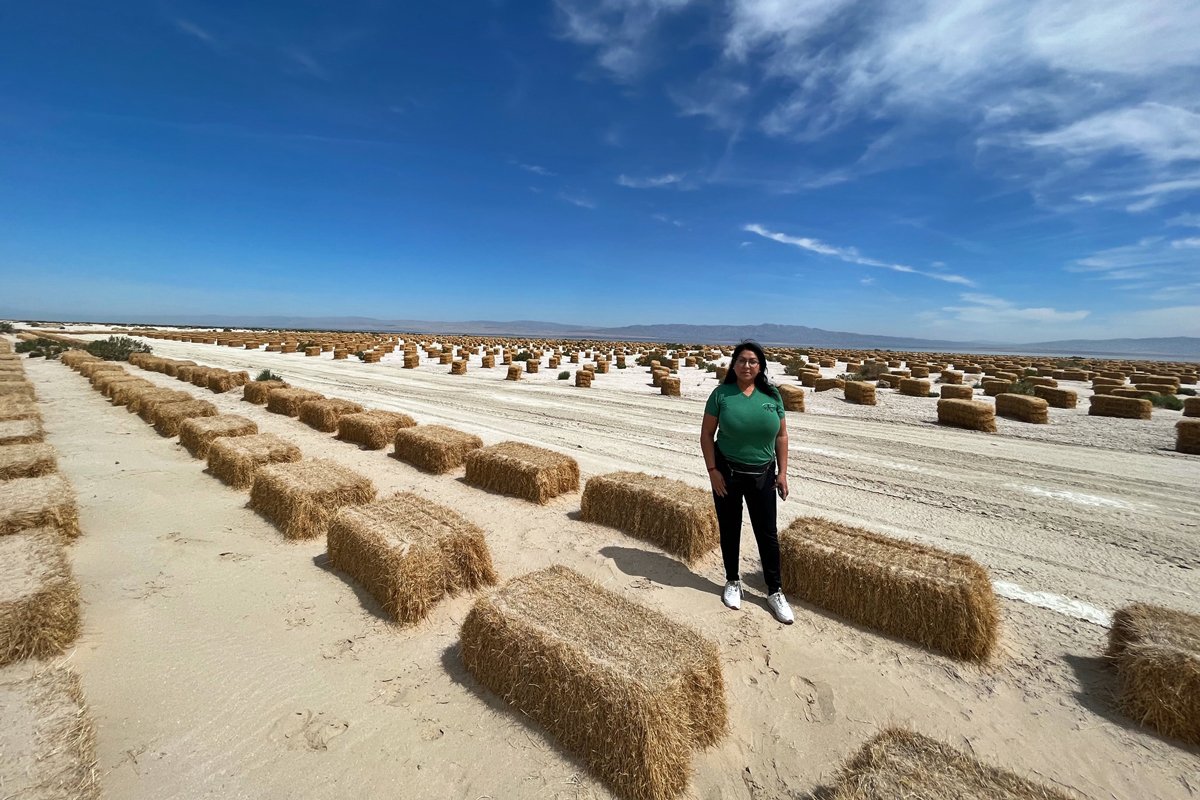
Elvira Herrera stands on the shore of the Salton Sea, where 300,000 hay bales have been placed to mitigate dust. Photo by Virginia Gewin |
|
Our Story of the Week comes from Civil Eats, a daily, nonprofit news source for critical thought about the American food system.
Air quality in California’s Salton Sea region is among the worst in the country. Farmworkers are exposed to toxic dust and airborne pollution from algae blooms, and exposure to things like sulfuric odors, arsenic and smoke from agricultural burning are all likely culprits of rising chronic health conditions in the area.
Excerpt:
|
|
The state’s most visible dust mitigation project is in Salton City, where over 300,000 hay bales have been placed on the dry sandy shores that surround the sea. Elvira Herrera, an organizer for the farmworker advocacy organization Lideres Campesinas and a resident of Salton City, thinks the bales have made little difference. But state officials in charge of the project say otherwise. At a July 13 webinar, Steven Garcia, senior engineer at the California Department of Water Resources, says that dust emissions from the hay bale site are down roughly 90 percent compared to last year.
But, scientists say, the goal of the hay bales and other dust mitigation projects is simply to prevent playa dust from making poor air quality worse.
“If the emissions aren’t from the shoreline, no amount of straw bales is going to improve the air quality,” says John Gillies, an atmospheric physicist at the Desert Research Institute in Reno, Nevada.
“The dirty secret is that people are being impacted by agricultural and desert lands much more than the Salton Sea playa,” says Earl Withycombe, retired air resources engineer with the California Air Resources Board....But, Withycombe adds, agricultural sources are not being studied, evaluated, or regulated in any decent fashion.
|
|
Institute for Nonprofit News
Mississippi Free Press
Foothills Forum
Moab-Times Independent
Open Campus
Visit inn.org/jobs for current listings across the INN network.
|
|
Tell us how we’re doing: What would you like to see in INNovation? Take our 5-minute survey to let us know how we can make our newsletter work even better for you. You’ll automatically be entered to win a $50 Barnes & Noble gift card! |
|
|
|
|
|
|