Good Morning Trevor,


This week's bag is more flavors of fall, even though the summer temps seem to be hanging in there.


The farmers in my neighborhood are busy getting ready for harvest. Some of the guys who were able to get their crops in early are already taking off soybeans. But the big harvest right now for most dairymen and row-crop guys is corn silage. Read below to learn about the old fashioned way of harvesting silage.


Another common question I've been getting lately is about the dry weather. It has been really dry and Governor DeWine just declared a big portion of the state as in a state of emergency due to the drought. Read below to learn about some of the challenges and considerations of a drought.


And lastly, this week's bag is full of bounty with a whole chicken, 3# of gold potatoes, sweet peppers, and more. The warm, dry weather has been helping us with our final batch of broilers on pasture. The chicken doesn't do well in cold, damp conditions. These warm nights and dry days have made less stress on our final rotation of chicken. The birds that are outside now will be harvested in mid October, hopefully before the water lines start freezing on me!


Enjoy

Trevor


Also in this newsletter:

  • Turkey Sale. We are thinking a lot about turkey these days...check out these savings on Ground Turkey and Turkey Burgers
  • Around the farm - making corn silage


Turkey Items - Sale

Turkeys are dominating our farm work these days. In honor of this humble (and curious) bird, we are featuring a few items on sale.


Ground Turkey - 1# bulk - $1 off


Turkey Burgers -

4 patties per pack, 1.25# - $1.50 off


Turkey Stock (Broth) - $5 per quart

great for a fall soup, to season and sip for health, for gravy, or to use in a braised beef or pork dish.


Order Sale Items Here

More Fall Flavors

Apple Cider - $5.75


Pressed from a mixture of apples - honeycrisp, cortland, gala, and paula red this week - and UV pasteurized, this cider is great and, if neglected in the fridge, will give that refreshing tang and fizz as it ferments some. That's how I prefer mine!

Stanley Plums - SALE - 1.5# bag - $3.50


This is the last week for the Stanley Plum. These dark purple plums with yellow flesh have that signature sweet first bite and tart zing on the finish. They are great for a snack or make an excellent preserve for serving with a cheese board.

Apple Sampler Bag - $8


Try two each of 4 different types of apples. This week's varieties include: Jonathon, McIntosh, Ginger Gold, and Gala

Sweet Potatoes - 3# bags


The possibilities are endless. Baked sweet potato. Sweet potato fries. A mash. A soup. In a stir fry. In pancakes, muffins, or even sweet potato pie or cookies.

Order Extras Here

From the Farm Bakery

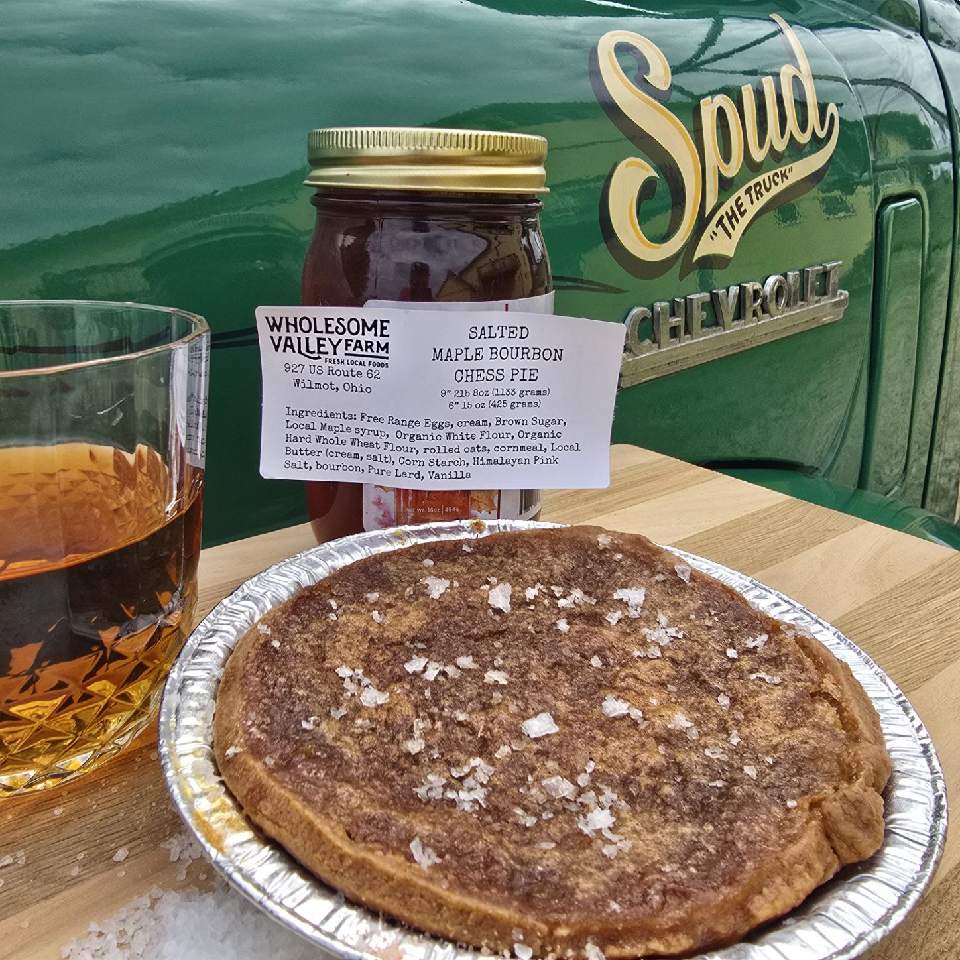
Salted Maple Bourbon Chess Pie: 

This week's pie is a break from fruit pies. We start with a custard of farm fresh eggs, cream, and whole milk. Some cornmeal adds the signature dense texture and bourbon adds a depth to the sweetness of the maple. Please keep this pie refrigerated. Best served chilled.


Apple Cinnamon Bread. We are replacing the zucchini bread this week with a new quick bread. Apples are folded into a sweet batter for a moist breakfast or dessert bread. Topped with an oat and brown sugar streusel topping.

About the Drought -

Fall Farm Management

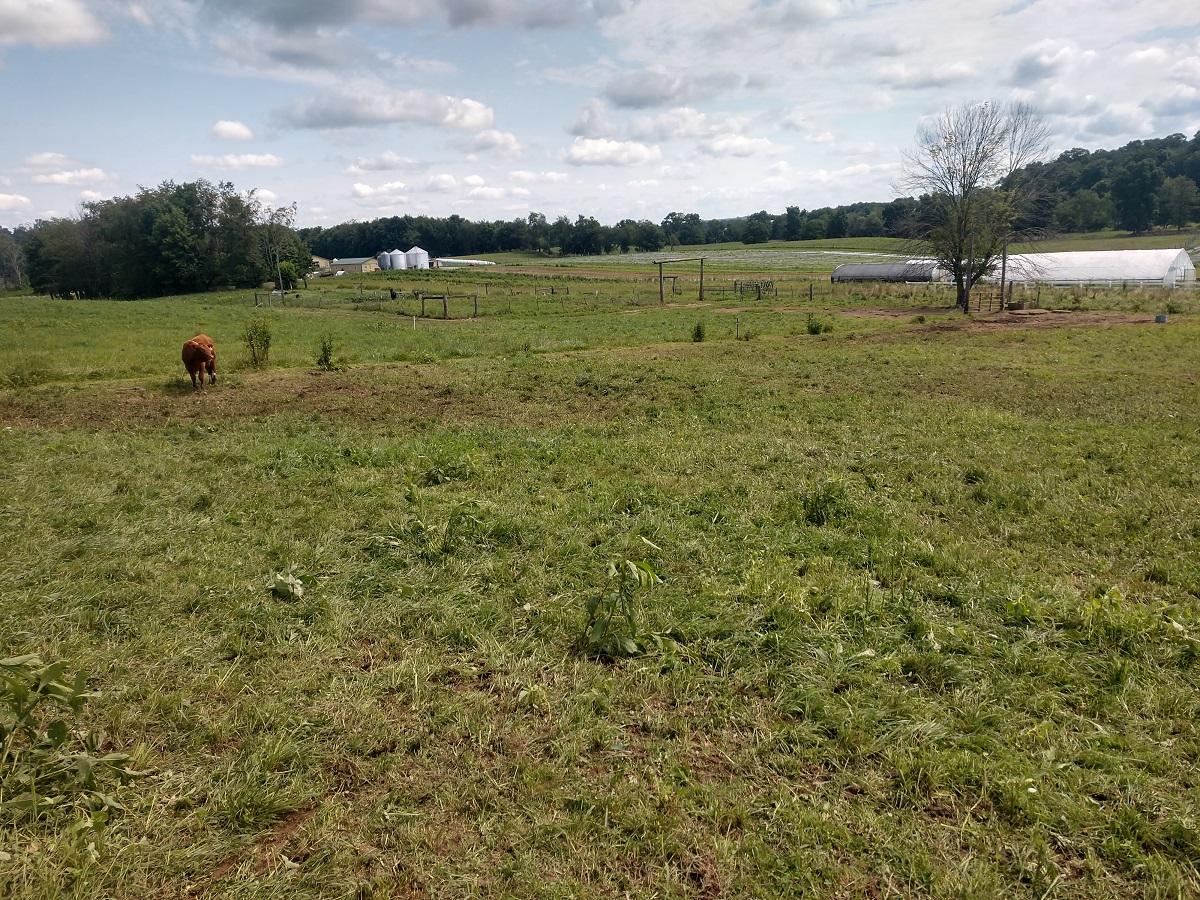
It's hard to tell from a photo just how dry and crunchy the grass is. It's bad right now.


We haven't had significant rain since July. This creates a few challenges:


1) Quality of pasture. The grasses are brown and have started putting their energy back into the roots to survive. A grass will search deeper for water, but in the lack of water, even with abundant sunshine, photosynthesis can't occur. Without photosynthesis, there is no energy to feed the plant (grow). Energy is put into the roots to survive leaving a nutritional void in the forage that the cattle eat.


2) Next Year's Potential. A weakened plant going into the winter has less potential growth for next spring. This is where it gets tricky. If I "overgraze" this fall, the grasses form less tillers (new growth). The more tillers a grass has going into the winter, the faster and stronger it will come up in the spring.


Overgrazing to survive this season can create a problem next year. It's really a gamble on what to do. Options include:

A) If I have a place to do it, start feeding hay to the cattle. Let the pasture recover.

B) Graze warm season annuals like Sorghum or Millet until the pasture recovers

C) Overgraze now and drill in some cereal crops (like cereal rye or wheat) to graze in the spring.


Feeding hay this time of the year is really a challenge. I have to pick a pasture to sacrifice because the cattle will destroy it while eating hay. Also, they will want to test the fences to get to the green grass they prefer.


Grazing sorghum or millet means you had to see the drought coming months ago. I fortunately did drill in some sorghum as an emergency crop in a low productive field. It's ripe and ready to graze.


And drilling in cereal crops. I'll probably do that this fall still or early spring.


Last year, we were able to graze until Thanksgiving week. I started feeding hay Thanksgiving week and moved the cattle into the barn the first week of December. This year I won't come close.

Planting New Pasture


To the right is a photo of triticale coming up Sept 10, 2022. That August I had plowed under 3 produce fields to turn into permanent pasture.


I planted triticale as a "nurse" crop with a permanent pasture mix underneath it. That year, we had good moisture and the triticale popped up in under 3 days.


The spring of 2023, my forage harvest was excellent. The triticale was very tender and high energy for the cattle. The permanent pasture came in strong and has been very productive this year.


I have a 15 acre field that is getting older and less productive. The grasses growing are no longer what I want, so my intent was to plow it under, fertilize, and replant with the same mixture as I did in 2022.


To Plow or Not to Plow

Right now, I have a bird in hand I'm looking to trade for 2 in the bush. I know the field - the bird in hand - is grazable. It will produce a 1st cutting hay. It's just not perfect.


The perfect field - 2 in the bush -- requires that I plow it, seed it, and that everything germinates and takes.


I have several concerns:

1) It's going to be very difficult to get a plow into the ground

2) I'll be turning over soil, releasing any moisture that is trapped below.

3) Even if I get the field worked, I need moisture for the seed to germinate. Every day that passes is precious. Just like the grasses that need tillers to survive the winter, so do the annual crops and the new seeding.


The seed salesman says to do it. "When the rain comes, the seed will be there ready to germinate."


I ask, but what happens if just enough rain comes to germinate? And then no more. The seedling will be stressed more than an established pasture.


Right now, I've made my decision. Although the temptation to have a perfect pasture in 2025 is real, I must realize that it's unlikely. I'll stick with my worn out pasture, feed it well, and drill in some annual cereal crops for spring tonnage. Hopefully in the fall of 2025, I can try again.

Around the Farm -

Making Corn Silage

See above our corn silage video

It's the first sign of fall when silage gets put up.

There are milestones in farming communities. There is the spring when the plow hits the ground and the corn planter comes out.


There are the sites of shocks and caps in the fields in July, just weeks before the wheat is threshed in a traditional "threshing circle."


Then in fall the farmers are busy cutting and reaping corn to make silage. This is usually early September. Following that, corn is picked (harvested) for either ear corn or kernel corn for animal feed.


This week my neighbors were putting up silage. I stopped in and got in the way - I mean helped - for a little while. I know better and I bring snacks as payment! They know I want to tell you all about it.


Step 1: Wait for the corn to dry down.

In previous newsletters I talked about the difference in sweet corn and field corn - also known as dent corn.


This is a good example of dent corn and what it is used for.


The photo to the right shows the milkline in an ear of corn. At this point, the corn is quite hard to the touch. The kernels have started to dry down and have a dent in the top of them. The yellow represents the hard part of the corn; the white represents the soft milky part. The milkline is about 1/2 to 2/3 up the kernel. This is the ideal time to harvest the corn for silage.


By contrast, in about 45 days from now farmers will look for the "blackline" to indicate that the corn is completely mature and dried down, ready to shell for kernel corn.


Step 2: Cut the corn plant and bind it into a shock.


This is the really old fashioned way to do it. The Amish use antique reaper binders that are obsolete. These old machines cut the corn plant about 3 inches off the ground. About 5 stalks are collected together and tied off with a piece of twine.


Step 3: Shocks are loaded onto the wagon.


The shocks of corn are usually transferred up a conveyor from the reaper binder onto a wagon that rides beside the reaper.


In this photo, I'm collecting all the ones that fell off the wagon on the way back to the barn.

Step 4: The corn is fed into a chopper


The chopper is driven off of the PTO (power takeoff) shaft on a tractor. The driveshaft powers the machine where a belt pulls the stalks of corn into a blade that chops it up and blows it out the side.


The farmer manually feeds the corn stalks onto the conveyor.

Step 5: The chopped corn is packed into a silo.


The chopped corn is still green and wet. It is packed into the silo like making sauerkraut. The sugars in the corn start to ferment in the anaerobic environment. This preserves the corn and makes certain nutrients more available.


The silage also smells and tastes good to the cows. Marion, here, uses the silage to supplement his dairy ration in the winter. It is high in energy and nutrients, making it ideal and affordable way to feed a dairy cow (which requires a very rich ration to produce milk and carry a calf).

The men work in teams:

Reaper/Binder: 1 man driving two horses to run the reaper binder. This is the loud job.

Wagon Teams: 1 man drives and 1 catches/loads the corn onto the wagon. 3 wagons were in motion at once to provide continuous flow to the chopper.

Chopper: 1 man feeds the chopper as he unloads each wagon. The wagon teams switch wagons and horse teams when they drop the loaded wagons off at the barn.

Packer: Usually the chopper blows directly into a vertical silo. In this case, the silo was already full and a "bunk bag" was being filled. One man drives the skid loader to transfer the chopped corn to the bunk bag and pack it in tight.


All together there were 9 men working on this project. They break at 11:30 for a large lunch together prepared by the farmer's wife and his daughters.

Bag Contents

Small Omnivore

Kennebec Potatoes

Cauliflower

Beets

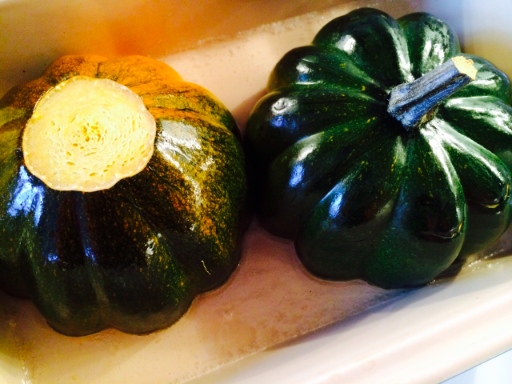
Acorn Squash

Grape Tomatoes

Sweet Peppers

Whole Chicken

Small Vegetarian

Kennebec Potatoes

Cauliflower

Beets

Acorn Squash

Grape Tomatoes

Sweet Peppers

Apples

Eggplant

Zucchini

Lettuce

Onion

Garlic

Mini

Kennebec Potatoes

Cauliflower

Acorn Squash

Grape Tomatoes

Sweet Peppers


Large Omnivore

Whole Chicken

Kennebec Potatoes

Cauliflower

Beets

Acorn Squash

Grape Tomatoes

Sweet Peppers

Whole Chicken

Celery

Oats

Apple Cinnamon Brats

Apples

Broccoli

Large Vegetarian

Kennebec Potatoes

Cauliflower

Beets

Acorn Squash

Grape Tomatoes

Sweet Peppers

Apples

Eggplant

Zucchini

Lettuce

Onion

Garlic

Celery

Oats

Broccoli

A2 Guernsey Yogurt

Pears

Small Vegan

Kennebec Potatoes

Cauliflower

Beets

Acorn Squash

Grape Tomatoes

Sweet Peppers

Apples

Eggplant

Zucchini

Lettuce

Onion

Garlic


Order Extras From the Online Shop

JOIN US FOR THE

WINTER SEASON

Winter Share Package Details
Sign up For Winter Season HERE
OUR FAMILY OF COMPANIES
 
STAY CONNECTED
Facebook  Instagram