Inviting Input for the Ways of Knowing Action Agenda

What would it take to truly shift the health science knowledge system (HSKS), so that communities historically excluded from defining “evidence” are centered as co-creators of knowledge and justice?


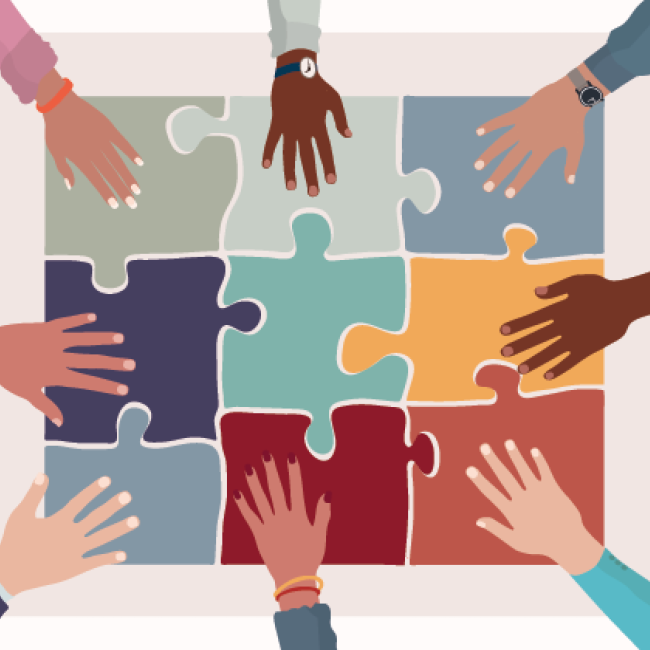
After more than two years of collaboration with Partners for Advancing Health Equity, community members, anti-racist and anti-colonial scholars, funders, journal editors, academic administrators, and other incredible partners, we’re excited to share the Ways of Knowing Action Agenda. Grounded in recommendations from the 2024–2025 Ways of Knowing gatherings, this action-oriented agenda provides practical steps to uplift historically oppressed and marginalized communities, advancing health equity research along a continuum toward health justice.

Action Area One | Situate research to be accountable to communities

Action Area Two | Prioritize the social impact of research findings

Action Area Three | Embed health justice principles in research culture

Action Area Four | Work in coordination to achieve collective action

Action Area Five | Bolster the infrastructure needed to support an equitable and durable health equity research ecosystem

This work is meant to be collaborative and to evolve as an organic movement to shift the HSKS. We welcome your insights on meaningful milestones for each action area and your ideas for future collaborations that can help carry this agenda forward.

What We're Watching

Why does race determine how long we live? Dr. Thomas LaVeist and his team investigate this question through their documentary, The Skin You’re In. The film explores why Black Americans experience poorer health than other ethnic groups in the United States, and offers solutions through conversations with health experts and storytelling from Black families’ lived experiences. In the words of our own Ye Ji Kim, PhD, MPH, “The documentary was a strong, visual argument supporting the evidence in the scientific community of the injustice that Black and other persons of color experience in metropolitan US. The lived experiences told in first person by two young adults provide insight into the intergenerational health inequities resulting from such things as food deserts, lack of green spaces, and chronic stress of police presence and (over) involvement in communities.” 

What We're Learning

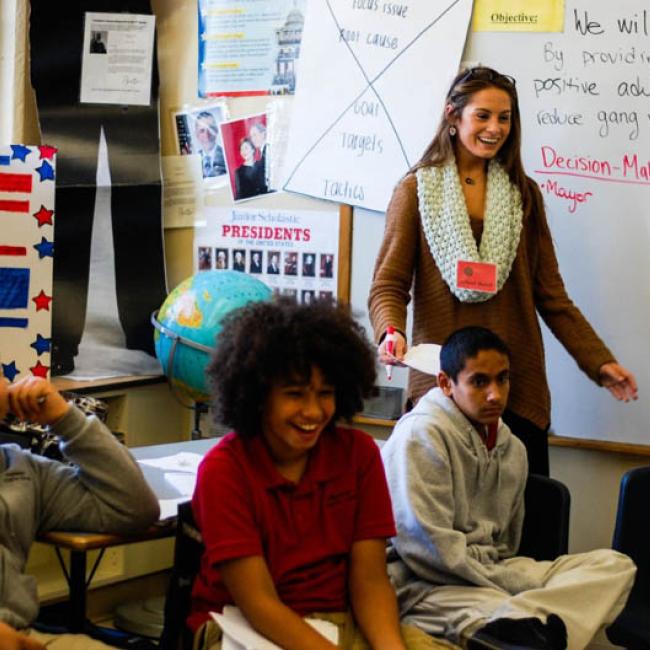
Does a school-based action civic engagement curriculum affect civic and wellbeing outcomes for adolescents (ages ~ 10–18) attending U.S. middle and high schools? In this protocol paper, the project team hypothesizes that students attending schools implementing the action civics curriculum will report more positive civic and wellbeing outcomes than students who are in control group schools. The I-ACTED study (investigating action civics training through an experimental design): a cluster randomized controlled trial of a school-based action civics education intervention on adolescent wellbeing is one of the first randomized controlled trials to test this hypothesis.

Latest E4A Blog Posts

Rooted in Relationships: Sharing Broad Themes from E4A Grantee Networking Sessions

Coming Together to Continue Advancements Toward Equity and Justice

Innovative Partnerships with Big Impacts

Cross-Sector Partnership Improves Cancer Screening

An innovative partnership between Nebraska’s Department Motor of Vehicles, public health officials, and a community advocacy group improved health screening access among African Americans, a population facing disproportionate cancer burdens. Using colorectal cancer as a test case, the project team handed out screening kits at the DMV to find out if leveraging non-traditional settings like salons and barber shops, religious spaces, libraries, community centers, and the DMV can improve health and racial equity.

Evidence For Action at UCSF

LinkedIn  Instagram  Web  YouTube
LinkedIn Share This Email