|
Why Reducing C-Players Strengthens Your Business
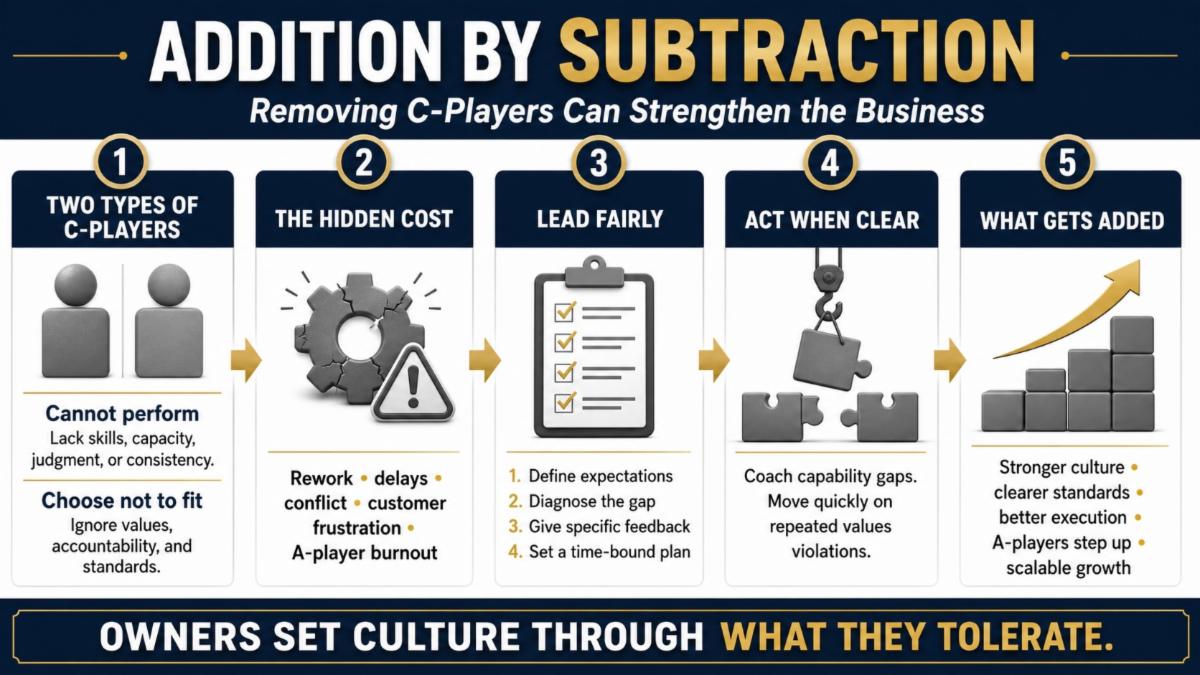
Most owners recognize the cost of a bad hire. Fewer fully account for the cost of keeping the wrong person too long. A C-player may be likable, experienced, or productive in certain areas. But they fall short in one of two ways:
- They cannot perform at the level the role requires.
- They choose not to operate according to the company’s values and expectations.
Either pattern creates hidden costs: missed execution, management distraction, rework, lower standards, customer frustration, and resentment from stronger employees.
Removing a C-player—fairly, clearly, and decisively—can be an act of addition by subtraction. It creates room for better performance, healthier culture, and stronger accountability.
Two Types of C-Players
Those who cannot perform
Some employees are trying but lack the skills, judgment, capacity, or experience required for the role. They may repeatedly miss deadlines, make avoidable errors, require excessive supervision, or show little improvement despite coaching.
This is generally a capability issue. Leaders should define expectations, provide appropriate training and support, set measurable goals, and give the employee a reasonable chance to improve.
But reasonable cannot mean forever. If the position requires an A-level result and the employee consistently delivers at a C-level, keeping them in the role is unfair to the business, the team, and often the employee.
Those who choose not to fit
Other C-players are capable but choose not to fit the organization. They may ignore processes, blame others, resist accountability, undermine leaders, create conflict, or treat coworkers disrespectfully.
These people can be especially dangerous because owners may protect them for their knowledge, production, sales results, or tenure.
But a productive employee who damages trust and violates core values is not an A-player. Their behavior tells everyone else that results excuse misconduct and that company values are optional.
That message will eventually cost more than their individual contribution.
The Cost of Tolerance
C-players do not just affect their own output. They consume the capacity of the whole organization.
A-players often carry the burden. They fix mistakes, cover unfinished work, protect customers, and absorb the stress created by weak or disruptive teammates. Over time, they disengage or leave because they see that accountability is not applied equally.
The company then risks losing the people it most needs while protecting the people who are holding it back.
Accountability Is Respectful
Compassion does not mean lowering standards. It means being clear, fair, and direct.
A good leadership conversation is simple:
“This role requires these results and behaviors. Here is where the gap exists. Here is the support we will provide. Here is the timeline for improvement. If the gap is not closed, we will need to make a change.”
This approach gives employees clarity and an honest opportunity to improve. It also prevents a business from drifting into permanent underperformance.
Values Must Drive Decisions
Core values are not wall décor. They are operating requirements.
If accountability, respect, integrity, safety, teamwork, or customer commitment matter, they must influence who gets rewarded, promoted, and retained. A supervisor who hits production targets but ignores safety procedures, refuses standard work, and mistreats teammates is not a culture fit—regardless of output.
A company cannot scale when influential people are allowed to operate by different rules.
A Simple Process
Before making a change, make sure leadership has done its part:
1. Define the role’s expected results and behaviors.
2. Identify whether the issue is clarity, capability, capacity, or commitment.
3. Give specific feedback based on observable facts.
4. Create a time-bound improvement plan with metrics, support, and consequences.
5. Act when the evidence is clear.
Capability gaps may call for coaching, reassignment, or separation. Repeated values violations usually require faster action because they damage the entire team.
What Gets Added
A personnel change may create short-term disruption. But it often produces unexpected gains:
- Strong employees step forward.
- Meetings become more productive.
- Rework, conflict, and owner involvement decline.
- Customer service becomes more reliable.
- Standards become credible again.
- Processes improve because the company no longer revolves around one person’s exceptions.
The business does not improve because every replacement is perfect. It improves because the organization stops allowing one person’s poor performance or destructive behavior to define its standards.
Business owners set the real culture through what they tolerate. Sometimes the most important addition a company can make begins with subtraction.
The question isn't whether you should make this shift. It is what's keeping you from starting today?
Question for You to Ponder
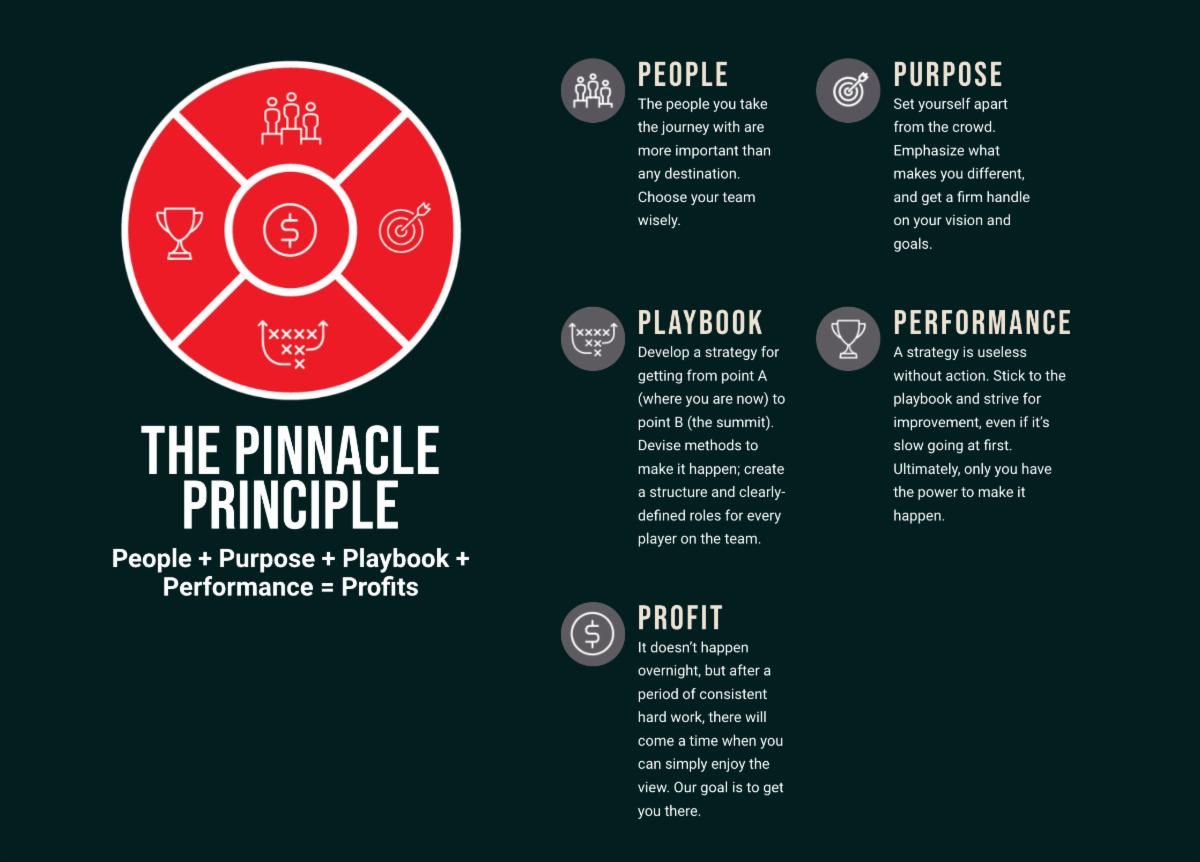
Are you ready to lead your business to its Pinnacle?
Outcome (if you act)
More profit and a better quality of life.
Call to Action
-
Ask me for a copy of the Path to Pinnacle
- Schedule a Meeting with Me
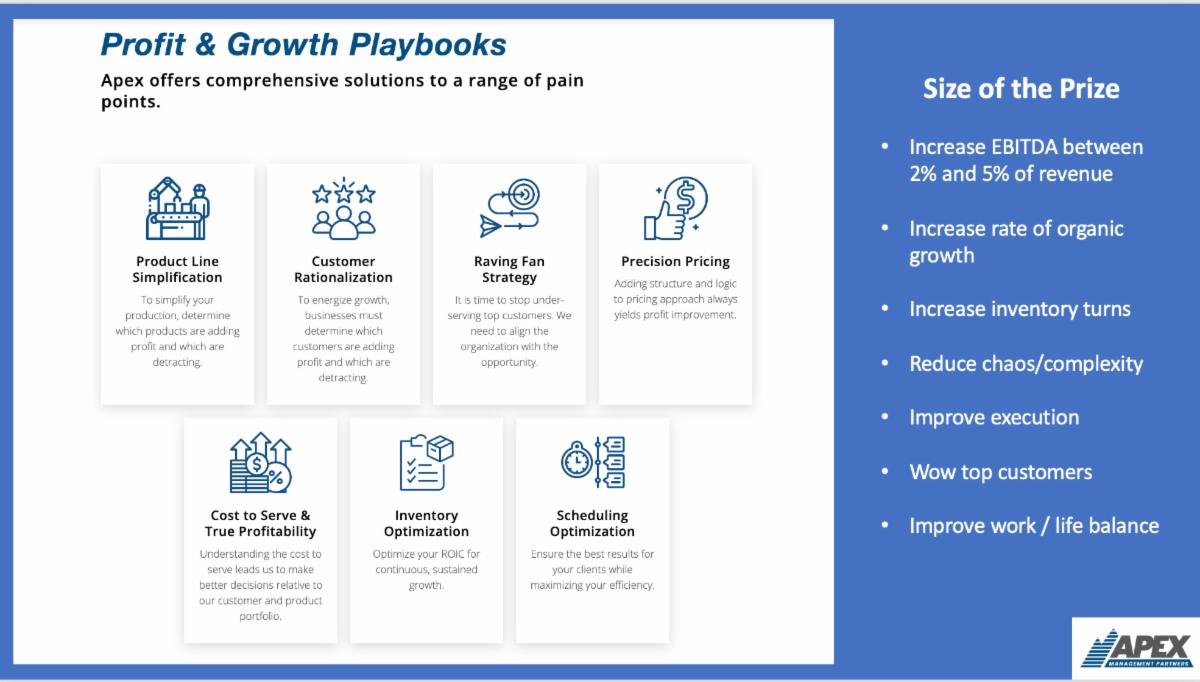
Our Mission: Accelerate Profitable Growth and Improve Execution
|