|
WHAT WE'RE EXCITED ABOUT:
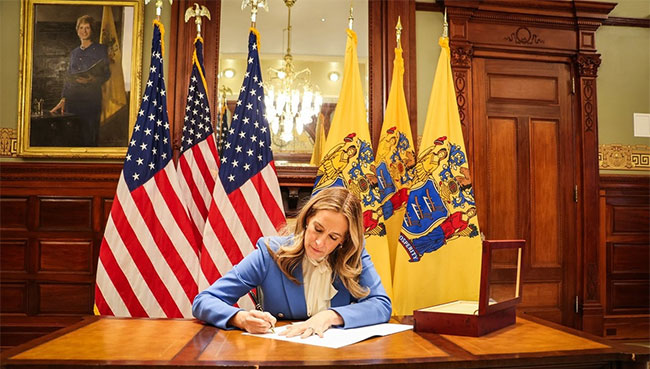
GOV SHERRILL PRIORITIZING KIDS' MENTAL HEALTH
| | |
New Jersey Elevates Youth Mental Health— A Welcome Signal for Those of Us on the Front Lines
by Cynthia D'Arcy, LSW, BCBA, Ed.D, Director of Education, Collier School
| | |
Governor Sherrill’s decision to elevate youth mental health during her transition process is an encouraging and important signal. The creation of a statewide task force and a dedicated action team focused on children’s mental health and online safety signals to schools, families, and providers across New Jersey that this crisis is being taken seriously at the highest levels of government. This is significant.
While this task force does not change day-to-day realities in schools overnight, it represents something meaningful: recognition. For special services teams and educators navigating increasingly complex student needs, it affirms what you already know: that student mental health is one of the defining challenges facing education today, and that addressing it requires attention, collaboration, and sustained commitment.
| | |
"The youth mental health crisis isn't theoretical; it's playing
out every day in schools. When mental health
and education function as one system, students don't just stabilize; they regain the ability to learn and move forward."
-- Cynthia D'Arcy, LSW, BCBA, Ed.D, Director of Education, Collier School
| | |
For those of us working directly with vulnerable students, this focus is long overdue. Nationally, one in five children experiences a diagnosable mental health condition, and suicide remains among the leading causes of death for adolescents. In New Jersey, nearly 4 in 10 high school students report persistent feelings of sadness or hopelessness2, an early indicator of emotional distress that often interferes with learning. These are not abstract statistics; they are the students that special services teams advocate for every day.
At Collier we work alongside districts on the front lines of this reality. We serve students whose mental health needs are inseparable from their educational experience, students for whom traditional school settings, despite strong efforts and supports, are not sufficient at a given moment.
| |
What is Governor Sherrill's New Interdisciplinary Advisory Task Force?
The Interdisciplinary Advisory Task Force is a statewide coalition of leaders from education, healthcare, labor, business, veterans’ organizations, environmental groups, and nonprofit sectors. Its role is to participate in listening sessions and briefings, helping ensure that the Governor’s policy priorities are informed by real-world experience and grounded in how issues affect communities across New Jersey.
A separate Transition Action Team focused on Kids’ Mental Health and Online Safety brings together state and national experts to help inform strategies that improve children’s mental health outcomes.
| | | |
What distinguishes Collier is our seamless integration of academics and therapeutic services. With two full-time, on-site psychiatrists and a full staff of licensed therapists, social workers, and specialized educators working as a coordinated team, mental health services are built into each student’s school day. Ultra-small class sizes enable immediate response, consistent care, and close collaboration between clinical and academic staff.
As New Jersey shines a brighter light on youth mental health, we are encouraged by the recognition of this shared challenge and the work ahead.
We remain committed to standing with our public-school partners to support students at their moments of greatest need and to help them build the stability to return successfully to their districts. We welcome ongoing dialogue and the chance to be a resource as you think through appropriate support and next steps for your students.
| | |
Sources:
- Centers for Disease Control and Prevention. (2024). Youth Risk Behavior Survey Data Summary & Trends Report: 2013–2023. U.S. Department of Health and Human Services.
- Rutgers New Jersey State Policy Lab. (2023). Youth Mental Health in New Jersey: Current Status and Opportunities for Improved Services.policylab.rutgers.edu New Jersey State Policy Lab.
| | INVESTING IN OCCUPATIONAL THERAPY | |
The Squeeze on Our New Squeeze Machine
| |
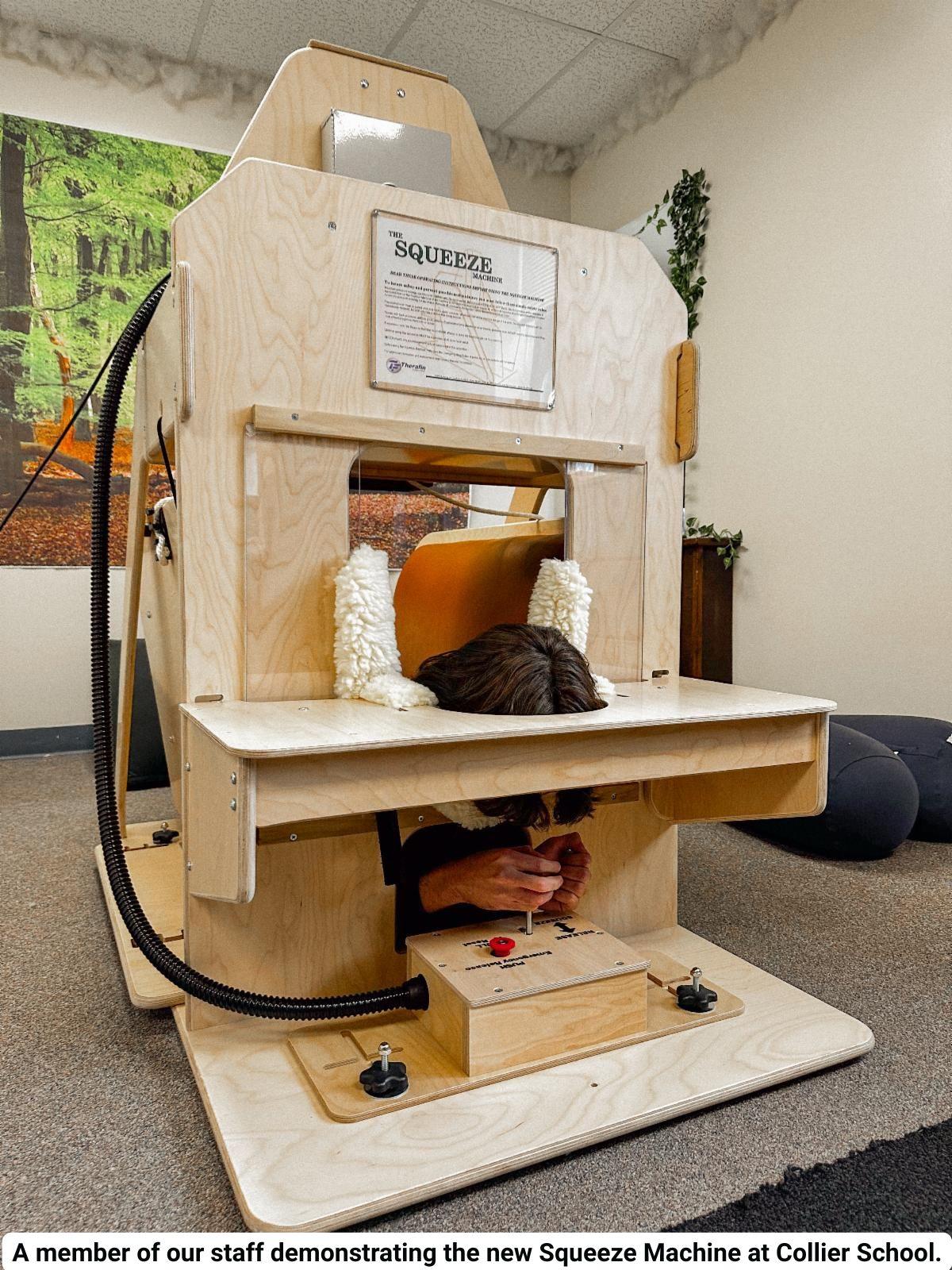
Our Occupational Therapy program is always seeking new ways to provide therapeutic interventions that help our students regulate their emotions. That's why we’re all very excited about our new Squeeze Machine, which is designed to support students innovatively and quickly.
Grounded in evidence-based sensory integration practices, the Squeeze Machine delivers deep pressure input, also known as proprioceptive input. This steady, evenly distributed pressure around the body is similar to a firm, controlled hug and can have a calming and organizing effect on the nervous system.
“We have seen students return to class calmer and
more prepared to engage in tasks such as writing
or participating in lessons.”
--Kate Van Oosterhout, MS, OTR/L, Occupational Therapist at
Collier Middle School and Collier High School
Deep pressure interventions are commonly beneficial for (but not limited to) students with Autism, Anxiety, Obsessive-Compulsive Disorder, Sensory Processing Disorder, and Attention-Deficit Hyperactivity Disorder. Students within these populations may experience sensory dysregulation, heightened anxiety, difficulty with focus, or challenges with emotional regulation. Proprioceptive input can reduce physiological arousal, enhance body awareness, and help students return to a more regulated, ready-to-learn state throughout the school day.
A key feature of the Squeeze Machine is that it is entirely student-directed. While under the supervision of a licensed therapist, students enter when they feel ready, position themselves comfortably, and gently pull a lever to adjust the pressure to their preferred level. When they wish to stop, they simply release the lever. This autonomy supports self-awareness and empowers students to take an active role in their own regulation.
“One of our students uses the Squeeze Machine almost every day and takes pride in learning a new regulation strategy. After just a few minutes in the machine, he’s ready to sit with me and write," added Oosterhout. "Just a year ago, he would miss up to an hour of class time while he was in an emotionally dysregulated state.”
The Squeeze Machine is one example of the comprehensive, sensory-informed supports available at Collier. Our therapeutic approach ensures that students receive the structured, individualized interventions they need to feel safe, confident, and ready to succeed.
| | ADDRESSING SCHOOL AVOIDANCE | | |
Construction Underway for Expanded School Avoidance Support Program
Due to the success and growing needs of our school avoidance program, construction has begun on a larger,
dedicated space in the Social Services
| | | |
building on campus. This move will provide much-needed room to accommodate the increasing number of students served by our team of licensed clinicians.
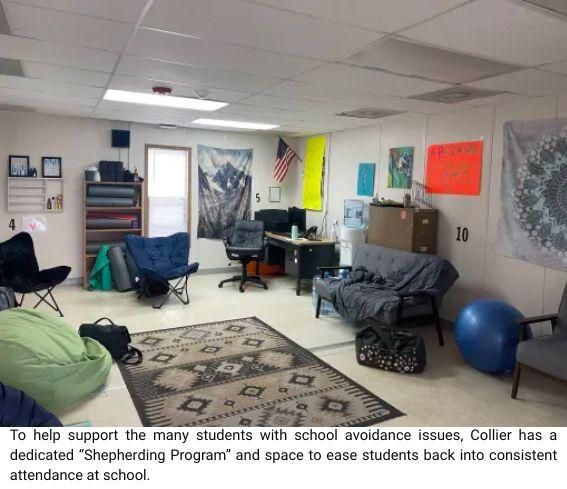
At Collier, we use the term "Shepherding" to describe the unique, hands-on way we guide students through the roadblocks of returning to the classroom and building consistent attendance. The program provides therapeutic support for students who struggle to remain regulated or stay in the building. When school becomes overwhelming, our Shepherds are there to walk alongside them.
The initiative has become an integral part of the Collier School community, serving approximately 30% of our student body. Students work in small groups led by our on-staff clinicians. Interventions include providing a safe space on campus, family support and coaching, exposure therapy, and individual counseling.
| | | |
“To date, the Shepherding Program has seen
significant results with a success rate of 82%.”
--Sydney Houston, LSW, Shepherding Program Clinician at Collier
| During individual and group therapy sessions, students learn Dialectical Behavior Therapy (DBT) skills to manage their emotions and anxieties. Cognitive Behavioral Therapy (CBT) is also used to help students challenge negative thinking patterns. The goal is to help students reach a point where school feels manageable again. | | | |
Sydney continued, “When one student entered our program, attending class and making friends were extremely challenging. After about a year, she made an incredible turnaround. Not only did she attend class consistently, but she also made many friends and gained such confidence that she spoke at an event in front of 150 people in support of Shepherding and Collier School!”
Moving into the new space will give students more room to work, take breaks, and meet with staff. We look forward to this next step and will share updates as renovations continue.
| | | | |
SAVE THE DATE!
Collier School Open House
Tues, April 28, 2026, 9-11am
All are welcome!
| | | |
Join us for a day of discovery as we open our doors to the public, offering guided tours of our campus, informative sessions about our unique programs, and opportunities to meet our dedicated school leaders, teachers, and therapists.
This event is a great opportunity to learn more about the Collier School community and the resources we offer. We look forward to welcoming you and answering any questions you may have during your visit. To register, please email Tracy Theoret at TTheoret@collieryouthservices.org and let her know you plan to attend.
| | |
If you are a school district leader or staff member seeking a placement for students whose needs cannot be met within your district, Collier School provides a trusted, therapeutic alternative. We offer a caring environment and individualized approach for students referred by district Child Study Teams.
To learn more about our referral process and how we can help your students succeed, contact Cynthia D'Arcy, LSW, BCBA, Ed.D, Director of Education, via email at cdarcy@collieryouthservices.org, or call 732-946-4771 x207. Contact us anytime to discuss how Collier School can support your district’s students and help them reach their full potential.
| | |
Collier School Therapeutic Services
Available to all Middle and High School Students
Psychiatric Services
Trauma/Healing and Restore Program
Occupational Therapy
Shepherding Team/School Avoidance
Speech, Language and Hearing Therapy
Board-Certified Behavioral Analysts
Individual & Group Counseling
Skills Training and Retention (STAR) for Emotional Regulation
Obsessive-Compulsive Disorder (OCD)
Registered Dietitian Services
Family Support Groups
Equine-Assisted Learning
For more information on our on-site therapeutic services, please visit:
Therapeutic Support | Collier Middle School
| | | |  | |
160 Conover Road
Wickatunk, NJ 07765
(732)946-4771
www.collieryouthservices.org
| | | | | |