|
MARCH 2026
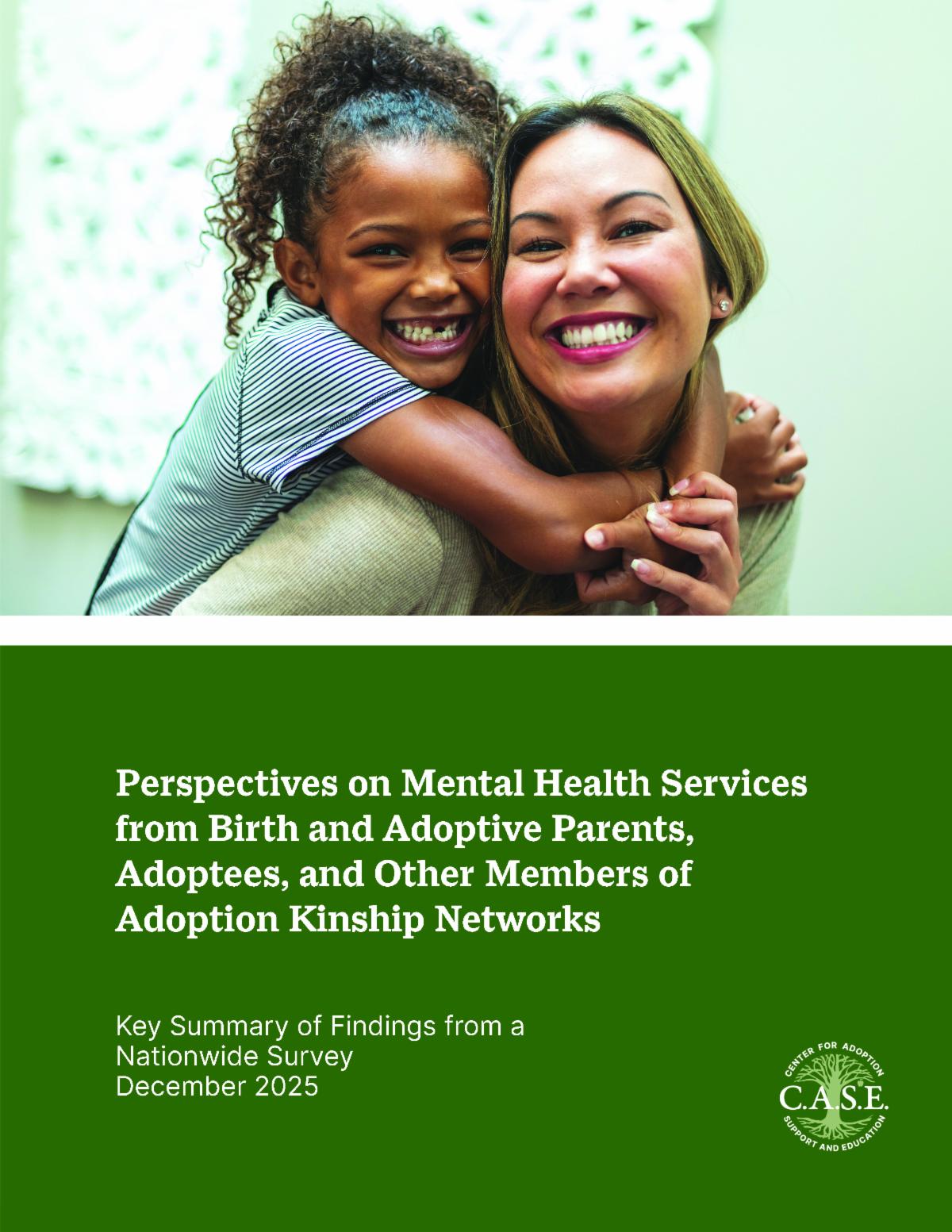
For more than 25 years, C.A.S.E. has dedicated itself to ensuring that every family impacted by child welfare has access to the care, support, and resources they need to heal and succeed. The Training for Adoption Competency (TAC) Effectiveness Study and the Perspectives on Mental Health Services from Birth and Adoptive Parents, Adoptees, and Other Members of Adoption Kinship Networks national survey reaffirmed what our organization has long theorized: adoption competent mental health treatment strengthens therapeutic alliances, increases engagement in services, and achieves better overall outcomes, including enhanced family well-being, closer family bonds, improved parental understanding of the child's needs, and positive changes in the child's emotional, behavioral, and social functioning.
| |
| |
The knowledge, values, and skills that define adoption competency were originally shaped by a National Advisory Board and subject matter experts during the development of the TAC curriculum. These competencies provided a strong foundation for the National Adoption Competency Mental Health Training (NTI) curriculum, which was built on the same evidence‑informed framework. Both curricula continue to evolve through ongoing reviews of current research, practice insights, and consultation with experts, including families with lived experience. Together, TAC and NTI serve distinct audiences yet function as essential components of a comprehensive, systemic approach to strengthening adoption‑competent practice nationwide.
Across all C.A.S.E. programs, one clear theme emerges: too many children, youth, and families affected by foster care and adoption still face challenges in accessing adoption-competent mental health services. These findings strengthen our commitment. They guide how we build capacity, shape systems, and support families in providing responsive, trauma-informed, and permanency-focused care. Together, we are creating systems that respond more compassionately, competently, and intentionally.
We hope that each article in this newsletter will affirm that adoption competency is essential to ensuring that families don’t just achieve permanency but also experience stability, healing, and long-term well-being. As you read, we hope you walk away with the reminder that adoption competence is not just a framework. It is a commitment to healing and permanency, and to the belief that every family deserves care that sees and supports their stories.
| |
| | | |
Training That Transforms Care: The Impact of TAC
The recent publication of the TAC effectiveness studies comparing the views of families treated by TAC-trained clinicians with those treated by non-TAC-trained clinicians clearly supports the message that adoption competency. The TAC mission of increasing access to adoption competent mental health professionals to all members of the adoption kinship network is essential in ensuring that children, youth, and families receive the type of support that is helpful to them. Most exciting are the results from a recent multi-state effectiveness study showing that families who engaged with TAC-trained clinicians report:
- A stronger therapeutic alliance with the therapist
- Higher satisfaction across all dimensions of treatment
- More adoption-relevant care
- Improved family outcomes
Currently, there are TAC sites in 20 states that deliver TAC training for clinicians in their state. We are excited to announce that we have received funding from the Dave Thomas Foundation for Adoption to support the addition of a new TAC (Training for Adoption Competency) site in 2026. The TAC is a 72-hour curriculum for post-master’s-licensed clinicians designed to develop adoption competent professionals. The Institute for Credentialing Excellence now accredits TAC as the only assessment-based certificate accreditation program for Adoption Competency.
| | | | |
Evidence in Action: How Adoption Competency is Strengthening Mental Health Services
Findings from the effectiveness study confirm that adoption‑competent care is essential. When mental health professionals are trained in adoption competence, outcomes improve, including family well‑being, family connection, and parents’ understanding of their child’s needs.
For the National Center, these findings confirm both the urgency and effectiveness of our work. Although there has been a significant gap in care for families affected by child welfare, the TAC study demonstrated that there is a clear solution: adoption competency trainings such as NTI and TAC. Grounded in real‑world practice, the TAC research shows what works to strengthen treatment quality, build workforce confidence, and improve collaboration across child‑serving systems.
This research‑to‑practice approach supports lasting systems change so that children, youth, and families across the country can access consistent, responsive, and effective mental health services no matter where they live.
| | | | |
From Training to Mastery: Advancing Clinical Practice Through the C.A.S.E. Academy
The TAC research findings serve as a powerful springboard for the Academy's offerings for advanced mental health professionals. For post-TAC clinicians who have seen so much and know so much, these findings illustrate the need to really dig into adoption competent practice. While the complexity of our work doesn’t stop, know that you are not alone, and the learning journey doesn’t need to end with TAC.
- Building on the amazing teachings of TAC, we hone our craft by drilling into advanced clinical skills in the Academy through fresh coursework that expands our thinking and practice beyond TAC, as well as through robust discussions in our advanced clinician learning cohorts, where we support and learn from one another.
| | | | |
Expanding Access to Adoption Competent Training Nationwide
The TAC study and survey results offer hope and opportunity, showing that when families access TAC-trained clinicians, their self-reported outcomes improve. The survey, on the other hand, tells us that far too many people still can’t access adoption-competent mental health care.
While TAC is the gold standard, it is not currently available to clinicians in every state. But NTI training is free and web-based; it is available to clinicians and professionals in every state who want to access it, either through our C.A.S.E. Institute learning management system or through other organizations.
NTI provides your staff with the foundation they need to work with foster, adoptive, and kinship families. The foundation they need to understand is the nuances and complexities inherent in the experience of being separated from birth family and disconnected from one’s identity.
| | The Center for Adoption Support and Education (C.A.S.E.) is a national leader transforming the mental health of the adoption, foster, and kinship care community.
Learn more at: adoptionsupport.org | | | | |