|
|
|
POLICY & ADVOCACY UPDATE
Issue #35, 19 December 2024
| | | |
|
-
eeger - where people people grow
- New visa system now in operation
- Net overseas migration for 2023-24
- More changes for international students
- Submission to Treasury on pricing practices
- Another strong month for hotel performance in November
- Latest IVS data for September quarter
| |
|
eeger - where people people grow
The Tourism, Hospitality and Travel industries in Australia are set to experience a transformative shift with the announcement by the Minister for Trade & Tourism, Senator Don Farrell, last week of eeger.com.au - a careers and training platform designed to address the challenges of workforce development, skills shortages and career growth in these vital sectors. The new platform: eeger - where people people grow, will be the first of its kind in Australia bringing together innovative technology, industry expertise and tailored resources within the one digital platform to meet the needs of both employers and job seekers. More than just a job board, eeger will be a central hub for education, training and career development. The platform is developed and managed by AA through Government funding via Austrade and supported by an industry advisory committee representing the diverse industries across travel, hospitality and tourism. Members are encouraged to go on-line at eeger.com.au and register their interest in receiving updates on the platform. The website is due to be fully launched in March 2025 and the aim is to have job vacancies listed and available for job seekers looking for work and a career in our industry.
| | |
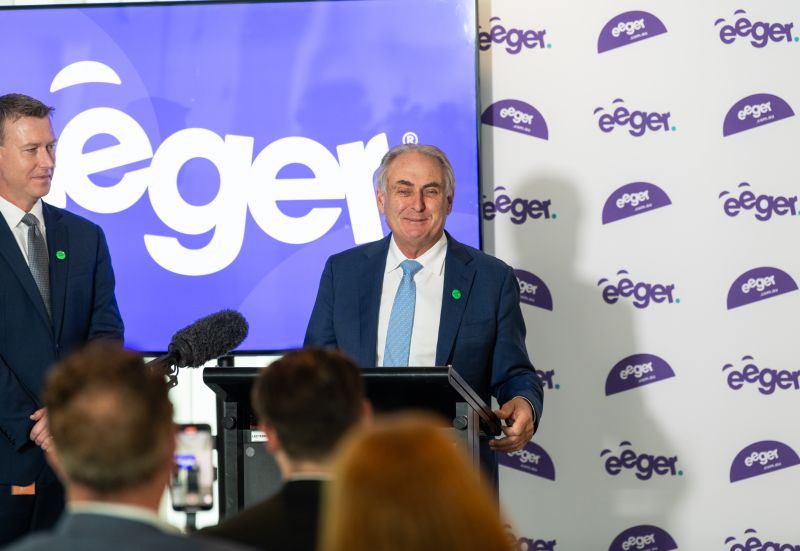
Minister for Trade and Tourism, Senator Don Farrell, launching the website brand eeger alongside AA CEO James Goodwin. | |
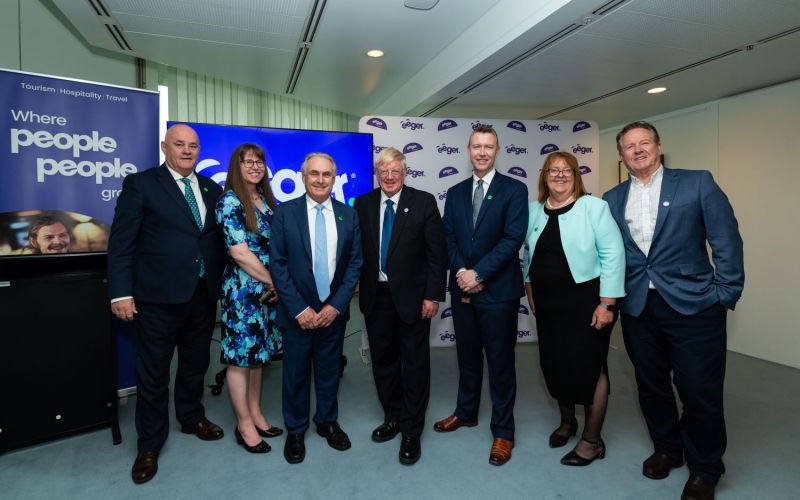
At the launch (from L to R) AHA CEO Stephen Ferguson, Sam Palmer from Austrade, the Minister, AA Board member Bruce Copland, AA CEO James Goodwin, AA Policy Director Jenny Lambert OAM and ATEC CEO Peter Shelley. | |
New visa system now in operation
The new Skills in Demand visa came into operation on 7 December 2024. As reported in the last update, this followed the release of the Consolidated Skills Occupation List (CSOL) that will enable employer sponsorship of temporary migrants paid between the TSMIT (salary threshold) of $73,150 and $135,000 pa. Skilled migrants with a salary above $135,000 can be sponsored under the specialist visa category, where the CSOL list does not apply, unless they are in the trades or lower skill categories. Confusion was created after the regulations were released as the wording implied that chefs could only be sponsored from the three countries where they were specifically mentioned in a free trade agreement. Having received briefings from their migrant agents, members contact AA to seek clarification, which we quickly received from the Department which said "it is not the intent to restrict Chefs to countries where Australia has an ITO in place which provides access for this occupation ... the Department will look to amend the instrument (regulations) to clarify as a matter of priority, and in the interim will not prevent applications of Chefs being lodged or being granted on the basis of nationality." So, in short, if your migration agent suggests that chefs can only be sponsored from three countries, assure them that this is not the case.
| |
Net overseas migration for 2023-24
Last week, the ABS released the net overseas migration (NOM) movements for the last financial year. The NOM measures the net movement of arrivals and departures, where those movements relate to people who have stayed here for more than 12 months, so does not represent the total number of working holiday makers or students who may only stay here for a shorter time. The NOM figures have become politically charged, particularly with the record NOM of 536,000 in 2022-23 arising from the post-pandemic surge in longer term arrivals. For 2023-24, NOM was 446,000, with migrant arrivals decreasing by 10% to 667,000 and departures increasing 8% to 221,000. 465,000 arrivals were temporary visa holders, and 60,000 were returning Australian citizens. Of the 91,000 permanent visa holder arrivals, 41,000 were skilled (this includes the skilled worker and their family). For the arriving temporary visa holders, 20,000 were VET students (studying more than one year and down from 38,100 in 2022-23), 147,500 were higher ed students (down from 177,400), 48,800 skilled temporary migrants (down from 49,200), and 79,600 working holiday makers (staying more than one year - and up from 73,700 from 2022-23).
| |
|
More changes for international students
As reported in previous updates, the federal government last month failed to pass its proposed caps on international student numbers and, as a result, initially proposed to keep in place a ministerial directive that prioritised student visa processing for applications for the major universities, which led to a decline in overall numbers. Today the government announced a new directive which effectively achieves what would have been the outcome of the caps legislation by prioritising applications from institutions which are yet to achieve what would have been their 2025 target numbers if the legislation had passed (and slowing down the rest). This new Direction 111 basically "shuffles the deck chairs" across providers, but from our point of view, if it results in a significant reduction in student numbers then our concerns will remain. The potential is that the new directive will have a significant negative impact as although it is likely to help regional universities, it will do so at the expense of international students' demand for capital city educational offerings, which will in turn, impact city hospitality workforces. It may even do so at the expense of international education overall, as the competition for international students is a global one, and if the student can’t have the provider of choice, they may choose another country.
| |
|
Submission to Treasury on pricing practices
As reported in the last update, a consultation paper was issued by Treasury in November to address some unfair selling practices to consumers. The Treasury paper makes specific reference to our industry, where drip pricing is defined as occurring where a headline price is advertised, but the application of fees increases that price as the customer moves through the purchasing process. The paper also seeks to target dynamic pricing defined as when the price of a product or service that was presented upfront to the consumer increases during the purchasing process (for example, when in a queue to purchase concert tickets, so not surge pricing as is common in accommodation pricing). Due to the specific mention of our industry, AA finalised a brief submission last week which makes it clear that the commercial accommodation sector that AA represents does not in any way condone unfair practices such as drip pricing and dynamic pricing. That said, we suggested that the existing consumer laws were very strong, and any further general or specific prohibitions were not necessary, backing the approach by ACCI (of which AA is a member) in their submission.
| |
|
Another strong month for hotel performance in November
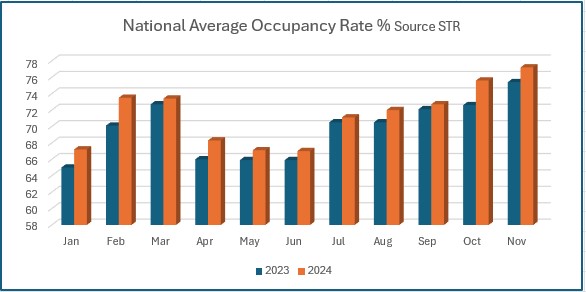
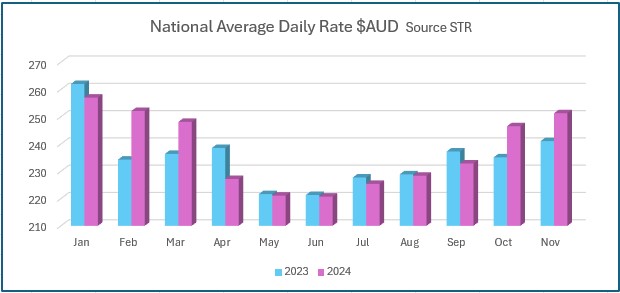
According to the latest STR data, on the back of rises in both the average occupancy rate and average daily rate across Australia in October, both rose again in November 2024 compared with last year. The average national occupancy in November across was 77.2% compared with 75.4% in November 2023, and the Average Daily Rate was over 4% higher at $251.25 compared with $241.04 in November 2023. Revenue per available room in November 2024 was $194.00, a solid increase from $181.70 in November 2023. For the year to November 2024, the average Australian occupancy rate was 71.4% compared with 69.6% in 2023. The rise in the ADR over this period was $2.54 to $234.38, and growth in revenue per available room increased from $163.55 in the year to November 2023 to $169.60 in 2024. Occupancy rates for the year to November 2024 were up in all capital cities with Western Australia experiencing the largest gains followed by Victoria and Queensland. It is a different picture for the year to November for the ADR, with four of the states experiencing an average drop, including ACT, NT, Tasmania and Victoria. New Zealand continues to struggle although with some improvement, with an occupancy rate for November 2024 at 78.2% compared with 78.3% in October 2023. Their ADR for the month was significantly higher in November 2024 at NZD253.69 compared with NZD236.01 in November 2023.
The graphs below derived from the STR data show the strength of the October and November performance compared with other strong months such as February and March. In all other months this year, the occupancy rates have held up, but ADR has been below 2023
| |
|
Latest International Visitor Survey Data for September
According to the latest Tourism Research Australia IVS data released this week, 7.5 million trips to Australia were recorded in the year ending September 2024. Of this, holiday travel accounted for 3.1 million trips, which is only 79% of September 2019 levels. More positive for the accommodation sector, there were 287.0 million visitor nights which was 4% up on September 2019 level, with overall spend in Australia similarly up 4% on September 2019 levels. A more detailed cut of the accommodation usage in the period will be included in the next update, but in summary 43.5 million visitor nights (15%) were spent in a hotel, resort or motel. This was a significant increase on the 28.8 million nights (10%) spent in a hotel, resort or motel in the year to September 2019.
| |
|
Drop me an email at policy@accommodationaustralia.org or give me a call on 0418 277 919 if you have any national policy issue that you think AA should be following up. If you know an AA member who is not receiving this advocacy report but wants to, then encourage them to email me and we can add them to the distribution list.
Best wishes for the festive season, and cheers to a very positive 2025 for all of our members. Back with the next update early in the new year.
Kind Regards
Jenny Lambert OAM
National Policy Director
Accommodation Australia
| | | | |