|
The complaint seems to argue that LIV Golf’s “billions of dollars” are dwarfing the distillery’s “painstaking efforts to build its reputation with consumers over nearly two decades.”
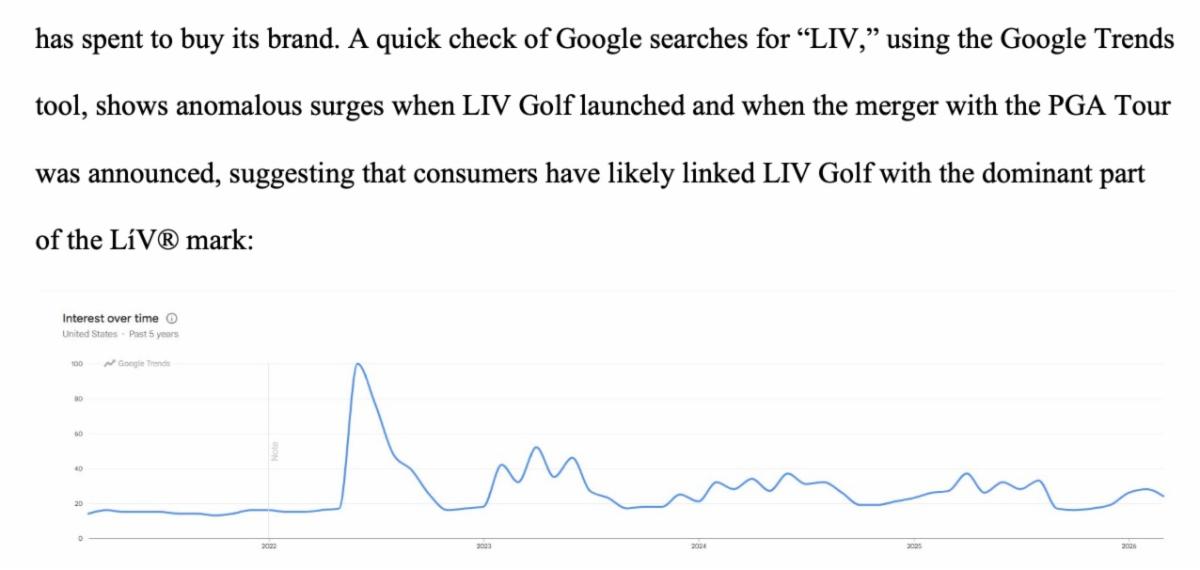
To be sure, an earlier or “senior” user of a trademark can claim that a newer or “junior” user is flooding the market so much that the senior user loses control of its brand, amounting to “reverse confusion” - where consumers mistakenly think the senior user’s goods actually come from the junior user. But at the same time, just because LIV Golf spent a lot of money on its golf league and has been in the news for various reasons, does this mean that consumers are likely to confuse the brands?
Trademarks and golf-related beverages are nothing new. Consider the well-known Arnold Palmer lemonade-tea combo, the subject of a federal trademark registration and a great ESPN SportsCenter commercial.
Afroman, Barbra Streisand, and IP Law
It’s probably no surprise that we, like many of you, have been reading about the Afroman case. But what does Afroman have to do with Barbra Streisand, much less intellectual property law?
For those of you who haven’t read about Afroman, he’s a rapper whose house was searched by police. Afroman was not pleased with the search, much less how it was conducted. But instead of suing the police for violation of his rights, Afroman took a different approach. Using his own home video surveillance footage of the search, he made several satirical rap songs and videos.
For example, one song stemmed from footage of a law enforcement officer possibly distracted by a lemon pound cake in Afroman’s kitchen. This led to the song “Lemon Pound Cake” (whose tune may or may not resemble “Under the Boardwalk”), with lyrics like:
“Mama’s Lemon Pound Cake, it tastes so nice…,
It made the sheriff want to put down his gun, and cut him a slice….”
Just as Afroman didn’t care for the search, the sheriff’s deputies didn’t care for the songs, which included others that were, shall we say, more explicit. They sued Afroman for defamation, claiming that he damaged their reputations and affected their jobs. (For example, the deputy shown in the kitchen supposedly eyeing the cake - nicknamed “Officer Poundcake” by Afroman - testified at trial that he’d received hundreds of poundcakes at work due to the videos.)
Last week an Ohio jury sided with Afroman. You can read more about it on NPR. Or all over social media.
So while this case is mostly about the First Amendment and police searches (and baked goods, so to speak), some have cited it as an example of the “Streisand effect.” That phenomenon is named after, you guessed it, Barbra Streisand, who filed a lawsuit complaining that her Malibu home was visible in an aerial photograph among thousands of photographs of the California coastline. Reportedly, the photo had only been downloaded 6 times before the lawsuit was filed, but was downloaded 420,000 times in the month after. The court dismissed the case and ordered Streisand to pay the defendant $177,000 in legal fees. The L.A. Times reported on that case.
In the intellectual property world, clients often want their lawyers to send cease-and-desist letters over potential misuse of patents, trademarks, and copyrights. But clients should also be aware of the potential “Streisand effect” and how drawing attention to an issue - or how the issue is handled - can sometimes make things worse, especially if the recipient takes to social media. And even more so if he is Afroman.
Shout Out
We’d like to give a shout out to a longtime Friend of the Firm, the esteemed lawyer and mediator Mills Gallivan, for his new book The American Crisis in Civility: Professional Parables, co-authored with Ned Currie, which is now available on Amazon. Profits are being donated, and Mills said they are offering discounts and continuing education to firms that place bulk orders over a certain amount.
You can reach Mills at mgallivan@gwblawfirm.com. Congrats!
|