New standards for economic data aim to sharpen view of global economy |
| |  | The cornerstones of our digital world—from smartphone apps to new digital assets and artificial intelligence tools—didn’t exist back in 2008, the last time the world’s statistical community overhauled its approach to standardizing how countries measure the economy. Now, an updated System of National Accounts—the global standard for producing measures of economic activity—more fully incorporates emerging technologies, digital services, and intangible assets. Remarkably, despite increasing geoeconomic fragmentation, the United Nations Statistical Commission in March unanimously approved the wide-ranging and comprehensive update. It’s the sixth iteration in the almost nine-decade history of the SNA, a global standard for national metrics including production, income, consumption, capital investment and financial activities, as well as national wealth. Updating the SNA is a global effort coordinated by the International Monetary Fund, United Nations, World Bank, European Commission, and Organisation for Economic Co-operation and Development. Click here to read full article.
| | From farm to fork: boosting food security by fixing border bottlenecks |
| | | Imagine a truckload of fresh mangoes grown by smallholder farmers in Sri Lanka. The fruit is ripe, fragrant, and ready for export. But instead of heading straight to market, it sits at the border waiting for inspections, test results, and paper certifications. Hours turn into days. By the time the mangoes reach their destination, some are spoiled or may no longer meet the strict requirements of the importer. The result? Lost income for farmers, higher prices for consumers, and wasted food. Wasted food also means wasted water, labour, fuel, and opportunity. Globally, about 14 percent of food is lost between harvest and retail, according to Food and Agriculture Organization estimates. Food rejected annually by importing countries for health or pest concerns alone accounted for about 649,000 tons globally, with a value of nearly US$1.13 billion. A new World Bank commitment of US$100 million in financing aimed at improving agricultural productivity, market access, and climate resilience is helping Sri Lanka limit food waste by improving its National Quality Infrastructure (NQI). Click here to read full report.
| | State of U.S. Tariffs: August 2025 | |
| | | The Budget Lab (TBL) estimated the effects all US tariffs and foreign retaliation implemented in 2025 through July 31, including the new list of “reciprocal” tariffs to take effect August 7. TBL analyzed the July 31 tariff rates as if they stayed in effect in perpetuity. Current Tariff Rate: Consumers face an overall average effective tariff rate of 18.3%, the highest since 1934. After consumption shifts, the average tariff rate will be 17.3%, the highest since 1935. Overall Price Level & Distributional Effects: The price level from all 2025 tariffs rises by 1.8% in the short-run, the equivalent of an average per household income loss of $2,400 in 2025$. This assumes the Federal Reserve does not react to tariffs and so the real income adjustment comes primarily through prices rather than nominal incomes; if the Federal Reserve reacted, the adjustment could in part come in the form of lower nominal incomes. Annual pre-substitution losses for households at the bottom of the income distribution are $1,300. The post-substitution price increase settles at 1.5%, a $2,000 loss per household. Click here to read full report and click here to Download the Data.
| | South Africa's Response Measures to the US tariffs | |
| | | Since the beginning of the 7th Administration, South Africa embarked on a process to stabilize and enhance mutually beneficial trade and investment relations with the US. The aim has been to address long-standing bilateral issues of concern for both sides in ways that move the trade relations forward. South Africa has been engaging the US at various levels with a view to ensure predictability in trade. However, even with these efforts, the US decided to impose a 30 percent unilateral tariff on South Africa. It is unfortunate that this Governments efforts in resetting the relationship with the US has been undermined by some actors within South African society. The unilateral tariffs have been implemented notwithstanding, South Africa’s submission of a comprehensive and ambitious Framework Deal in May 2025 aimed at addressing the US trade deficit, address tariffs, promote digital trade, enhance commercial relations, promote investment and eliminate non-tariff barriers to enhance mutually beneficial trade relations with the United States. Click here to read full joint media statement by The Ministers of International Relations and Cooperation and Trade, Industry and Competition.
| | Is it time for South Africa to strengthen its knowledge base on trade matters? | Since the start of the year, the focus has been on U.S. tariff matters, especially in agriculture, which is understandable given the profound uncertainty and costs that tariffs present to businesses in the perishable foods industry. But the trading environment is changing globally. The policy decisions the U.S. has taken have somewhat led to a shift from the time of embracing globalization and opening trade to a more inward-looking approach. Therefore, the opening of new markets may not be as easy as it was in the past few decades, when the sentiment was broadly positive. There is also a lot more push for reciprocity these days than in the past. Thus, thorough research and policy options in every critical sector of the economy are crucial for assessing and supporting the decisions that South African trade authorities will be compelled to make in the coming months and years. Watch here. | | The Far East countries are back buying SA’s maize |
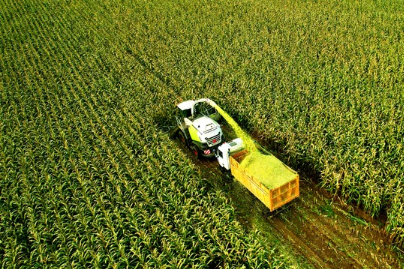
| | | South Africa’s maize exports are back in the Far East export markets. These aren’t new territories for our maize. We typically export to them during the seasons of abundance, such as this one. Last season, we did not see many maize exports to the Far East. Our export activity focused on Africa. The region was hit by the drought and needed maize more than other regions for staple food. South Africa channelled its maize exports, mainly white maize, to this region. And yes, South Africa was also hit by the drought, but we still had a relatively decent yield, and also benefited from supplies from the past season. This enabled South Africa to export more maize to the African continent. Zimbabwe accounted for 56% of South Africa’s maize exports of 2.3 million tonnes last year. We are now back in the season of abundance. Zambia has surplus maize, and Zimbabwe has a better yield, although it may still need about 700,000 tonnes of maize imports later in the season. Click here to read full article.
| | Higher US tariffs take effect, but negotiations continue |
| | | The global trading system remains in a state of profound uncertainty. South Africa now faces a 30% tariff on its exports to the US. The higher tariffs put South African agricultural products at a disadvantage relative to those of competitor countries, such as Peru and Chile, that pay a much lower tariff of around 10%. The most exposed agricultural industries include ostrich products, table grapes, citrus, nuts and wines, amongst others. But this is not the end of the road. The South African government continues to negotiate. The senior officials - Department of Trade, Industry and Competition (DTIC), Department of Agriculture, Department of International Relations and Cooperation (DIRCO), and The Presidency – is likely to go to the US soon further to persuade the US administration for much favourable tariff levels. But these negotiations, as we see in so many countries, are proving to be challenging. For example, the US has placed significantly higher tariff rates on several countries, such as the EU and Japan, which face tariffs of between 15% and 20% even after the “new deals.” Click here to read full report by Wandile Sihlobo.
| | As we focus on trade issues, don't forget the lingering biosecurity challenges |
| | | Those in government will have to carefully allocate their resources and time in the current moment when there are so many urgent matters that require their participation and efforts. Don't forget, the foot and mouth disease that we discussed extensively these past few weeks is still very much a challenge. The government, organised agriculture, and private sector collaboration that many highlighted in their various agricultural gatherings remain a valid and essential idea to pursue. I am raising this issue because I often fear that as time passes, we may all focus on U.S. trade matters and ignore some of the persistent domestic challenges. Indeed, the trade friction issues are urgent and present notable costs to the affected businesses. But for us to export widely to the world, we have to strengthen both plant and animal health. We have fallen short in this area in recent years, and now rely on some imported vaccine for foot and mouth disease. Click here to read full article by Wandile Sihlobo.
| | SA food inflation rises again — but doesn’t shift the moderate outlook |
| | | South Africa’s consumer food price inflation rose to the highest level in 16 months, at 4.7%, in June 2025, from 4.4% in May, underpinned mainly by recent increases in the price of meat; oils and fats and vegetables. But this increase does not alter our assessment of moderate food price inflation in 2025. The increase in the meat price inflation was caused by two significant factors, which have somewhat eased. First, the outbreak of avian flu in Brazil led to South Africa temporarily restricting imports of poultry products from the country, and this caused panic in the market. South Africa imports roughly 20% of its annual poultry needs and Brazil is one of the key suppliers. However, the restrictions have now been lifted and imports are expected to recover in the coming months. The restrictions were necessary to ascertain the scale of avian flu in Brazil, and ensure that it was eradicated, before imports could resume. South Africa has received confirmation that Brazil has successfully eradicated the disease and lifted the ban on imports. Click here to read full article by Wandile Sihlobo.
| | Export diversification is the key to driving SA agriculture’s long-term growth path |
| | | We do not emphasise enough the critical role of exports in driving South Africa’s agricultural growth. If one looks at the past three decades, this sector has more than doubled in value and volume. Indeed, the improvements in genetics and cultivars, amongst other interventions, are the primary catalyst that delivered this growth. But another critical catalyst is the exports. This is a point I illustrated at length in my book, A Country of Two Agriculture. We now export roughly half of what we produce in South Africa’s agriculture, which was nearly US$14.0 billion in 2024. We are not even at capacity in terms of agricultural production, as we have roughly 2.5 million hectares of government-owned land that was previously commercially farmed, but now sub-optimally utilised. We also have capacity in the former homelands to increase agricultural output. When this land in the underutilised government farms and the former homelands is finally released to deserving black farmers, with title deeds, paired with affordable finance, and partnerships from commodity associations, we will be able to drive the agricultural output to new heights. Click here to read full article by Wandile Sihlobo.
| | Wandile Sihlobo: SA - and the world - in last-minute tariff race with the US | The future of many South African farmers hangs in the balance today with 30% export tariffs to the US set to take effect tomorrow. Wandile Sihlobo, the Chief Economist of the Agricultural Business Chamber of South Africa (Agbiz) - who has been involved in some of the trade deal preparations - says: “I would say that the South African authorities have done a fair share of their work on improving the offering that they had made at the end of June in Angola. The key thing then is whether there will be sufficient time to provide enough thinking as to what is being put on the table, given that every country in the world literally is racing to have a conversation with the US authorities.” Meanwhile, Sihlobo urges a change in approach in how South Africa engages with the world.” I think…we must embrace free trade agreements.” He also gives an update on the Foot-and-Mouth disease outbreak that has taken South African cattle farmers out of the export market for a particular period. However, he celebrates the excellent grain harvest up North where it’s up double digit from last year. “We are looking at over 18 million tons of grain”. He also predicts a year of recovery for wheat, barley, and canola. Click here to watch full interview. | | PODCAST: SA's ample grain harvest may help ease food price inflation concern | |
South Africa's 2024-25 summer grains and oilseed production estimate was lifted again this month, by 2% from the June 2025 estimate to an expected 18.74 million tonnes (up 21% year-on-year). There is an annual uptick in all the crops, mainly supported by favourable summer rains and the decent area plantings. This ample harvest will likely add downward pressure on prices, which bodes well for consumer food price inflation. The recent surge in maize prices was linked to the slow harvest process and quality issues, but that should be short-lived and does not change our view of potentially moderating prices going forward. A closer look at the data reveals that the monthly upward revisions were primarily in maize (+2%) and soybeans (+3%). Click here to listen to full podcast.
| | The August 2025 issue of Agbiz Grain Quarterly is now available! | |
Agbiz Grain Quarterly is an online magazine dedicated to the South African grain handling and storage industry. In addition to the usual offering of thought-provoking articles, the August 2025 issue highlights the revision of the wheat import tariff system to address delays in tariff adjustments, as well as ways in which technologies worldwide are using AI to perform certain functions in the grain handling and storage industry. Click here to read magazine.
| | Could the grain industry soon operate rail lines |
| | | South Africa’s grain industry has a clearer idea about the future of rail transport after Moshe Motlohi, acting chief executive of the newly established Transnet Rail Infrastructure Manager (TRIM) met with officials of Agbiz, Agbiz Grain, and the South African Cereal and Oilseed Traders Association (Sacota) on Tuesday, 22 July. The focus was for the grain industry to understand what TRIM’s strategy for the grain industry will be. Towards the end of last year, government gave permission to Transnet to split the ‘old’ Transnet Freight Rail (TFR) into two entities, TRIM and the remainder, as part of its efforts to deregulate the rail industry. The remainder – mainly locomotives and wagons – will still be referred to as TFR, but will function as an independent network operator. The ‘new’ TFR will in future compete with private network operators that will be licensed to use the rail infrastructure. Private entities that wish to offer network operator services must apply for a license from TRIM. The first opportunity has already taken place with applications closing on 27 February 2025. A total of 98 applications were received. Click here to read full article.
| | Global growth expected to decelerate as trade-related distortions wane |
| | | Global growth is projected at 3.0 percent for 2025 and 3.1 percent in 2026. The forecast for 2025 is 0.2 percentage point higher than that in the reference forecast of the April 2025 World Economic Outlook (WEO) and 0.1 percentage point higher for 2026. This reflects stronger-than-expected front-loading in anticipation of higher tariffs; lower average effective US tariff rates than announced in April; an improvement in financial conditions, including due to a weaker US dollar; and fiscal expansion in some major jurisdictions. Global headline inflation is expected to fall to 4.2 percent in 2025 and 3.6 percent in 2026, a path similar to the one projected in April. The overall picture hides notable cross-country differences, with forecasts predicting inflation will remain above target in the United States and be more subdued in other large economies. Risks to the outlook are tilted to the downside, as they were in the April 2025 WEO. A rebound in effective tariff rates could lead to weaker growth. Click here to read full report.
| | South Africa receives seven-day extension as 30 per cent US tariffs loom over fresh produce exports | |
With the original deadline now passed, South Africa’s government appears to be shifting focus to domestic support rather than preventing the tariffs, leaving citrus and upcoming stonefruit and grape seasons facing significant market disruption. The deadline for the imposition of new 30 per cent tariffs on South Africa fresh produce exports to the US has passed, with the latest reports indicating that the country has been granted another seven days to come up with a better proposal. Few believe that things will change in that timeframe, and most accept that the higher tariffs are now unavoidable. It may however affect next week’s shipments – with sources saying they are planning another conventional vessel to mop up the fruit that is already packed but could not be shipped before the end of July. South Africa now faces pressure on two fronts. On one side is the Trump tariffs, and on the other a massive police scandal that is threatening the government. Click here to read full article.
| | Cabinet to meet on support package for firms and workers exposed to 30% US tariffs | |
Trade, Industry and Competition Minister Parks Tau will present Cabinet with a proposed support package for South African companies and workers that will be negatively affected by the 30% reciprocal tariffs to be imposed on South African exports to the US at 12:01 am eastern daylight time on August 8. The package is being developed in parallel to ongoing attempts to negotiate a trade deal with the US, which accounts for 7.5% of all South African exports, making America South Africa’s third-largest global export market after the EU and China. South African exports to America, which stood at $14.9-billion in 2024, could decline by up to $2.3-billion yearly, independent research has indicated. Previous attempts at finalising a deal have failed, despite South Africa having proposed a framework deal in May, which included various concessions on agricultural exports to South Africa and even an offer to buy American liquefied natural gas. Click here to read full article.
| | Beyond the FPJ Big 50: Are people really buying more fruit and veg? | |
From mango to melons, retail sales of fresh fruit and veg are thriving, with the total fresh produce category reaching £14 billion in sales for the first time in the year to 18 May. But while inflation is a big driver, it is far from the only explanation. Podcast host and FPJ features editor Nina Pullman is joined by editor Fred Searle and contributing editor Michael Barker to lift the lid on what’s really happening in the category. Together, they discuss some of the key trends, risers and fallers in the recently published FPJ Big 50 Products 2025, the definitive list of the top-selling fruit and veg at UK supermarkets. Plus: what does the government’s new food strategy mean for fruit and veg sales? And is Joe Wicks’ recent post about expensive healthy food a sign of wider consumer discontent about rising prices? Listen to the first episode of The Fresh Produce Journal Podcast and find out why fresh produce sales in the UK are at a record high here.
| | Rail could feed 50% of Durban’s grain export capacity |
| | | The grain handling sector has wasted no time in taking advantage of the deregulation of the country’s freight rail sector. Industry bodies Sacota (South African Cereals and Oilseeds Trade Association), the agricultural business chamber Agbiz, and Agbiz Grain, have already met with the new CEO of Transnet Rail Infrastructure Manager (TRIM), Moshe Motlohi, and are looking at forming a consortium to utilise rail capacity to ship maize and soybeans to Durban via rail. Dr André van der Vyver, CEO of Sacota, explains that much of the viability of grain shipping by rail utilising private operators will depend on announcements made in coming weeks and the willingness of the selected private operators to accommodate the unique requirements of the industry. TRIM has divided the existing rail network into an A- and B-network, with the A-network being the core main lines such as the KwaZuku-Natal container line from Gauteng to Durban and the mineral line to Richards Bay. This network will, for the most part, remain fully under TRIM’s control, “with slots being allocated to private network operators, including the ‘new’ TFR, at a fee,” says Van der Vyver. Click here to read full article.
| | Agricultural Input Prices July 2025 |
| | | In the first half of 2025, we saw some relief from rising input costs, with lower fuel and fertilizer prices providing brief breathing room. This helped ease margin pressures during a critical production period. However, the overall picture remains uneven, while some input costs declined, others started climbing again, creating a volatile cost environment. Between January and July 2025, South African inland fuel prices displayed a generally declining trend, offering partial cost relief to producers, particularly in the agricultural and transport sectors. Diesel (0.005%), a vital input for mechanised farming and logistics, fell from R19.49 per litre in January to a low of R18.57 in June, before rising modestly to R19.35 in July. This cumulative drop of approximately 0.14c/l from the start of the year suggests that farmers benefited from relatively lower diesel costs during peak land preparation and planting activities. However, the July increase in diesel prices, although modest, may signal an emerging upward trend heading into the harvest season. Click here to read full report by Thapelo Machaba.
| | US tariff poses threats to agriculture, but ‘challenging’ negotiations continue – Agbiz |
| | | South Africa now faces a 30% tariff on its exports to the US, and the country’s agricultural products are at a disadvantage relative to those of competitor countries, such as Peru and Chile, that pay a much lower tariff of about 10%, Agricultural Business Chamber of South Africa (Agbiz) chief economist Wandile Sihlobo writes in the entity’s Agricultural Trade Digest on August 1. The most exposed agricultural industries include ostrich products, table grapes, citrus, nuts and wines, among others, he points out. However, the announcement of the current tariff does not signal the end of the road, with negotiations continuing, and South African authorities working on refining its offer to the US ahead of the August 7 tariff implementation date, Sihlobo assures South Africans. He posits that representatives from the departments of Trade, Industry and Competition, Agriculture, and International Relations and Cooperation, along with colleagues from The Presidency, will likely visit the US soon to persuade its administration to implement more favourable tariff levels. Click here to read full article.
| | South Africa to boost continental trade ties as US tariffs bite | |
South Africa plans to seek new markets for its goods to offset the impact on its exports from Washington’s imposition of 30% tariffs on the nation’s goods entering the US. “In the coming months, we will be scaling up our trade missions into new markets in Africa and beyond,” President Cyril Ramaphosa said in his weekly newsletter Monday. The government will also boost a so-called National Exporter Development Programme, which aims to “grow the pool of export-ready companies,” he said. President Donald Trump on Thursday imposed a 30% tariff on imports from South Africa — the highest in sub-Saharan region — among a slew of levies that are being introduced in his revised global plan. The levies could put more than 100 000 jobs in South Africa’s auto and agricultural sectors at risk, central bank Governor Lesetja Kganyago warned last month. The country already has one of the world’s highest unemployment rates and tepid economic growth. Click here to read full article.
| | Fruit exporters still need a backup for Port of Cape Town |
| | | Although a smaller chunk of South Africa’s table grape exports had to be diverted away from Cape Town this season, bottlenecks remain a risk. Thanks to favourable weather conditions, the table grape industry diverted 40% less of its total export volumes through the Eastern Cape ports of Port Elizabeth and Ngqura in the 2024-’25 export season than in 2023-’24. Speaking at the organisation’s Table Talk industry event in Paarl, Mecia Petersen, CEO of the South African Table Grape Industry (Sati), said that although the industry had only shipped 6% of its total exports via the Eastern Cape in the past season, compared to 10% in 2023-’24, this did not mean the industry could depend solely on Cape Town. Using the 2023-’24 season as a baseline, the industry’s freight modelling showed that with the 5.4% increase in exports this year, not having the Eastern Cape ports and Walvis Bay available would have caused the maximum inventory for the season to be 30% higher than the actual level, a 3% smaller profit margin per freight container than was attained during the season and a minimum loss of profit of R123 million for the industry. Click here to read full article.
| | Statement of the Monetary Policy Committee |
| | | Global economic conditions remain uncertain. The United States paused tariff increases in April, but that pause expires tomorrow, and many countries do not yet have new trade deals. World oil prices spiked in June, due to escalating conflict in the Middle East, but have since eased again. To date, global economic activity has been broadly resilient to these stresses. The world growth outlook is largely unchanged from our last meeting. But there are risks that permanently higher tariffs, or adverse geopolitical developments, could cause more disruption to the global economy than we have seen so far this year. For the major central banks, policy is generally in a wait-and-see phase. In the United States, there are signs of new inflationary pressures, from tariffs. Monetary policy remains ‘modestly restrictive’. In Europe, by contrast, inflation is lower, and policy is more neutral. All the major central banks kept their policy rates unchanged at their most recent meetings. Turning to South Africa, in May we warned that economic activity for the first quarter of 2025 was looking weak. Click here to read full statement Issued by Lesetja Kganyago, Governor of the South African Reserve Bank.
| | BUSA Cargo Movement Update and Economic and Employment |
| | | This update provides a consolidated overview of the South African logistics network and the current state of international trade. At our container terminals, an average of 14 161 TEUs was handled daily, slightly down from 14 470 TEUs the previous week – but still at impressively elevated levels. Despite another high-throughput week, port operations were still intermittently delayed by adverse weather, vacant berths, and continuous equipment breakdowns and shortages. Inclement weather and equipment breakdowns proved to be the main operational constraints at the Port of Cape Town. In contrast, the main operational challenges in Durban proved to be continuous equipment breakdowns and adverse weather. Vacant berths, agent delays, and poor weather mainly impacted operations at our Eastern Cape Ports, while adverse weather and marine equipment challenges hindered operations at the Port of Richards Bay. The latest reports from TFR suggest that the annual shutdown on the line between Pretoria and Durban continued this week and concluded around Friday afternoon. Click here to read full report.
| |
| | | The El Niño-Southern Oscillation (ENSO) is firmly in a neutral state and is predicted to be in a neutral state for the foreseeable future. ENSO, however, has limited influence on the South Africa during the winter seasons and is not expected to have a significant impact. With the start of the spring and early summer seasons, the eastern parts of the country normally start receiving significant rainfall. During early- and mid-spring the eastern and south-eastern areas of the country are expected to receive above-normal rainfall with most other areas expected to be below-normal. During the late-spring season, however, most areas of the country are expected to receive below-normal rainfall. Minimum and maximum temperatures are largely expected to be above-normal for the most parts during the spring seasons. The SAWS will continue to monitor the weather and climate conditions and provide updates on any future assessments that may provide more clarity on the current expectations for the coming season. Click here to read full report.
| | Powering Progress: Collaboration boosts Cape Town Port efficiency | In the video, stakeholders from the fruit export industry, the Western Cape Government, and Transnet Port Terminals reflect on the successful implementation of a public–private partnership that delivered two 500kVA generators and 120 additional reefer plug points at the Cape Town Container Terminal. Speakers featured in the video include: Theo Boshoff, CEO of Agbiz, Noxolo Thabatha, Terminal Manager at Cape Town Container Terminal, Glen Steyn, Project Manager, Logistics Development: Western Cape Government, Mecia Peterson, CEO: South African Table Grape Industry (SATI), Oscar Borchards, Managing Executive, Western Cape Terminals: Transnet, Ilse van Schalkwyk, Acting DDG: SEAD & Chief Director: Economic Sector Support, Antoinette van Heerden, Logistics Manager: Fresh Produce Exporters Forum and Jacques du Preez, General Manager: Trade and Markets, Hortgro. Watch the video here and read the full joint press release here. | | SSK seeks visionary leader to drive commercial growth | Sentraal-Suid Co-operative (SSK), a trusted agricultural partner for over 90 years, is looking for a dynamic Chief Operating Officer: Commercial to lead key business units across retail, mechanisation, and petro operations. This is a rare opportunity to shape strategy, drive profitability, and help future-proof one of South Africa’s leading co-operatives. Click here for more information and to apply. | | SAPPO Trade Statistics: June 2025 | During June 2025, import volumes of pork products reached 2,392,151 kg, 0,2% lower than the previous month, originating from 14 countries. The average import price reached R33,01/kg during June 2025, 6,1% lower than in May 2025. Spain, Brazil, and Netherlands were the top three origins by volume of South African pork meat imports during June 2025. Click here for full report. | | Explore the latest AFMA Animal Feed Report – April 2025 | AFMA has released its April 2025 Animal Feed Report, providing detailed insights into feed production trends and market dynamics. With notable month-on-month and year-on-year decreases in total production, this report is essential reading for industry professionals tracking performance and planning ahead. Click here to access the full report and statistics: AFMA Industry Statistics. | | Get the latest news from the FPEF | In the latest edition of Keeping it Fresh, the Fresh Produce Exporter's Forum (FPEF)'s newsletter, you will get a summary of the most pertinent information as well as reminders of important upcoming events. Please click here to peruse. | | The Citrus Growers' Association of Southern Africa (CGA), shares the latest news in the citrus industry in its weekly update, From the desk of the CEO. Please click here to peruse. | | |
The 2025 Agricultural Transformation Lekgotla
13 August 2025 | Batter Boys, Pretoria
Learn more
BFAP Baseline 2025
13 August 2025 | Pretoria
Learn more
2025 Agricultural Transformation Lekgotla
13 August 2025 | Batter Boys, Pretoria
Learn more
South African Sugar Technologists’ Association Congress 2025
12-14 August 2025 | ICC Durban
Learn more
International Blueberry Organisation Summit
25 – 27 September 2025 | CTICC, Cape Town
Learn more
| |
- Agbiz is the only organisation that serves the broader and common over-arching business interests of agribusinesses in South Africa.
- Agbiz addresses the legislative and policy environment on the many fronts that it impacts on the agribusiness environment.
- Agbiz facilitates considerable top-level networking opportunities so that South African agribusinesses can play an active and creative role within the local and international organised business environment.
- Agbiz research provides sector-specific information for informed decision-making.
- Agbiz newsletter publishes members' press releases and member product announcements.
| | THIRD-PARTY WEBSITE LINKS TO THIS NEWSLETTER | | The Agbiz Newsletter may contain a few links to websites that belong to third parties unrelated to us. By making these links available, we are not endorsing third-party websites, their content, products, services or their events. Agbiz seeks to protect the integrity of its newsletter and links used in it, and therefore welcomes any feedback. | | | | |