Good policies (and good luck) helped emerging economies better resist shocks |
| |  | Emerging market economies have held up remarkably well in recent years, even after periods of global financial turbulence. While favorable external conditions (in other words, good luck) often helped, it’s clear that good policies matter. In the past, “risk-off” episodes—when global investors indiscriminately sold riskier assets—often hit emerging markets especially hard. They triggered sharp capital outflows and tighter financial conditions, causing currencies to plunge and inflation to surge. That picture has significantly changed recently. Many emerging markets have weathered shifts in global risk appetite better than before. Capital outflows have been smaller, borrowing costs more contained, growth steadier, and inflation lower. Improved policy frameworks—such as credible monetary policy, more independent central banks and more transparent fiscal policy—played an important role, as we show in a chapter of the new World Economic Outlook. Comparing typical risk-off episodes before and after the global financial crisis, our analysis concludes that improved policy frameworks contributed to smaller output losses and lower inflation. Click here to read full article.
| | Why bridging Africa's skills gap is crucial for growth | |
| | | Sub-Saharan Africa’s economic promise is clear. It has the world’s youngest and fastest-growing population; by 2050 a quarter of the world’s working-age population will be living in Africa, with vast natural resources, and expanding regional markets. Yet these strengths are undermined by a persistent weakness: the region’s skills gap. Every month, around one million young Africans enter the labour market, but 86 percent of jobs are in the informal sector, and too many lack the competencies demanded by both traditional industries and emerging sectors. The result is a paradox: Africa is a continent brimming with human energy and yet constrained by a shortage of relevant skills. Employers can’t find the workers they need, while young people can’t find the jobs they want. Africa has promising opportunities for job creation. The World Bank Group and Africa Development Bank-supported Mission 300 aims to connect 300 million people to electricity by 2030—an investment wave that will demand grid engineers, protection technicians, lines workers, and meter installers across utilities and contractors. Click here to read full article.
| | Minister Tau remains optimistic about the renewal of the Africa Growth and Opportunity |
| | | Following his visit to Washington DC and New York, Minister Tau believes that the Africa Growth and Opportunity Act (AGOA) continues to enjoy bipartisan support and is optimistic about the renewal of the AGOA. In Washington DC, Minister Tau engaged with the United States Trade Representative and also members of Congress; while in New York, the Minister supported His Excellency President Ramaphosa in engagements with a number of members of Congress, both Republicans and Democrats. The overall message was that there remains broad support for the renewal of AGOA in Congress across the aisle. However, questions remained on the period of renewal, the timing of when AGOA will be renewed, and also the legislative vehicle for renewal. On the period of renewal for AGOA, the consensus suggests that AGOA may be renewed for a short-period of between one-to-three years to allow Congress to introduce changes and improvements to the programme. The timing of the renewal of AGOA will depend on the legislative vehicle that Congress chooses to renew AGOA. Click here to read full statement.
| | TRADE, POLICY AND LEGISLATION | | Rural road investment - managing expectations and complexities |
| | | On the 27th of August, the Ministry of Agriculture issued a media statement commending Agbiz and Agri SA for our support in fixing rural roads. Recognition is always welcome and the political will to address the issues that is so pressing for both farmers and agribusiness alike, is a cause of excitement. That being said, roads are a complex issue so an element of realism is also required to manage expectations. In this column I will expand on some of the initiatives underway. Road conditions are one of those items that have featured on the agenda of agricultural groupings for decades and decades. Roads are built, then through a lack of maintenance they deteriorate and it becomes an impediment to business. Same old story? Not quite. The joint initiative may still at the planning stage but the idea is certainly not to scold government about the current state of rural roads. Instead, we need to build a data-driven business case for investment into our rural logistics system. Click here to read full article for Farmers Weekly by Agbiz CEO Theo Boshoff.
| | From seed to harvest: what awaits this season? | Farmers are preparing their lands as the new planting season begins. From the eastern regions that start in October to the western regions in November, the soil is being ploughed and made ready for another season of growth. Agriculture remains the heartbeat of our economy and food security, and the coming months promise to be busy and full of potential. In this episode, Wandile Sihlobo explores what the 2025/26 planting season may bring. He discusses the weather forecasts and the possibility of La Niña bringing above-normal rainfall, the expected performance of grains, oilseeds, fruits and vegetables, and the importance of strong grazing conditions for livestock farmers. He also looks at challenges such as rising input costs and the opportunities created through new machinery and investment in the sector. Southern Africa as a whole is preparing for what could be another favourable year, and this episode unpacks what that means for farmers, agribusiness, and communities that depend on agriculture. Click here to watch. | | SA leaders have signalled a commitment to export diversification, but can we deliver on this vision? |
| | | The South African government and business are aligned on the need for export diversification. That does not mean abandoning existing markets but building on them. What we now need to do is to initiate, in earnest, trade talks with new export markets. Two critical areas require attention from both government and business. First, engaging new potential trade partners in various sectors of the economy will require solid technical expertise in the South African government. In the early 2000s, South Africa likely had a deep pool of human capital in trade matters, particularly in terms of senior negotiators and technical experts. However, over time, things may have changed somewhat, as the country has gone through a period of maintaining relations in the past decade rather than a continuous opening of markets, as we witnessed in the early 2000s. Therefore, a review of human capital and ensuring that the relevant departments have sufficient resources to enhance their skill set, if needed, is critical if we are to succeed in our attempt at trade diversification. The expectations have already been set as South Africa's political leadership once again highlighted its intention to diversify its export markets during the various engagements in the United States in the last week of September 2025. Click here to read full report.
| | Foot-and-mouth disease a major challenge, constraint for farmers |
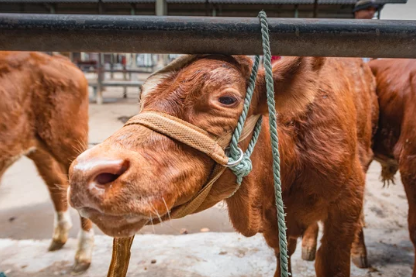
| | | Throughout much of this year, many observers — myself included — have highlighted the encouraging growth prospects for South Africa’s agricultural sector. This optimism has largely been driven by the excellent harvests of grains, oilseeds, fruits and vegetables across the country after the good summer rains of the 2024–25 season. This optimism is also evident in the high-frequency data. The agricultural sector’s gross value expanded by 18.6% quarter-on-quarter in the first quarter of the year, and by a more moderate 2.5% in the second, partly because of the delay in the summer crop harvest. In the third quarter, the sector is expected to post strong growth again. The sentiment in the sector remains positive, with the Agbiz/IDC Agribusiness Confidence Index — a sentiment indicator for South Africa’s agriculture — at 63 points in the third quarter, well above the 50-point neutral mark that separates optimism (above 50) from pessimism (below 50). As a result of the abundant harvests, agricultural exports have also been encouraging, reaching US$3.7bn in the second quarter, a 10% year-on-year increase. Click here to read full article.
| | South Africa's agricultural machinery sales remain strong |
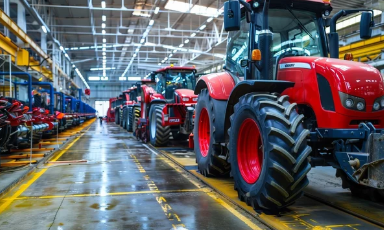
| | | South Africa's agricultural machinery sales have remained reasonably robust since the start of 2025 and are likely to continue on this encouraging pace throughout the year. More specifically, the tractor sales have increased for the past nine consecutive months, while combine harvester sales have only cooled in the last four months, having started on a solid momentum. The recent data for September 2025 also paints a mixed picture. For example, the tractor sales are up 15% y/y, with 758 units sold. However, the combine harvester sales were down 53%, with eight units sold. The soft sales in combine harvester sales are not a significant concern, given the higher volume of sales in the past few months. Importantly, the cumulative sales of combine harvesters for the first eight months of 2025 are up 17% from the corresponding period in 2024, with 180 units sold. The increase in agricultural machinery sales primarily reflects the positive sentiment in the sector regarding the 2024-25 field crop, horticulture, and wine grape harvest, supported by the favourable weather conditions. It also signals optimism about the season ahead. Click here to read full article.
| | Building blocks SA needs for its export diversification drive |
| | | The SA government and business are aligned on the need for export diversification. That does not mean abandoning existing markets but building on them. What we now need to do is to initiate, in earnest, trade talks with new export markets. Two critical areas require attention from both government and business. First, engaging new potential trade partners in various sectors of the economy will require solid technical expertise in the SA government. In the early 2000s, SA had a deep pool of human capital in the area of trade matters, particularly in terms of senior negotiators and technical experts. However, over the past decade things have changed as the country has gone through a period of maintaining relations rather than a continuous opening of markets, as we witnessed in the early 2000s. Therefore, a review of human capital and ensuring the relevant departments have sufficient resources to enhance their skill set, if needed, are critical if we are to succeed in our attempt at trade diversification. Click here to read full article.
| | South Africa is set to have a record canola harvest in the 2025-26 season |
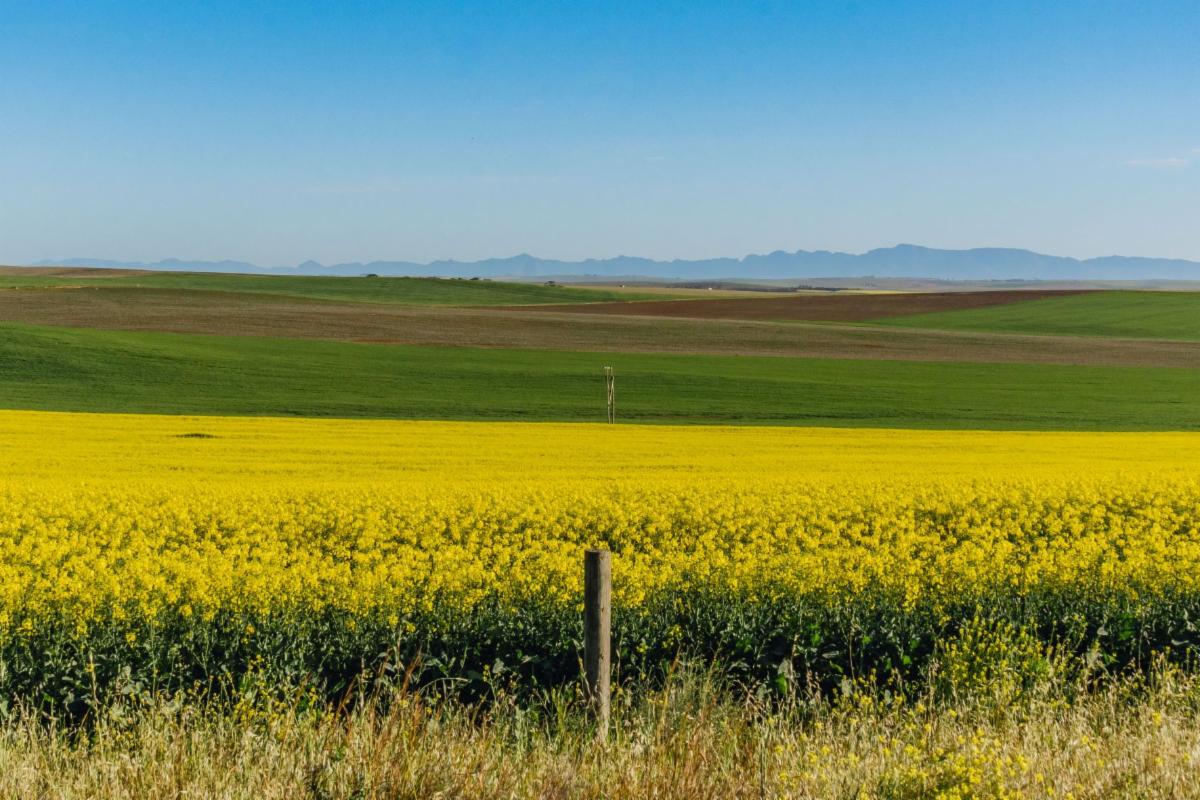
| | | At the end of August, I pondered the possibility of a canola boom in South Africa for the 2025-26 season. I based my view on the area planting and weather prospects, which were encouraging compared to the 2024-25 season. However, as many people in South Africa’s canola-growing province, the Western Cape, would agree, the start of the 2025-26 season presented a challenge for some regions of the province. We have seen reports of snail infestations in some areas, forcing farmers to replant, a process that increases production costs. At the end of September 2025, the Crop Estimate Committee released its second production forecast for canola, indicating a possible harvest of 311,640 tonnes, a 3% decrease from the August 2025 estimate. Notably, this remains 7% higher than the previous season. The annual gains are primarily due to the expansion in area plantings. I must say, this is not far off from our initial estimate of a 311,661-tonne harvest of canola, which was an 8% increase from the 2024-25 season. Here, we applied a five-year average yield of 1.89 tonnes per hectare to the area of 164,900 hectares, which provided a harvest estimate of 311,661 tonnes. Click here to read full article.
| | Exploring China’s zero tariff access offer with a careful eye |
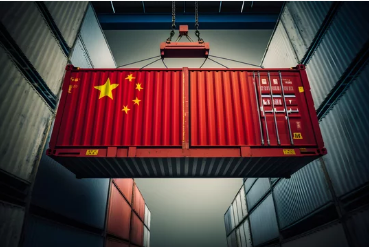
| | | Two weeks ago at the SA—China Trade and Investment Promotion Conference in Johannesburg, China's ambassador to SA, Wu Peng, said China had steadily increased imports from SA. “Take agriculture as an example: today, as avocados and dairy products have gained market access to China, 68 categories of SA agri-food products can be exported to China. Ninety percent of SA’s pecans and half of its macadamias are sold to China. These products have enriched the food baskets of Chinese consumers and, more importantly, increased the incomes of SA farmers and exporters.” I want to add that while we appreciate this momentum and want to see a deeper integration of agricultural products into China, there are still some constraints. For example, many of the products the ambassador mentioned still face various levels of tariffs. Consider our macadamia nuts, which face a 12% tariff in China. In the case of wine the industry must pay tariffs ranging from 14%-20% (depending on whether the wine is bottled or sold in bulk). Click here to read full article.
| | Is Zim quietly lifting its maize import ban? |
| | | It appears that Zimbabwe has taken the right step and eased the ban on maize imports. I was reviewing South Africa’s maize exports for the week of 26 September 2025, and Zimbabwe was listed as an importer. During that week, South Africa exported 27 624 tonnes of maize, with 47% (12 858 tonnes) of it being exported to Zimbabwe. South Africa’s 2025/26 maize exports so far stand at 650 897 tonnes, which is far below the seasonal export forecast of 2.2 million tonnes. Ordinarily, Zimbabwe is one of South Africa’s large maize markets, in addition to countries in the Far East and some African countries. However, last month, Zimbabwe issued a notice temporarily banning the import of maize due to improved domestic supplies. Our view was that the country didn’t have sufficient maize to meet its annual demand and would need to import maize. We based our view on data from the US Department of Agriculture (USDA), indicating that Zimbabwe’s maize production is approximately 1.3 million tonnes. Given the annual consumption of 2.0 million tonnes, they naturally need about 700 000 tonnes to fulfil their needs. There was also growing evidence that the supply is constrained. Some milling firms are already facing challenges due to the maize shortage. Click here to read full article.
| | PODCAST: Another boost for South Africa’s harvest | |
We are ending South Africa’s 2024/2025 summer grains and oilseed production season on an optimistic note. We now have eight production estimates, with two more to follow that are unlikely to change the positive picture. The data released at the end of September 2025 by the Crop Estimates Committee shows an increase in the harvest estimate, 2% higher than the August 2025 estimate, to an expected 19.94Mt (a 28% year-on-year increase). There is an annual uptick in the estimate for all the crops, mainly supported by favourable summer rains and decent area plantings. The base effects also help, as we struggled with a drought last year that weighed on the harvest. This ample crop will likely continue to put downward pressure on prices, which may help moderate food price inflation. In a few weeks the focus will be on the 2025/2026 season, which also promises to be favourable because of the prospects of La Niña rains. Click here to listen to the podcast for more information.
| | Sacta levy boosts research and development |
| | | Just a few years ago, South Africa’s self-pollinating crops industry, encompassing soya beans, wheat, oats, barley, and lupins, was in steep decline. The development of new varieties had slowed, yields had stagnated, and the total hectares under cultivation was shrinking. Andrew Bennett, CEO of the South African Cultivar and Technology Agency (Sacta), explains that unlike hybrid crops such as maize, self-pollinating crops used to allow producers to retain grain from one season and replant it in the next, often with minimal yield loss. South African legislation permitted this practice, enabling producers to avoid annual seed purchases. The recent proclamation of the new plant breeders’ legislation however limits these practices (see article elsewhere in this issue). While beneficial to producers, this undermined commercial incentives for seed companies to invest in breeding programmes for these crops. To address this challenge, Sacta was established as a non-profit agency to administer statutory breeding and technology levies on self-pollinating grain crops. The goal: restore investment in cultivar development and break the cycle of declining innovation. Click here to read full article for Agbiz Grain .
| | Factors shaping the state of South African agriculture |
| | | Various factors, both positive and negative, continue to shape South Africa’s agricultural sector. Starting on a positive note, early indicators suggest a strong likelihood of favourable rainfall conditions across South Africa for the upcoming 2025/26 summer season. Current forecasts indicate a neutral weather phase with average rainfall, which would be generally favourable. Yet the occurrence of La Niña rains remains a possibility, which would further ease concerns about a potential shift from the wet 2024/25 La Niña season to a drier El Niño pattern. South African producers are likely to begin evaluating the prospects for the 2025/26 summer crop season more seriously by October, once planting gets underway. For now, the focus remains on the ongoing harvest of summer grains, oilseeds, citrus, and other crops. The summer crop harvest is progressing well, with oilseed harvesting nearly complete. Encouragingly, feedback suggests crop quality – particularly in soya bean regions – is better than initially feared. In contrast, the maize harvest is lagging its usual schedule due to delayed plantings and persistent rains through April, which slowed crop development. Click here to read full article Agbiz Grain .
| | FAO cereal supply and demand brief |
| | | The Cereal Supply and Demand Brief provides an up-to-date perspective of the world cereal market. The monthly brief is supplemented by a detailed assessment of cereal production as well as supply and demand conditions by country/region in Crop Prospects and Food Situation, published three times per year. More in-depth analyses of world markets for cereals, as well as other major food commodities, are published biannually in Food Outlook. FAO’s latest forecast for global cereal production in 2025 has been raised by 10.1 million tonnes (0.3 percent) this month, putting the total at 2 971 million tonnes. The increase reflects upward revisions to production forecasts across all crops, led by wheat, maize and rice (in order of magnitude). At this level, world cereal production is 3.8 percent higher year on year, marking the largest annual growth since 2013. World wheat production is forecast at 809.7 million tonnes in 2025, up 0.6 percent compared to the previous month and now 1.3 percent above the 2024 output. Click here to read full article.
| | BUSA cargo movement update |
| | | This update provides a consolidated overview of the South African logistics network and the current state of international trade. At our container terminals, an average of 13 401 TEUs was handled daily, a significant increase from 11 631 TEUs the previous week. Smooth operations were mainly constrained by inclement weather, vacant berths, and equipment challenges. Adverse weather and equipment challenges disrupted operations in Cape Town, as high swells, inclement weather, and congestion prevented optimal productivity in Durban. Vacant berths, accompanied by bad weather, ensured operational delays at our Eastern Cape Ports, while minimal delays were reported at the Port of Richards Bay. The latest Southern Africa Terminal and Service Update from Maersk, for Week 39, suggests that most of the significant South African terminals are currently fluid with no waiting times reported. The latest reports from TFR suggest that intermittent cable theft and locomotive breakdowns ensured operational delays on the Container Corridor this week, while ongoing locomotive issues resulted in slow-moving trains on the line between City Deep and Mafikeng. Click here to read full report.
| | Economic and employment indicators & trends issue |
| | | Productivity declines after the 2008 crisis and 2020 pandemic have weighed on growth; without these, GDP per capita would be significantly higher. Job losses between 2025:Q1 and Q2 hit Community and Social Services, Agriculture, and Finance, raising unemployment from 32.9% to 33.2%, while Trade recorded the highest gains. South African households hold a larger share of assets in equities than most major economies; U.S. household equity ownership remains near historical peaks. Per capita investment has fallen sharply since 2008, with a weak recovery after 2020, even after adjusting for inflation and population growth. Spending on expansion and maintenance has plateaued, with uneven annual grant allocations and a sharp drop in the Regional Bulk Infrastructure Grant projected for 2026/27. U.S. poultry imports peaked in 2019, then declined sharply, with a slight recovery in 2024 as exporters regain market share. firms’ net profit margins hit the highest levels since 2010, led by financial intermediation and real estate. Medium firms averaged 13.5% ROE and just under 5% ROA, with Community, Social, and Personal Services outperforming across firm sizes. Click here to read full report.
| | AMIS Market Monitor - No. 132 October 2025 |
| | | In October, wheat harvesting wraps up and the harvesting of maize and soybeans begins across the northern hemisphere. In the southern hemisphere, wheat crop is developing, and farmers are starting to plant maize and soybeans. Rice harvests are ongoing in China and Southeast Asia. Overall, crop prospects are good. In September, wheat, maize, and rice prices generally declined, owing to ample supplies and strong competition among exporters. However, soybean prices stayed firm in Brazil and the United States, balancing out price drops in Argentina caused by changes in export taxes. Despite these positive trends, ongoing trade tensions have triggered adjustments in trade flows of some commodities, with potential implications on farmers' margins in producing countries and consequently future planting decisions. Wheat production in 2025 is forecast at a record high, mainly due to better yields in Canada, the EU, and the Russian Federation. Utilization remains steady without major adjustments, trade is set to rise, and stocks are expected to grow in some major producing countries. Click here to read full report.
| | OECD‑FAO Agricultural Outlook 2025‑2034 |
| | | The OECD-FAO Agricultural Outlook 2025-2034 is a collaborative effort by the Organisation for Economic Co-operation and Development (OECD) and the Food and Agriculture Organization (FAO) of the United Nations. Serving as a reference for forward-looking policy planning, the Outlook draws upon the expertise of both organisations, incorporating inputs from collaborating member countries and commodity organisations. It provides a comprehensive assessment of national, regional and global agricultural commodity markets over the next ten years. The Outlook uses the OECD-FAO Aglink-Cosimo model to ensure consistency and global equilibrium across all markets. Detailed methodology and model documentation are available online at www.agri-outlook.org. At the OECD, the baseline projections and Outlook report were prepared by members of the Trade and Agriculture Directorate: Marcel Adenäuer, Fabiana Cerasa, Thomas Chatzopoulos, Armelle Elasri (publication co-ordinator), Hubertus Gay (Outlook co-ordinator), Barbora Gilbert, Céline Giner, Gaëlle Gouarin, Lee Ann Jackson (Head of Division), Edith Laget, Claude Nénert, Grégoire Tallard, and Kotone Yamamoto of the Agro-Food Trade and Markets Division, and for fish and seafood by Claire Delpeuch and Will Symes of the Agricultural Resources Policy Division. Click here to read full report.
| | Global potato market shift: Europe’s oversupply, North America’s contract discipline, and Asia’s rise as a frozen-fry powerhouse |
| | | The international potato industry is undergoing one of the most consequential transitions in decades, shaped by a convergence of structural oversupply, shifting trade routes, and accelerating investment in processing capacity outside of its traditional heartlands. For much of the 20th and early 21st centuries, Europe and North America defined the rhythm of global potato supply and demand: Europe as the center of breeding and frozen-fries innovation, North America as the land of large-scale contracted production and export to Asia-Pacific markets. That balance is now eroding. In Europe, a dramatic increase in acreage has led to record harvest projections for 2025, particularly in Germany and France, even as domestic demand has stalled and international buyers pivot to alternative suppliers. This dynamic has created a paradox: the world has never grown potatoes more efficiently, but margins for many European growers are narrowing to unsustainable levels. At the same time, North American processors are leaning toward financial discipline, scaling back open-market purchases, and pursuing profitability over volume. Growers in the United States and Canada are responding by moderating acreage, aware that oversupply could depress returns further. Click here to read full article.
| | Freshfel Europe supports EAT-Lancet report calling for urgent policy shift to prioritise fruit and vegetables in food systems |
| | | European fresh produce association says holistic review of agricultural, fiscal, health and environmental policies urgently needed to tackle low consumption levels and promote plant-based diets. Freshfel Europe has said that the release of the latest EAT-Lancet report on ’healthy, sustainable and just food systems’ is well aligned with the association’s ”repeated calls” to have a drastic shift in policies influencing food systems. It said that a holistic review of agricultural, fiscal, health, environmental and education policies is urgently needed, positioning fruit and vegetables as key partners to the much-needed solutions to rising societal challenges. ”Currently, levels of fruit and vegetable consumption remain far too low compared to health and sustainability recommendations,” Freshfel stated. ”Meanwhile the prevailing food policy environment continues to reinforce the dominance of ultra-processed foods, contributing to a collapse in public health and leading an high environmental footprint incompatible of food with the EU’s climate ambitions. Click here to read full article.
| | Applications are now open for the Agbiz Centenary Bursary 2026 | Established in celebration of Agbiz members who have reached their centenary milestones, this bursary is dedicated to supporting the next generation of leaders in agribusiness. It provides an opportunity for South African master’s and PhD students in agribusiness management-related fields to further their studies and contribute to the future growth of the sector. If you’re passionate about advancing your academic journey and making an impact in agriculture and agribusiness, this opportunity is for you. Learn more and apply here. | | Agbiz seeking Head: Strategic Projects | Agbiz would like to invite dynamic and suitably qualified individuals to apply for the position of Head: Strategic Projects. This is a strategically significant post that reports to the CEO. The Head: Strategic Projects leads Agbiz’s work on high-impact, cross-cutting initiatives that support the transformation, competitiveness, and sustainability of the agribusiness sector. This position is responsible for the identification, development, coordination, and execution of special projects, often in partnership with member organisations, government departments, industry associations, and external experts. The role contributes directly to Agbiz’s advocacy and visibility by managing strategic initiatives, responding to national sectoral developments, and supporting the CEO in implementing Agbiz’s mission. Click here to learn more. | | Get the latest news from the FPEF | In the latest edition of Keeping it Fresh, the Fresh Produce Exporter's Forum (FPEF)'s newsletter, you will get a summary of the most pertinent information as well as reminders of important upcoming events. Please click here to peruse. | | BFAP September Newsletter | This month’s highlights showcase BFAP’s continued contributions to key industry conversations and research shaping South Africa’s agricultural landscape. From award-winning research at the Agricultural Economics Association of South Africa (AEASA) Conference and expert insights shared at the AFMA and SACOTA AGMs, to the release of the Red Meat Industry Report, Oilseeds Focus articles, and our latest Trade and Food Inflation Briefs — each feature offers a lens on the dynamics influencing South Africa’s food and agricultural value chains. Click here to read. | | The Citrus Growers' Association of Southern Africa (CGA), shares the latest news in the citrus industry in its weekly update, From the desk of the CEO. Please click here to peruse. | | |
Agbiz Media Day WC
23 October 2025 | Elsenburg, WC
Learn more
AgriSA ATLAS Congress
15 October 2025 | Choose Life Church, Moreleta Park
Learn more
| |
- Agbiz is the only organisation that serves the broader and common over-arching business interests of agribusinesses in South Africa.
- Agbiz addresses the legislative and policy environment on the many fronts that it impacts on the agribusiness environment.
- Agbiz facilitates considerable top-level networking opportunities so that South African agribusinesses can play an active and creative role within the local and international organised business environment.
- Agbiz research provides sector-specific information for informed decision-making.
- Agbiz newsletter publishes members' press releases and member product announcements.
| | THIRD-PARTY WEBSITE LINKS TO THIS NEWSLETTER | | The Agbiz Newsletter may contain a few links to websites that belong to third parties unrelated to us. By making these links available, we are not endorsing third-party websites, their content, products, services or their events. Agbiz seeks to protect the integrity of its newsletter and links used in it, and therefore welcomes any feedback. | | | | |