Rethinking water security in a water-insecure world |
| |  | The words came from a teenage girl standing amid the devastation of the Odisha Super Cyclone in Eastern India in 1999. At the time, I was a member of the Indian Administrative Service, coordinating relief efforts 48 hours after the storm. Her question cut through the chaos and would shape my life’s work. Relief was necessary, but the real solution lies in building strong, adaptive water systems. The devastation in Odisha wasn’t just about wind speeds and storm surges—it was about what followed. Entire water systems were wiped out, leaving communities without clean drinking water for weeks. Contaminated wells and destroyed infrastructure led to disease outbreaks. Disasters expose the weaknesses in our water systems. Without water security, disaster recovery stalls. But true resilience requires more than just emergency response—it demands smarter water systems designed for a world that has changed. Over the last 50 years, natural water storage has declined by 27 trillion cubic meters due to land degradation, groundwater depletion, and loss of wetlands. Read full article here.
| | EU ‘bazooka’ response expected to next US tariffs | |
| | | The case for the EU to unleash its Anti-Coercion Instrument (ACI) for the first time against the US is mounting by the day as the White House plans to implement reciprocal tariffs on April 2. It would be a debut for a tool that embodies a new level of economic security policymaking for the bloc. Dubbed a regulatory ‘bazooka’ by EU officials, the ACI grants the European Commission sweeping powers to restrict a range of economic activities — including foreign direct investment (FDI) — in response to threats by foreign governments designed to coerce the EU to change its policies in exchange for averting tariffs. The idea behind the ACI started during Donald Trump’s first presidency, when the EU realised that retaliatory duties under its existing toolbox weren’t sufficient to counter the growing politicisation of trade. Mr Trump’s promise since returning to office to impose so-called reciprocal tariffs in April against countries with digital service taxes and tough corporate enforcement regimes means the ACI is now expected to come full circle. Click here to read full article.
| | Optimism for agri-trade and sustainable agriculture in Africa with renewed ECA-FAO partnership | |
The Economic Commission for Africa (ECA) and the Food and Agriculture Organization (FAO) signed a Memorandum of Understanding (MoU) on Tuesday, outlining a framework for strategic collaboration between the two UN entities. The agreement, formalized in a signing ceremony on 18 March 2025 in Addis Ababa, aims to drive sustainable agriculture, regional integration, and climate resilience, while fostering innovation for economic diversification, environmental sustainability, and inclusive growth across the continent. The MoU was signed by Antonio Pedro, Deputy Executive Secretary (Programme Support) of the ECA, and Abebe Haile-Gabriel, Assistant Director-General of the UN Food and Agricultural Organization -FAO. This agreement builds on past collaboration under a previous MoU that entered into force on January 31, 2017, for five years. Read full article here.
| | Global grain market trends: Rising maize & wheat prices, falling rice quotations |
| | | In February 2025, international maize and wheat prices increased due to seasonally tighter supplies and concerns over crop production in key exporting countries. By contrast, international rice quotations declined, as ample exportable supplies and weak import demand exerted downward pressure on prices. FAO’s analysis of the latest domestic staple food price data indicates that prices remained higher year-on-year in many countries during January and February 2025. On a monthly basis, maize and wheat prices increased seasonally in South America, with strong export demand providing additional support to the price increases in the major exporting countries. In Southern Africa, tight supply conditions and inflationary pressures from weakened currencies in several countries continued to sustain high maize prices. In Central America, maize prices exhibited mixed trends, with the main season harvest driving price declines in some areas, while adverse weather conditions led to localized production shortfalls and price increases in others. Click here to read full report.
| | SA agriculture must build on the current optimism in the sector |
| | | South Africa must build on the positive sentiment currently evident in agriculture and agribusiness by implementing long-standing plans and tackling the long-term growth constraints in the sector. The path ahead for the sector remains clear through the Agriculture and Agro-processing Master Plan (AAMP), which took the collaborative efforts of all stakeholders to draft. The AAMP's core objective is to drive inclusive growth in the sector by addressing constraints across commodities and cross-cutting matters such as land reform. In early February, the U.S. President cited misleading claims about South Africa's land reform in his Executive Order against South Africa. Amid these headlines, we worried there would be a sense of pessimism about business conditions in the sector. Positively, the Agbiz/IDC Agribusiness Confidence Index, a sentiment indicator in South Africa's agriculture and agribusiness, registered a notable 11-point uptick from Q4 2024 to the 70-point mark in Q1 2025. Click here to read full article by Wandile Sihlobo.
| | Continuously building friendships should be SA’s agricultural trade approach |
| | | At a time of heightened geoeconomic tension it is tempting to argue that countries, industries and businesses must align with particular interests or regions. For businesses and industries, the ideal path should be to remain neutral and continue to broaden business activity with a wider range of countries. This is especially critical for SA agriculture. The sector is export-orientated, with exports reaching a record $13.7bn in 2024, up 3% year on year. The export markets and products are varied, with the African continent absorbing nearly half, while the EU, Middle East, Asia and the UK are also sizeable markets. SA should not rest on this success, but should strive to maintain and deepen trade relations in regions where capacity remains. The EU-SA agricultural trade has had a few frictions, mainly related to citrus. There is a growing sentiment among farmers in the EU that the region must manage its imports and protect domestic producers. Click here to read full article by Wandile Sihlobo.
| | SA consumer food price inflation ticked up mildly in February 2025 |
| | | South Africa’s consumer food price inflation ticked up to 1,9% in February 2025 from 1,5% in January. This was underpinned by mild increases in cereal products; fish and other seafood; fruits and nuts; and vegetables. We believe this mild uptick in food inflation is the start of the change in the trend we have been anticipating, mirroring the price path at the commodity level. The excessive rains, broadly positive for agriculture, caused a minor disruption in the vegetable markets, thus contributing to the price increase. The jump in fruit and nuts inflation also mirror to the broader price trend we are observing, resulting partly from the strong global demand. As with our previous note, we continue to believe that the outlook for 2025 remains promising, and consumer food price inflation could be relatively benign despite the price trend change. The rains across South Africa have benefitted agricultural production, and farmers planted a decent area, and crop production expectations are encouraging. Click here to read full article by Wandile Sihlobo.
| | South Africa's agricultural machinery sales show signs of recovery |
| | | In an environment of misinformation, where some allege that South Africa's agriculture is under siege and that farmers aren't making solid financial decisions, it is heartening to see strong machinery sales. The high-frequency data from the South African Agricultural Machinery Association show that South Africa's agricultural machinery sales are recovering. For example, tractor sales increased for the second consecutive month, up 21% year-on-year in February 2025, with 638 units sold. This follows a 28% sales jump in January 2025. The combine harvesters' sales were up 6% year-on-year in February, with 19 units sold. The increase in sales reflects the positive sentiment in the sector about the harvest based on favourable weather conditions and the base effects. The weak performance in agricultural machinery sales in 2024 resulted from various factors. First, South Africa's agricultural sector had higher machinery sales between 2020 and 2023. Click here to read full article by Wandile Sihlobo.
| | How to unlock SA’s agricultural potential |
| | | The agricultural sector now enjoys universal recognition and its status as a growth propeller is embraced in a way that transcends sectoral interests. Specifically, the country’s political leadership deeply appreciates the importance of agriculture in driving the rural economy, addressing poverty and creating job opportunities. Much has also been written about the sector’s untapped opportunities for unlocking growth and addressing racial inequities in its ownership. Our attempt in this book is to move the conversation even further and provide a more concrete view of how to unlock the agricultural potential in SA fully. We specifically attempt to highlight some uncomfortable truths about SA’s agriculture by focusing on some key principles, and highlighting policies and economic realities. This is done in the hope that everyone will now have the same level of understanding of the specific needs and interventions in the sector. Click here to read An extract from ‘The Uncomfortable Truth about South Africa’s Agriculture’ by Wandile Sihlobo and Johann Kirsten.
| | The Dan Corder Show | The uncomfortable truth about South Africa's agriculture | Wandile Sihlobo speaks on the actual realities of farming in South Africa, what the government and private sector needs to do better, and why so many South Africans have an inaccurate perception of the industry. Click here to watch. | | PODCAST: There is rising optimism in South Africa’s agriculture | |
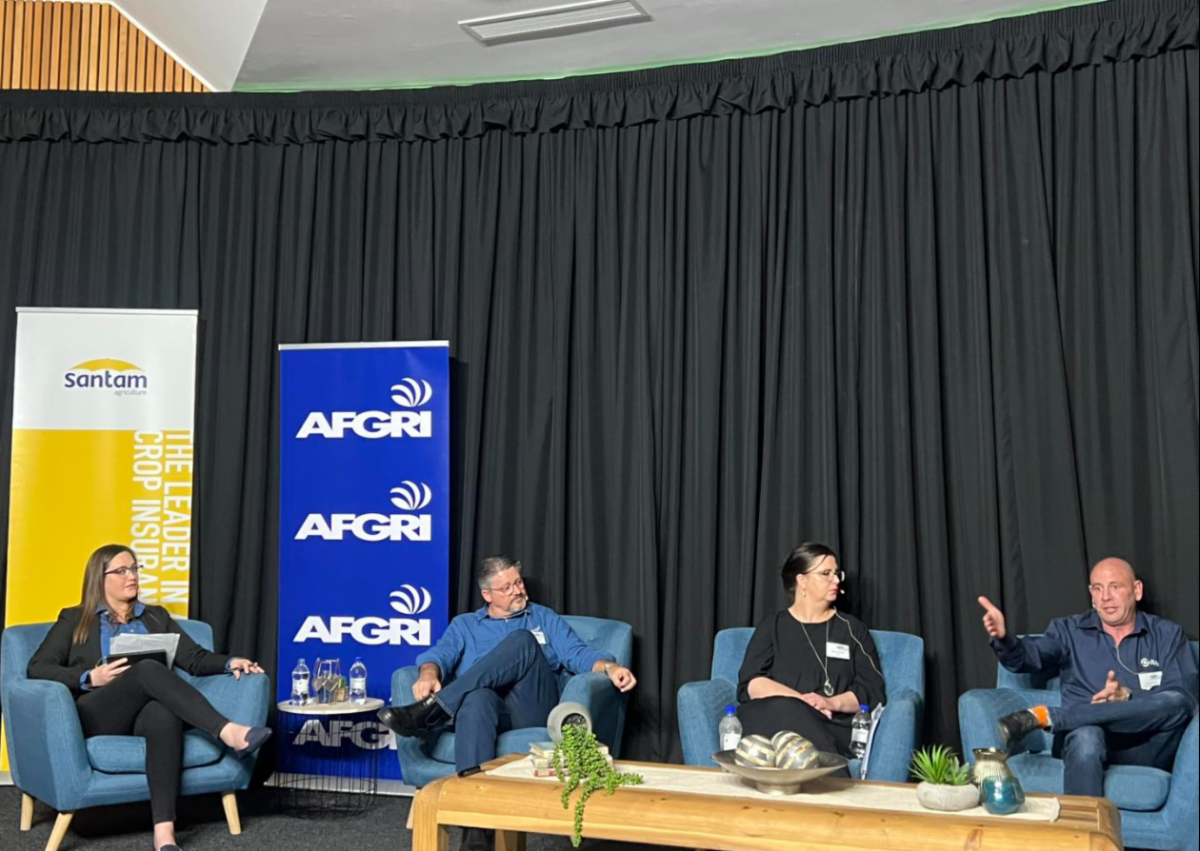
We are having a challenging year — some sections of South Africa are uncomfortable with the Expropriation Act and geopolitical tensions are increasing. So we were pleasantly surprised to see rising optimism in the country’s agricultural sector. The Agbiz/IDC agribusiness confidence index (ACI) — a sentiment indicator — increased 11 points from the fourth quarter of 2024 to 70 in the first quarter of 2025. This is the third consecutive improvement, placing the ACI at its highest level since the fourth quarter of 2021, a year when La Niña rainfall boosted agricultural output. Click here to listen to the podcast for more insights.
| | ESG: Implications for the grain and oilseeds sector |
| | | The abbreviation ESG stands for environmental, social and governance. It is a framework used internationally by stakeholders to assess an organisation’s business practices and performance on various sustainability and ethical issues. ESG is about sustainability in the broader sense, not just about environmental issues. In agriculture the environmental factors are quite prominent though. Environmental factors are paramount in ESG investing within the agricultural sector. These factors include issues such as sustainable land use, water conservation, biodiversity protection, and the reduction of greenhouse gas emissions. The social factors focus on the wellbeing of agricultural workers, local communities, and consumers. Governance factors focus on management structures and practices to ensure accountability, transparency, and ethical behaviour The prominence of concerns regarding climate change as well as human rights and health, are driving forces behind consumer and investor demand for ESG reporting. Click here to read full article by Annelize Crosby, head of legal intelligence, Agbiz.
| | Agbiz Grain SHEQ seminar exceeds expectations |
| | | The Agbiz Grain SHEQ, or safety, health, environment and quality, seminar held in Pretoria last year brought together industry leaders to discuss critical issues pertaining to the grain storage sector. The key topics included the Agbiz Grain SHEQ compliance audit, alcohol and substance abuse in the workplace (especially cannabis use), workplace injuries and challenges such as medical practitioners refusing to treat injury-on-duty (IOD) cases, employees faking IODs, and navigating compensation under the Compensation for Occupational Injuries and Diseases Act, 1993 (Act 130 of 1993) or COIDA. The first session addressed the need for audit criteria tailored to the grain storage sector. Due to the industry being unique with distinct risks and mitigation methods, a sector-specific audit document needs to be created. This document, developed by a sector committee with external input, will cover all compliance aspects for grain storage facilities. Click here to read full article by By Christal-Lize Muller, Plaas Media.
| | Are emerging market risks for private investors overstated? What the data show | |
The G20 has delivered a strong message that multilateral development banks (MDBs) need to be “better, bigger, and more effective.” That’s the headline of the G20 reform plan adopted in November 2024, which not only sets out the future path but also establishes how to get there with a detailed roadmap of 13 recommendations and 44 actions. A key part of this guidance is for MDBs to mobilize more private capital for development, alongside efforts to leverage more financing from their own balance sheets. It is a goal that the World Bank Group and other MDBs are moving fast to achieve, with ambitious near-term targets in sight. This includes mobilizing $65 billion in climate finance for low- and middle-income countries by 2030. The private sector is also pivotal to meeting the World Bank Group and African Development Bank's aim to connect at least 300 million people in Africa with electricity access by 2030. Click here to read full article derived from blogs.worldbank.org.
| | Connecting 300 million people to electricity and building a resilient future in Africa |
| | | One of the resounding messages of the recent Mission 300 Africa Energy Summit was that closing the energy-access gap—for electricity and clean cooking—is possible. This gap remains enormous in Sub-Saharan Africa, particularly in rural and isolated areas. Nearly 600 million people in Sub-Saharan Africa live without access to electricity, representing nearly 83% of the world’s unelectrified population. The World Bank Group is partnering with the African Development Bank and other partners on Mission 300, an ambitious initiative to connect 300 million people to electricity in Sub-Saharan Africa by 2030 and accelerate development and poverty reduction. At the same time, it is an unprecedented opportunity to make people, businesses, and communities more resilient to economic and other shocks and crises that will likely intensify in the coming decades. New electricity connections will significantly improve people’s well-being, access to healthcare and education, and other basic needs, such as drinkable water and sanitation. Read full article here.
| | ‘We support free trade as we oppose tariffs’: US farmers |
| | | It's the US farmers who could ultimately feel even more pain as a result of Trump administration's tariffs on Canada, Mexico and China, US media and economists warned. In her Insight Talk show, Global Times (GT) reporter Wang Wenwen talked to two US farmers about the impact the tariffs will have on them and their concerns. Ryan Marquard (Marquard), vice president of the Iowa Farmers' Union, has raised and directly marketed beef, chicken, turkeys and eggs for almost two decades. Caleb Ragland (Ragland), president of the American Soybean Association, farms 4,000 acres of soybeans, corn and winter wheat. GT: In light of the tariff war, what is the general mood among farmers now? Marquard: It's not good at all. We've been down this road before. Last time though, the agri economy was in a much stronger place. It's hard to say that we're not in an agricultural recession in America, and we have all the uncertainty of a tariff regime and significant disruption in terms of the US Agency for International Development funding. Click here to read full article by globaltimes.cn.
| | 4 key facts about forests and food: our experts weigh in |
| | | Forests and food are interconnected. As the world accelerates towards a food transition that delivers better, more sustainable outcomes for people and the planet, we must recognize that forests, woodlands, and landscapes are critical to this transition, but also to wider sustainable development goals. Investments in forests are investments in local communities, national economies, and our planet. We spoke to two of our forestry and agriculture experts on the topic. Food is produced in many forested areas. In addition, integrating agroforestry practices can enhance soil health by increasing organic matter and nutrient cycling. These practices also create habitats for vital pollinators and supporting overall ecosystem resilience. While agriculture remains a major driver of deforestation, there is plenty of evidence that it can exist in harmony with forested landscapes - and heal, instead of harm, the planet. As shown in our recent flagship report, Recipe for a Livable Planet, adopting a whole-of-landscape approach can yield significant benefits for countries. Read full article here.
| | Deputy President Shipokosa Paulus Mashatile concludes Working Visit to Japan | |
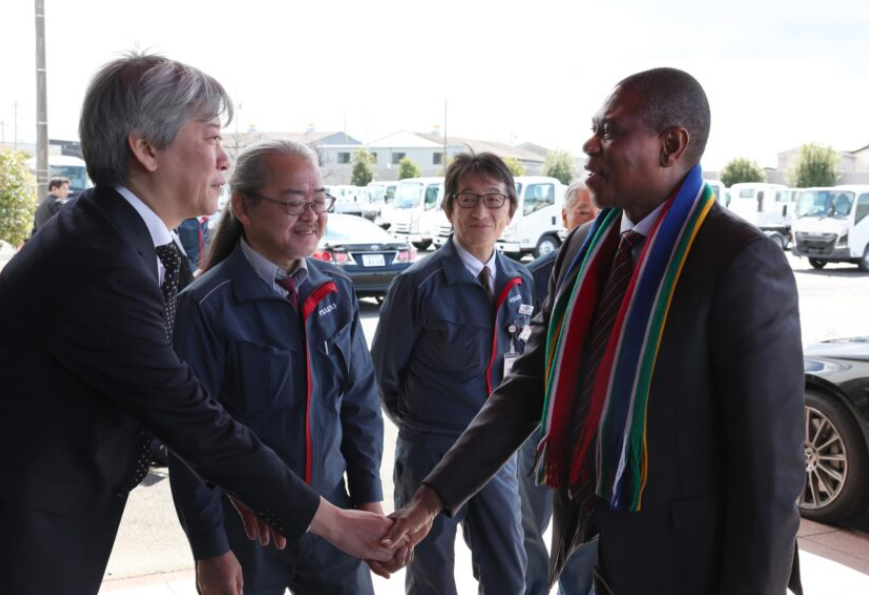
Deputy President Sipokosa Paulus Mashatile has successfully concluded his Working Visit to Japan aimed at reaffirming the strong cooperation between South Africa and Japan in areas of mutual interest. As the two countries mark 115 years of well-established diplomatic relations, the year 2025 also marks a special milestone, with both countries chairing important multilateral organisations – South Africa’s Presidency of the G20 and the Tokyo International Conference on African Development (TICAD-9) Summit led by Japan. During the Working Visit, the Deputy President met with Japanese Government officials, including paying a courtesy call on His Excellency Mr Ishiba Shigeru, Prime Minister of Japan and Chief Cabinet Secretary Mr Yoshimasa Hayashi. The Deputy President expressed his appreciation for Japan’s support for South Africa’s Presidency of the G20 and looked forward to collaborating with Japan to ensure that TICAD-9 is a success. Click here to reads full media statement.
| | Creecy moves to test private sector appetite for rail and port partnerships |
| | | Transport Minister Barbara Creecy has launched an online request for information (RFI) process to test market appetite for potential private sector participation (PSP) investments in selected rail and port infrastructure and operations. The information submitted ahead of the May 9 closing date for responses will help guide the development of the first PSP procurement phase, which could begin before the end of August. The corridors selected for the RFI, include: a PSP for the Northern Cape-to-Saldanha Bulk Minerals Corridor and the Northern Cape-to-Nelson Mandela Bay Corridor, which primarily transport iron-ore and manganese exports respectively; the Richards Bay Bulk Minerals Corridor PSP, which is a key export channel for coal and chrome exports from Limpopo and Mpumalanga, and through which magnetite is also exported; and an intermodal supply-chain PSP project focused on the container and automotive sectors, including the potential designation of the South African container port system as a regional transhipment hub for major shipping lines. Read full article here.
| | IFPA releases supply chain white paper | |
The International Fresh Produce Association (IFPA) has released its white paper, ’Supply Chain of the Future: From Vision to Action’, providing a roadmap for ”unprecedented pre-commercial collaboration” to tackle systemic challenges in the fresh produce supply chain. Recognising that “data doesn’t move food, collaboration does,” as stated by Steve Alaerts, chair of the IFPA Supply Chain Council, the association says it is fostering an ”environment of open dialogue and shared problem-solving”. The white paper outlines how the initiative is breaking down barriers and building trust through collaborative efforts. These efforts are focused on harmonised standards, smart data escrow, shelf-life predictability and dynamic incentives. IFPA has convened industry leaders in a series of global ’collabathons’, bringing together diverse perspectives to map out challenges and co-create solutions. Click here to read full article.
| | South Africa’s grain market outlook – 2025/26 projections | |
South Africa’s grain sector is poised for moderate growth in the 2025/26 marketing year, with stable planting areas for corn and wheat leading to slight production increases. Corn exports are expected to rebound by nearly 25% due to high carry-in stocks and above-average yields. However, domestic consumption remains under pressure due to economic challenges such as policy uncertainty, logistical bottlenecks, and high unemployment rates. The wheat sector anticipates higher imports to meet rising consumption demands, while rice imports are projected to remain steady with limited local demand growth. The country continues to rely on imports for wheat and rice, mainly from Russia, Thailand, and India. Meanwhile, regional climatic conditions are improving, reducing demand for South African grain exports. Despite these positive trends, structural issues in infrastructure and trade policy remain critical challenges for long-term agricultural sustainability. Click here to read full article.
| | Statement of the monetary policy committee | |
The world economy is experiencing extreme levels of uncertainty. Trade tensions have escalated, and longstanding geopolitical relationships are shifting abruptly. In these circumstances, the global economic outlook is unpredictable. Germany has set out plans for large investments in security and infrastructure, which are likely to lift European growth. Meanwhile, China has announced new stimulus measures to bolster demand. In the United States, economic sentiment is volatile. The year started with surging stock prices and a stronger dollar. More recently, however, the disruptive effects of tariffs and policy uncertainty have come into focus. Growth expectations have now slipped, the dollar has weakened, and US stock markets have given up recent gains. By contrast, asset prices in other economies have been resilient, with most major currencies strengthening against the dollar. Click here to read full report issued by Lesetja Kganyago, Governor of the South African Reserve Bank.
| | Export estimates of citrus varieties show stability and balanced growth |
| | | Ahead of the official start of the 2025 citrus export season in April, the variety focus groups of the Citrus Growers' Association of Southern Africa (CGA) presented their predicted volumes available for export in the upcoming season. "All available data project exports that are in line with the five-year average, which means there will be sufficient fruit for our global markets. The outlook suggests no oversupply or undersupply," said Gerrit van der Merwe, Chairman of the CGA. Overall, the quality of the fruit for 2025 looks to be excellent. The breakdown of various variety estimates indicates a balanced season ahead. The current prediction is that 32.9 million 15kg cartons of Lemons will be exported to key markets, which represents a 5% decrease from last year. Estimates for citrus-producing regions the Sundays River Valley, Senwes (Marble Hall and Groblersdal), Boland and Patensie are all down, but Hoedspruit is estimated to increase its lemon production. Click here to read Media statement by Boitshoko Ntshabele, CEO of the Citrus Growers' Association of Southern Africa (CGA).
| | Africa Agri Tech’s AgBusiness Day showcases the future-forward thinking needed to boost agriculture |
| | | The final day of the Africa Agri Tech Conference and Expo at the CSIR Convention Centre in Pretoria focused on AgBusiness, where business leaders were urged to abandon yesterday’s solutions and embrace future-forward strategies. Gauteng MEC for Agriculture, Vuyiswa Ramokgopa, opened the day with a call for bridging the technological gap between commercial and small-scale farmers. “If Gauteng wants to shift the needle to become an agricultural powerhouse, we must address the divide between commercial farmers who are tech-savvy and small-scale farmers who are seemingly oblivious to the technology that can help them progress. This requires a twofold approach: equipping farmers with knowledge and ensuring technology is accessible and affordable.” The affordability of artificial intelligence (AI) in agriculture was addressed by Arno Hanekom, Digital Strategist at Datacentrix, who emphasised that effective AI solutions were low-risk, cost-effective, and highly beneficial. “Datacentrix overcomes hesitancy to adopt AI by solving real farm challenges. Click here to read full article derived from proagrimedia.com.
| | Agbiz CEO Theo Boshoff unpacks the Expropriation Bill | In this insightful discussion with Anlie Hattingh on AgriXtra, Agbiz CEO Theo Boshoff unpacks the newly signed Expropriation Act, shedding light on its implications for land reform and property rights. While some see the legislation as a step forward, others fear its impact on private ownership. Boshoff provides a balanced perspective, separating fact from fiction and exploring what this means for the agricultural sector. Click here to watch the full interview. | | Developments in SA's Trade Environment & The Role of Agbiz Fruit – Wolfe Braude | Wolfe Braude, Fruit Desk Manager at Agbiz Fruit, discusses the latest developments in South Africa's trade environment and their impact on the agricultural sector. He also highlights the role of Agbiz Fruit and its contributions to supporting and growing the fruit industry. Click here to watch to learn more about trade insights and Agbiz Fruit’s key initiatives! | | Agbiz CEO Theo Boshoff Reflects on 2024 and Sets Sights on 2025 | In this insightful interview with Anlie Hattingh, Agbiz CEO Theo Boshoff reviews the key milestones and challenges of 2024 while sharing his vision for 2025. The discussion dives into crucial topics such as Environmental, Social, and Governance (ESG) principles, sustainable practices across agriculture and its value chains, and what lies ahead for the industry. Click here to watch full interview. | | The Citrus Growers' Association of Southern Africa (CGA), shares the latest news in the citrus industry in its weekly update, From the desk of the CEO. Please click here to peruse. | | |
Mzansi Young Farmers Indaba
1-2 April 2025 | Lavender Kontrei Market, Pretoria North, Gauteng
Learn more
Transforming Poultry Productivity and Empowering Sustainability in Africa
29-30 April 2025 | The Garden Venue, Johannesburg, South Africa
Learn more
BUSA Sustaining Progress Conference 2025
29 May 2025 | Focus Rooms, Modderfontein
Learn more
3rd Annual Food Waste Solutions Summit
26-27 June 2025 | Hotel Sky, Sandton
Learn more
International Fresh Produce Association’s Southern Africa Conference
23-24 July 2025 | Pretoria, South Africa
Learn more
South African Sugar Technologists’ Association Congress 2025
12-14 August 2025 | ICC Durban
Learn more
| |
- Agbiz is the only organisation that serves the broader and common over-arching business interests of agribusinesses in South Africa.
- Agbiz addresses the legislative and policy environment on the many fronts that it impacts on the agribusiness environment.
- Agbiz facilitates considerable top-level networking opportunities so that South African agribusinesses can play an active and creative role within the local and international organised business environment.
- Agbiz research provides sector-specific information for informed decision-making.
- Agbiz newsletter publishes members' press releases and member product announcements.
| | THIRD-PARTY WEBSITE LINKS TO THIS NEWSLETTER | | The Agbiz Newsletter may contain a few links to websites that belong to third parties unrelated to us. By making these links available, we are not endorsing third-party websites, their content, products, services or their events. Agbiz seeks to protect the integrity of its newsletter and links used in it, and therefore welcomes any feedback. | | | | |