Shaping markets for sustainable growth and climate goals | |
The climate crisis demands a transformative approach to economic policy, focussing on shaping markets rather than just fixing their failures. Modern industrial policy should set ambitious missions, such as achieving net-zero emissions, and drive innovation across all sectors. Governments must guide economic growth to be sustainable and inclusive, using strategic public finance, redesigned contracts, and public-private collaboration. Public procurement should prioritise outcomes aligned with climate goals, while public institutions must be empowered to lead this change. By adopting a mission-orientated strategy, governments can catalyse innovation, direct investment, and ensure that economic growth supports both environmental sustainability and social equity. This approach is essential to address global challenges and foster a green race to the top. Click here to read full article first published by IMF Blogs.
| |
AI's potential to revitalise economic and productivity growth | |
The global economy faces slower growth, persistent inflation, and high borrowing costs, exacerbated by sluggish productivity. AI presents a key opportunity to overcome these challenges by potentially reversing the downward trend in productivity and driving a significant surge. Despite the need for time and adjustments, AI's long-term benefits could outweigh its initial impact. The intersection of shocks like pandemics and geopolitical tensions with secular trends such as ageing populations and high sovereign debt further complicates growth. However, AI's role in transforming various sectors and its potential to reduce supply-side constraints offer hope for renewed economic dynamism and improved productivity. Click here to read full article derived from imf.org.
| |
Rejuvenation of Agri-Sector Unity Forum is vital to ensure stakeholders reach consensus |
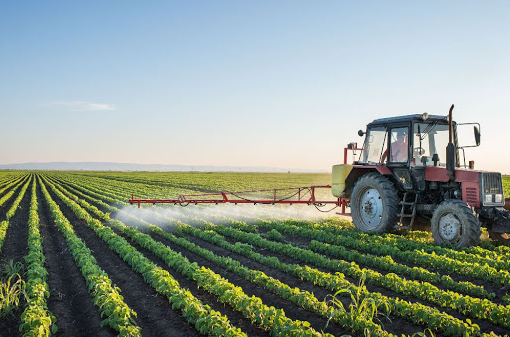 |  | Like many economic sectors in the country, the agricultural sector is not unfamiliar with the Government of National Unity (GNU) because the sector was led by the National Party minister, Dr André Kraai van Niekerk, between 1994 and 1996. At the core of GNU1 was to build a stable, competitive and internationally inclined agricultural economy. As a consequence, there was a radical shift in agricultural policies from strong state control towards a policy era that is characterised by the privatisation of farm credit, information and inputs; liberalisation of trade and deregulation of markets. Essentially, policy reforms adopted during the first GNU aimed to minimise state interventions in agriculture and make agriculture export-oriented. There is sufficient evidence to believe that GNU1 was successful in deregulating and privatising the sector. Today, 55% of the agricultural value is generated from export markets and private companies are the main generators of technology, markets and trade activities. Click here to read full article derived from busrep.co.za.
| |
Pracademics as change agents in South African agricultural economics | |
Siphe Zantsi and Mamakie Lungwana explore the role of "pracademics"—professionals who blend academic and practical expertise—in the South African agricultural economics field. Their study highlights Wandile Sihlobo, a prominent agricultural economist who exemplifies this hybrid role by bridging theoretical knowledge and practical advice to enhance policymaking and public knowledge. Sihlobo serves as Chief Economist at Agbiz and is also involved in academia as a senior lecturer and research fellow. His work, including influential books and media contributions, underscores the importance of pracademics in translating complex agricultural issues into accessible insights for policymakers and the public. The paper calls for greater recognition and support for practitioners who are vital for addressing real-world challenges and advancing development goals. Click here to read full piece.
| |
Tobacco Control Bill revived in seventh Parliament |
 | | The Tobacco and Electronic Delivery Systems Bill was first published for comment on 21 June 2023. Amongst other provisions, the bill proposes to do away with designated smoking areas in public places, place a complete ban on the display of tobacco products, and bring in plain packaging requirements. Wide-ranging powers are also afforded to the Minister of Health to regulate all aspects of the advertising, promotion, packaging, labelling, and sale of tobacco products. The bill lapsed because it was not finalised by the previous Parliament, but it has been revived by the seventh Parliament. What is concerning is that the bill never went through a proper line-by-line engagement at NEDLAC. This has been flagged with the previous portfolio committee. The bill may have a number of unintended consequences and really needs to be subjected to proper scrutiny by the social partners in NEDLAC. While the health concerns are acknowledged, the tobacco industry contributes significantly to employment, the economy, and the tax revenue of the country. Click here to read the full article by Agbiz Legal Intelligence Manager Annelize Crosby.
| |
South Africa's agricultural fortunes contracted in Q2, 2024 |
 | | After a robust expansion of 13,5% quarter-on-quarter (seasonally adjusted) in the first quarter of 2024, South Africa's agricultural gross value added contracted by 2,1% in the second quarter. This is unsurprising. South Africa's agriculture has gone through the severe impact of the El Niño-induced drought in February and March, which weighed on crop yield. For example, South Africa's 2024-25 summer crop harvest is down 22% from the previous season, estimated at 15,69 million tonnes. Moreover, the livestock industry, which accounts for nearly half the sector's value, faces relatively higher feed costs and lingering animal diseases (particularly foot-and-mouth disease), which all explain the underperformance this quarter. The drought impact has already weighed on sentiment in the sector. For example, the Agbiz/IDC Agribusiness Confidence Index (ACI) remained depressed in the second quarter of 2024, reaching 38 points from 40 points in the previous quarter. Click here to read full data response by Wandile Sihlobo.
| |
What agricultural message should the African leaders take to the Forum on China–Africa Cooperation? |
 | | It is hard to discuss global agriculture without mentioning China. The country is a dominant player in exports and imports of agricultural products. In 2023, China was a leading agricultural importer, accounting for 11% of global agricultural imports. Trailing China was the US, Germany, Netherlands, the UK, France and Japan. Similarly, China played a notable role in exports, and it was the fifth-largest agricultural exporter in the world in 2023. The leading countries ahead of China were the US, Brazil, Netherlands, and Germany. Commentary on China trade is under spotlight again in the wake of the Forum on China–Africa Cooperation (FOCAC) taking place in early September. Some African countries will likely use this opportunity to advocate for deeper trade, especially in agriculture. This is understandable in view of China's dominant role in global agriculture. According to Trade Map data, China spends just over US$200 billion a year on the imports of agricultural products. Click here to read full article by Wandile Sihlobo.
| |
Mixed prospects for South Africa's 2024-25 winter crop production |
 | | South Africa's 2024-25 winter crop season is underway, and some regions of the Western Cape (the largest province for winter crops), have received excellent rains so far. Some areas of the Western Cape may have received more rain than ideal earlier in the season, leading to fears of possible poor yields. But we are still early in the season, and there will be clarity about the yield potential only in the coming months. We pay close attention to the Western Cape regarding the winter crops because of the province's significant contribution to these crops. For example, about 70% of the winter wheat plantings for the 2024-25 season are in the Western Cape. The area planted for barley, canola, and oats is much more prominent in the province as a winter rainfall region. Other major winter crop-producing provinces are the Northern Cape, Free State, and Limpopo, and the production in these provinces is mainly under irrigation. The major challenge for these provinces was the mid-summer drought, which resulted in farmers reducing the area plantings this winter season and conserving moisture for the upcoming summer crop season, which starts in October. Click here to read full article by Wandile Sihlobo.
| |
The changing weather patterns ahead of the start of summer crop season in South Africa | |
From October 2024, farmers and farm workers across South Africa will be hard at work, tilling the land. We will start the 2024-25 production season for maize, soybeans, sunflower seeds, sorghum, groundnuts, and dry beans. However, the soil preparation activity in October will primarily be in the eastern regions of South Africa. The western areas of the country will start the planting in November. This variation, in part, is caused by rainfall patterns. The start of the 2024-25 season also means we are now back to closely monitoring the weather conditions. Some global weather forecasters have indicated the possibility of La Nina this coming season. Such a weather event typically brings above-normal rainfall. And this would be a relief after a drier season. However, there remains uncertainty about the intensity of this weather event. Click here to read full article by Wandile Sihlobo.
| |
Impact of drought beginning to reach consumers | |
We had a tough summer season in Southern Africa, with El Niño-induced drought that led to significant crop failures in the region. Zambia and Zimbabwe, among other places, lost roughly half of the staple maize harvest. These countries must now rely on imports of maize to stabilise the domestic supplies for the year. We will likely remain in these challenging conditions until May 2025, when the new season harvest gets into the market. The impact of the poor harvest is starting to show at household level. For example, an article in Business Day Africa on August 20 indicates that “Elisa Magosi, the SADC executive secretary, has called for urgent humanitarian assistance, reporting that 68-million people across the region are now at risk of hunger. The crisis is particularly acute in Malawi, Zambia and Zimbabwe, which have traditionally supplied food, especially maize, to East Africa. Read full article by Wandile Sihlobo for heraldlive.co.za here.
| |
Maize forecast lowered again, but still sufficient for local consumption |
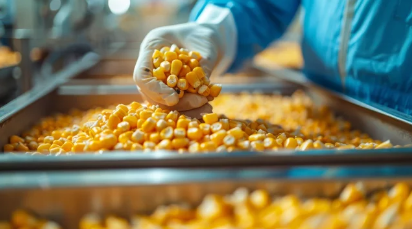 | | Current estimates of South Africa’s maize production could be further slashed for the 2023-24 season. Given that we are at the tail end of the season and will soon start planting for the 2024-25 production season in October, there typically are minimal adjustments on the figures at this stage. But this has not been a typical season. We struggled with a mid-summer drought in February and March, undermining crop yield potential in various regions. We have seen downward adjustments in the production estimates late in the season, which is not a typical practice in normal seasons. Thus, there is always a risk of potential downward revision of the production figures as more data about the actual harvest delivered to silos becomes available. On 28 August, South Africa’s Crop Estimates Committee lowered the 2023-24 maize production estimate by 2% from July to 13.06 million tonnes. This current harvest is 21% down from the 2022-23 season. Click here to read full article by Wandile Sihlobo for mg.co.za.
| |
Progress in South Africa’s canola production | |
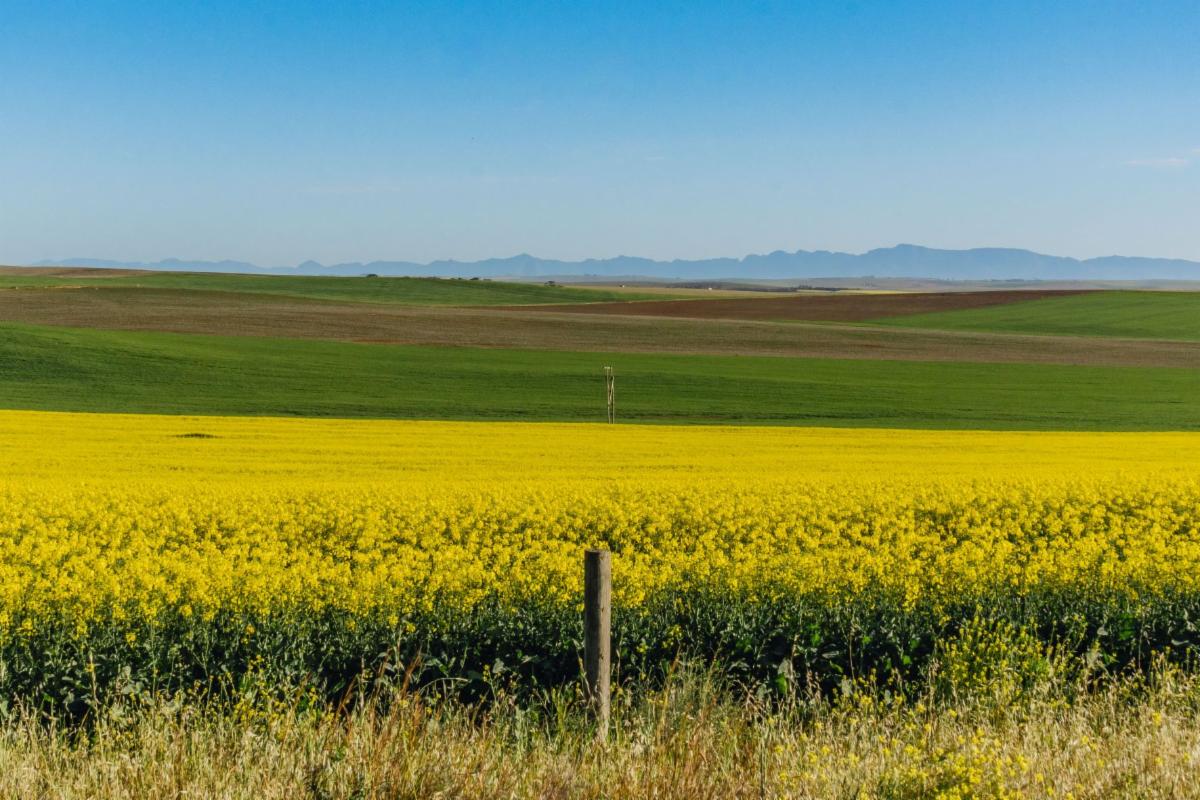
This point is worth revisiting now that we have new 2024-25 season production data. Canola is one of South Africa’s agricultural success stories. From when we planted the crop commercially on 17k hectares in 1998-99, the area has increased to an estimated 154k hectares in 2024-25. There has been a switch from some winter wheat and barley traditional growing areas to canola because of price competitiveness. Canola is a winter crop. Therefore, the production is primarily in the Western Cape, a winter rainfall region in South Africa. The catalyst behind the increase in canola plantings, among other things, is a rise in domestic demand or usage for oils and oilcake. South Africa is now a net canola exporter, having exported to countries such as Germany and Belgium in the recent past. Click here to read full article by Wandile Sihlobo.
| |
South Africa's agricultural export growth cooled off in the second quarter of 2024 | |
After the sharp increase in the first quarter of 2024, South Africa's agricultural exports fell slightly on a year-on-year (y/y) basis in the second quarter. According to data from Trade Map, the country's agricultural exports were at US$3.37bn in the second quarter, a 0,1% decline relative to the same period last year. This comes after growth of 6% y/y in the first quarter of the year. The slight decrease in the second quarter reflects the moderation in the prices of some agricultural products and the decline in the volumes. The top exported products by value include citrus, apples and pears, maize, wine, dates, pineapples, avocados, sugar, grapes, fruit juices, nuts, and wool. Click here to listen to full podcast – Agricultural Market Viewpoint with Wandile Sihlobo.
| |
 | | Agbiz Grain Quarterly is a digital magazine dedicated to the South African grain handling and storage sector. The August 2024 issue features comprehensive feedback from the recent Agbiz Congress, including key takeaways and insightful discussions led by industry leaders. It also delves into important topics such as the impact of environmental regulations on grain storage, current sea freight rates, and industry perspectives on emissions targets. This edition includes an in-depth look at several crucial issues, including the industry's call for a standard operating procedure for grain and oilseed inspections. Highlights also feature a French co-operative’s exploration of South African grain industry solutions, the need for logistical reform at Transnet, and the influence of sea freight rates on raw material importation. Additional articles cover emissions targets, the debate over white wheat, weed seed contamination risks, the effect of split kernels in barley on profit margins, and essential environmental law knowledge for SHEQ practitioners. Click here to read magazine.
| |
Reviving global growth through resource allocation reforms | |
Global growth has stagnated since the 2008 financial crisis, with forecasts showing further decline. Our study finds that without significant policy interventions, growth could slow to 2.8% by 2030. However, by improving allocative efficiency—ensuring resources are directed to their most productive uses—global productivity could be significantly boosted. If countries narrow their efficiency gap with the U.S. by just 15%, annual global growth could increase by 1.2 percentage points. Key reforms include reducing regulatory barriers, enhancing labour market flexibility, and improving access to financing. These steps are crucial to reversing the decline in productivity and driving future economic growth. Read full article by IMF Blog here.
| |
Report BUSA Annual General Meeting 2024 |
 | | On Wednesday, 28 August 2024, Agbiz, represented by CEO Theo Boshoff, attended the Annual General Meeting (AGM) of Business Unity South Africa (BUSA). The event, held in Johannesburg, was a gathering of South Africa's key business leaders and government officials, focussing on the collaborative efforts needed to drive the country’s economic growth. President Cyril Ramaphosa delivered a keynote address emphasising the importance of deepening the partnership between government and business to foster sustainable economic growth, create jobs, and eradicate poverty. As this was the first BUSA AGM since the formation of the Government of National Unity (GNU) following the May elections, President Ramaphosa highlighted the consensus achieved within the GNU on addressing South Africa’s most pressing challenges. He reiterated the government's commitment to creating an inclusive economy by collaborating closely with all social partners. Click here to read full report by Agbiz Communication Officer Temba Msiza, and click here to read full Speech by President Cyril Ramaphosa.
| |
Women rise in Central Bank leadership, but gender parity remains elusive | |
Women are leading more central banks than ever before, thanks to appointments in the past year, but recent gains still leave the share of female governors far short of parity. The number of women in governor roles rose to 29 this year from 23 last year, though that left the share of female leaders at just 16 percent of the world’s 185 central banks, according to an April report by the Official Monetary and Financial Institutions Forum. Greater gender balance in senior positions may help increase the diversity of thought and checks and balances, in turn contributing to increased economic and financial stability and improved performance, IMF research shows. Appointments this year in Bosnia and Herzegovina and Papua New Guinea are examples of how smaller economies are driving more progress on gender balance, according to OMFIF, a London-based think tank for monetary, economic and investment issues. Click here to read full article derived from imf.org.
| |
Bridging two agricultures: One year after Sihlobo’s call |
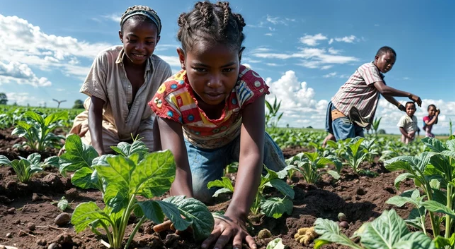 | | On the first anniversary of Wandile Sihlobo’s “A Country of Two Agricultures,” Ivor Price reflects on South Africa’s agricultural progress and ongoing challenges. He highlights the crucial work of RMIS, Kagiso Trust, and AGDA in advancing systemic change and supporting marginalised farmers, underscoring their vital roles in reshaping the nation’s agricultural landscape. The anniversary of Sihlobo’s work is not just a marker of time, but a call to assess the path we’ve walked since its release. How far have we come in closing the gap between the farming efforts of our black brothers and sisters, who toil with little more than hope, and the well-resourced, commercial farming sector long dominated by the white minority? This divide, nearly three decades after democracy’s dawn, remains a scar etched deep into our landscape. Sihlobo’s book reminds us that this scar is a legacy of dispossession, where black farmers were systematically pushed to the margins, deprived of land, and robbed of livestock. Click here to read full article first published in foodformzansi.co.za.
| |
Seasonal Climate Outlook: September 2024 - January 2025 |
 | | The El Niño-Southern Oscillation (ENSO) is currently still in a Neutral state and is predicted to weaken further. Current predictions indicate the development of a La Nina state during the start of the summer season, however, there is still significant uncertainty in the predictions. It is advised to monitor the ENSO system, as significant changes in the system may occur after the winter period due to increased prediction skill. Current predictions focus on the spring and early summer seasons and indicate wetter conditions along the south-eastern coastal areas during spring as well as the central parts in early summer. Drier conditions are expected over most of the north-eastern half of the country for the entire forecast period. These predictions may change if the ENSO predictions become more certain towards a La Nina state, and as such continues monitoring of future seasonal climate watches are advised. Minimum and maximum temperatures are expected to be mostly above-normal countrywide for the forecast period. Read full Seasonal Climate Watch - Aug 2024 here.
| |
Action needed to reverse SA canned deciduous fruit sector’s declining competitiveness | |
South Africa’s canned deciduous fruit sector has, with one exception, been on a declining international competitiveness trajectory since 2016, a PhD research project at Stellenbosch University has found. Canned deciduous fruits embrace peaches, pears, apricots and mixed fruits. The sector has been globally competitive from the early 1960s, and from 2002 to 2021 was the third most competitive such industry in the world, after Greece and Spain. However, the South African sector’s Relative Trade Advantage (RTA) rating (which measures competitiveness), which stood at 23.03 in 2016, had fallen to 17.02 in 2020. The exception to this decline was the pears subsector, whose RTA rating actually increased from 33.96 to 40.40 over the same period. Of course, the strong performance of canned pears increased the average RTA for the whole sector and disguised just how much other subsectors declined. Click here to read full article derived from engineeringnews.co.za.
| |
Weather Watch: Southeast/central South Africa set for wet conditions as summer looms, north-east drier than normal | |
The next five months will see drier-than-normal weather conditions over northeastern South Africa, but the coastal southeast and central regions should have a wet spring and early summer. And it’s going to be warmer than usual across the country. The spring and early summer months in South Africa are set to be warmer than usual, while the outlook for rain is very patchy. This is according to the latest Seasonal Climate Watch from the South African Weather Service, a rolling monthly report that looks five months ahead – so in this case from September to the end of January. “Minimum and maximum temperatures are expected to be mostly above normal countrywide for the forecast period,” the weather service said. This has been the outlook for months, and while it snowed recently on Table Mountain, it has been unseasonably warm over much of South Africa with August emerging as the new September in Gauteng. Click here to read full article derived from dailymaverick.co.za.
| |
South African logistics network and international trade overview | |
This update provides a comprehensive overview of the current state of South Africa’s logistics network and international trade. Adverse weather conditions and equipment breakdowns have significantly disrupted port operations, particularly in Cape Town, Durban, and Eastern Cape ports. The Port of Richards Bay faced congestion due to an influx of trucks, while the Port of Beira reached record cargo volumes. Globally, the "Global Container Port Throughput Index" saw a 3.3% increase for June 2024 but is expected to decline in July. Air cargo at ORTIA showed a positive trend, though still below pre-pandemic levels. Cross-border road freight trade saw increased transit times, particularly at Groblersbrug. Despite ongoing challenges, optimism remains as structural reforms in the sector continue, albeit at a slow pace, with private sector involvement being key to future resilience and growth. Read the full update in the latest BUSA Cargo Movement Update.
| |
The Citrus Growers' Association of Southern Africa (CGA), shares the latest news in the citrus industry in its weekly update, From the desk of the CEO. Please click here to peruse. | |
In the latest edition of Fresh Quarterly, you will get a summary of the most pertinent information as well as reminders of important upcoming events. Please click here to peruse. | |
Explore the latest developments in the South African wine industry. Click here to read the August issue and stay updated on key insights and upcoming events. | |
|
Artificial Intelligence in Agriculture Conference
26-27 September 2024 | Indaba Hotel, Fourways
Learn more
Emergency AgriClimate Summit 24
26 September 2024 | Tshwane University of Technology, Pretoria
Learn more
RPO Conference
17 October 2024 | Nampo, Bothaville
Learn more
SAIAE & PASAE International Symposium 2024
23 – 25 October 2024 | Grabouw, Western Cape
Learn more
AgriSA Green Horizons Congress
9 - 10 October 2024 | V&A Waterfront Cape Town
More information
C&I Solar + Storage Summit
19-20 November 2024 | The Maslow Hotel, Johannesburg
Learn more
| |
- Agbiz is the only organisation that serves the broader and common over-arching business interests of agribusinesses in South Africa.
- Agbiz addresses the legislative and policy environment on the many fronts that it impacts on the agribusiness environment.
- Agbiz facilitates considerable top-level networking opportunities so that South African agribusinesses can play an active and creative role within the local and international organised business environment.
- Agbiz research provides sector-specific information for informed decision-making.
- Agbiz newsletter publishes members' press releases and member product announcements.
| |
THIRD-PARTY WEBSITE LINKS TO THIS NEWSLETTER | |
The Agbiz Newsletter may contain a few links to websites that belong to third parties unrelated to us. By making these links available, we are not endorsing third-party websites, their content, products, services or their events. Agbiz seeks to protect the integrity of its newsletter and links used in it, and therefore welcomes any feedback. | | | | |