Ahead of the Trend Newsletter

Each month, Dr. Ryan Burge, author and political scientist at Eastern Illinois University, publishes two columns highlighting the latest news in religion research utilizing data from the ARDA. We are excited to share these Ahead of the Trend articles with you.

View as Webpage

Does Religion Drive Conspiratorial Thinking?


Both prophets and conspiracy theorists fulfill a human need to find order in chaos. This overlap raises an intriguing question: Are religious belief and conspiratorial thinking positively linked, as both require imaginative leaps?


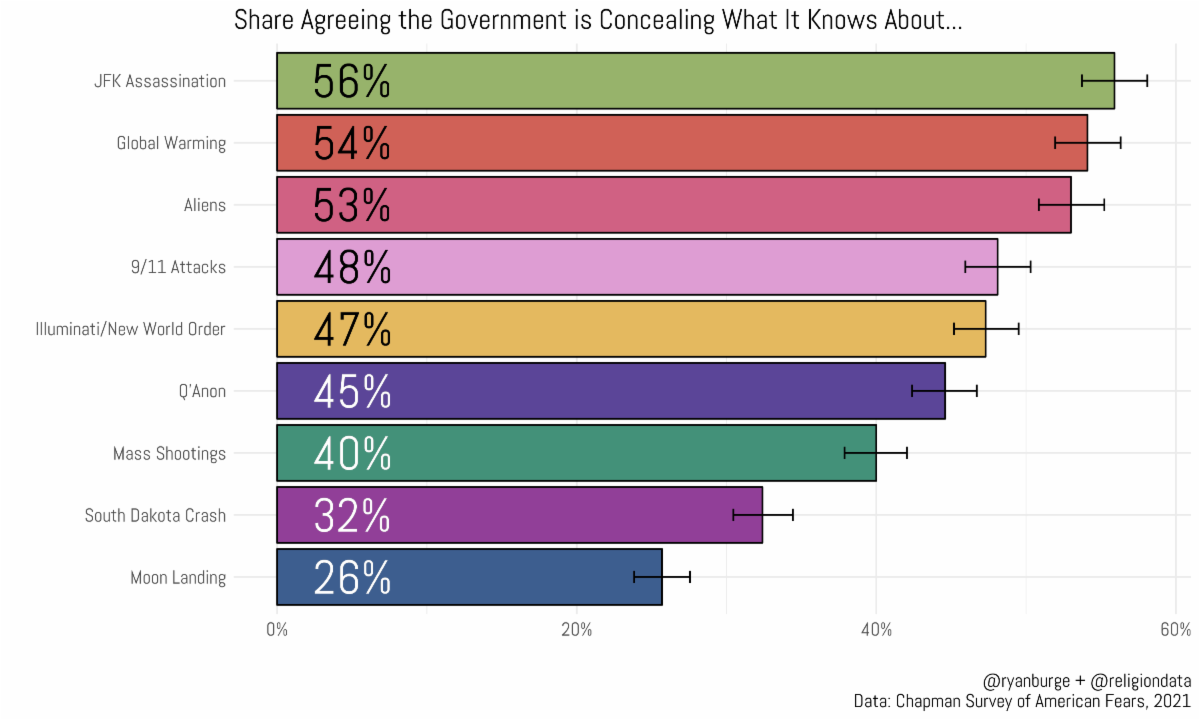
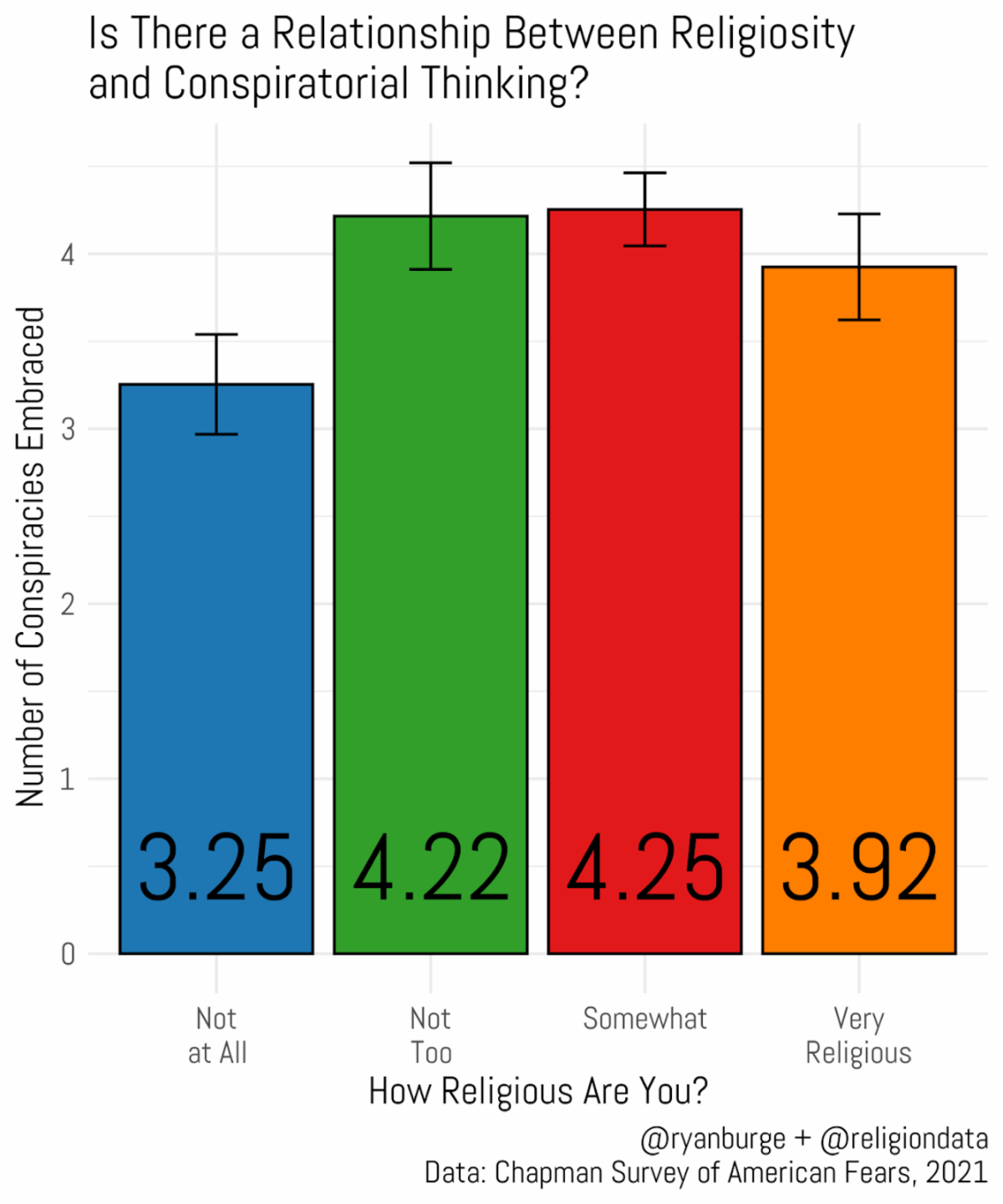
The Chapman Survey of American Fears asks respondents about whether they believe the government is concealing information on a number of conspiracy theories. When the results are analyzed in terms of the respondents' religiosity, there's only a weak relationship between conspiratorial thinking and religious adherence


So does religion promote conspiratorial thinking? Maybe, but it seems like other factors, such as political ideology, can play a role too, in certain circumstances.

Read More


A House Divided: Clergy, Conscience, and Same-Sex Marriage


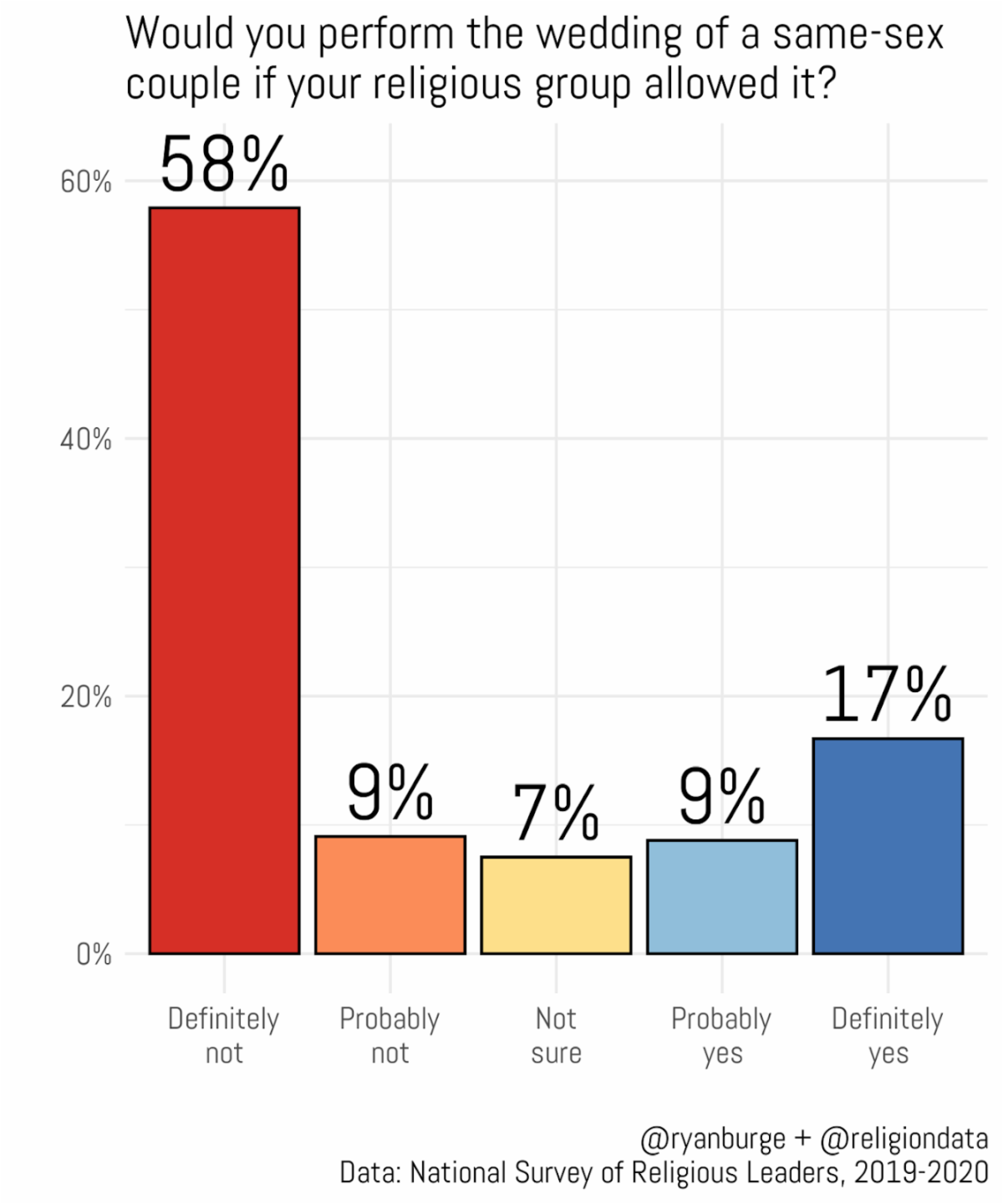
In the National Survey of Religious Leaders, respondents are asked about their personal views of performing a same-sex wedding. Among those who were permitted to conduct a ceremony, a significant majority said that they wouldn’t preside over the nuptials of a same-sex couple.


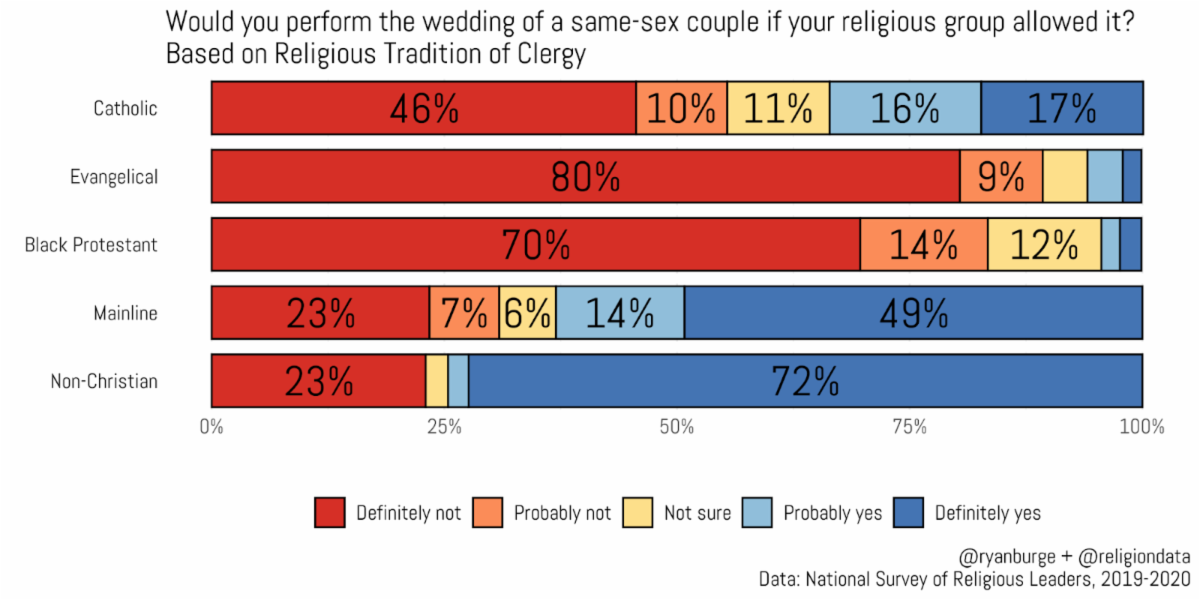
What should come as no surprise is the fact that evangelical clergy would not perform a same-sex wedding even if their tradition allowed it. In this sample, 89% of evangelicals said “definitely not” or “probably not.” This is pretty compelling evidence that a lot of evangelical clergy are not just parroting the views of their denomination — this is a strongly held personal belief.

 
Read More
 

Previous Ahead of the Trend Articles:


Are Americans Especially Distrustful of Religion? Trust in American institutions has eroded significantly over the last several decades. The General Social Survey has asked respondents about their confidence in over a dozen institutions, including the federal government, major companies, and the scientific community. But given the nature of this newsletter, we want to focus on one specific example: organized religion.


Have Views of Marital Fidelity Changed Over Time? The command to stay faithful to one’s marital partner is found in many major religious traditions. Yet, a lot has changed around the issue of sex in the United States in the last fifty years. Did this cultural shift actually result in noticeable changes in the ethics of marital infidelity? Interpreting data collected since 1973 in the General Social Survey, we seek to understand how opinions on sexual relations outside of marriage may have changed over time.

 
The Association of Religion Data Archives | Website
Facebook  LinkedIn