Ahead of the Trend Newsletter


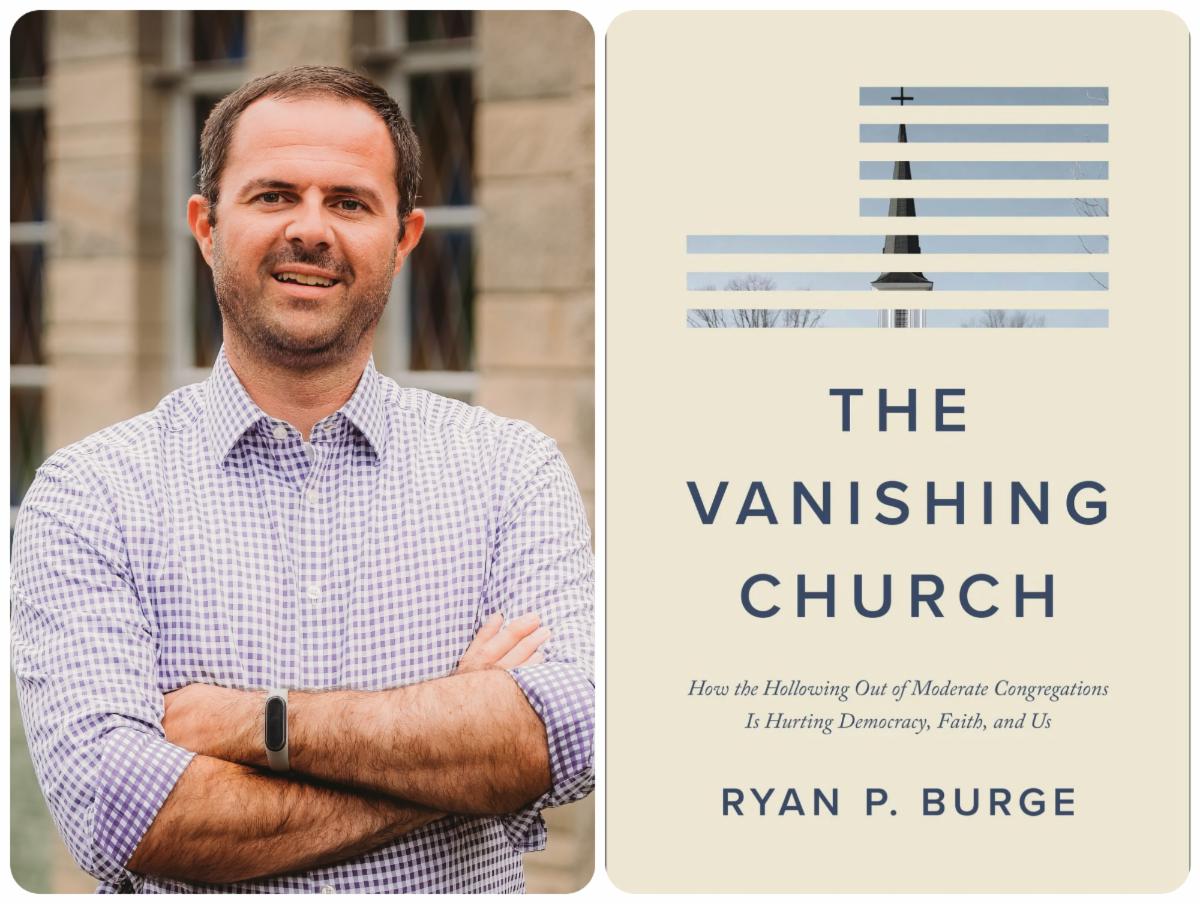
Each month, Dr. Ryan Burge, author and political scientist at Washington University in St. Louis, publishes two columns highlighting the latest news in religion research utilizing data from the ARDA. Other authors from the ARDA team contribute practical analysis on resources and stories of impact on occasion. We are excited to share these Ahead of the Trend articles with you.

View as Webpage

Religion As a Cultural Identity


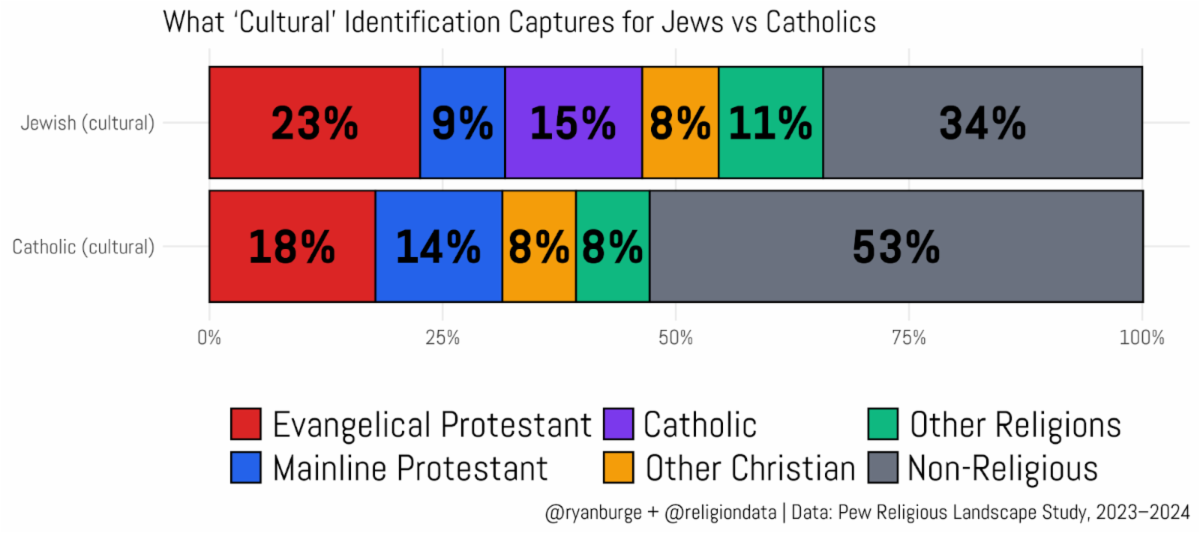
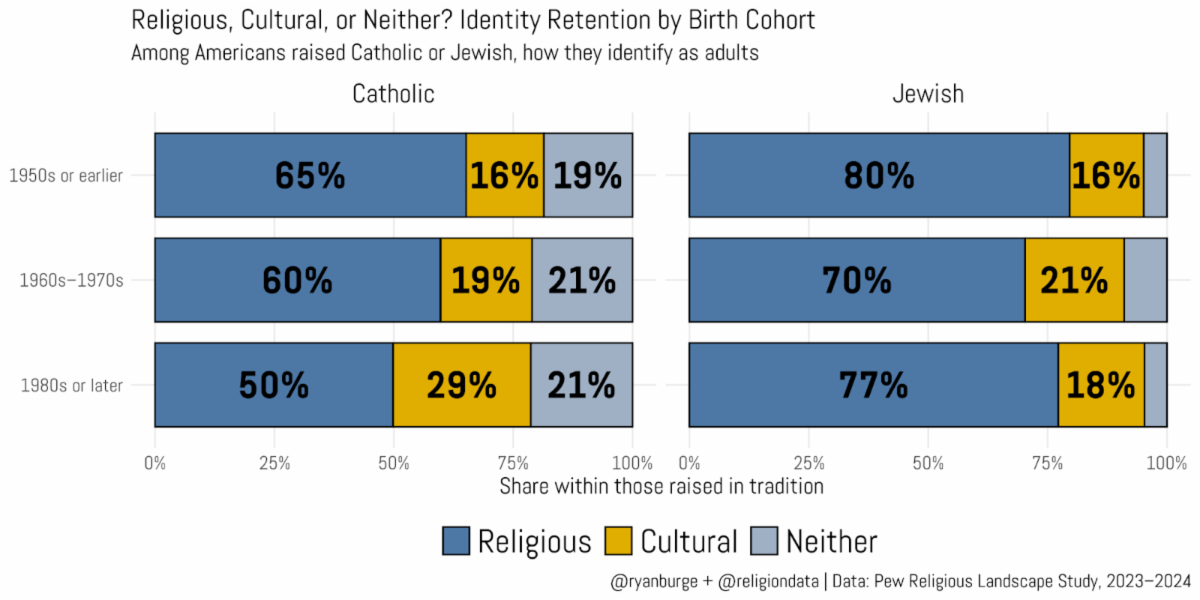
When looking at data on religion as a cultural identity, it is easy to assume that people who think of themselves as culturally Jewish or Catholic grew up in those traditions and still feel some attachment to them, even if they don’t participate in the faith in any meaningful way.


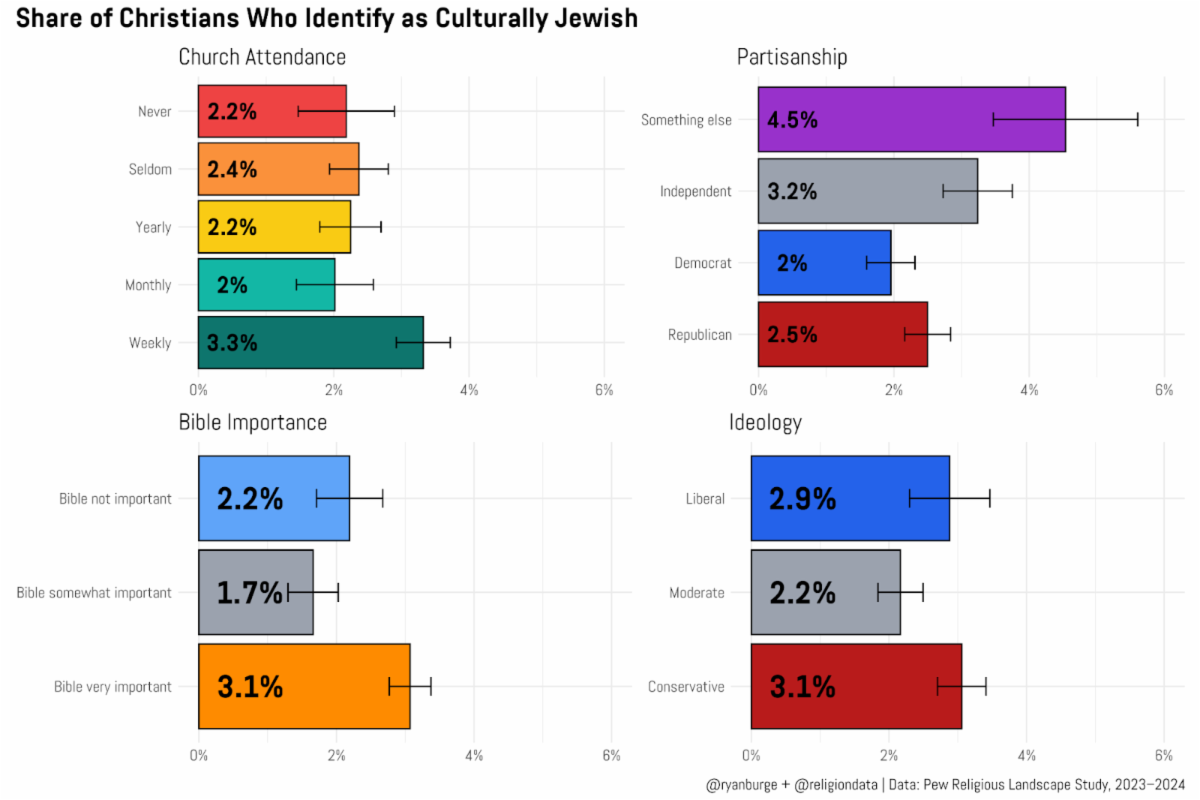
It’s a fairly straightforward hypothesis—and it can be tested by examining patterns of religious attendance. The Catholic percentages make perfect sense as half as many cultural Catholics attend weekly Mass compared to religious Catholics. It can be expected that Jews would follow this pattern, but instead, the exact opposite is true as cultural Jews were almost twice as likely as religious Jews to attend services weekly.


Cultural Jews and Cultural Catholics?


When someone is asked, “Are you religious?”, there are a number of different ways they might justify an affirmative answer. It could be that they attend a house of worship regularly or pray frequently. It could be that they hold specific beliefs about Jesus Christ or Muhammad. Those would be behavior and belief measures of religion. But there’s a third dimension that often gets overlooked: belonging.


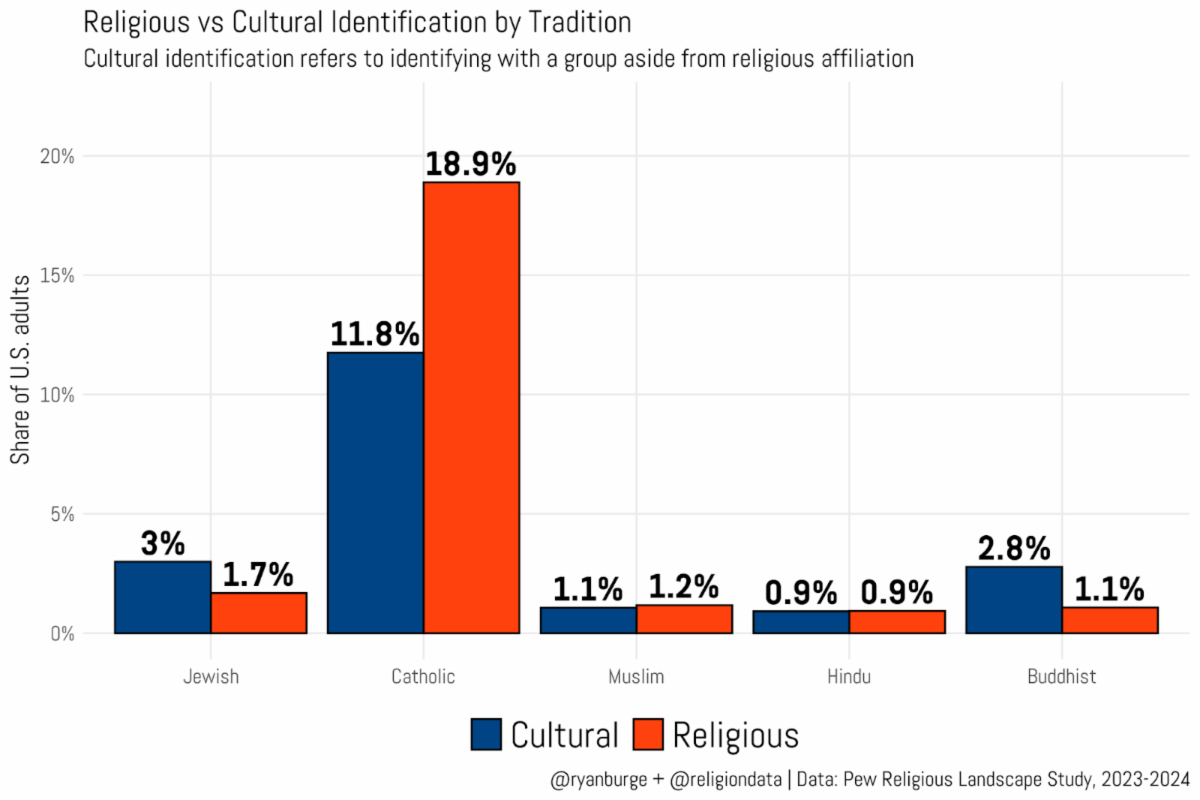
Thanks to the Pew Religious Landscape Survey, we now have a way to parse “religious” and “cultural” identification with much more precision. This set of questions allows us to compare the share of the sample that affiliates with each tradition using the standard religion question and the that identifies with that tradition in a cultural or ethnic sense.


Ryan Burge: The Last 50 Years of American Religion


Dr. Ryan Burge will be leading a conversation in Indianapolis this Sunday, March 1, at Tabernacle Presbyterian Church about the transformation of American religion over the last five decades—from declining church attendance to the rapid rise of the religiously unaffiliated. If you are local to Indy, be sure to check out this event.

Previous Ahead of the Trend Articles:


Do Americans Care Who Their Boss Is? Do men feel comfortable having a female boss? Do women want to be supervised by someone of their own sex? The answers to these questions often reflect deeper convictions about gender roles in society—views that are frequently shaped, at least in part, by religious teachings.


Are Never Attenders More Secular Today? There’s this well-worn phrase you hear in Christian circles: “Going to church doesn’t make you a Christian any more than standing in a garage makes you a car.” It’s often used by pastors to remind people that simply showing up on Sunday isn’t enough to be a faithful Christian. From a social-scientific standpoint, that’s basically someone saying that religious behavior doesn’t matter much—they place more emphasis on belief or maybe belonging instead.

 
The Association of Religion Data Archives | Website
Facebook  LinkedIn