JUNEAU, Alaska May 29, 2020
- Educators navigated major challenges this spring with an abrupt transition from an in-person to remote learning environment that completely changed the educational landscape. As we move to a “post-hunker-down” but pre-vaccine phase, teachers who have barely closed the books on an unprecedented year launched the summer season by participating in Alaska’s first virtual statewide education conference on May 27-29.
The
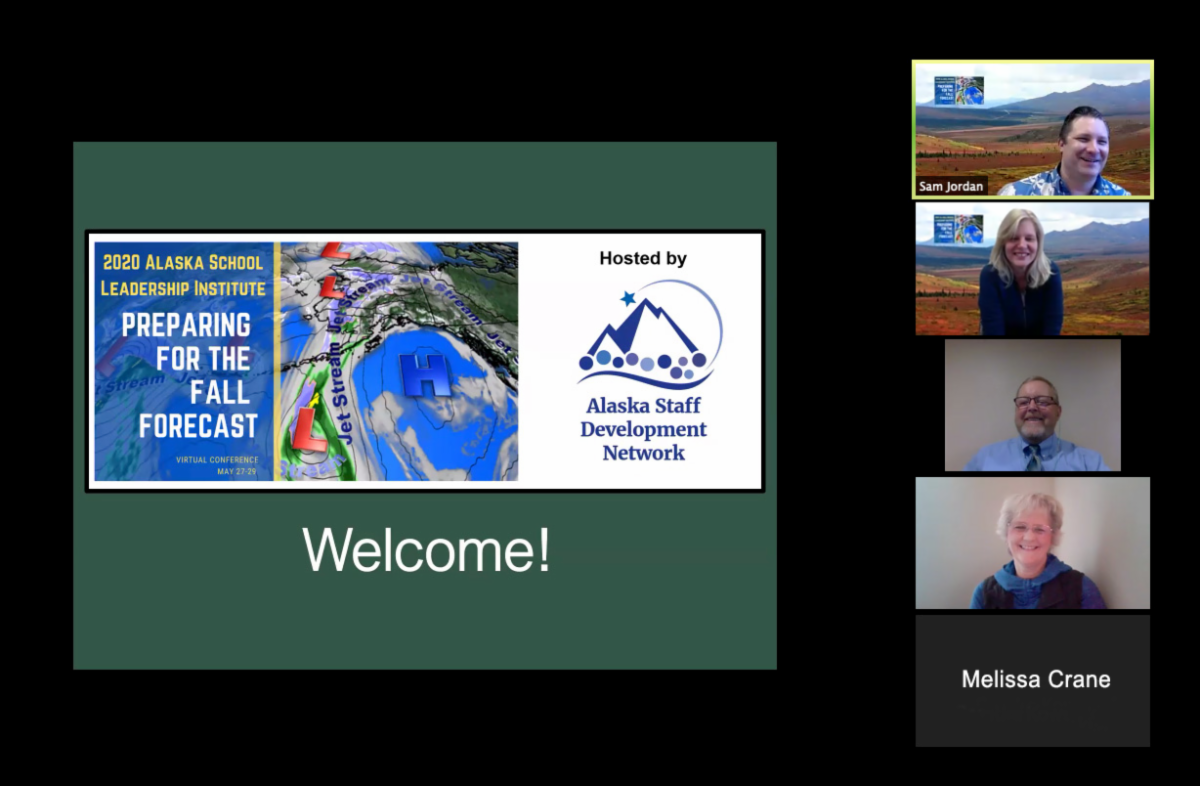
Alaska School Leadership Institute (ASLI) 2020 “Preparing for the Fall Forecast”
focused this year on the biggest question on the minds of educators as they look ahead:
“How should we plan for opening school next fall, and where do students begin?”
The conference, now twelve years running, had to close registration at almost 200 registrants, double the attendees of most years.
“It’s stunning, the level of commitment these educators have. Exhausted by the COVID interruption, some have barely been out of the school year for a week and are here,” said longtime Alaskan educator, and Institute co-faciliator Gary Whiteley. “What a tribute to them as professionals.”
This year the persistent impact of the COVID-19 pandemic, with travel and social distancing restrictions still in place in many communities, meant a virtual platform was a necessary move. The challenge for the Alaska Staff Development Network (ASDN) was in how to replicate the collaborative environment that ASLI typically offers educators, many of whom are otherwise separated by thousands of miles of tundra, ocean and mountains.
“We really wanted to provide the collaborative setting that we knew our educators were looking for as they reflected on the school year and started thinking about how to prepare for the unknowns ahead,” said ASDN's Administrator, Kathy Blanc.
A big part of creating that valued collaborative time was in carefully orchestrating the framework for the event with ASDN colleague Sam Jordan, which was large group learning time interspersed with smaller group sessions where educators from across the state could meet and learn from each other. Facilitators kept busy responding to technical issues so they could keep the agenda flowing smoothly and participants could focus on content and engaging with peers.
“One of the most valued aspects of ASLI is the ability to teach relevant content for educational leaders, and allow time for them to talk about it with their colleagues,” said education consultant and Institute co-facilitator Lexie Domaradzki, who has been a part of the conference since it began twelve years ago. “The tricky part was trying to figure out how to retain that ability here in this virtual format.”
Preparing for a conference designed for Alaskan educators means understanding the vast needs of the regions and understanding that what might work for schools in the lower 48 doesn’t translate in areas like rural and remote Alaska, where many rural village students, and even the educators, do not have access to internet outside of the school building said Whiteley.
Beyond working with dedicated educators who attended, the team attributes much of the conference success to the hours of preparation leading up to the event, including a focus on the most current educational literature, studying successful strategies in the field and considering examples from other states.
“It’s not just our opinions,” said Domaradzki. “It’s about the strongest, most evidence-based research of today.”
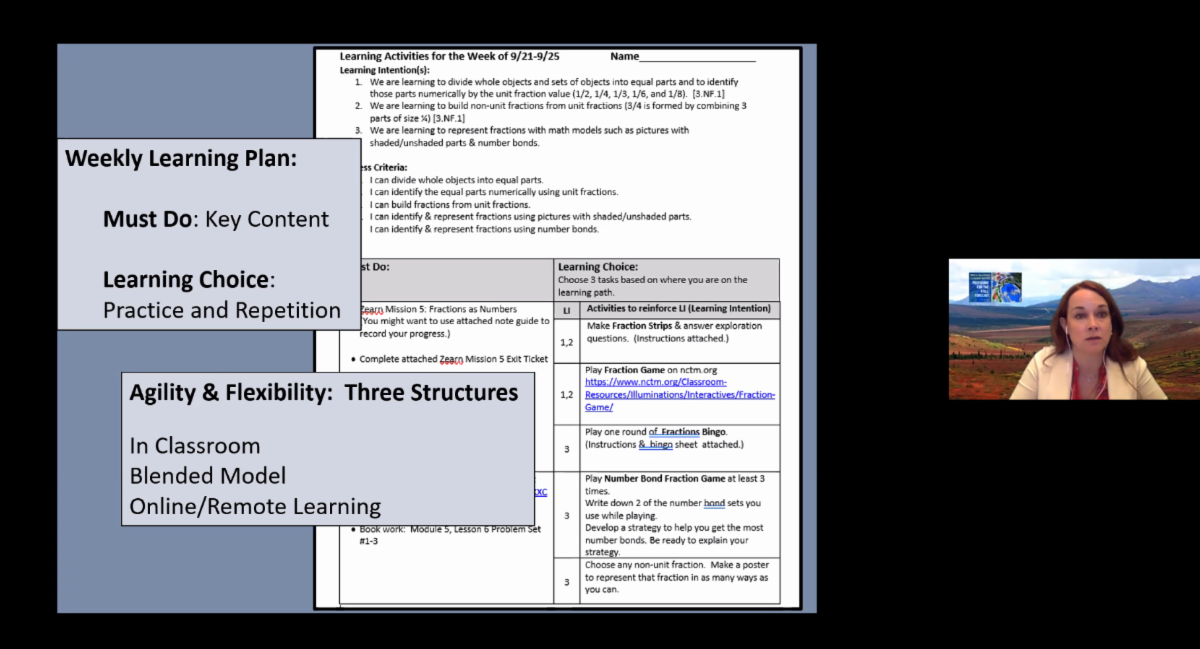
Other guest presenters included Ricky Robertson and Victoria Romero, educators and co-authors of “Building Resilience in Students Impacted by Adverse Childhood Experiences: A Whole-Staff Approach,” and Bobbi Jo Erb, award winning math educator and consultant from Anchorage.
The
“Alaska’s Smart Start 2020 for K-12 Schools”
school restart framework released this month by the Department of Education and Early Development was included as a reference throughout the three-day conference as participants touched on subjects like crisis communication, adaptive learning, building resilience and planning for instructional gaps. The institute content was designed to position districts for effective implementation of their re-opening plans, which will be finalized this summer after receiving school re-opening health and safety guidelines from the state.
“The feedback in the breakout rooms has been really positive and possibility focused, solution focused and a forward focused dialogue." Domaradzki said.
Feedback from attendees:
• “I’m so impressed with the people I’ve gotten to talk to,” wrote one attendee. “This is a wonderful opportunity to learn from peers and grow!”
• “I really like the flexibility of this template. Thank you!”
• “We APPRECIATE the steps! They provide a path!"
Educators concluded each day with time for district level teams to distill the days learnings into district and school level planning. Many district leadership teams will be working throughout the summer to plan for the multiple and dynamic reopening scenarios that may be required depending on the progression of COVID-19 across Alaskan communities.