|
Early diagnosis and treatment will give your horse the best chance of recovery
By Lauren MacLeod
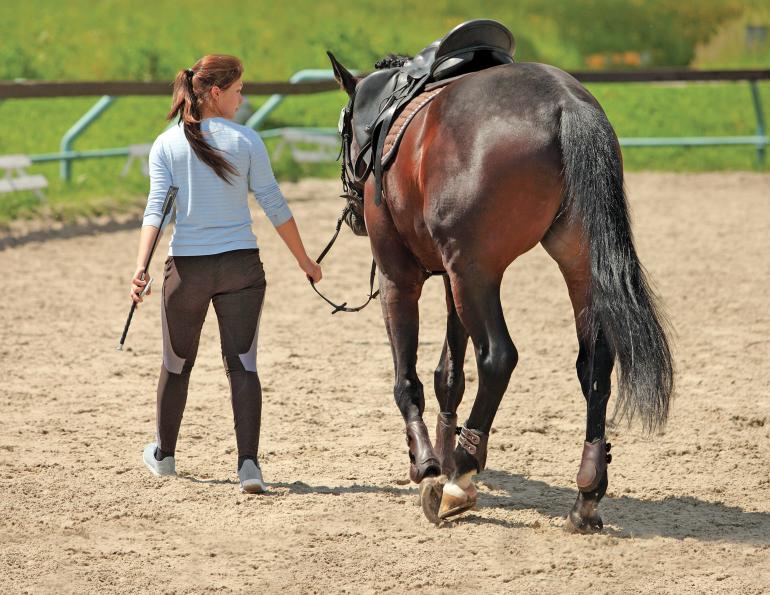
The detection of subtle lamenesses can prove challenging to even the most experienced horsemen. Matters are further complicated when the gait abnormality is inconsistent or intermittent. In some of these cases, efforts to find the source of pain are fruitless. In fact, some of these "mystery lamenesses" are not true pain-related lamenesses at all; they are caused by neurological dysfunction. Sometimes, differentiating between true musculoskeletal pain and neurological disease can be tricky.
A major clue that the neurological system could be involved is a random appearance to the gait abnormality
...
|
|
Installing trust, confidence, and thinking through challenges.
By Jonathan Field
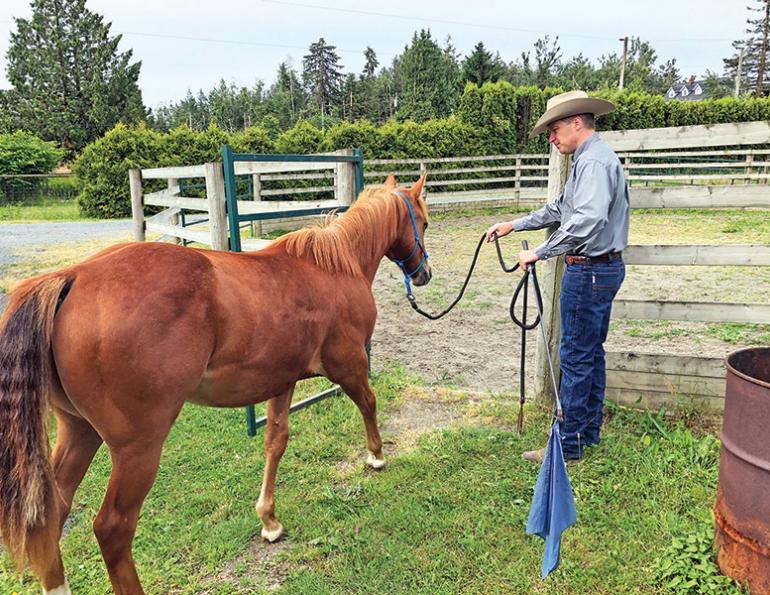
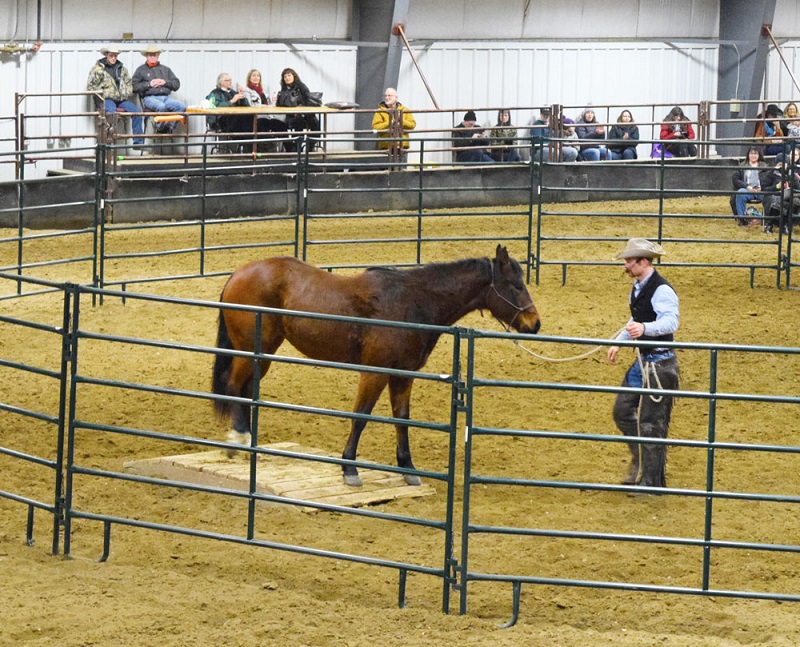
In this article I will share some of the key steps I took to prepare my weanling colt for safe handling in general, and get him ready for some specific trailer training. For his first trip, he was herded into the trailer and rode loose in a mini-box stall with another horse on board. Even a big trailer trip like his first one is not enough to consider him a trailer-trained or prepared horse.
Once home, I brought him to a friend's place, taught him to lead, and now he was ready for more specific training. There are still many steps needed to teach him to be led or sent into the trailer by himself, and to stand in the divider area
...
|
|
By Jochen Schleese, CMS, CSFT, CSE
This article will examine the relationship between equine back disorders and saddle fit.
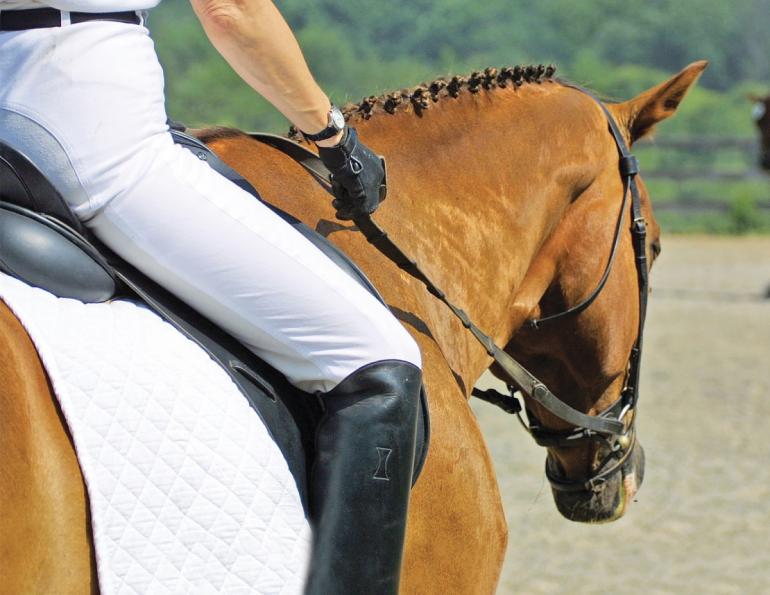
The issue of "kissing spines," or overriding dorsal spinous processes, is of concern to many riders. Kissing spines is closely related to saddle fit and specifically, to proper gullet width. While it is gratifying to see that more and more manufacturers have recognized that the gullet needs to be the width of at least three to four fingers evenly down the length of the saddle, there are unfortunately many older saddles still in use with gullet channels that are much too narrow. I have recently come across an inordinate number of horses with kissing spines, which was actually exacerbated by poorly fitting saddles
...
|
|
By Will Clinging
When I was younger and hardier I was happy enough to ride in all kinds of weather. If truth be told, I have made my living riding and maybe I felt more obligated to ride rather than being happy to ride. Now that I am a bit older I've become a fair weather rider - or at least I'm not an extreme weather rider.
I used to have a cut-off point at minus 25 degrees Celsius. I would use a hair drier to warm up the bit before I put it in the horse's mouth. I would ride in insulated coveralls, felt pack boots, deerskin mittens, a sheepskin hat, and ski goggles. I was a sight to see!
I did not enjoy those cold days when staying warm took all my attention and energy
...
|
|
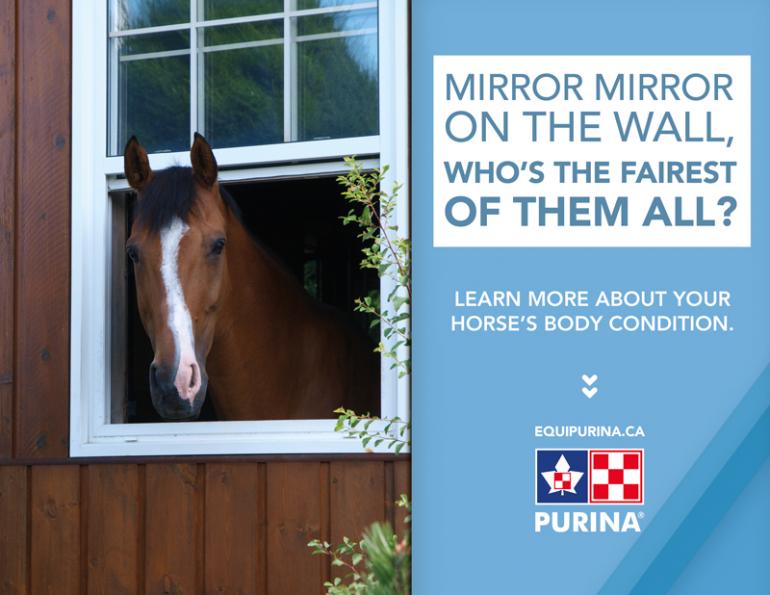
We all want healthy horses with beautiful muscle tone, that are neither too fat nor too thin. In short, we want our horse to have the ideal body condition. But what is an ideal body condition and, especially, how does one evaluate it effectively?
Adequate evaluation of your horse's body condition is extremely important, as it allows you, notably, to provide it with a diet designed specifically for its needs.
For most horse owners, assessing body condition often comes down to a subjective description, such as good, not bad, or bad, which leaves a lot of room for error
...
|
|
The winter of 2007 brought unseasonal weather to Central Saanich on Vancouver Island, British Columbia, where the ratio of flowerboxes to snow ploughs is at least 10,000 to one. After nearly three weeks of snow, cold temperatures, and isolated flurries, I heard laments from many riders for the return of the west coast's most discernable characteristic: rain. "At least you can ride in the rain," I was told over and over again. The rest of Canada would collectively laugh at us for complaining about a few weeks of winter, but the fact is we on the southern portion of Vancouver Island do not have the mindset for coping well with the enclosure that snow brings to our riding.
I noticed two occurrences as wind-blown snow swirled through any open barn door where I might have been feeding, bucketing warm water, or breaking ice from frozen water taps...
|
|
By April Clay, M.Ed., Registered Psychologist
It's a new year and time for a new you, right? If one of your goals is to gain more confidence in your riding, that's certainly a worthwhile focus.
Just think positive! You have likely heard this familiar advice at some point in your riding career. A popular way to encourage you to do this is to get you to write and recite affirmations. These are short, positive statements about your riding, such as "I am relaxed and confident" or "I am a winning competitor."
But do these feel-good statements work? Can they really help you boost your sagging sport esteem?...
|
|
As someone who always thinks that she wants downtime, I am surprisingly terrible at it when it does come knocking on my door. Especially when it comes to riding.
Over the last season, there was the odd occasion when riding felt like a chore. Now I hate to admit that when so many people out there would kill to be able to ride on a daily basis, or even at all. Don't get me wrong, I know how lucky I am. But I do work hard to be able to keep my horse, which often means I get to her at the end of a long and sometimes challenging day.
...
|
|
The search for mastery brings with it the question of specificity. If you are trying to master a particular sport, should you focus on and practice that sport exclusively? Or might cross-training, and using tools from outside that sport, benefit you in some way? Certainly, there is a lot to argue in favour of practicing only your sport in order to get better at it. From a physiological standpoint, there is even more to argue for multi-disciplinary training.
Most simply, cross-training allows you more tools to accomplish the job. And isn't it always better to have a few possible solutions rather than just one?
...
|
|
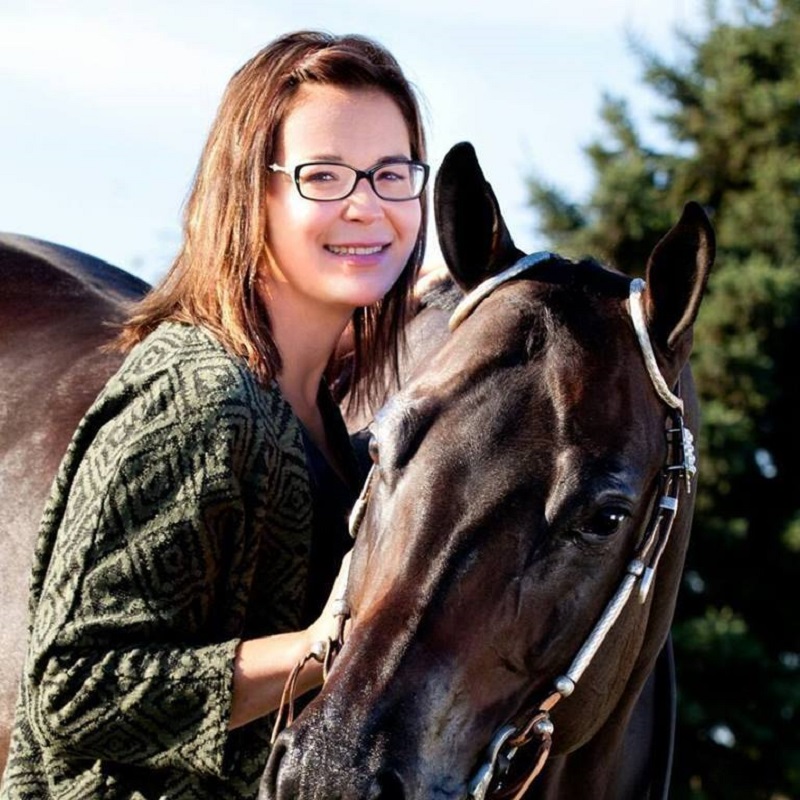
A Bentley, Alberta woman sustained severe head trauma from being kicked by a horse on December 28, 2018. Deserie Rieu, 35, suffered a brain bleed and was initially intubated due to a swollen airway when she was struck by a hoof on the right side of her face. She also lost several teeth and her cheekbone, jaw and palate were fractured. Family and friends waited with bated breath to hear if she would survive.
Deserie Rieu's mother, Judy Rieu, says Deserie was working in the barn with a friend who found her face-down on the ground after hearing two horses squeal. Deserie has no memory of what happened and likely did not see the kick coming
...
|
|
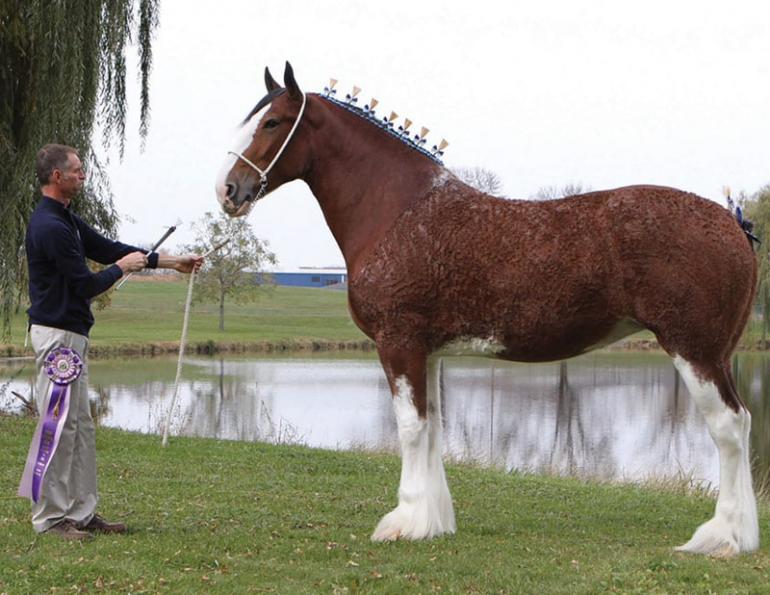
The three-year-old Clydesdale mare, Puzzle, owned by Willow Way Farms near Ohaton, Alberta, captured the title of Supreme Grand Champion at the World Clydesdale Show held in Madison, Wisconsin from October 25 to 28, 2018.
Allan Gordeyko, who operates Willow Way Farms with his son Wes and daughter-in-law Kristen, calls the honour the "Stanley Cup of Clydesdale competitions"
...
|
|
Two Albertans from Parkland County west of Edmonton are facing charges of animal cruelty after allegedly mistreating horses on a rural property.
On Friday, January 4, 2019, the RCMP arrested and charged Patricia Lynn Moore, 48, with three counts of permitting and/or causing unnecessary pain, suffering or injury to animals. The criminal investigation was launched on December 12, 2018, after police received reports of starving horses near Entwistle.
Moore has faced charges before
...
|
|
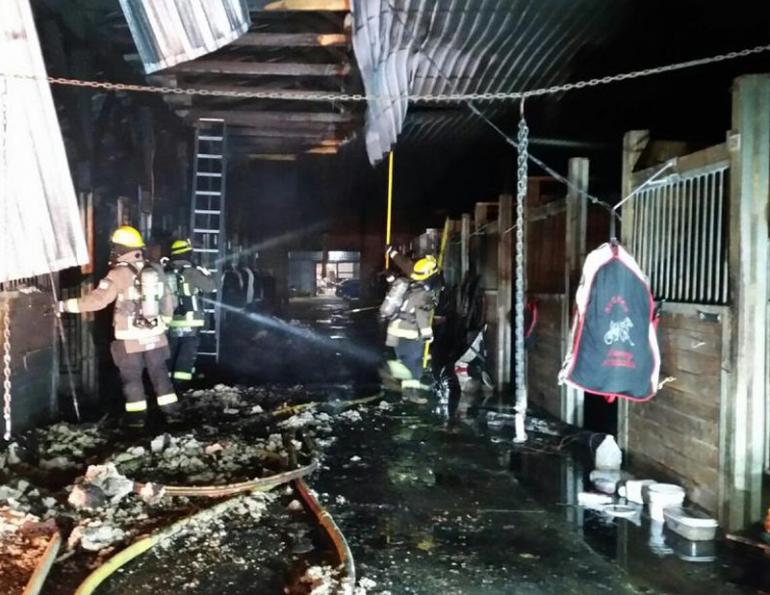
In the early morning hours of Friday, December 21, 2018, a barn fire at First Line Training Centre in Milton, Ontario, claimed the lives of five horses.
Thirty-seven Standardbreds and one pony were in the barn when the fire started at around 1:40 a.m. Two died in the fire, and three were euthanized due to their injuries after assessment by a veterinarian. The uninjured horses were taken to the nearby Mohawk Racetrack for housing
...
|
|
February 14 - 17, 2019
Saskatoon Prairieland Park, along with volunteers from Saskatchewan Horse Federation, the Western College of Veterinary Medicine, and various equine breed groups, are working together to facilitate the eighth annual Saskatchewan Equine Expo. The objective of the Expo is to present equine related lectures, presentations, demonstrations, entertainment, and opportunities focusing on the equine industry. Whether participants and spectators are amateurs or professionals, they will experience the newest products, techniques, and technology...
|
|
|
See what's happening on our social sites
|
|
|
|
|
|
|
|
|