The Alcohol Policy Resource Center at Prevention First provides municipalities, local officials, law enforcement, and community coalitions focused on underage drinking in Illinois with training, education, resources, and tools on evidence-based alcohol policy strategies.

MONTHLY NEWSLETTER - OCTOBER 2026

Mission

Helping communities reduce underage drinking and alcohol misuse.

Goal

To reduce alcohol use among those who are 12-25 years old in communities throughout Illinois.

ALCOHOL YOUTH TRAFFIC CRASHES

National Teen Driver Safety Week is October 18-24. Traffic crashes are a leading cause of death for teens (15-18 years old) in the United States. Alcohol plays a big role in those crashes.


According to NHTSA's Traffic Safety Facts for Young Drivers in 2024:

  • Twenty-nine percent of the young drivers who were killed in traffic crashes had BACs of .01 g/dL or higher; 25 percent had BACs of .08 g/dL or higher.
  • Of the 637 young drivers killed who had alcohol in their systems, 547 (86%) were at .08 g/dL or higher.

The number of young drivers involved in fatal traffic crashes who had BACs of .01 g/dL or higher increased 34 percent, from 871 in 2015 to 1,171 in 2024. Twenty-four percent of these drivers had alcohol in their systems in 2024 as compared to 20 percent in 2015.


Coalitions and Law Enforcement can implement proven strategies to decrease youth impaired driving, including Roadside Safety Checks. The APRC has an infographic that highlights the importance of Roadside Safety Checks. Roadside Safety checks work when paired with a strong awareness campaign. Campaigns can be conducted by law enforcement or in conjunction with a prevention coalition. The APRC can provide technical assistance in partnering with law enforcement to implement these checks and develop roadside safety check awareness campaigns.


The Alcohol Policy Resource Center can assist with analyzing your data, scanning your community, and matching policy/strategy to assessment findings. If you have any questions or need more information, please reach out to Jody Heavilin.

ADVOCACY FOR THE WIN

Mars, Incorporated has told public health leaders that it has halted marketing of the controversial Pop-Tarts and BuzzBallz alcohol collaboration and committed that Pop-Tarts will not enter into another co-branding partnership with an alcohol company.

The commitments came during a September 25 meeting between three senior Mars executives and representatives of five public health organizations convened by the U.S. Alcohol Policy Alliance (USAPA).


The meeting followed a national campaign organized by USAPA in response to the announcement that two familiar Pop-Tarts flavors—Frosted Brown Sugar Cinnamon and Frosted S'mores—would be turned into BuzzBallz ready-to-drink cocktails containing 15% alcohol by volume.


More than 30 public health organizations signed a letter organized by USAPA calling on Mars to end the partnership and prohibit future alcohol collaborations involving brands popular with children and teenagers.


During the meeting, Mars representatives told the coalition that:

  • Mars regrets the Pop-Tarts/BuzzBallz partnership, which was entered into before Mars acquired Pop-Tarts' former parent company, Kellanova.
  • All planned marketing promoting the collaboration has been cancelled and production has ceased.
  • Pop-Tarts will not enter into another co-branding partnership with an alcohol company.


"We applaud Mars for listening to the public health community and taking action," said Mike Marshall, CEO of the U.S. Alcohol Policy Alliance. "Using one of America's most recognizable childhood food brands to help sell a high-alcohol product should never have happened. But Mars inherited this partnership, responded quickly when we raised our concerns, and has now told us it will not happen again. That is responsible corporate leadership."

APRC ON THE MOVE

Connecting the Dots – Alcohol products, policy, and partnership investments


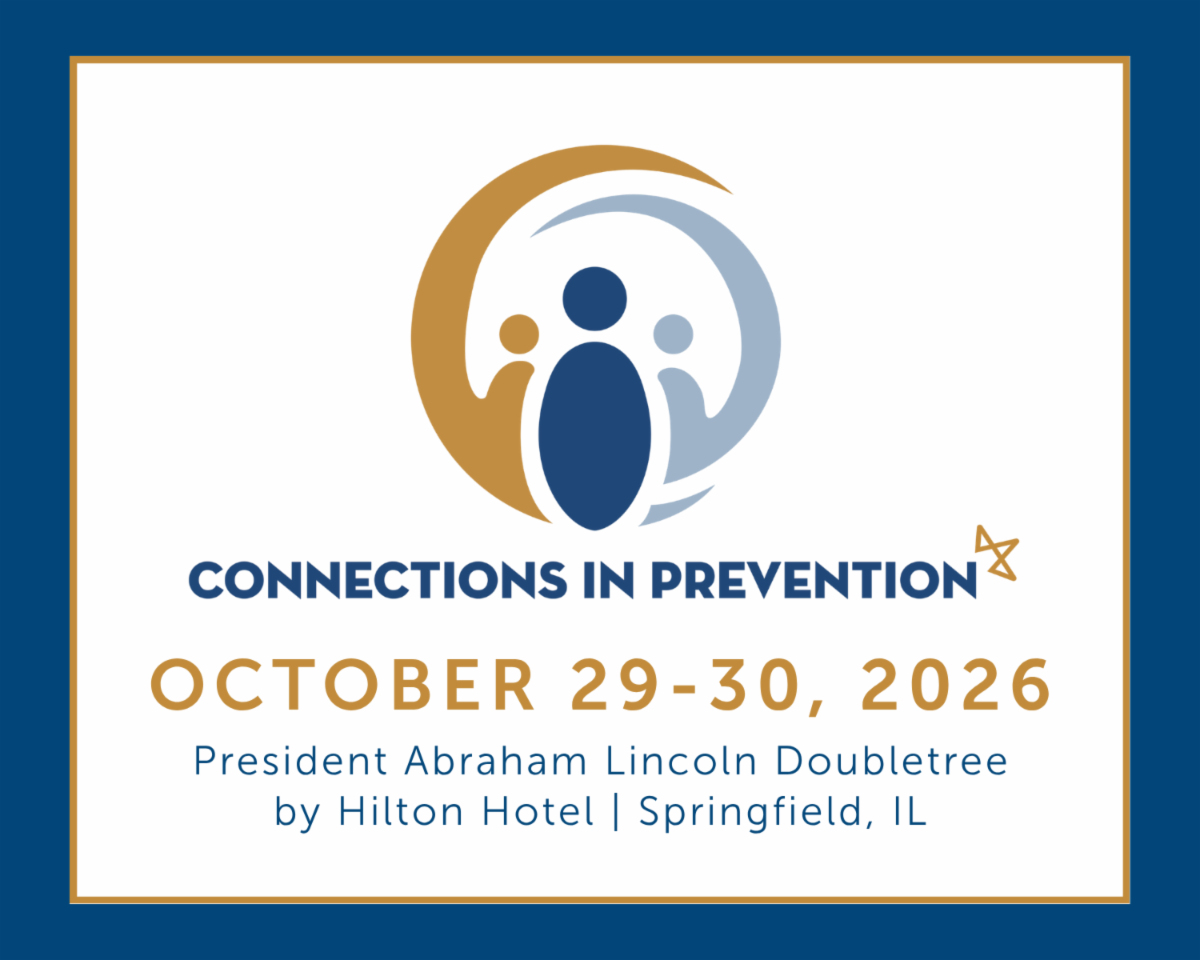
The APRC, in partnership with the ILCC's Division of Enforcement, will be presenting at this year's Connections in Prevention Conference in Springfield. The CIP Conference takes place on October 29 and 30 at the President Abraham Lincoln Springfield - DoubleTree by Hilton. Jody Heavilin and Kenneth Williams will speak on the latest alcoholic beverages and the marketing techniques the industry is using to capture an underage audience. In addition to the products, this workshop will review policy solutions and how creative partnerships can be successful. 


There's still time to register! We hope to see you there!

Addressing the rapidly evolving alcohol landscape through policy and partnerships 


The Alcohol Policy Resource Center is excited to present again at this year's Tall Cop Emerging Drug Trends Conference in Dallas, TX. The conference takes place on November 12 and 13 at the Hyatt Regency Dallas. APRC Senior Administrator Jody Heavilin and ILCC Division of Enforcement East Central Region Supervisor Kenneth Williams will speak about how to address the evolving alcohol landscape through partnerships and policy. There's still time to register.

ENVIRONMENTAL SCANNING SUCCESS

The DuPage Federation on Human Services Reform, in partnership with the DuPage County Health Department, completed an environmental scan of tobacco retailers across DuPage County. Their aims were threefold:

1.      Assess the distribution and density of tobacco retailers;

2.      Document the types and range of tobacco, THC, and kratom-based products available

3.      Provide recommendations to help the DuPage County Health Department strategically focus prevention and advocacy resources.


DuPage Federation staff used registered cigarette and tobacco retailer data from the Illinois Department of Revenue to assess retailer density by municipality and countywide. U.S. Census data on municipal geography and population, coupled with Impact DuPage data on municipal rates of adult smoking and smoking-cessation attempts, provided contextual information regarding community-level risk and tobacco retailer density.


Twenty DuPage County municipalities were selected based on retailer density, population risk factors, and geographic distribution. Between April and June 2026, staff visited 200 registered tobacco retailers to obtain a sufficiently robust and geographically representative sample. A structured assessment rubric, informed by Prevention First and other environmental scan toolkits, was used to document the types and range of tobacco, THC, and kratom products sold, number, type and location of advertisements, product placement, discounts and price promotions, proximity to sensitive locations such as schools and public libraries, and age-of-sale signage.


The scan identified several significant public health concerns:

  • All retailer types, including gas stations, pharmacies, grocery stores, and smoke/vape shops, regularly sold tobacco products,
  • Nearly all smoke/vape shops sold a broad range of tobacco, THC, and kratom products.
  • More than one in five gas stations and one in ten convenience stores sold kratom, increasing its accessibility beyond specialty vape/smoke shops.
  • Retailers used strong marketing strategies that may appeal to youth and other vulnerable audiences, coupled with potentially misleading or confusing product claims and dosage information that may amplify risk.


Recommendations from this project will be used to guide policy, public awareness, education, treatment, and recovery efforts. For more information, please contact Mimi Doll, PhD. You can download the report here. 

RESOURCE OF THE MONTH

NOTEWORTHY RESEARCH

Reinhart CA, Begum S, Kovacevic L, Bhatt T, Kosgolla J, Smith DC. Underage Access to Alcohol Through Curbside and Home Delivery: Prevalence and Consequences. Prev Sci. Published online September 30, 2026. doi:10.1007/s11121-026-01984-2


Greene, N. K., Kritikos, A. F., & Mumford, E. A. (2026). Attitudes Toward Cancer and Heart Disease Warning Labels on Alcoholic Beverages in the United States. Public health reports (Washington, D.C. : 1974), 141(4), 572–579. https://doi.org/10.1177/00333549251404847


Rossheim, M.E., Tillett, K.K., Vasilev, V., LoParco, C.R., Agwuncha, T., Sekhon, V.K. et al. (2025) An online assessment of pricing for ready-to-drink alcohol products: Implications for risk and policy solutions. Alcohol: Clinical and Experimental Research, 49, 226–233. https://doi.org/10.1111/acer.15491 49. 226-233. 10.1111/acer.15491. 

APRC CLEARINGHOUSE

The APRC's Clearinghouse has been updated to include the Special Events Toolkit and Alcohol & E-Commerce infographic. Requests can be made by downloading the Clearinghouse Form and emailing it to Jody Heavilin. The resources will then be mailed to you. If there is an APRC resource not listed, such as the Environmental Scan Toolkit, it can still be requested by email.


Resources are also available at our Springfield and Chicago offices.

The Illinois Alliance on Reducing Underage Drinking was formed in early 2020. In September 2022, the Alliance expanded its focus to include youth cannabis use prevention and formally changed its name to the Illinois Alliance on Reducing Youth Substance Use.


The Illinois Department of Human Services, Division of Substance Use Prevention

& Recovery leads the charge, which allows stakeholders to:

  • Share current youth substance use prevention efforts being implemented in Illinois
  • Share information on best practices to reduce youth substance use
  • Share data & research on efforts to reduce youth substance use
  • Review the Illinois STOP ACT report
  • Unify prevention efforts in the State of Illinois


Currently, the Alliance meets virtually on a quarterly basis. Our FY27 meeting schedule:      

  • Thursday, December 10, 2026
  • Thursday, March 11, 2027
  • Thursday, June 10, 2027

All meetings are from 2:30 pm to 4:00 pm. Meeting minutes and agendas are housed on the APRC website. If you are interested, please reach out to the APRC - Jody Heavilin.

The Alcohol Policy Resource Center is more than just downloadable resources. We are available for coalition presentations or to help customize resources or presentations.

The APRC would also like to help spread the news of your good work in Illinois! If you have outcomes you would like highlighted, please reach out to Jody Heavilin at jody.heavilin@prevention.org.


The APRC is committed to creating resources, professional development opportunities, and technical assistance. We would love to hear from you! If there is an Alcohol Policy or Prevention topic on which you would like more information, please let us know.

 
Funded in whole or in part by the Illinois Department of Human Services, Division of Substance Use Prevention and Recovery through a grant from the Substance Abuse and Mental Health Services Administration.