The Trained Nurses' Association of India adapts the MIYCAN eLearning course for the nurses of India | |
|
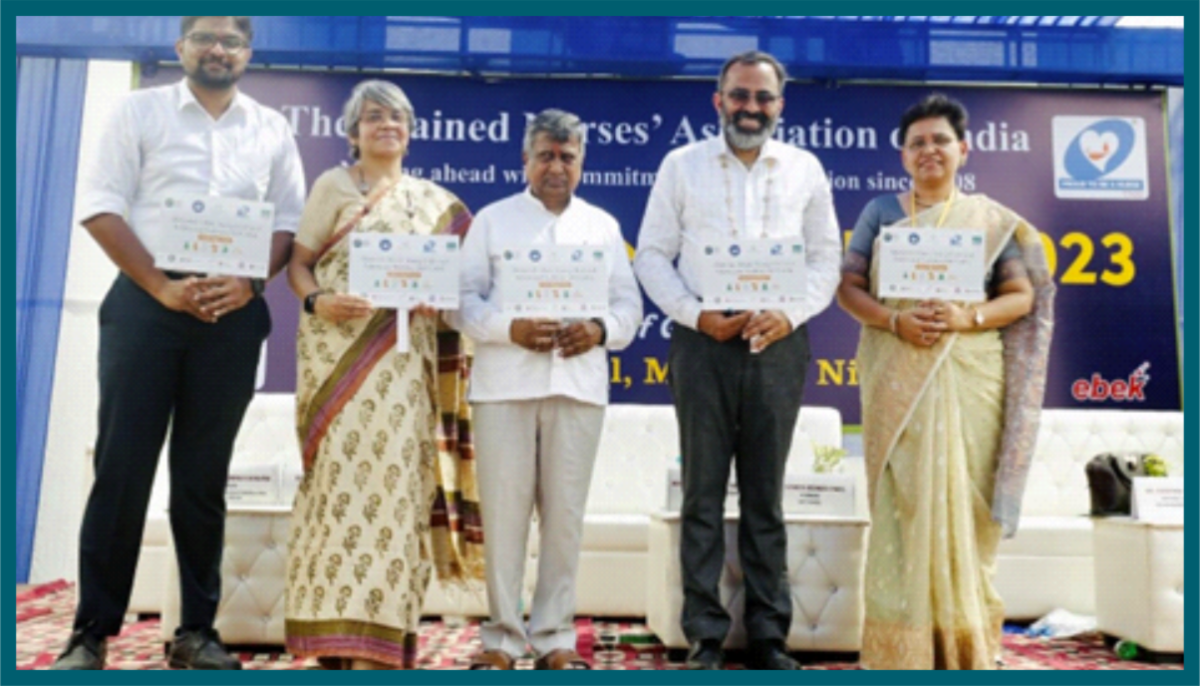
The Trained Nurses' Association of India (TNAI) has adapted the Maternal, Infant, Young Child, and Adolescent Nutrition (MIYCAN) eLearning course content to strengthen the knowledge and practice of MIYCAN for nurses in India. The integration of the eLearning course content into their Learning and Management System (LMS) and the launch of the TNAI fellowship on MIYCN was supported by Alive & Thrive.
The eLearning course was launched in the presence of the Ministry of Health and Family Welfare, NITI Aayog, National Skill Development Council, and Indian Nursing Council during International Nurse’s Day Celebrations on 12 May 2023. The eLearning course has been made available for the members of the association on TNAI LMS. The event has been graced by Dr. Vinod Paul, Member Health and Nutrition NITI Aayog as Chief Guest. He addressed the audience on the critical role played by nurses in public health service delivery and the need for further strengthening of the cadre of nurses through continuous skill enhancement in India.
The eLearning course content was earlier developed by IIPH-Delhi, PHFI, in collaboration with Alive & Thrive and WeCan, with contributions from Food, Drugs, and Medico-Surgical Equipment Committee of FOGSI, Indian Academy of Pediatrics (IAP-IYCF Chapter); Indian Society of Perinatology and Reproductive Biology (ISOPARB); Human Milk Banking Association; Indian Association of Preventive and Social Medicine (IAPSM); and Nutrition International.
For more info, click here: TRAINED NURSES' ASSOCIATION OF INDIA (TNAI) (tnaionline.org)
| |
Alive & Thrive at International Maternal Newborn Health Conference 2023 | |
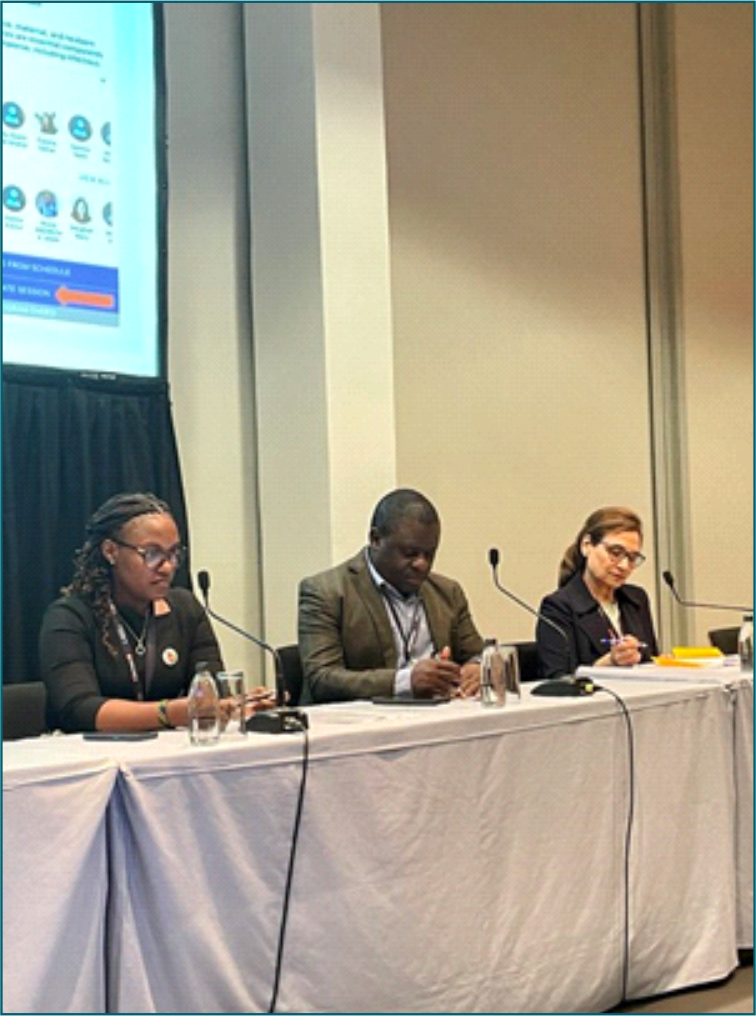 |  | Alive & Thrive's implementation research shows that maternal nutrition interventions can be successfully integrated into ANC platforms leading to improved MIYCN practices. During a thematic session and two scientific presentations, Alive & Thrive delved into this research at the 2023 International Maternal Newborn Health Conference (IMNHC). During this Thematic Session, speakers discussed Alive & Thrive’s implementation research on integrating a tailored package of maternal nutrition interventions into antenatal care (ANC) platforms, and the potential for ANC platforms to serve as a vehicle for bringing the interventions to scale. Alive & Thrive’s research in two countries, Ethiopia and India, formed the basis of our discussion. The session also featured information on the Action Agenda for optimizing and safeguarding women's and girls' nutrition by Deborah Ash, Director of the Women's Nutrition Initiative. The Action Agenda demands rapid and urgent change to the global systems generating unfair outcomes for women and girls. We want to see powerful leadership and sustained investment so that all women and girls – and their potential – are nourished.
For more info, click here: Alive & Thrive at IMNHC
| |
Alive & Thrive in National Conclave on Maternal Nutrition reflecting on learnings from policy and nutrition research | |
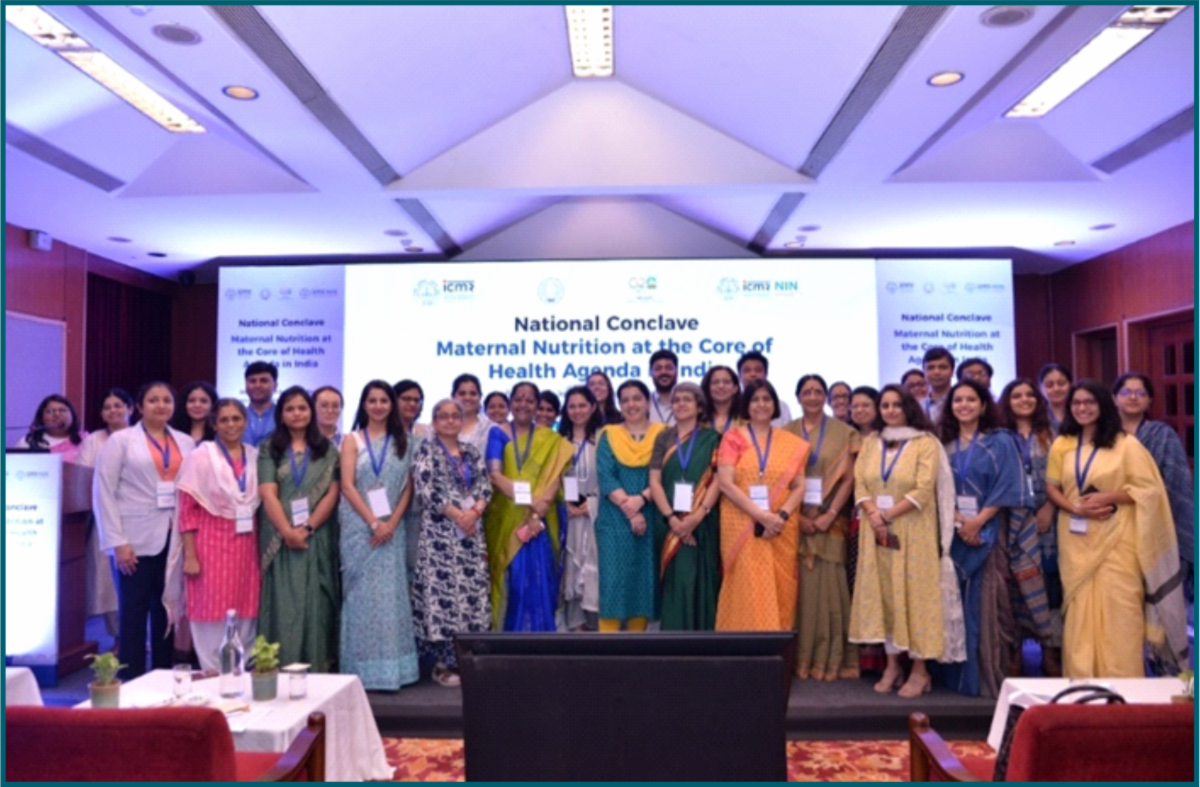 | |
The final workshop of the Maternal Nutrition Consortium was organized by the Indian Council of Medical Research (ICMR), Ministry of Health and Family Welfare (MoHFW), Government of India on 29th May 2023. The Consortium is a group led by ICMR-National Institute of Nutrition, Hyderabad - which has been working towards generating knowledge and evidence on best practices for improving maternal nutrition in the country. The conclave was graced by dignitaries from MoHFW, the Ministry of Women and Child Development, and attended by different development partners, professional associations, and academia.
In 2021, the consortium conducted a series of 12 webinars/E-dialogues, on several important thematic areas under maternal nutrition, attended by experts and academia from across the country. During the thematic discussions, critical points around the issues and key recommendations were exchanged. The conclave aimed at consolidating and finalizing all these recommendations and sharing the same with the government for accelerating the efforts for addressing maternal nutrition. A summary document synthesizing all the key findings and recommendations was developed by the consortium partners and shared with the government and all key stakeholders during the conclave.
Dr. Sebanti Ghosh, Senior Technical Advisor, South Asia, Alive & Thrive was one of the key panelists to reflect on the key recommendations made by the National Consortium on Maternal Nutrition webinar series
| |
Roundtable discussion on Improving Quality in Maternal Nutrition, IYCF, and Adolescent Nutrition Service Delivery at Facility and Community Level | |
|
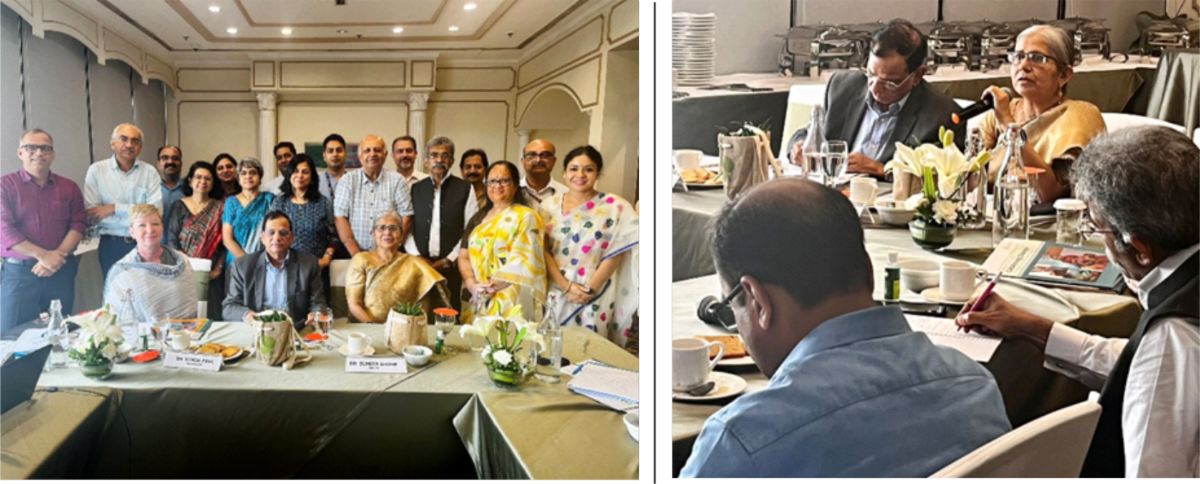
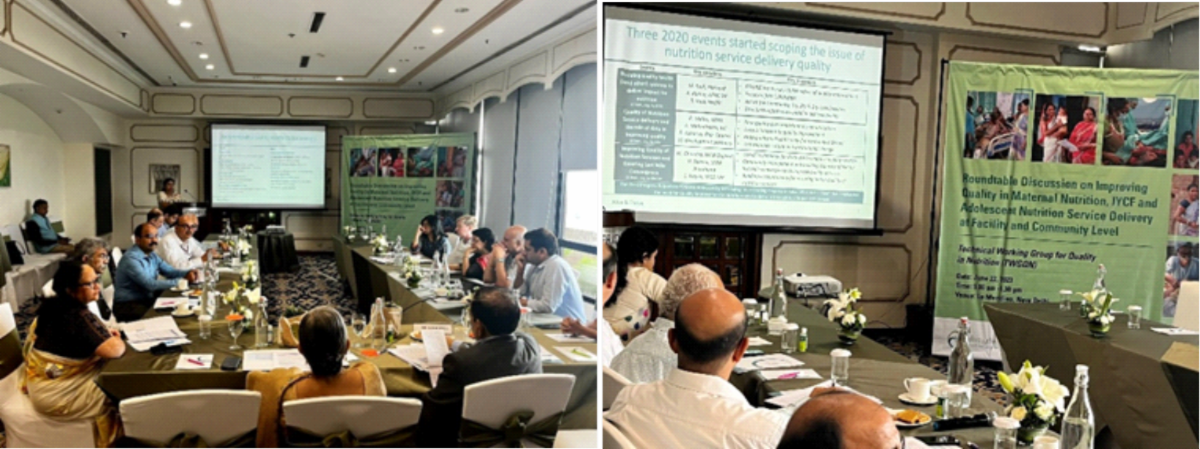
The National Level Technical Working Group on Quality of Nutrition (TWGQN) has convened a roundtable discussion on improving the quality of maternal nutrition, IYCF, and adolescent nutrition service delivery at the facility and community level. The discussion was organized in the presence of Dr. Vinod Paul, Member Health & Nutrition, NITI Aayog, and Dr. Sumita Ghosh, Former Additional Commissioner Child Health Ministry of Health and Family Welfare (MoHFW), Govt. of India.
Building on the learnings of various ongoing efforts and multiple rounds of discussions, the TWGQN has prepared a draft technical note presenting the scope of inclusion and integration of quality standards pertaining to maternal nutrition and IYCF services leveraging the existing health and nutrition programs and a potential pathway for continuous measurement and review of the quality of services through institutional mechanisms.
The roundtable meeting laid out its objectives to deliberate and develop consensus on prioritization and integrating quality standards for both community and facility-based maternal nutrition, IYCF, and adolescent nutrition service delivery while leveraging existing quality assurance and improvement programs; to share experiences and learnings on pilot efforts on integrating /strengthening the quality of nutrition services and lastly to discuss/iterate on a roadmap for setting up an institutional mechanism of continuous quality measurement focusing on maternal nutrition, IYCF, and adolescent nutrition services including roles of development partners, academia, and professional associations.
| |
|
In her opening remarks, Dr Sumita Ghosh, former Additional Commissioner Child Health, MoHFW suggested leveraging every existing service delivery point for mothers and young children to integrate and prioritize quality of nutrition. She highlighted that regular weight measurement and counseling need to be focused on as an indicator of quality. While acknowledging the gap in the quality of counseling she emphasized strengthening the skills of frontline workers& providers for counseling services for nutrition, especially for addressing breastfeeding and complementary feeding difficulties faced by mothers/families. She also stressed strengthening convergent efforts across health and ICDS systems for quality improvement.
Dr Vinod Paul, Member NITI Aayog in his keynote address appreciated the efforts to bring to center-stage the quality of nutrition services and encouraged the group to develop a framework about scale up the quality interventions at the district and state level, building on learnings from the current pilot initiatives including identifying potential mechanisms to integrate quality assurance/improvement and measurement within the system. While emphasizing the need for continued focus on the quality of early and exclusive breastfeeding, Dr Paul highlighted the need on improving the quality of complementary feeding. He strongly recommended the group focus on improving the quality of nutrition care for low birth weight (LBW) babies and follow up on the growth trajectory for LBW infants. Dr. Paul also emphasized on the quality of interventions for the prevention and treatment of anemia and early childhood development.
As the next steps, the group will develop short-term, mid-term and long-term plans including prioritization of interventions/actions based on the valued inputs and insights received during the roundtable discussions; prioritize development of an implementation framework for district level at scale implementation of quality of nutrition services based on current evidence and learnings; develop quality standards pertaining to Adolescent Nutrition, THR/HCM, Growth Monitoring and Promotion (GMP) services; and disseminate the compendium of best practices of case studies on improving quality of nutrition services.
Alive & Thrive was privileged to have facilitated the roundtable and was joined by UNICEF, WHO, WB, UPTSU, NI, Save the Children, PCI, RTI, NQOCN, IAPSM, IAP, FOGSI, and representatives of Academia.
| | |
Strengthening knowledge of nutrition and nutrition-sensitive services among PRI Members in Gujarat | |
|
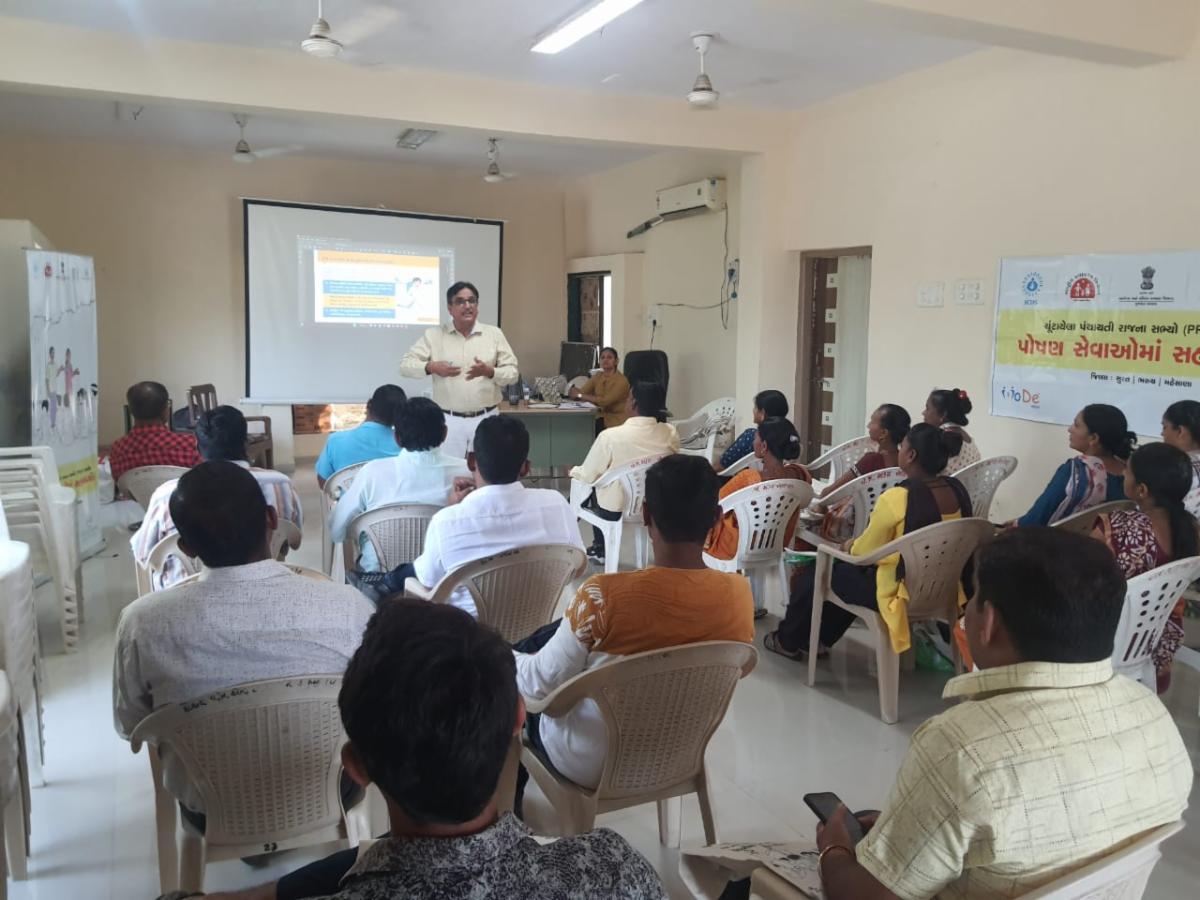
As a part of Alive & Thrive’s implementation research (IR) in Gujarat, the Panchayati Raj Institution (PRI) Members including Sarpanch[1] and Ward Members have been sensitized on nutrition and nutrition-sensitive services. The sensitization of 979 out of 1502 Ward members from three IR districts (Surat, Bharuch, and Mehsana) have been completed in June 2023. The sensitization of the rest of the PRI ward members is in progress and will be completed in July 2023. The training is scheduled for one day which includes training on the Supportive Supervision mobile application.
The training includes discussions on the roles and responsibilities of PRI ward members in improving the nutrition status of their community. It has been observed that the ward members were enthusiastic and participated in the training very actively. The ward members expressed that the mobile application would prove to be a useful tool and help during their home visits and visits to the health facilities.
[1] Sarpanch - Wikipedia
| |
|
Journal Article:
Comprehensive Approach for Improving Adherence to Prenatal Iron and Folic Acid Supplements Based on Intervention Studies in Bangladesh, Burkina Faso, Ethiopia, and India
Anemia remains a critical maternal nutrition issue in low- and middle-income countries. Literature search, formative research, and baseline surveys informed the design of interventions to improve adherence to iron and folic acid supplementation in Bangladesh, Burkina Faso, Ethiopia, and India.
The Alive & Thrive interventions addressed underlying barriers at the individual, community, and health system levels. Interventions were further adapted for integration into existing large-scale antenatal care programs through continuous monitoring. The barriers included poor supplies, lack of counseling during antenatal visits, and insufficient community and family support for PW.
We strengthened service delivery protocols and the capacity of community workers to engage families. We trained health workers, improved supervision and counseling quality, strengthened supply systems for IFA tablets, and facilitated family support for PW.
Women’s knowledge, beliefs, self-efficacy, and perception of social norms were improved through interventions tailored for each country setting. Considering the high burden of anemia in low- and middle-income countries among women especially during pregnancy and the health consequences for mothers and newborns of low iron intake, decision-makers and implementers need to pay greater attention to understanding local barriers to adherence and designing interventions that can improve adherence.
Social and behavioral science theories and health systems strengthening frameworks provide a strong technical basis for designing effective interventions to improve IFA adherence.
For more, click here: Comprehensive Approach for Improving Adherence to Prenatal Iron and Folic Acid Supplements Based on Intervention Studies in Bangladesh, Burkina Faso, Ethiopia, and India (Sanghvi T, Nguyen PH, et al, Food and Nutrition Bulletin. 2023) (aliveandthrive.org)
| | | | | |