RESOURCES
In the United States, about 6,000 women enter menopause each day, but 45% of women don’t know the difference between perimenopause and menopause prior to experiencing symptoms.
This World Menopause Month, learn more about the natural life stage of the menopause transition and healthy again.
| |
|
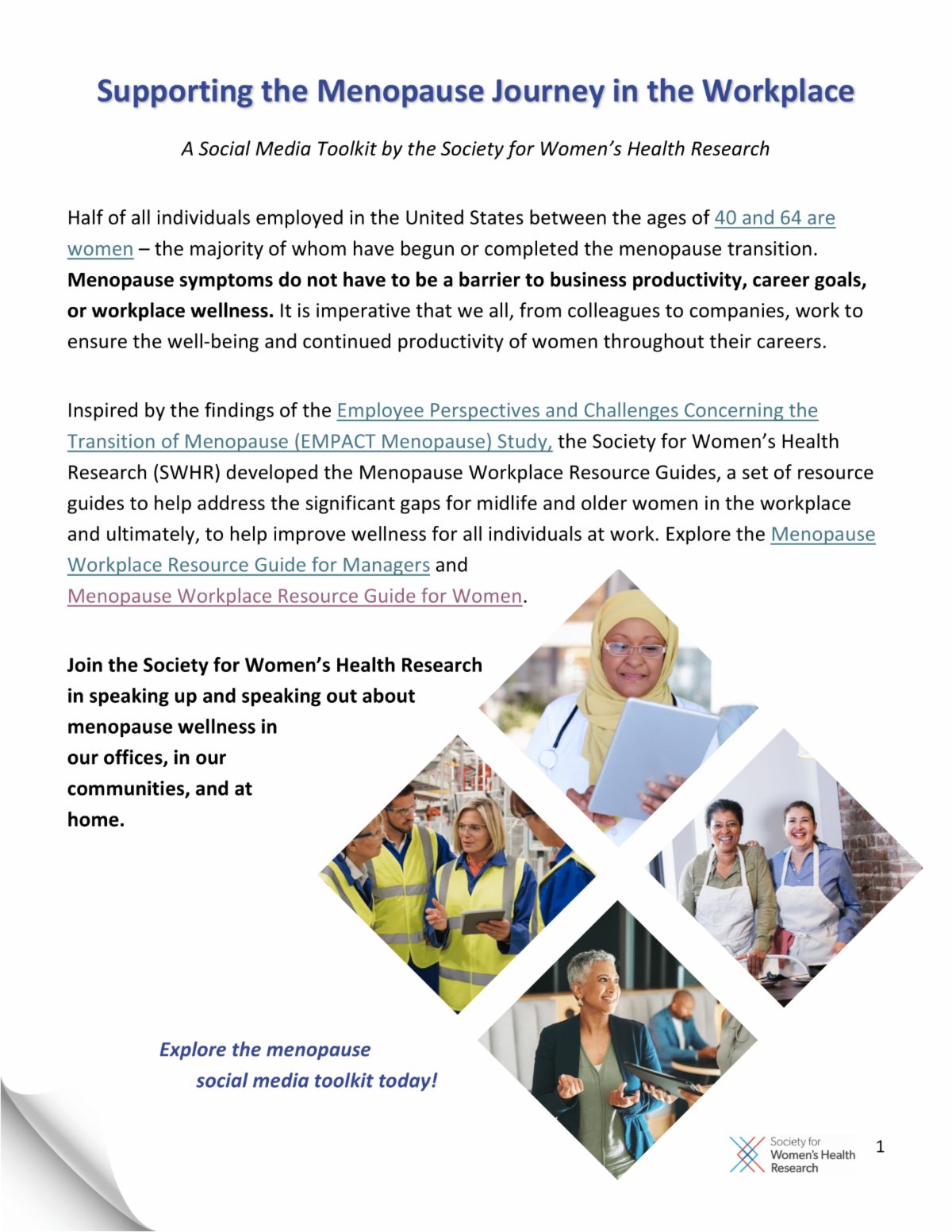
Check Out the SWHR Menopause Toolkit
Although the term menopause is often used loosely to describe the entire time frame of a woman’s midlife changes, there are different stages to menopause. The transition to menopause is often incremental, with hormonal changes and associated symptoms sometimes starting before women begin to notice changes in their menstruation.
The Menopause Preparedness Toolkit: A Woman’s Empowerment Guide was created to support women through major menopause milestones and prepare them for conversations with physicians, families, and friends.
| | |
Read more about menopause on our blog! | |
NEWS AND RESEARCH
SWHR Working Group members have produced the following news, research, and resources related to menopause:
News and Research
-
Alzheimer's & Dementia: Reproductive hormones in relation to white matter hyperintensity volumes among midlife women, submitted by Rebecca Thurston, PhD, University of Pittsburgh
-
American Journal of Obstetrics and Gynecology: Menopausal vasomotor symptoms and plasma Alzheimer disease biomarkers, submitted by Rebecca Thurston, PhD, University of Pittsburgh
-
Circulation: Trajectories of sleep over midlife and incident cardiovascular disease events in the Study of Women's Health Across the Nation, submitted by Rebecca Thurston, PhD, University of Pittsburgh
-
JAMA: Elinzanetant for the Treatment of Vasomotor Symptoms Associated With Menopause, submitted by JoAnn V. Pinkerton, MD, FACOG, MSCP, The University of Virginia Health System and Rebecca Thurston, PhD, University of Pittsburgh
-
The Journal of Clinical Endocrinology & Metabolism: Endogenous estrogens and brain activation during verbal memory encoding and recognition in the postmenopause, submitted by Pauline Maki, PhD, University of Illinois at Chicago
-
The M Factor: Shredding the Silence on Menopause is a feature-length documentary film centering on the lived experiences of women across the U.S., submitted by Wen Shen, MD, MPH, Johns Hopkins Medicine
-
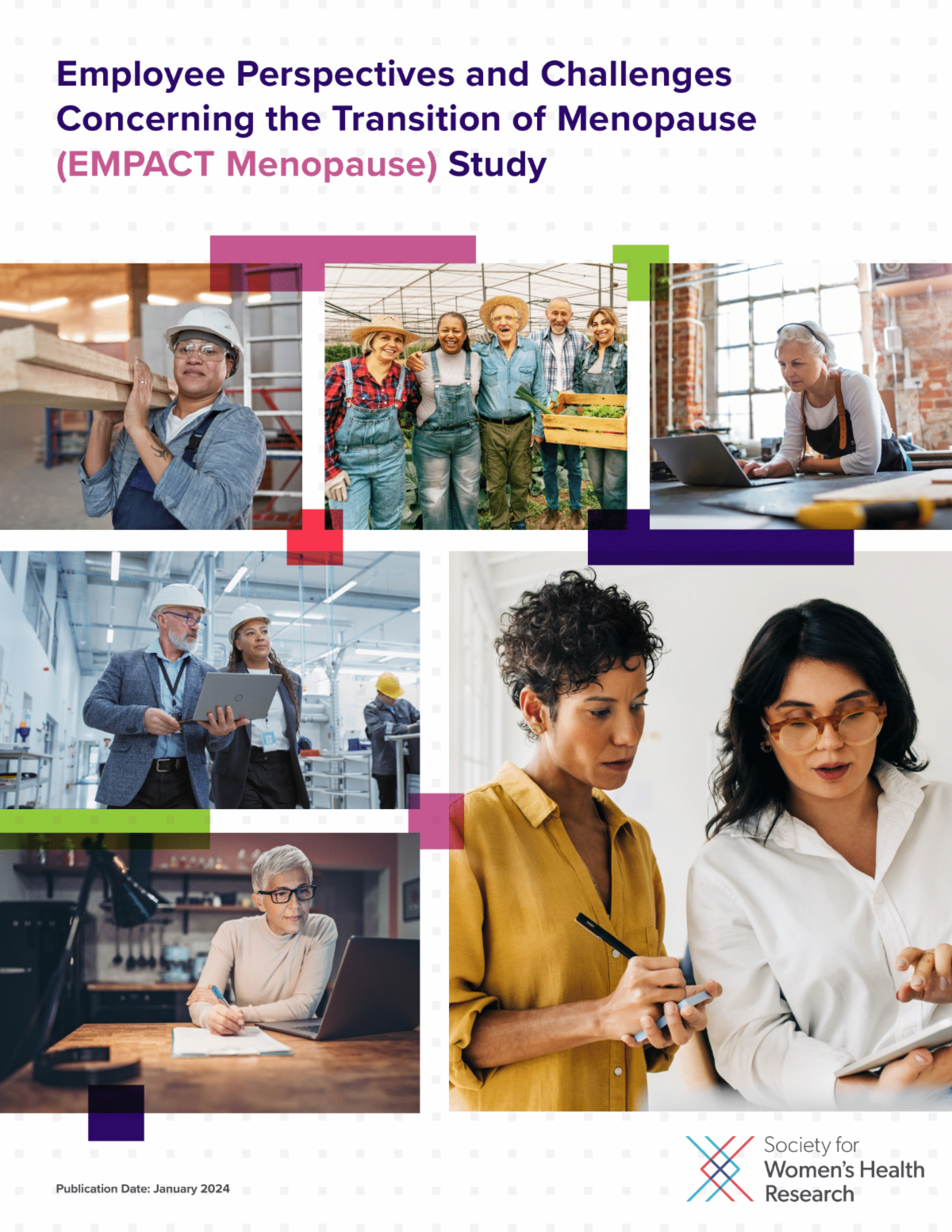
Mayo Clinic Proceedings: Impact of Menopause Symptoms on Women in the Workplace, submitted by Stephanie Faubion, MD, MBA, Mayo Clinic
-
Menopause: Addressing menopause symptoms in the primary care setting: opportunity to bridge care delivery gaps, submitted by Stephanie Faubion, MD, MBA, Mayo Clinic
-
Menopause: "Not feeling like myself" in perimenopause - what does it mean? Observations from the Women Living Better survey, submitted by Nina Coslov, MBA, Women Living Better
|
-
The Stay Juicy Podcast features menopause expert Dr. Arianna Sholes-Douglas as she debunks menopause myths and empowers women to “STAY JUICY” on their midlife journey, submitted by Dr. Arianna B. Sholes-Douglas, MD, FACOG, Tula Wellness and Aesthetics
| |
|
Events and Resources
-
Event: Empowered Transitions: Menopause, Wellness and Healthy Aging in Women Johns Hopkins Medicine on November 1 at 7:00 AM-5:00 PM ET, submitted by Kate Pisano, The Johns Hopkins University School of Medicine
-
Event: Delve into the world of Hormone Replacement Therapy (HRT) with Dr. Wokoma at November 2 at 19:30 GMT, submitted by Nina Kuypers, Black Women in Menopause
-
Report: Menopause and in the Workplace: Consensus Recommendations, submitted by Stephanie Faubion, MD, MBA, The Menopause Society
-
Resource: The Making Menopause Work™ Initiative is designed to guide employers on ways to better support their employees going through this significant life change, submitted by Stephanie Faubion, MD, MBA, The Menopause Society
| |
-
Resource: The Menopause Guide app was launched in 2019 and is free to all providers, submitted by Wen Shen, MD, MPH, Johns Hopkins Medicine
| |
-
Resource: Menopause Step-by-Step Series and Webinars is a new series providing concise, evidence-based topic summaries of key issues related to understanding and managing menopause. Articles are published in the Menopause journal, submitted by Stephanie Faubion, MD, MBA, The Menopause Society
-
Resource: Transforming Women’s Health Course is designed by Mayo Clinic to assist health care professionals in improving the care of women based on emerging scientific and clinical evidence and including in-depth discussions about menopause management, submitted by Stephanie Faubion, MD, MBA, Mayo Clinic
-
Resource: The Women's Health Fellowship at Mayo Clinic in Jacksonville, Florida provides a flexible one- to two-year postgraduate education experience with the goal is to train academic physicians who wish to be positioned as national leaders in the field of women's health, submitted by Stephanie Faubion, MD, MBA, Mayo Clinic
-
Statement: Misinformation About Hormone Therapy Statement, submitted by Stephanie Faubion, MD, MBA, The Menopause Society
-
Website: The Menopause Society is newly designed withs lots of great new features and easy-to-use functions, submitted by Stephanie Faubion, MD, MBA, The Menopause Society
Know something SWHR should read? Reply to this email or tag us on social media at @SWHR!
| |
SHARE ON SOCIAL MEDIA
Join us on social media as share information about menopause research and symptom management! Follow #SWHRtalksMenopause to learn more.
| |
|
#MenopauseMonday
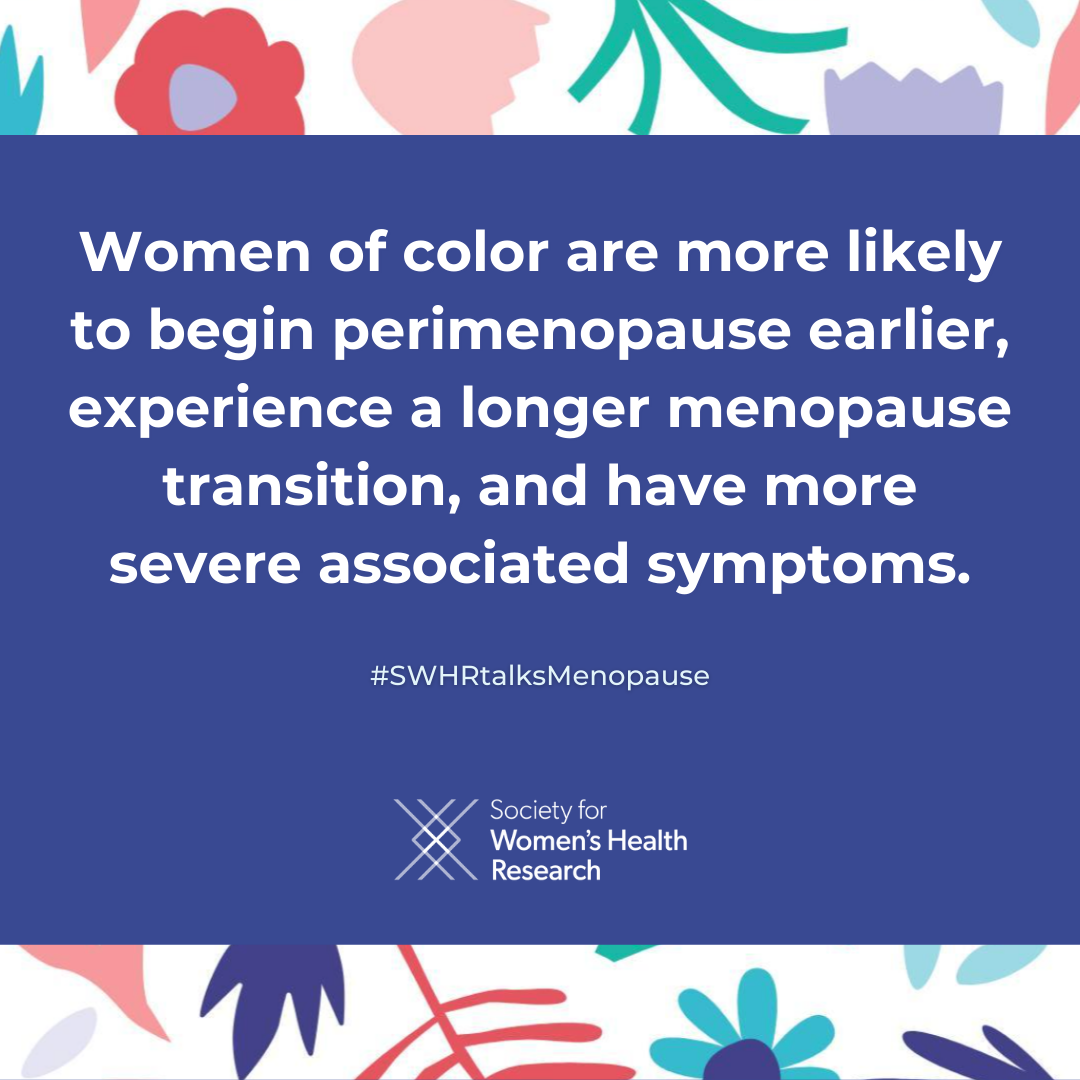
October is #WorldMenopauseMonth! Women of color are more likely to begin #perimenopause earlier, experience a longer transition, & have more symptoms. Learn how #menopause impacts women differently by in the Toolkit: https://ow.ly/em7H50T7CIU
#SWHRtalksMenopause
| |
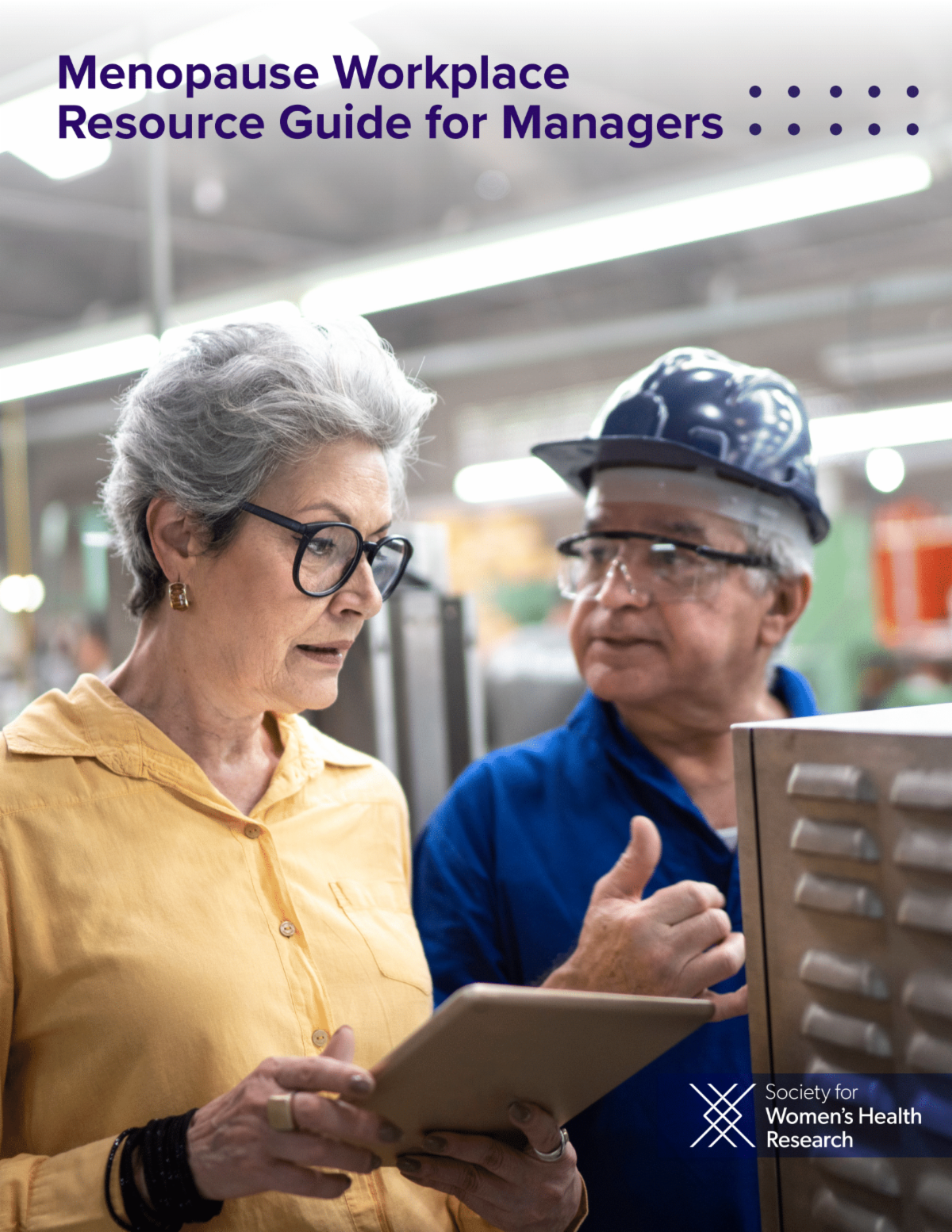
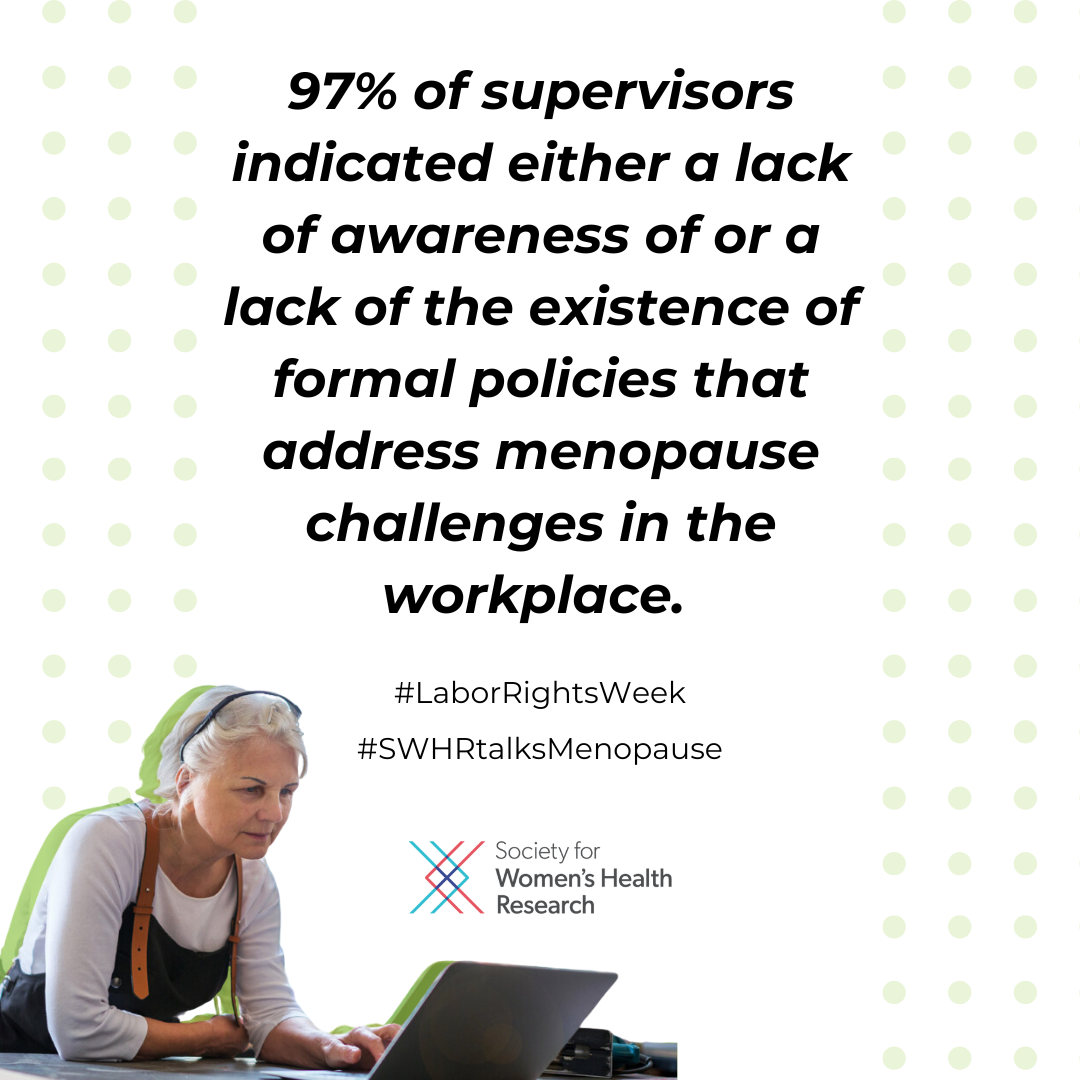
Did you know that 97% of supervisors indicated either a lack of awareness of or a lack of the existence of formal policies that address #menopause challenges in the workplace? Check out SWHR’s Menopause Workplace Resource Guide for Managers and Women for more information on creating a menopause-friendly work environment: https://ow.ly/sxiK50Sw6ms | |
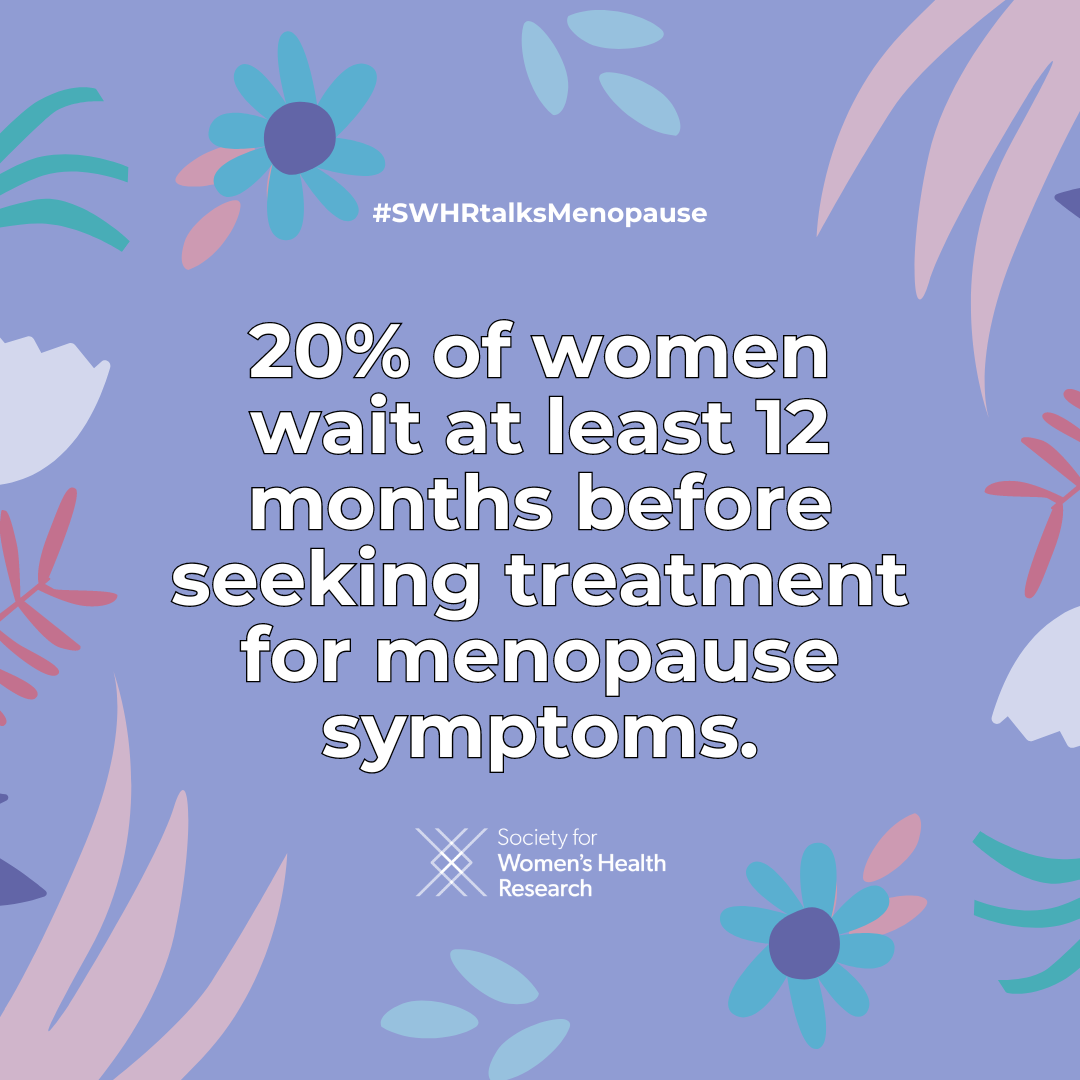
While the stages of #menopause often occur in midlife, the hormonal changes and symptoms can begin to occur before menstruation stops – and last for many years after. 20% of women wait >12 months before seeking treatment for symptoms. #SWHRtalksMenopause #MenopauseAwarenessMonth | |
PARTNER SPOTLIGHT
Our work is only possible with the help of great partners. Check out one of our menopause wellness partners here!
| |
|
The National Menopause Foundation
The National Menopause Foundation’s mission is to be the trusted and relatable resource raising awareness and understanding of menopause through education, activism, and community building.
To commemorate World Menopause Day on October 18, NMF launched a new series of free Menopause MicroCourses to help women better understand the most common symptoms of perimenopause and menopause. The curriculum for each free micro-course was created in conjunction with members of NMF”s Medical Advisory Committee, who served as expert faculty for the educational series. NMF plans to continue the series to provide MicroCourses on the 30+ symptoms of menopause. The first four topics covered in the series include:
| | |
All SWHR resources are free to view and share. Here's why: 20% of women wait 12+ months before seeking treatment for their menopause symptoms | | |
Did someone forward you this email? Looking for more news on women's health research? | | | | | |