RESOURCES
Sleep is essential for overall health and well-being, helping the body maintain proper brain function and physical health. Sleep health is affected by many biological, social, and environmental factors. For women, sleep plays a vital role in hormonal regulation, reproductive health, and mental well-being, with disturbances often linked to menstrual cycles, pregnancy, menopause, and caregiving stress.
Daylight Savings Times ends early the morning of Sunday, November 2, 2025. This means, when local daylight time is about to reach 2:00am on Sunday, November 2, clocks will be turned backward one hour to 1:00 am local standard time. Sunrise and sunset to follow will be one hour earlier on November 2, 2025 than the day before, meaning there will be more light in the morning and less light in the evening. While this change happens every year, it may impact your sleep. This fall is an important time to build and maintain healthy sleep habits.
As we approach the end of Daylight Savings Time this fall, learn more about sleep health and sleep hygiene.
| | |
Check Out the Narocelpsy Toolkit: A Woman's Empowerment Guide
Narcolepsy is a chronic sleep disorder that is characterized by persistent and excessive daytime sleepiness, an inability to regulate sleep-wake cycles, and in some cases, cataplexy (sudden change of muscle tone, which can be triggered by strong emotions).
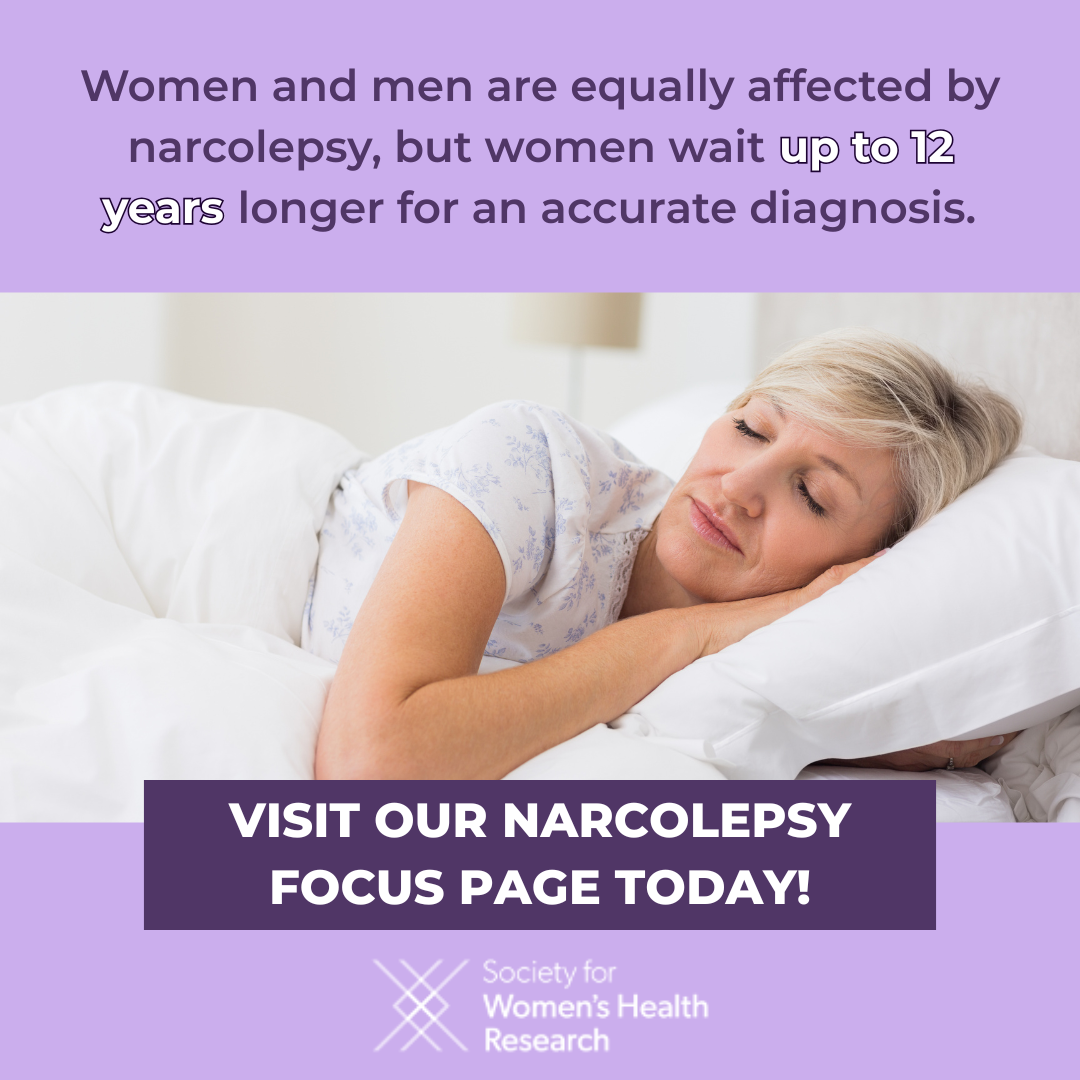
Although narcolepsy affects men and women equally and similarly, women are diagnosed an average of 12 years later than men after symptom onset.
The Narcolepsy Toolkit: A Woman’s Empowerment Guide was created to aid women living with narcolepsy and their families as they navigate their diagnosis, treatment, and care journeys. Read the guide today!
| | | |
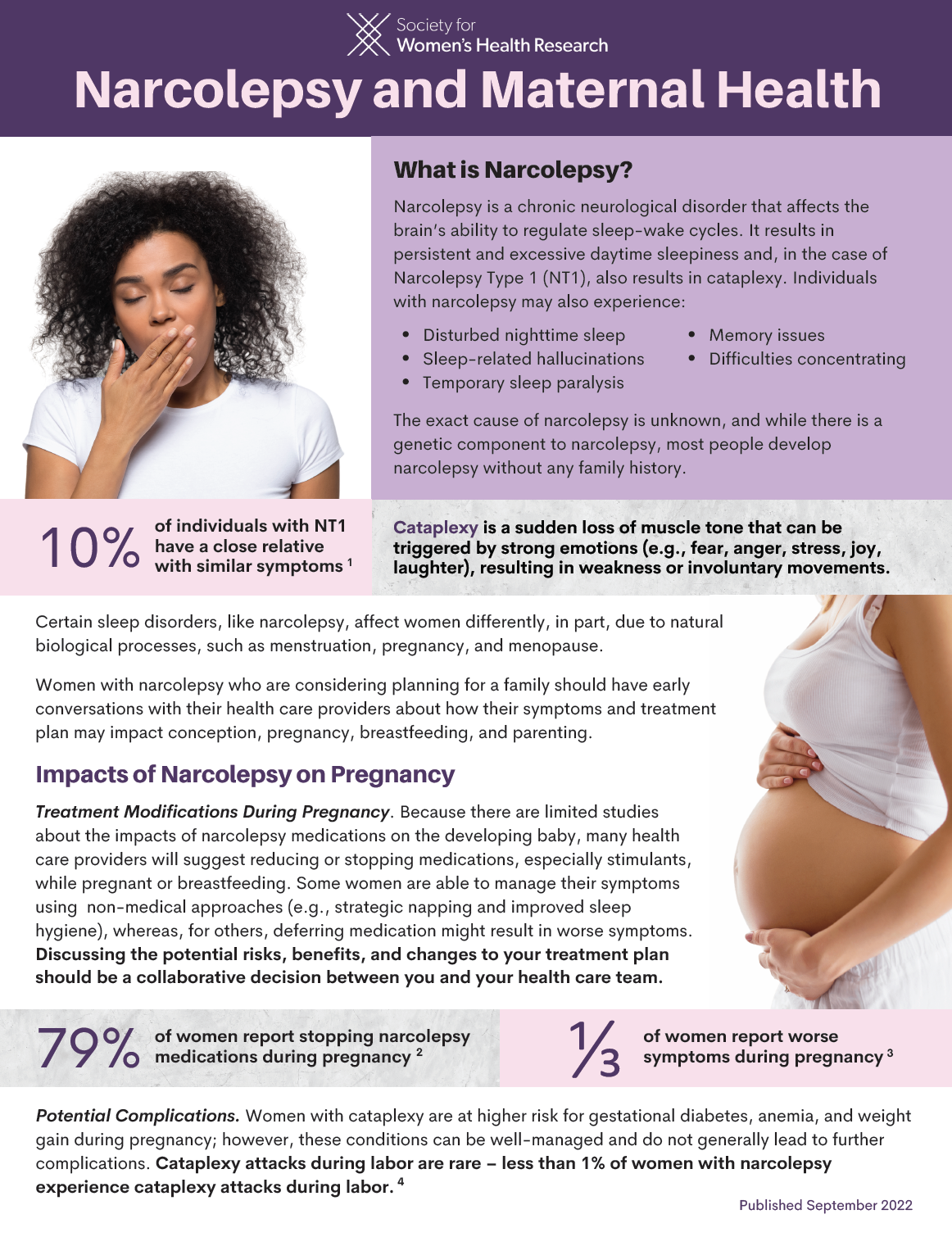
Certain sleep disorders, like narcolepsy, affect women differently throughout their lifespan, including in preparation for pregnancy and motherhood.
In the Narcolepsy and Maternal Health Fact Sheet, learn how to support women living with narcolepsy who are considering planning for a family, pregnancy, breastfeeding, or parenting.
| | |
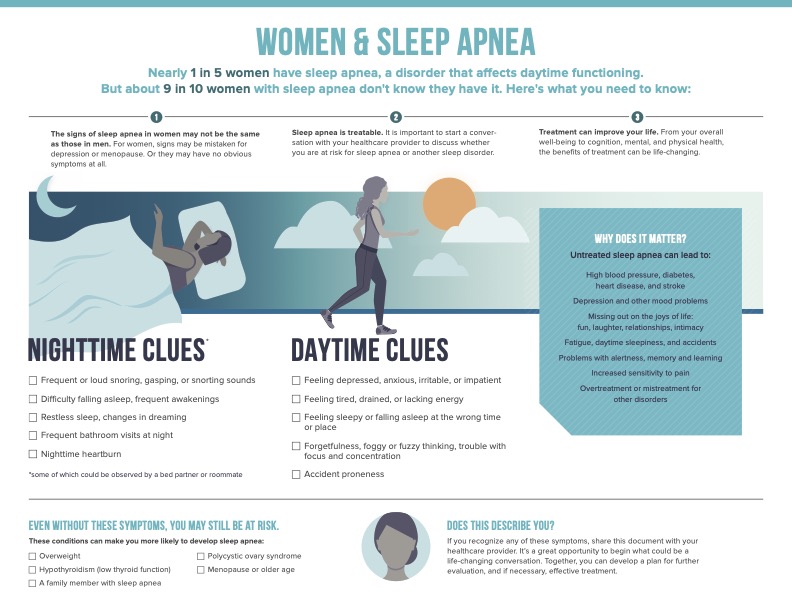
Nearly 1 in 5 women have sleep apnea, a disorder that affects daytime functioning. But about 9 in 10 women with sleep apnea don’t know they have it because the signs of sleep apnea in women may not be the same as those in men. For women, signs may be mistaken for depression or menopause. Or they may have no obvious symptoms at all.
The Women & Sleep Apnea Fact Sheet is for both patients and health care providers to raise awareness about this disorder.
| | |
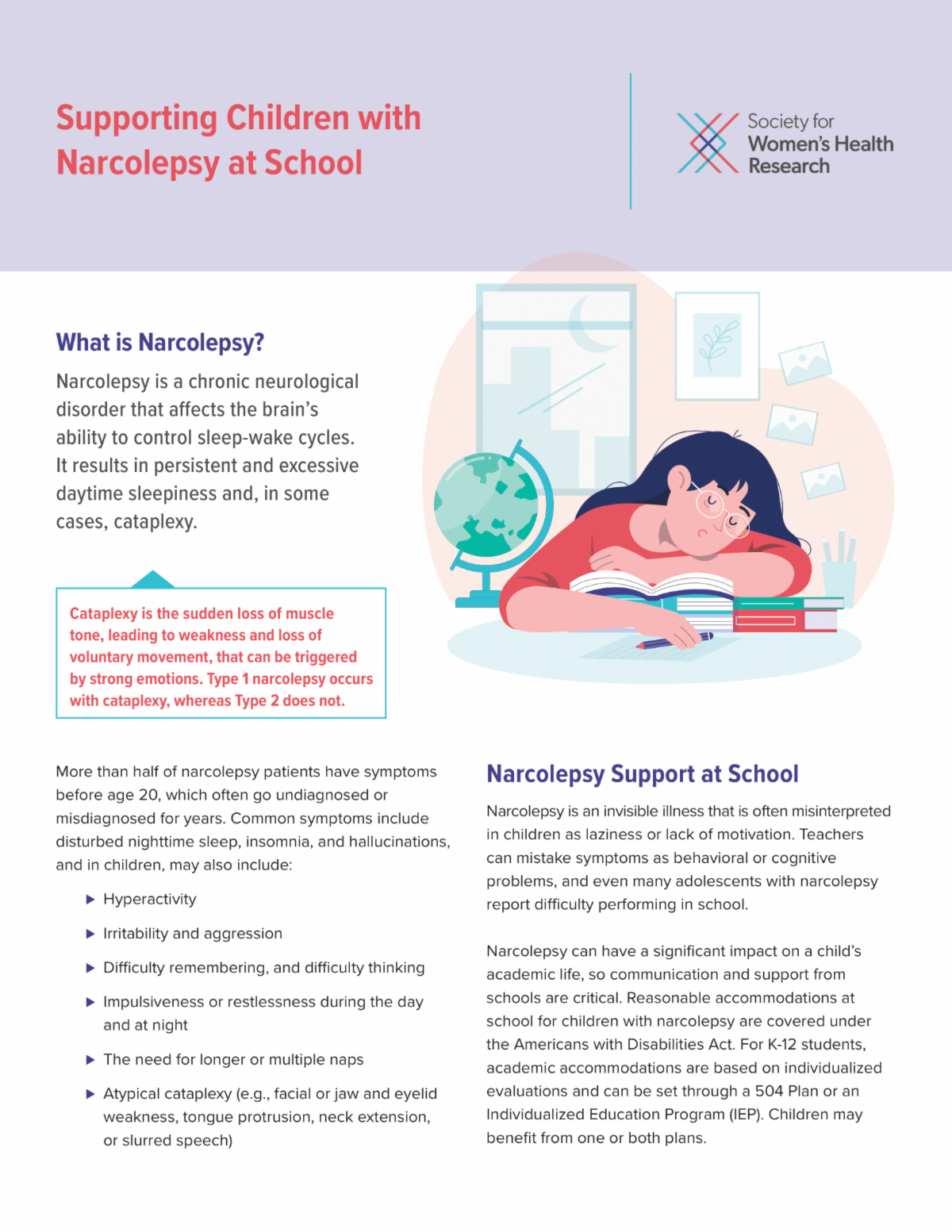
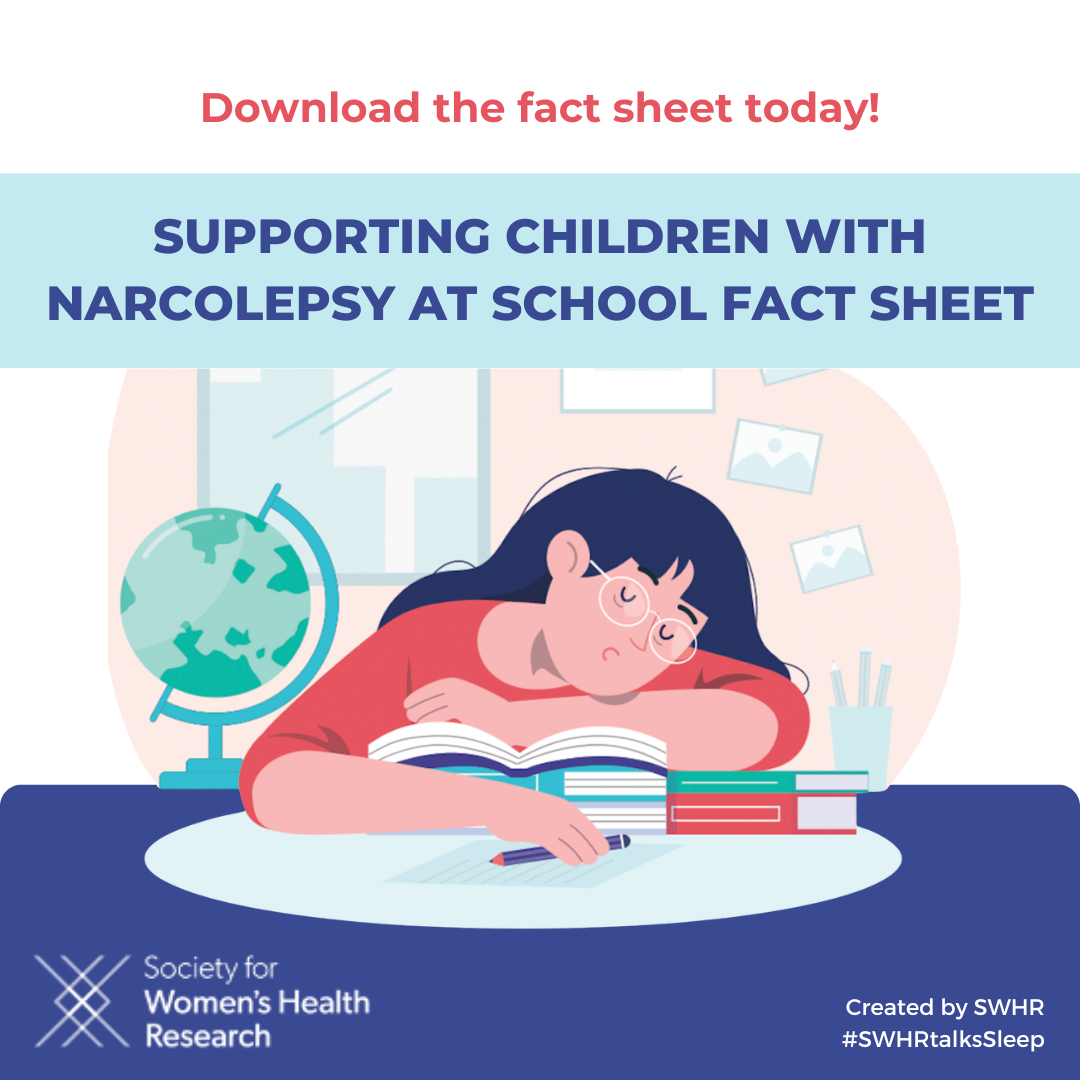
Narcolepsy is a chronic disorder that is often misinterpreted in children as laziness or lack of motivation. Teachers can mistake symptoms as behavioral or cognitive problems.
The Supporting Children with Narcolepsy at School Fact Sheet is designed to support caregivers as they navigate reasonable narcolepsy accommodations and care for their families.
| | Read more about sleep on our blog! | |
NEWS AND RESEARCH
SWHR Working Group members have produced and/or shared the following news, research, and resources related to sleep:
News and Research
-
Cephalalgia: The prevalence of hypnic headache in Iceland, submitted by Dawn Buse, PhD
-
Climacteric: The role of lifestyle medicine in menopausal health: a review of non-pharmacologic interventions, submitted by International Menopause Society
-
Headache: Sleep Disorders Among People With Migraine: Results From the Chronic Migraine Epidemiology and Outcomes (CaMEO) Study, submitted by Dawn Buse, PhD
-
The Journal of Headache and Pain: Comorbid and co-occurring conditions in migraine and associated risk of increasing headache pain intensity and headache frequency: results of the migraine in America symptoms and treatment (MAST) study, submitted by Dawn Buse, PhD
-
Journal of Neurology: Risk factors for migraine disease progression: a narrative review for a patient-centered approach, submitted by Dawn Buse, PhD
-
Neuroscience and Biobehavioral Reviews: Concerning the circadian rhythms of prolactin, its secretion timing, and regulation of the affiliative mind, submitted by Michael A. Grandner, PhD MTR DBS, University of Arizona College of Medicine
| | |
Events and Resources
-
Event Recording: The Benefits of Proper Sleep Hygiene by Shelby Harris, PsyD, DBSM, submitted by Tammy Anderson, Wake Up Narcolepsy
-
Resource: babysleep.com, a publicly available website created by the Pediatric Sleep Council that provides sleep advice for parents of infants and toddlers. The site is available worldwide and in 18 languages. Submitted by Erin S. Leichman, PhD, NCSP, DBSM, & Jodi Mindell, PhD, Saint Joseph’s University
-
Resource: Making sleep testing more equitable and accurate with advanced, gender-sensitive technology, submitted by Jason Ong, PhD, Nox Health
-
Resource: Sleep Apnea is Underdiagnosed in Women. Here’s Why., submitted by Jason Ong, PhD, Nox Health
-
Resource: Sleep Habit Tracker, submitted by Tammy Anderson, Wake Up Narcolepsy
| |
SHARE ON SOCIAL MEDIA
Join us on social media and amplify the conversation on sleep health and hygiene research. Follow #SWHRtalksSleep to learn more!
| | |
Children with #narcolepsy often are misinterpreted as lazy or unmotivated in school.
Let's find ways to help families and caregivers support kids with this chronic condition,
as they navigate reasonable accommodations and care. Learn more in SWHR's Supporting Children with Narcolepsy at School Fact Sheet: https://ow.ly/7H7L50Xh6em
#SWHRtalksSleep
| | |
It's time to #FallBack for #DaylightSavings. As the clocks change, don’t forget your #SleepHealth.
Sleep disorders are global public health issues that are often unrecognized, under-reported, and incur high economic burden.
Learn more about sleep health and sleep hygiene by exploring SWHR's FREE, science-based resources: https://ow.ly/ti2h50Xh6eB
#SWHRtalksSleep
| | |
#DYK? Women and men are equally affected by #narcolepsy, but women wait up to 12 years longer for an accurate diagnosis.
#SleepHealth is #WomensHealth! As we approach #DaylightSavings, check out SWHR's narcolepsy resources to learn more: https://ow.ly/LjGN50Xh6eS
#SWHRtalksSleep
| |
PARTNER SPOTLIGHT
Our work is only possible with the help of great partners. Check out one of our sleep partners here!
| |
American Academy of Cardiovascular Sleep Medicine
The American Academy of Cardiovascular Sleep Medicine (AACSM), is a not-for-profit health care-related organization based in Greenville, North Carolina. It is dedicated to advancing the knowledge base of healthcare professionals, patients and the public focused on the convergence of cardiovascular disease and sleep disorders. Guiding the work of the AACSM is the awareness of the negative impact of sleep disorders on cardiovascular health. Their basic philosophy maintains that risk factor modification and reduction can be accomplished through proper diet, exercise, healthy sleep as well as traditional medical treatment.
The Academy endeavors to educate healthcare practitioners on the interrelationship between heart disease and poor sleep, to align cardiology and sleep practices into one coordinated care philosophy.
| | All SWHR resources are free to view and share. Here's why: 9 in 10 women with sleep apnea are not properly diagnosed. | | | Did someone forward you this email? Looking for more news on women's health research? | | | | | |