Dear Colleagues,


Today marks the official start to Fall and there is no question that the days have grown shorter and cooler (although parts of the country are still sweltering and there may be more to come). This week brought Yom Kippur, the Day of Atonement, for our Jewish colleagues. This day stands as the holiest in the Jewish calendar. Its mood of reflection, reverence, and atonement feels aligned with the mood of the changing seasons and of our troubled world. 

Looking ahead, next week brings another reminder of the impact of the changing seasons with the festival of Michaelmas (the festival day is September 29; the mood of Michaelmas extends for some time). This ancient celebration has its origins in early Christianity, although its themes of gratitude for the harvest and the gifts of the earth, courage, and overcoming internal and external darkness feel very much needed and contemporary. Michaelmas has long been a part of many Waldorf schools’ festival celebrations, in part a reflection of our mid-European origins (note that it is not required!). Many of our Public Waldorf schools have adapted it to clearly demonstrate one of its major purposes, courage in the face of the unknown or when confronting adversity. It is a celebration of resilience, strength, and trust; a modern-day recognition of the importance of grit. The dark forces are typically represented by a dragon (this would be inappropriate in many Asian cultures, where the dragon represents wisdom and positive power). Often named a festival of courage, celebrations may include short plays, games and feats of courage, song, and the vanquishing or taming of a dragon. If we are lucky, the day might include a slice of delicious dragon bread! (Google for a range of recipes if you would like to explore this.) Over the years, as with any recurring festival, our young people anticipate their class role and look back at where they have been. They recognize and affirm the light that shines within each one of us, even when faced with danger or troubling times. Meaningful community and connections feel really important right now - may your inner light shine brightly. Firmly on the earth we stand! 


Wishing you golden light as days draw in,


Liz Beaven

Executive Director


Alliance Core Principles

Our Core Principles stand at the heart of our work of bringing the impulse of Waldorf education into a wide range of public schools. They form a platform of shared intentions and goals, uniting us as a network of 60 schools across the country. Given their importance, we plan to give attention in our E-news to one Principle each month from October to April this year to help build understanding and to provide tools for individuals and schools for ongoing professional development and school growth. For this week, we are placing the Principles in context and briefly describing some of the varied ways our schools are working with them and bringing them to life. 


The Alliance Core Principles were preceded by international work by the Hague Circle. As Waldorf education spread to more countries, this circle of international leaders wished to define what stands at the heart of the education, recognizing that practice and implementation will vary based on local needs and conditions. The Pedagogical Section Council of North America took up this work, developing a set of Principles in an attempt to build common ground between the established independent school movement (AWSNA) and the growing public school movement during a period of discord and arguments over the right to exist and use of the term “Waldorf”. From this work, AWSNA and the Alliance went on to develop their own Principles. To complete the picture, our colleagues in early childhood (WECAN and Lifeways) also developed sets of working principles. As might be expected, there is considerable overlap, with commonalities between these organizations, along with some distinct differences.


Our Core Principles help schools identify and clarify their mission, their knowledge, and their plans for continued growth. We developed a self-study and peer review process that provides a framework and support for a school to examine its stage of development in Public Waldorf education and its alignment with the Principles. The self-study can address 3 or all 7 of our Principles (in either case, it begins with getting familiar with all of them. A decision is then made based on the resources and capacity of the school). The process is formative, highlighting strengths, challenges, innovations (there are so many great innovations in our schools!) and action plans for the next 24-36 months. The process involves study of the Principles, creation of a report, a site visit by a team of peers, review by a membership committee that includes a representative from AWSNA (this ensures we remain compliant with our service mark responsibilities) and final approval by our Board. Schools that successfully complete this process are recognized as full member schools in good standing. They are awarded a sub-license for use of the term Public Waldorf. They address the items they identified in their action plan - and then take up the process again, ensuring that Public Waldorf education is “ever evolving, and continuously renewed through practice, research, observation, and active reflection”. In many ways, the school self-study and peer review process is a mirror of excellent classroom teaching principles and practices. 


Completion of the process, or being in progress, affords recognition of the school’s approach, public assurance, and the service mark sub-license. 


Our new position, in process and hopefully to be announced soon, will dramatically increase our capacity to provide support to schools undertaking this process. It is truly core to our work. Feedback from schools that have engaged in the process has been universally positive; schools have found the deep reflection and review by peers to be affirming and supportive of ongoing development. 

Indications and Principles


An Update from the Alliance Board of Directors


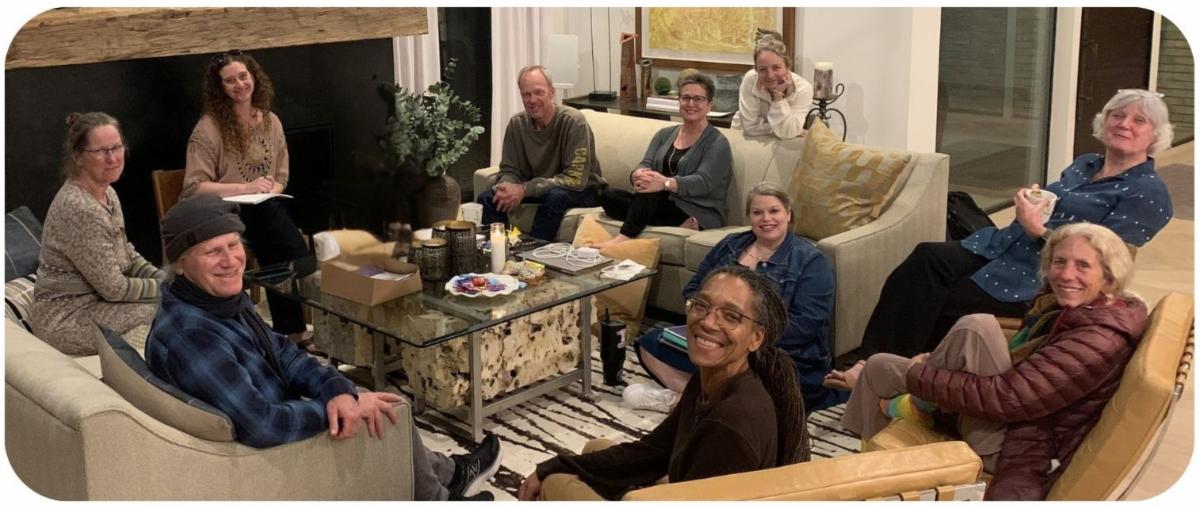
Before there was an Alliance, there was a conference and an informal group of visionary individuals with a deep commitment to expanding Waldorf education into public schools. Many of them went on to form our first Board of Directors. This is work that is truly built on the shoulders of volunteers. Today, the Alliance Board continues that tradition and has been very busy with our collective work. After an intensive, facilitated strategic planning process last Spring, the Board has been meeting monthly to support the forward motion of our major strategic goal areas (Membership and Self Study; Professional Development; Institutional and Financial Stability; Governance and Capacity; Advocacy and Partnerships). There has been progress in each area, including the decision to add a second director position to better serve our schools (more to come on that very soon), and exploration of models for teacher education. As part of our “Governance and Capacity” actions, we are reviewing and, where necessary, revising our Bylaws (many thanks to Cassandra Bridge for her work and recommendations on this; they will be considered at the October Board meeting) and have also examined our Board membership cycle.


In accordance with our Bylaws, we have changes to the composition of the Board, with some members completing their terms and others being invited to join. We will report on these changes after the October meeting and plan to honor the cumulative decades of contributions and experience of departing Board members at our January conference. 


We are deeply grateful for the commitment and work of every member of our Board of Directors.

Alliance Board Retreat 2026


Save the Date!

2027 Alliance Annual Conference


January 15–17, 2027 | Ocean Charter School, Los Angeles, CA


We encourage our community to begin planning and budgeting now to join us for this important gathering.


Was this newsletter forwarded to you?


Subscribe here to receive the Alliance’s bimonthly e-newsletter.


For more information:


Liz Beaven, Executive Director 

Carly Fedor, Administrative Assistant


Alliance for Public Waldorf Education

40 4th St., # 274

Petaluma, CA 94952


PublicWaldorf.org

Public Waldorf is a service mark of the Association of Waldorf Schools

of North America and is used pursuant to a license.


STAY CONNECTED

Facebook  Instagram