Dear Colleagues,


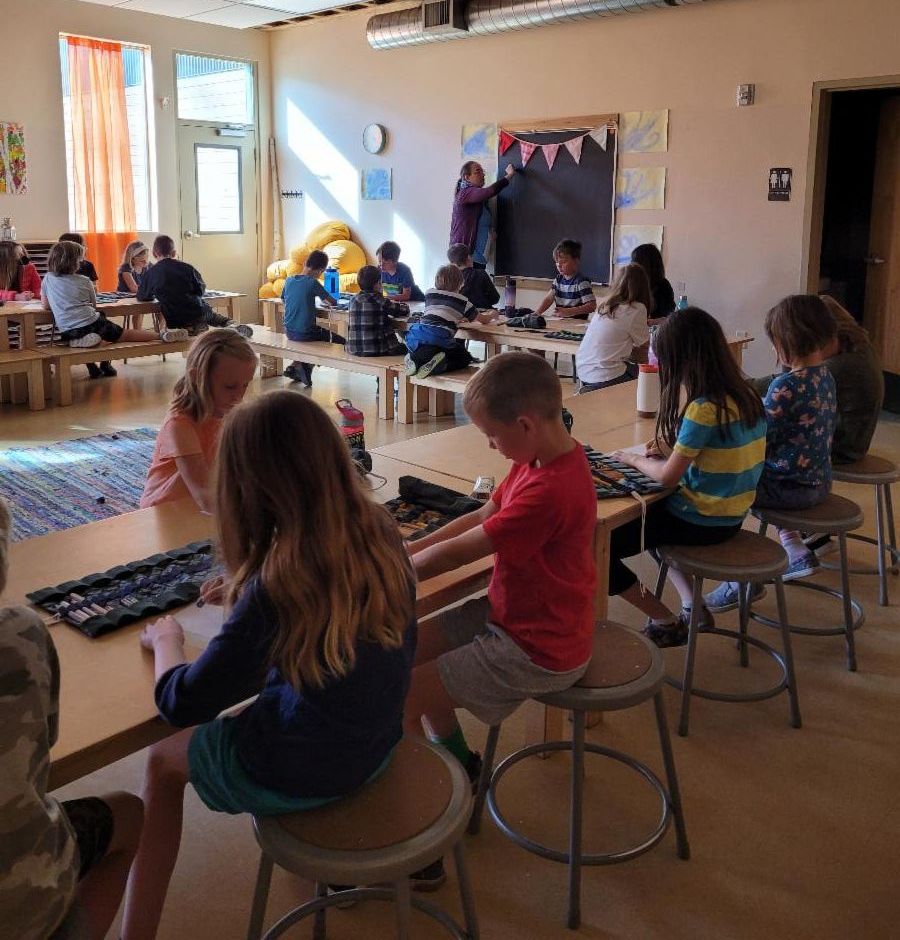
In these challenging times, it can be difficult to maintain our focus and attention on what is most needed, and most important. Many matters present themselves as urgent; things are coming at us at a rapid rate and from many directions. We know that, in tumultuous times such as these, our schools are havens of peace and routine in many of our students’ and families’ lives. Thank goodness for the energy of children, for schools that are communities, and for the deeply purposeful, meaningful work that we are all engaged in every day. 


We can list many, many gains for our students simply by being at school. The challenge is that we need them to be there to benefit. Attendance is a very significant challenge, identified in every school I visit and by every school leader I speak with. Public Waldorf schools are not alone in this; research shows that absenteeism nearly doubled across all schools after the pandemic and remains at high levels today. For a variety of reasons, a “school optional” mindset has taken hold. Absences may be the result of families under stress, a lack of resources, the needs of parents, or the wishes of the student. It may arise from a privileged position of new possibilities offered by parents working remotely or from the need for children to take on adult responsibilities. Whatever the cause, the results are the same; excessive absences have an impact on the individual student and on the social and learning environment of the class and school. In California and a few other states, the impact is also financial as funding is based on average daily attendance. 


Timely attendance is a related issue, reported as a significant problem in most schools. Along with “attendance optional,” we have a mindset of “start time is suggested or approximate.” Again, this represents a very significant shift in attitudes towards schools, with an impact on the individual child (late slips! Entering the classroom once things have started! Missing the opportunity for informal socializing before class starts. Missed content, instructions, or an overview of the day.) and the rhythm of the class. It is frustrating to embark on the all-important opening of the day and its carefully planned opening activities with only part of the class present. It is also striking how often we plan an activity or content with a particular student in mind only to have them arrive late that morning (to say nothing of planning a parent discussion around a topic of concern, only to find ourselves speaking with those who already understand the issue!).

We all recognize and lament the problem. We need effective partnerships with parents—ways to inform, encourage, support, educate, and persuade parents on the importance of attendance and timeliness. Effective, lasting solutions are proving to be elusive, but absenteeism has led to some creative approaches. We see friendly contests for the class with the highest attendance; traditional certificates or recognition for perfect attendance; pleas to parents, explaining the impact of absenteeism and tardiness—all with some impact but none presenting a true solution. Absenteeism and tardiness may in fact be part of wider changes we are seeing in schools, including the rise in home-schooling and the emergence of micro-schools and “pods,” small groups of families banding together to provide alternative schooling for their children. These impact schools, as we know them, but only provide options for the few. We also see schools responding with hybrid or flexible models: home-school support programs, hybrid models, schools within schools, and even fully virtual options. All of these are currently offered to some extent by Alliance schools. 


It is too soon to know whether we are witnessing a profound change in the life and form of schools. Meanwhile, we will continue to make our case to parents: we provide tremendous value to your child, we are essential partners in their healthy growth and development, their social and emotional growth happens best with peers and trusted adults, and we need you to get your child to school regularly and on time. We will happily share approaches that you have found are effective; here is one resource that has been recommended, with research, suggested language, and materials. It is a good starting point as we continue to attempt to address this core issue. https://www.attendanceworks.org/


As we face this issue, and the many other challenges of today, may courage and inner light be with you. Many of us are engaged in festivals of courage over the next week—may they bring us strength and reminders of the power of community and the creativity, flexibility, and courage we all carry within.


Warmly,


Liz Beaven

Executive Director


For more information:


Liz Beaven, Executive Director 

Carly Fedor, Administrative Assistant


Alliance for Public Waldorf Education

40 4th St., # 274

Petaluma, CA 94952

Public Waldorf is a service mark of the Association of Waldorf Schools

of North America and is used pursuant to a license.


STAY CONNECTED

Facebook  Instagram