|
Dear Colleagues,
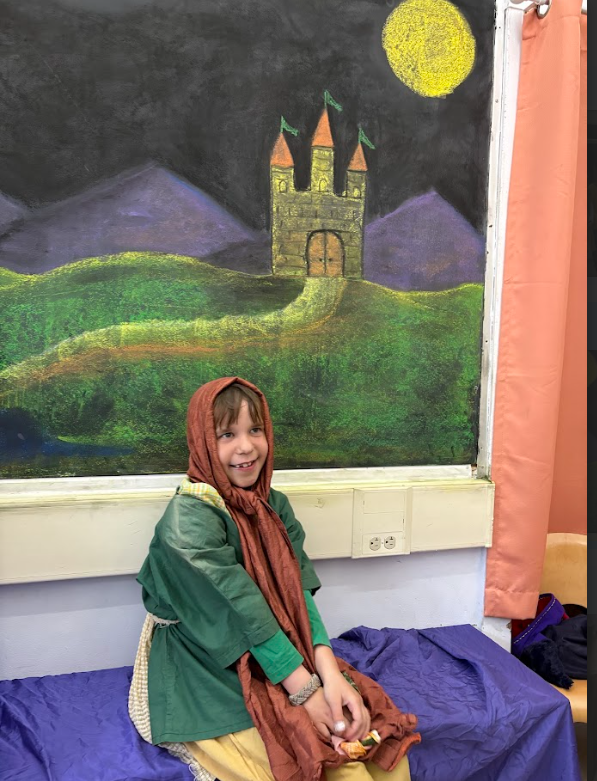
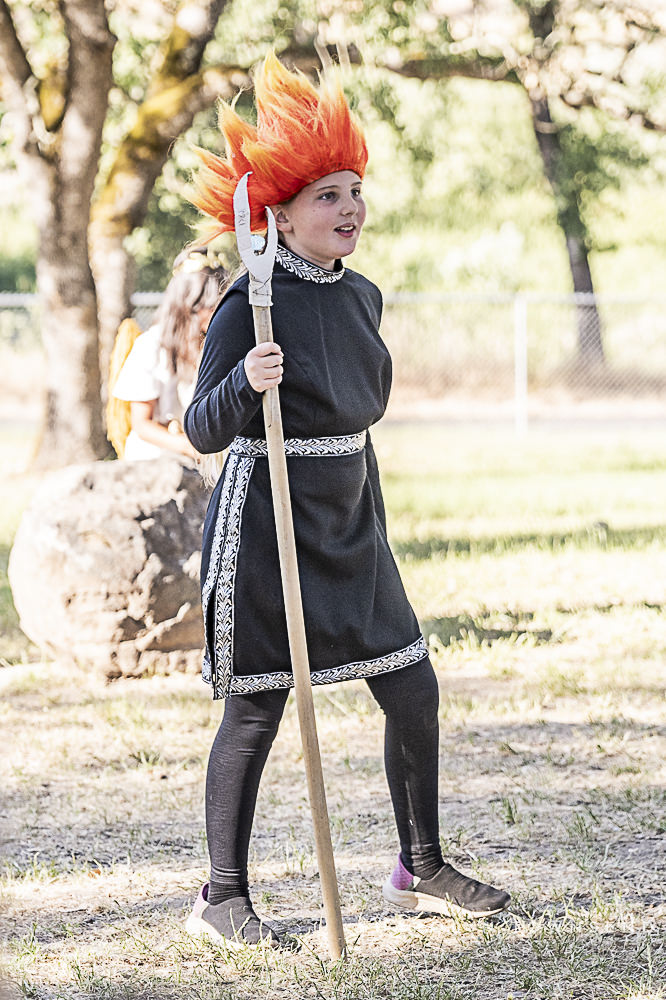
We are entering play season in schools! Over the past couple of weeks, I had the great good fortune to attend a grandson’s 4th grade play and to observe several classes in various stages of rehearsal for their upcoming class plays. Kudos to my grandson’s class and teacher for their lively, clever, and funny portrayal of a Norse myth; they set me reflecting on the important role of drama in Waldorf education.
Although class plays are not a requirement of Public Waldorf, they are a highly valued, effective approach to teaching and learning and provide strong support for our students’ social-emotional development. Drama starts early in Waldorf education with the simple reenactment of stories in early childhood - or through puppet shows that tell and retell stories and nursery rhymes. Like most things, drama follows a developmental path, moving from imitation in kindergarten to choral speaking by the whole class in first grade, to increasing differentiation into individual parts and characters to full, complex dramas by 8th grade and beyond. Participation in any part of this journey is capacity- and health-building for our students.
| |
Why are class plays so effective, and why are they worth our precious "instructional time”? We can start with what they are not: “performances”, shows, or entertainment in any traditional understanding of those terms, although the children will probably perform for audiences and their plays are often very entertaining. This echoes the message about storytelling from our January conferences; in Waldorf education, we are not there to entertain, despite the fact that at times we may feel like the director of a three-ring circus! Rather, it is engagement in the process that matters much more than the product; it is the child’s inner experience that really counts.
Class plays provide an opportunity for our young people to try out different characters and characteristics. They have the freedom to adopt and explore a different identity, more important than ever in an age where questions of identity can be complex. They include costumes - even if just a simple piece of cloth, a hat, or a prop. The students experience the excitement and challenge of slipping into something “other.” In case we doubt this, just picture the joy of a young child putting on an adult’s shoes. Drama literally provides this opportunity - to step out of oneself and assume a different character - and by doing so, to build a deeper understanding of the self.
Class plays work in harmony with our three pillars of thinking, feeling, and doing or willing - the heart, head, and hands are engaged. At the important level of the will, they epitomize many of the lessons that the arts teach: perseverance, repetition (learn those lines! Follow directions then add your unique self! Understand where you need to be, when!) They likely include the irreplaceable gifts of periods of boredom during rehearsals when it is not “my turn,” service to classmates, and a degree of failure. Maybe it was a reflection of my lack of skill as a teacher, but in my experience class plays always fell apart before they came together!
Plays also activate the feeling life and imagination, partly through engagement with one’s character and with the story. They invite expression and emotion. Along with emotional engagement, they also support social development. Relationships are key, whether all speaking together in chorus or waiting while other characters take their turn. Classmates support one another through rehearsing together, helping with props, scenes, and costumes, whispering cues as needed, and appreciating collective and individual work. You cannot produce a play without a high level of cooperation; drama is a team sport. As they get older and parts become more individualized, our students literally play off one another, exploring timing and humor, and gauging audience response. In addition to characters, class plays are a marvelous forum for expanding cultural knowledge through plots and characters from a wide range of cultures. At the individual level, drama builds confidence and courage - stepping out on stage is not so easy, yet we see a steady increase in capacity. As with so many other things, teachers choose parts for students that are within their ability yet stretch them a bit. They gain skills in public speaking, clarity of speech, and voice projection. The fruits of this are on display at eighth grade or high school presentations. The class play can be a forum for miracles: the shy, withdrawn student who suddenly emerges through taking on a character.
| | |
Some schools have the resources and staff to take on drama clubs; these, and our upper grades and high schools, take drama to new levels of intricacy and ability. Plays become a gift to the audience who can marvel at the students’ work, laugh at their humor, and be moved by the story. The immortal bard fully understood the power of words and action to move and persuade: “The play’s the thing, wherein I’ll catch the conscience of the king”. Hopefully at some point in the upper grades, students will encounter Shakespeare’s way with words.
As we head fully into Spring, may you enjoy the beauty of nature as it unfolds and the power of drama as our students demonstrate the fruit of their hard work (unless their teacher was smart enough to schedule the class play much earlier in the school year!) Play on!
Liz Beaven
Executive Director
| | |
Yes, Public Waldorf Can: Credo High School is
Recognized as a California Distinguished School!
We are delighted to inform you that Credo High School in Rohnert Park, Northern California, has been recognized as a California Distinguished School. This is a repeat for Credo (previously recognized in 2021) and places the school as one of only 408 middle and high schools state-wide that were acknowledged “for their efforts to move the needle for student achievement, no matter what. An excellent public education has the power to transform lives. This year’s California Distinguished Schools represent the hard work of our middle and high school educators and school staff, who provide our secondary students with life-changing educational opportunities.” Only 5 to 10 percent of schools across the state receive this distinction, which lasts for two years. Such recognition of student achievement and support for underrepresented students benefits all of us, showing that Public Waldorf achieves results! Warmest congratulations to school director Andrea Akmenkalns and everyone at Credo for this significant achievement and for the hard and continued work it represents!
| | | | Credo is a thriving high school with around 480 students; it continues to innovate within the often restricted space of high school education to meet the needs of its students. Learn more about Credo: https://credohigh.org/ | | |
Alliance Summer Professional Development
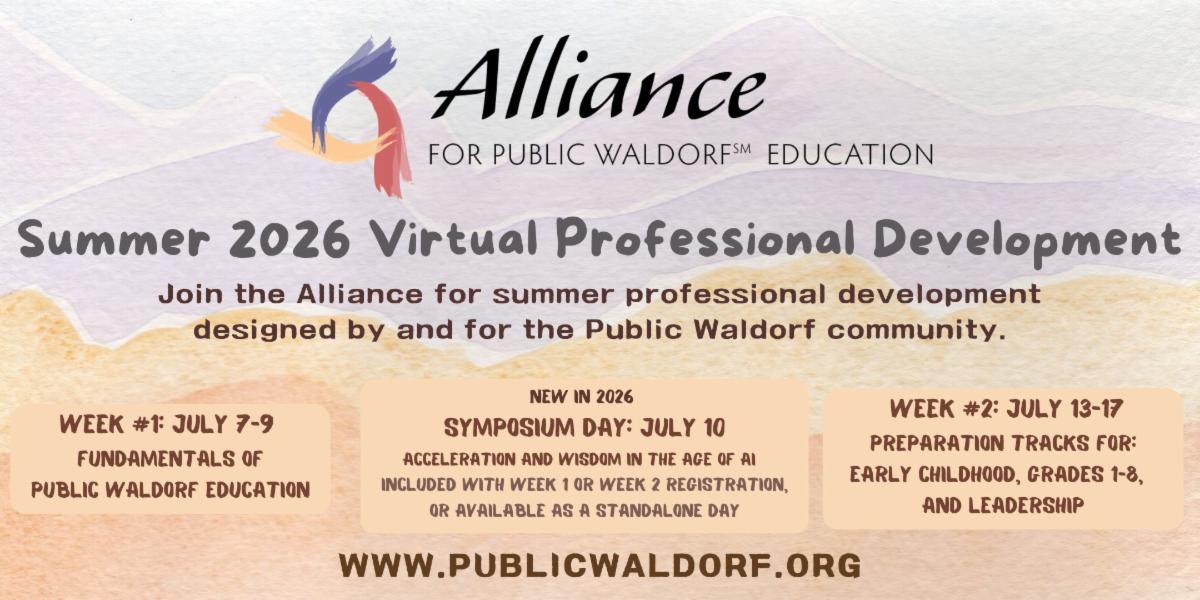
Save the date for our annual online professional development series! Our professional development will be offered over two weeks:
Week I, July 7-9 (Note this is Tuesday-Thursday): Fundamentals of Public Waldorf Education. These introductory sessions are designed for those new or fairly new to Public Waldorf: they provide an overview and framework of our work and an essential understanding of our Core Principles.
Week II, July 13-17: Early Childhood, Grades 1-8, and School Leadership. These sessions will help you to develop a deeper understanding of early childhood or a specific grade and to prepare for a new school year. They are provided for Public Waldorf school teachers by Public Waldorf school teachers: experienced educators who understand the unique possibilities and challenges of a Public Waldorf classroom. Our leadership track is available to anyone in a school leadership position; it will be informative about current issues, explore best practices, and provide opportunities for networking and exchanges with peers.
New this year: a one-day symposium, Acceleration and Wisdom in the Age of AI. Friday, July 10. Join us to explore a topic of great significance for education today. We are excited to provide this event as a bonus for anyone participating in Week I or Week II and, given widespread interest in and timeliness of this topic, will be available as a one-day event for anyone.
The Symposium will include a keynote address by Ben Klocek, discussion, and workshop opportunities. Ben’s talk will invite us to consider what it means to educate the human being in a time of rapid change. As technology amplifies our capacity to act, feel, and think, how do we cultivate balance, depth, and discernment? Along with us, Ben will explore how the rhythm of the school day, movement, art, and thoughtful engagement, can support the development of grounded, integrated, and wise human beings in an age of acceleration.
Ben Klocek is known to many of us: he is a web designer and teacher, and a Sacramento Waldorf School alum. He has worked in technology for more than 20 years while studying how screen use shapes our lives. For over seven years he taught technology and woodworking at a Public Waldorf charter school.
Ben is the father of two children, ages 14 and 17, and enjoys spending time as a naturalist, artist, and gardener.
More details will follow soon. Save the date!
| | |
Public Waldorf is a service mark of the Association of Waldorf Schools
of North America and is used pursuant to a license.
| | | | |