|
Dear Colleagues,
The school year is sunsetting! There are very few schools still in session, many others are in meeting and report mode, and a few have by now left 2025-26 far behind them. We have enjoyed seeing glorious pictures of graduations, advancements, fly-aways, rainbow bridges, and the many, varied ways we have marked the remarkable growth and development of our students (and, perhaps, reflected on what they have taught us and how we have grown alongside them!)
This is our final E-News for the summer; we will now let it rest until September. My mind has been wandering over the many highlights, school successes, dialogues, deep questions, laughter, and collaboration from these past months. What a privilege it is to work alongside all of you; so many people of good heart, furthering our mission to bring the impulse of Waldorf education into public schools so it may exist more broadly in this country, continue to innovate, and creatively adapt to changing conditions. You are the ones who are doing this work - in the words of the Hopi Elder, we are the ones we were waiting for, and I can’t thank you enough.
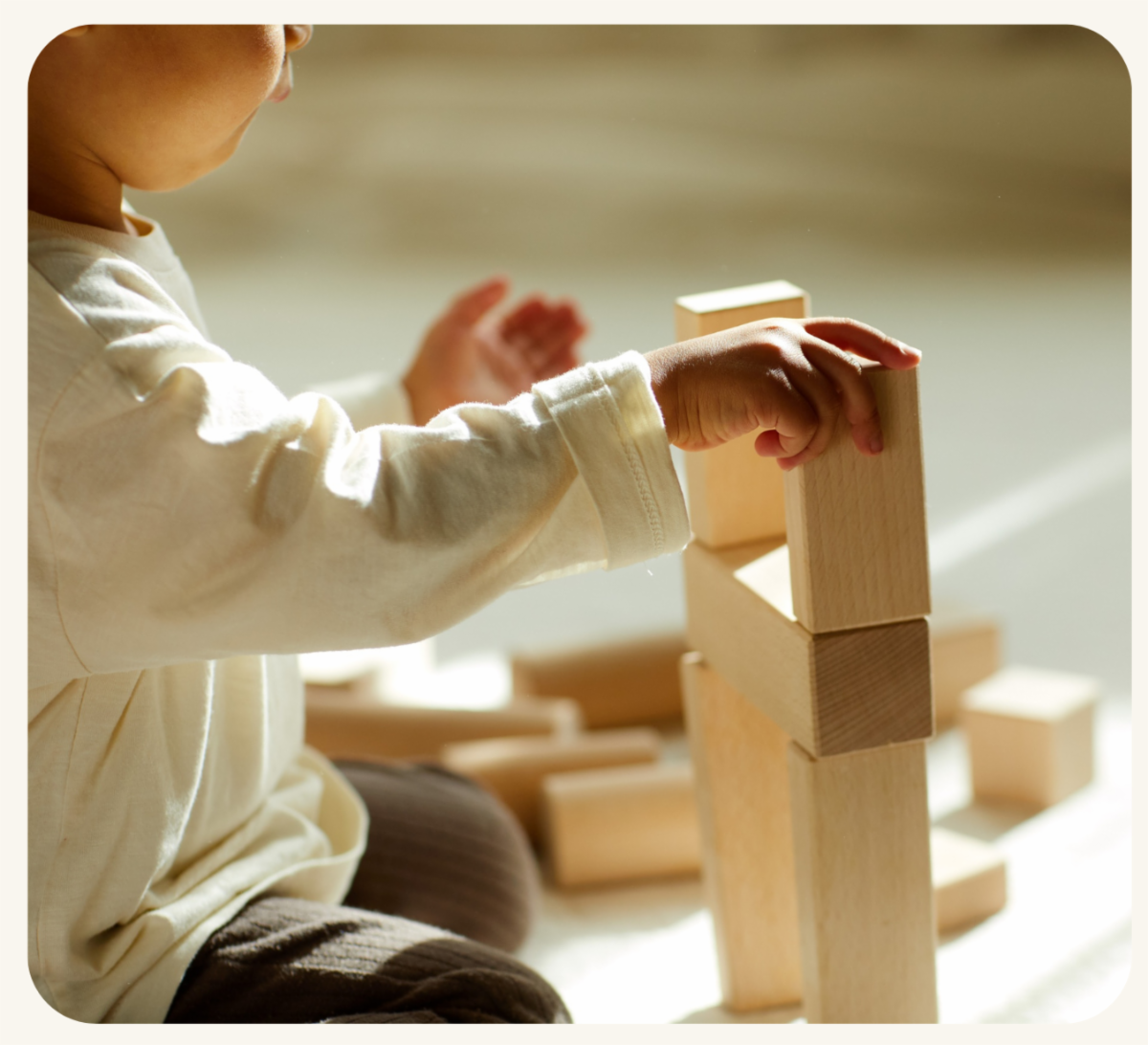
In addition to profound gratitude, my mind has also been on an unlikely topic, blocks. Not main lesson blocks, the ones you might expect in this context, but old-fashioned, wooden building blocks that were hopefully a part of your childhood. I was in a sobering conversation with a group of educators recently and learned that blocks are disappearing from early childhood classrooms. Once, they were a fixture of first grade classrooms (perhaps you are old enough to remember this). With the encroachment of early academics, they disappeared. Then, they were removed from many kindergartens, no doubt to free up “instructional time” for more academics. I asked why they were being removed from preschools and the answer shocked me. Children, and in many instances, their teachers, don’t know what to do with them! If things don’t magnetize, lock and click, or, even better, flash or make sounds, they are a mystery. Think of all the lessons blocks teach: balance, imagination, creativity, cooperation, problem-solving, failure and perseverance, engineering, the impact of gravity, the possibilities of doorways and bridges, team-building - the list is long. The thought of children not knowing what to do with blocks is profoundly disturbing, and reinforces the urgent need for our work. The “obvious” answer is what is happening, get rid of these pesky objects; the wise answer is to stand firm for protecting and developing children’s right to play, to create, and to imagine. In an age of AI, this is needed more than ever. Stand up for blocks and all that they represent!
| | |
This “block deficit” problem will be part of our exciting symposium, to be held on Friday, July 10, with our keynote presenter, Ben Klocek, and other experts. Join us! (You surely knew I would get to our upcoming professional development!) Our early childhood sessions will support you in defense of blocks and play, with an emphasis on integrative movement, creativity, imagination, story, and how to address academic requirements without tossing out the blocks. Of course, our Fundamentals week will provide essential building blocks for all of those newish to Public Waldorf. Consider inviting friends, parents, that homeschooling family from Little League… Our block crusade is open to all! From first grade through eighth grade, our fantastic presenters will provide guidance on main lesson blocks - their purpose, form, and developmental content - and will also emphasize the continued development of imagination and the ability to freely and independently create. Our afternoon arts sessions will further add to our tower, as the arts and crafts are essential elements of a Waldorf approach. Pull them out, and the tower collapses. Finally, our leadership sessions will address the need for solid building materials - blocks of varying shapes and sizes to ensure that our schools can grow and thrive.
Our Compass site is now open, with many thanks to Melanie Medina and her can-do work. Here, you can dig in more to the many gems that will be offered from July 7-17. We are thrilled by what our presenters will be bringing.
Meanwhile, in addition to my usual advice and hope that you can get outside and have your feet on the earth, I hope you can find a kid, some wooden blocks, and spend some time building.
Have a wonderful summer! May it be restful and renewing.
Liz Beaven
Executive Director
| | |
Visit our Summer PD Compass website
to view our schedule, presenters, and more!
| | |
2026 Summer Professional Development Dates:
Week #1: July 7–9 | Fundamentals of Public Waldorf Education
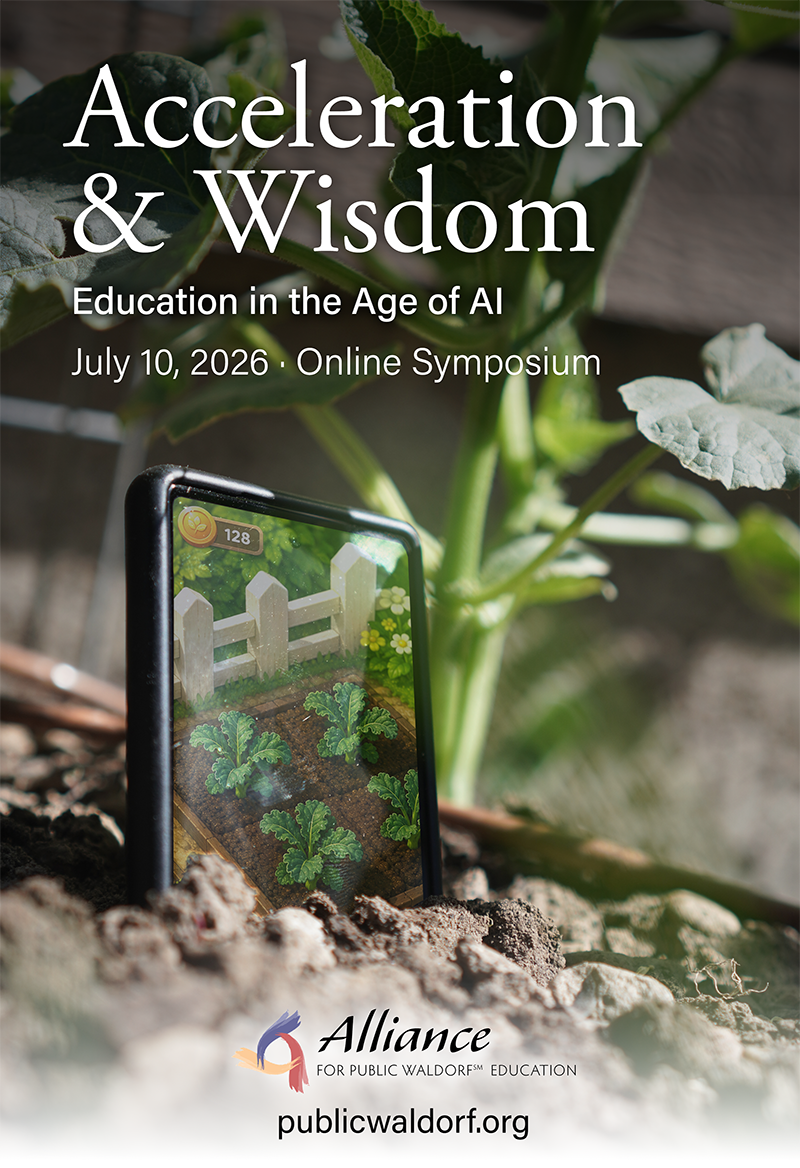
Symposium: July 10 | Acceleration and Wisdom in the Age of AI.
Week #2: July 13–17 | Preparation Tracks for:
- Early Childhood
- Grades Cohorts for Grades 1–8
- Leadership
2026 Summer Professional Development Pricing:
Symposium Only: Alliance Member: $60 | Non-Member: $75
Week #1: Alliance Member: $250 | Non-Member: $315
Week #2: Alliance Member: $410 | Non-Member: $515
Both Weeks: Alliance Member: $525 | Non-Member: $660
Single Session: Alliance Member: $40 | Non-Member: $45
School Rates :
-
Week #1: 3–5 attendees: $600 | 6–9 attendees: $1,200 | 10+ attendees: $2,000
-
Week #2: 3–5 attendees: $985 | 6–9 attendees: $1,970 | 10+ attendees: $3,280
-
Both Weeks: 3–5 attendees: $1,260 | 6–9 attendees: $2,520 | 10+ attendees: $4,200
| | |
Symposium
Acceleration and Wisdom: Education in the Age of AI.
| | | | |
Friday, July 10, 2026
The Symposium will include a keynote address by Ben Klocek, discussion groups, and a moderated panel discussion. Ben’s talk will invite us to consider what it means to educate the human being in a time of rapid change. As technology amplifies our capacity to act, feel, and think, how do we cultivate balance, depth, and discernment? Along with us, Ben will explore how the rhythm of the school day, movement, art, and thoughtful engagement, can support the development of grounded, integrated, and wise human beings in an age of acceleration.
| | |
Public Waldorf is a service mark of the Association of Waldorf Schools
of North America and is used pursuant to a license.
| | | | |