PacIOOS Tools and Services | | |
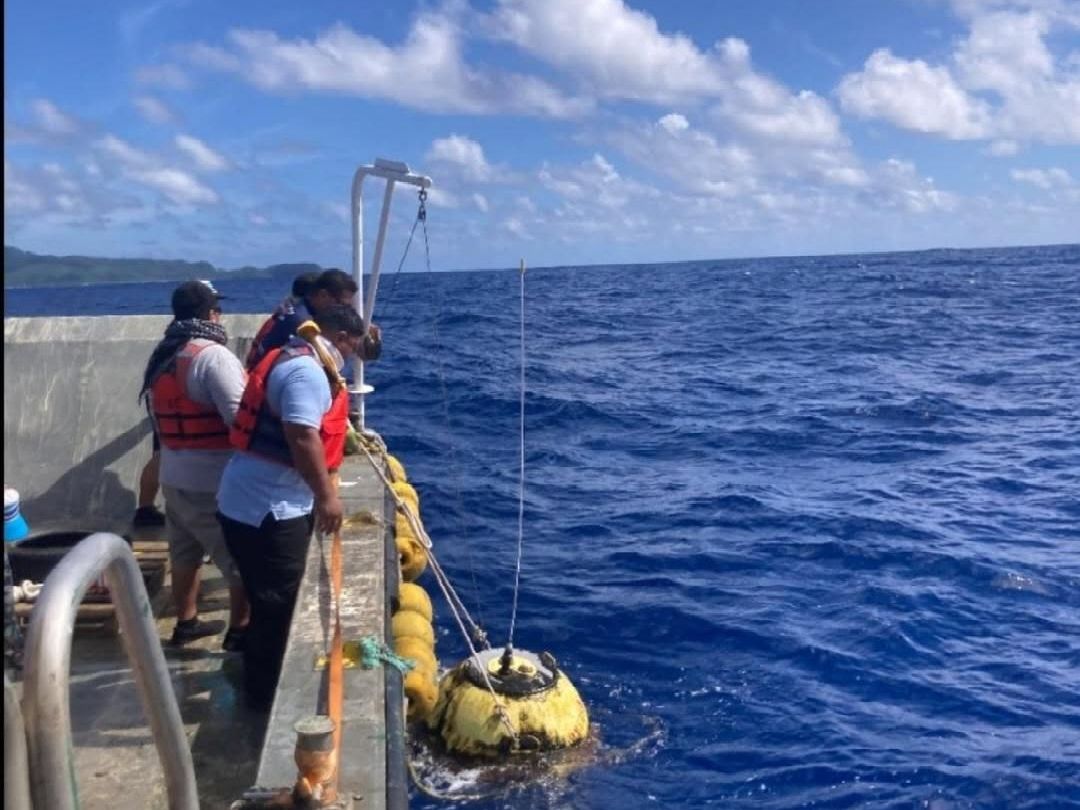
The PacIOOS wave buoy off Aunu'u Island in American Samoa has been swapped out for a newly serviced buoy to continue providing vital ocean data! Wave height, period, and direction are transmitted every half hour, and sea surface temperature is transmitted in real-time. These data are used not only to enhance the safety of ocean travel around American Samoa, but also to inform meteorological forecasts and atmospheric models, as well as wave forecasts and models, including sea level rise and inundation models. Sea surface temperature is a valuable tool for monitoring the health of the coral reef ecosystem.
MAHALO to the American Samoa Department of Port Administration, the National Park of American Samoa, UH Sea Grant, the American Samoa Department of Marine and Wildlife Resources, the National Marine Sanctuary of American Samoa, the American Samoa Coral Reef Advisory Group, and Industrial Gas for working together to coordinate the buoy swap! It takes a dedicated community to keep ocean data flowing seamlessly!
The Aunu’u wave buoy is owned and managed by PacIOOS. The NOAA Coastal Storms Program (CSP) provided the initial funding to purchase this buoy. Data are managed by the Coastal Data Information Program (CDIP) at Scripps Institution of Oceanography of the University of California, San Diego (UCSD). Long-term partnerships between PacIOOS, the U.S. Army Corps of Engineers (USACE), and CDIP enable data streaming into the PacIOOS website and PacIOOS Voyager. [Photo: Wave Buoy swap team with the old buoy. Credit: American Samoa Department of Port Administration]
| | Palau Wave Forecast Now on PacIOOS Website | |
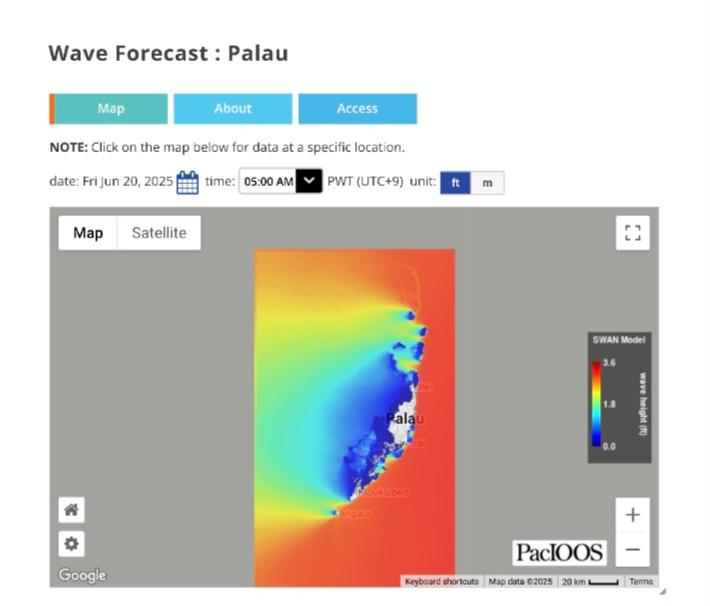
 | | The Palau Wave Forecast is now available on the PacIOOS website! The Simulating WAves Nearshore (SWAN) model is a 14-day, hourly forecast for the region surrounding the Republic of Palau at approximately 275-m resolution. The forecast is run daily and is updated on the website around 8:15 AM Palau Time (UTC+9) every morning. This high-resolution wave model helps capture shallow water effects and nearshore coastal dynamics such as refracting, shoaling, and shadowing to provide a general indication of the nearshore environment. Model runs are configured and produced by Dr. Ning Li, in consultation with Dr. Kwok Fai Cheung, both from the Department of Ocean and Resources Engineering (ORE) within the School of Ocean and Earth Science and Technology (SOEST) at the University of Hawaiʻi at Mānoa. Model development was funded through the United Nations Environmental Programme Green Climate Fund as part of a larger project to enhance climate resilience in Palau. [Image: Palau Wave Forecast. Credit: PacIOOS]
| | Pacific Ciguatera Network in American Samoa | | |
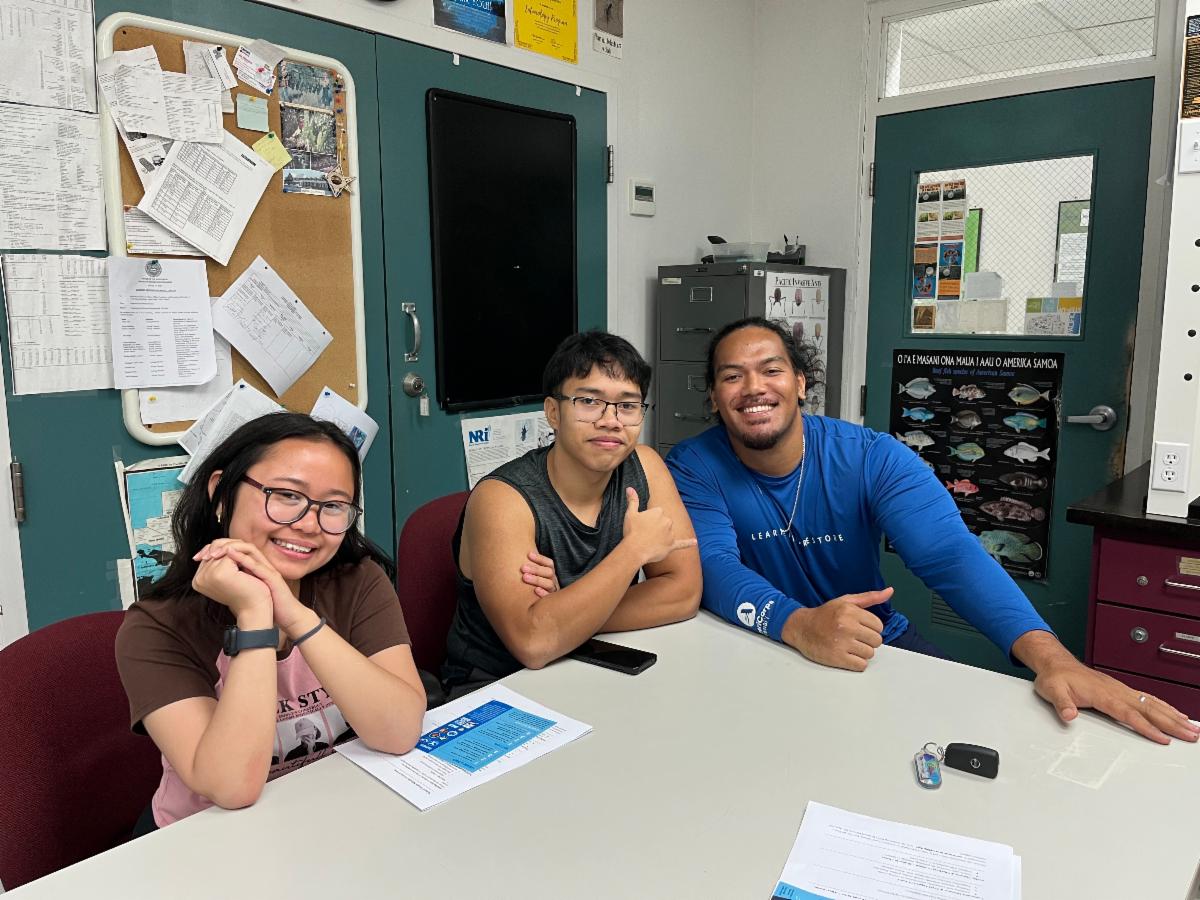
The Pacific Ciguatera Network (PCN)welcomes three new Summer Fellows for the American Samoa Ciguatera Project! Jhen Seguiwan, “Ben” Bengil, and Koloi Ioane are helping to expand the sampling efforts, plankton counts, and data analysis in American Samoa. They are also assisting with the Community Sampling Days initiative, and outreach with the National Marine Sanctuary of American Samoa and local high school science clubs. As a result of their efforts, awareness of ciguatera is rising throughout the community, with youth leading the conversations! [Photo: New American Samoa Ciguatera Project Fellows. Credit: PCN]
| | King Tide Project Summer Data Collection | | |
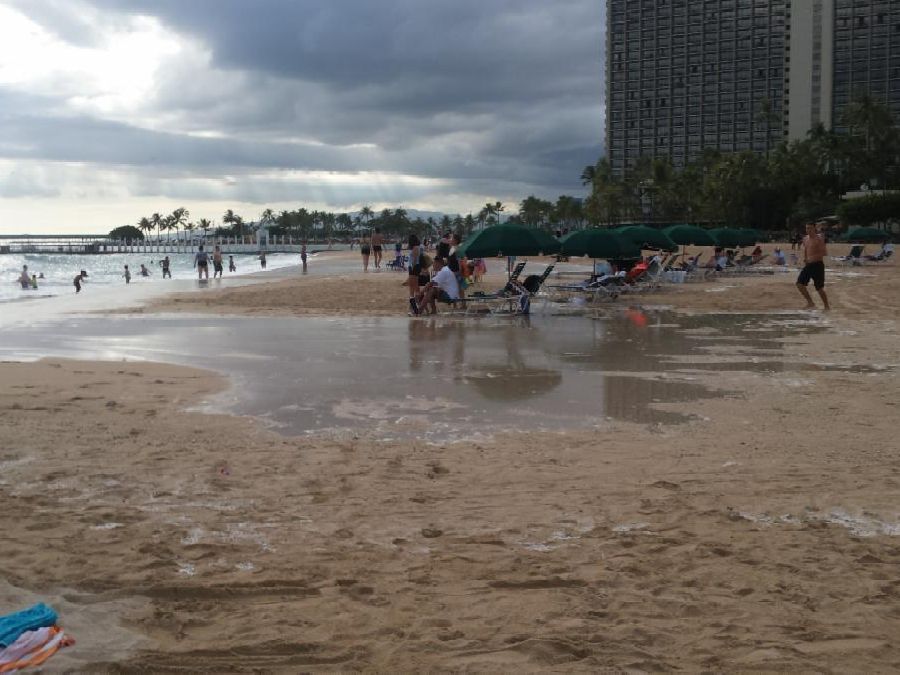
King Tides are the highest tides of the year. They are associated with flooding and inundation in low-lying areas, which can have devastating impacts on coastal infrastructure and communities. King Tides in the Pacific Islands usually occur in summer and winter months, during full or new moon cycles. The next set of this summer's King Tides will occur on July 22 and 23. Photos during these tides are vital for understanding and adapting to rising sea levels. To participate in the photo survey, visit the Hawaiʻi and Pacific Islands King Tides Project web platform. A photo from any location along our coastline that is experiencing a King Tide event will add to our place-based knowledge of the effects of sea level changes over time! [Photo: King Tide Event, Waikīkī, Oʻahu]
| | Meet Frank Camacho Roberto: PacIOOS' New Governing Council Member | | |
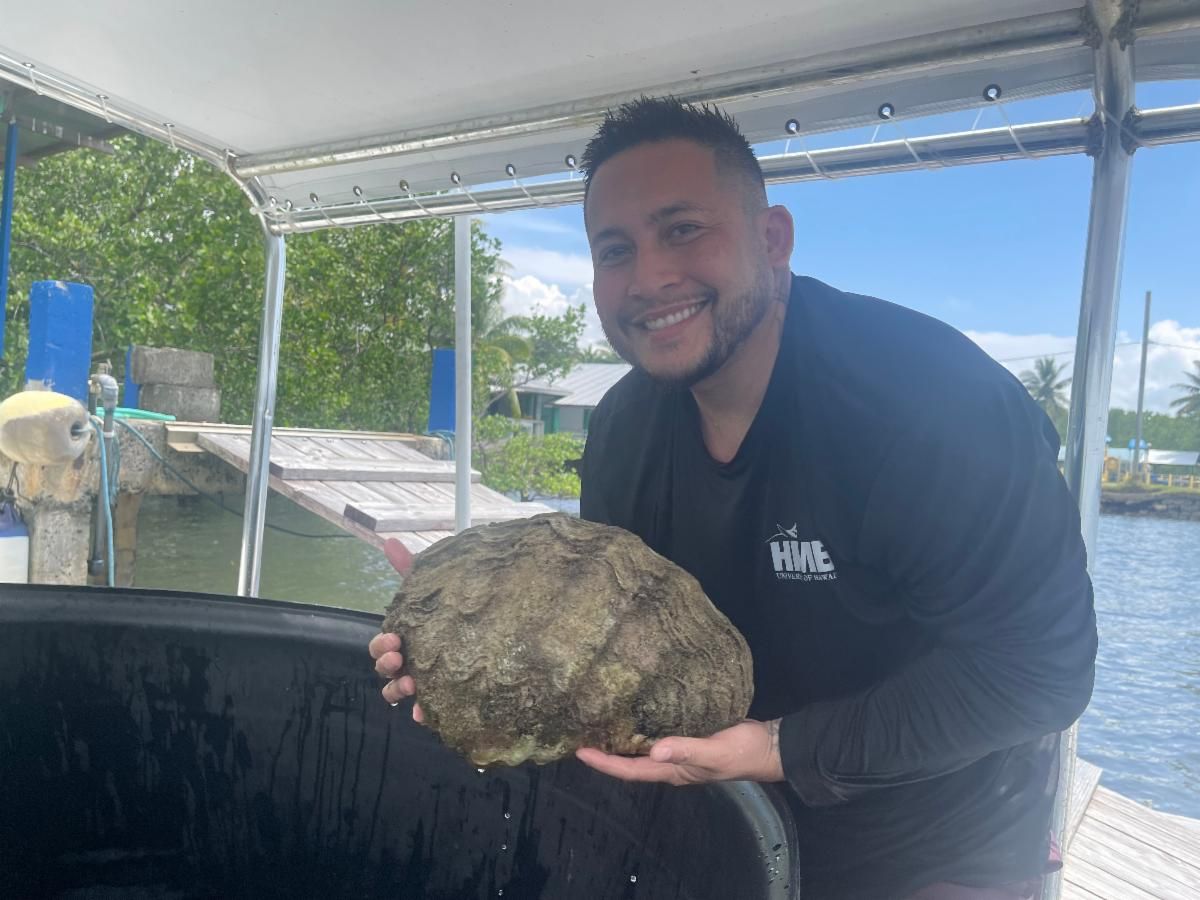
As the PacIOOS Governing Council member from the Guam Department of Agriculture Division of Aquatic and Wildlife Resources, Frank not only represents himself, but every fisher, hunter, farmer, and community member who heavily relies on Guam’s fisheries, wildlife, and environment. The previous Guam Representative, the late Dr. Jason Biggs, was Frank’s long-time mentor who greatly influenced and propelled his professional development and career, respectively, and he will be representing him as a product of his mentorship. As an individual, Frank intends to utilize his seat to gain fresh experiences and apply provided resources and guidance towards Guam’s current ocean monitoring efforts. [Photo: Frank Camacho Roberto with Giant Clam at the Palau Community College Cooperative Research Extension hatchery, Ngeremlengui, Palau. Credit: Dr. Jason Biggs]
| | Meet Lucia Hosekova: PacIOOS' New Physical Oceanographic Research Scientist | |
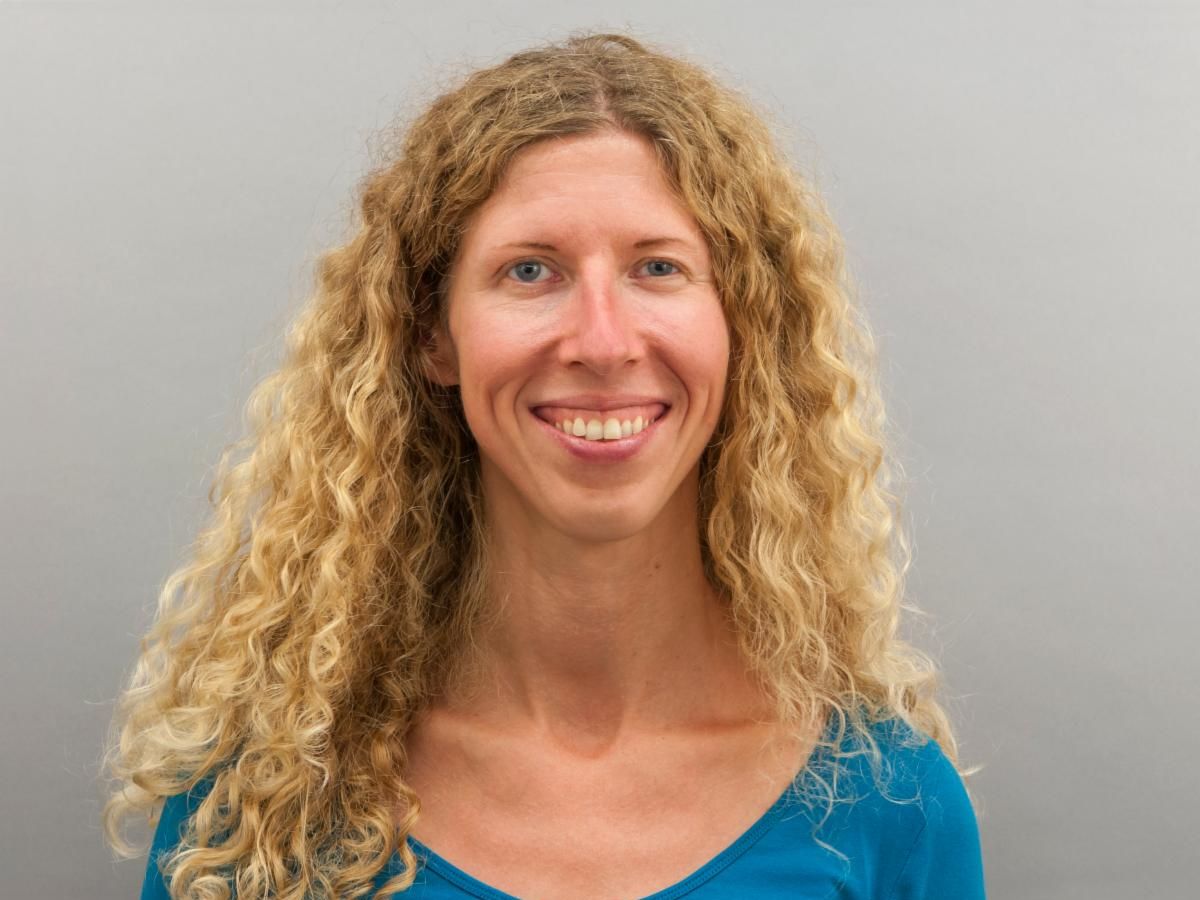
| | | Lucia is a research scientist from Switzerland with a PhD in Theoretical Physics. For the past three years, she has worked at the University of Hawaiʻi at Mānoa, where her research focused on model projections of ocean acidification and its impacts on the waters surrounding Hawaiʻi throughout the 21st century. She brings a broad interdisciplinary background to her work, having held research positions across Europe and the U.S. that spanned sea ice and wave physics, Arctic oceanography, and climate modeling. Lucia recently joined the Wave and Coastal Processes Research team, where her work centers on improving short-and long-term predictions of wave nearshore dynamics and coastal inundation in Hawaiʻi and other Pacific Islands. She is passionate about advancing the resilience of coastal communities and supporting their adaptation to present and future challenges. In addition to her research, Lucia is actively involved in outreach and science communication, and is excited to bring her background as a scientific diver into her new role. [Photo: Lucia Hosekova]
| | | | |