Spring season is in full swing, and PacIOOS has many news items to share. Scroll down to check out the March newsletter or visit our website or Voyager
.
|
PacIOOS Instruments and Tools
|
 |
|
|
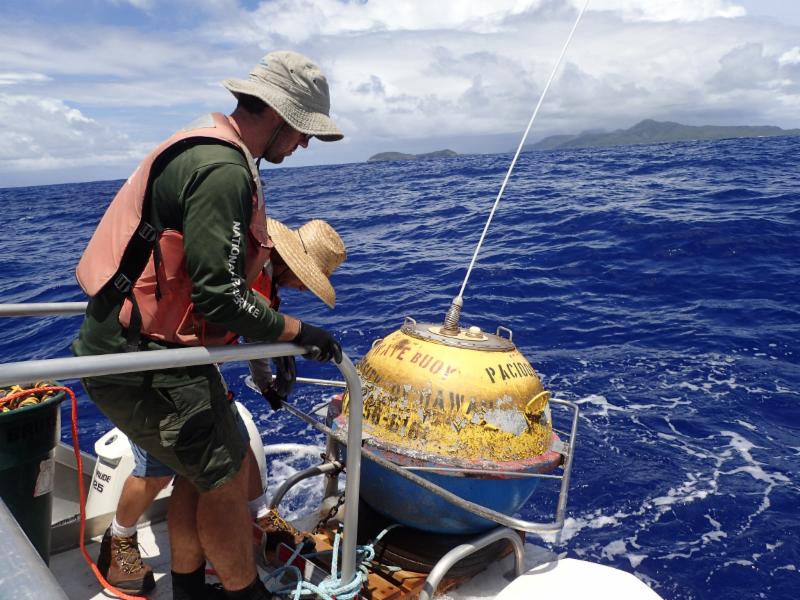
PacIOOS redeployed the Aunu'u wave buoy with the support of the National Park of American Samoa. Photo credit: NPS |
Aunu'u Wave Buoy Redeployed
With the support of the National Park of American Samoa, PacIOOS successfully redeployed its wave buoy off Aunu'u, American Samoa. The wave buoy measures wave height, direction, period, and sea surface temperature in 30 minute intervals. All data is easily accessible online. PacIOOS maintains a network of 13 wave buoys throughout the Pacific Islands region -- the Aunu'u wave buoy is the only one located South of the Equator. Wave buoys inform ocean users, agency officials, and scientists about current ocean conditions. Data are managed by the Coastal Data Information Program (CDIP) at Scripps Institution of Oceanography. Long-term partnerships with the U.S. Army Corps of Engineers and CDIP enable data streaming.
|
 |
|
|
|
|
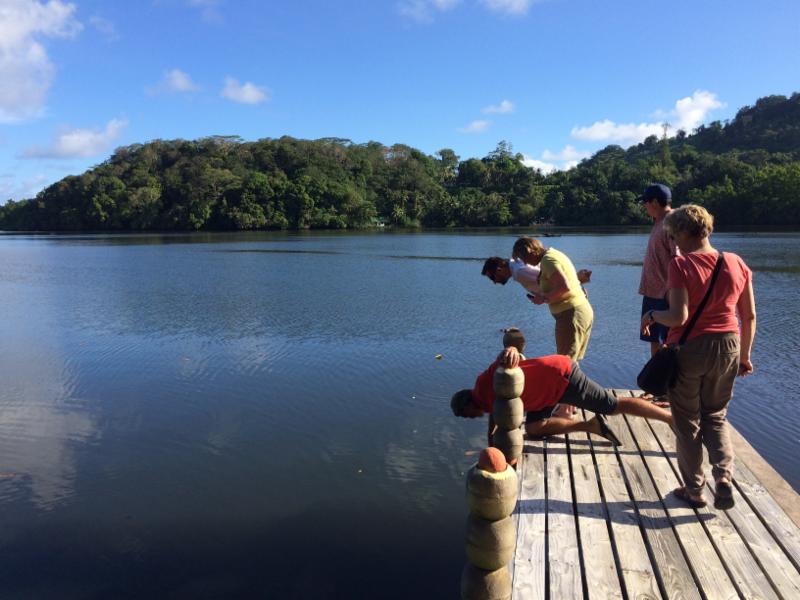
| Executive Committee members visit the PacIOOS nearshore sensor site at the Nanpil watershed. |
|
PacIOOS Executive Committee Meets in Pohnpei, FSM
Meeting participants reviewed program updates and budgets, developed an outline for PacIOOS' revised Strategic Plan, and discussed potential future collaborations and projects in the FSM. Pohnpei State Governor Peterson, the Pohnpei Weather Service Office, and other local partners and stakeholders engaged with the group to further collaborative efforts, to provide an in-depth understanding of regional ocean observation needs, and to identify potential future initiatives. The Executive Committee is comprised of five members of the Governing Council and meets between the annual Governing Council meetings in the fall to provide oversight and policy guidance to PacIOOS management.
|
|
Partner Engagement in Majuro, RMI
|
|
|
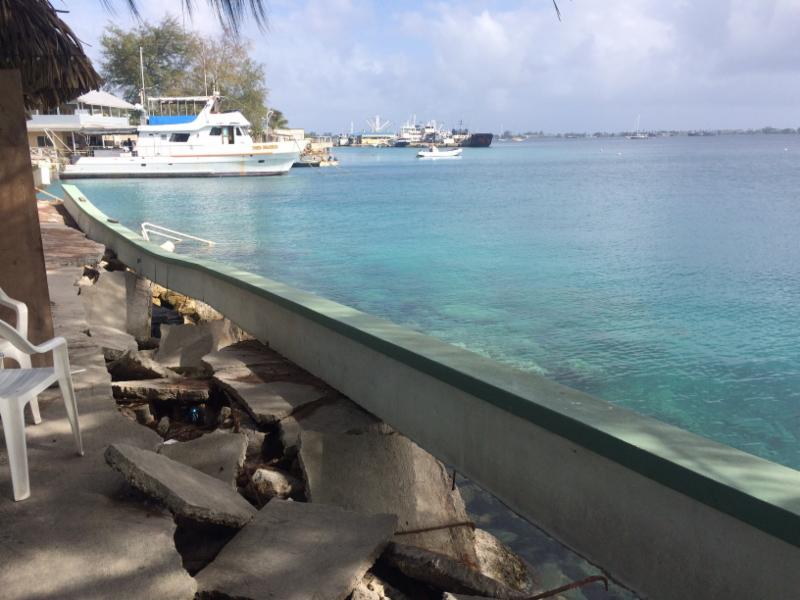
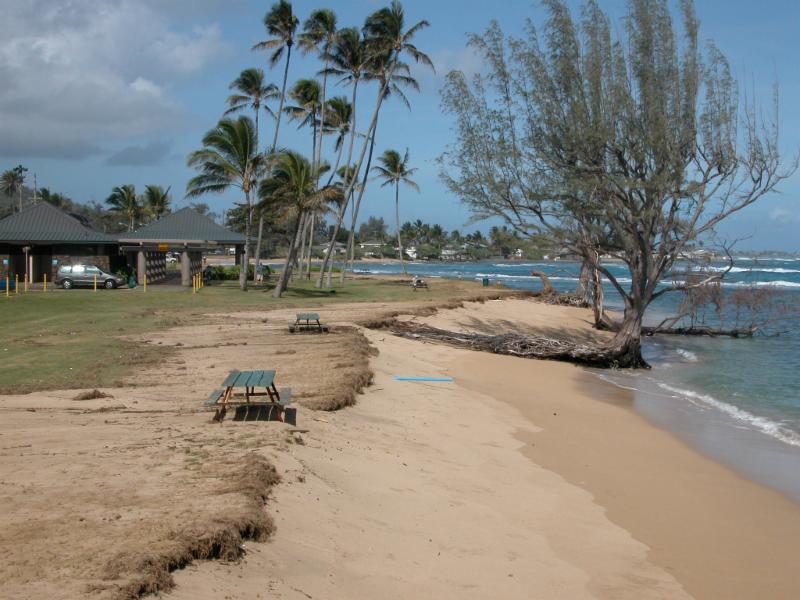
Properties along the shoreline are vulnerable to
damage caused by wave inundation. |
PacIOOS staff visited with partners on Majuro, Republic of the Marshall Islands, to provide program updates and to learn about ongoing and new projects. Topics of discussion included the Kwajalein and Majuro wave run-up forecast, which serve as planning tools for local authorities to prepare com
munities for potential wave inundation events. PacIOOS works closely
with local partners to groundtruth the forecasts and to increase usability. Local, national, and international PacIOOS partners also joined forces to p
rovide funding for a new Majuro wave buoy. The buoy is scheduled to be redeployed in late spring and will serve as a key ocean observing asset for the low-lying atolls of the Marshall Islands.
|
|
|
|
|
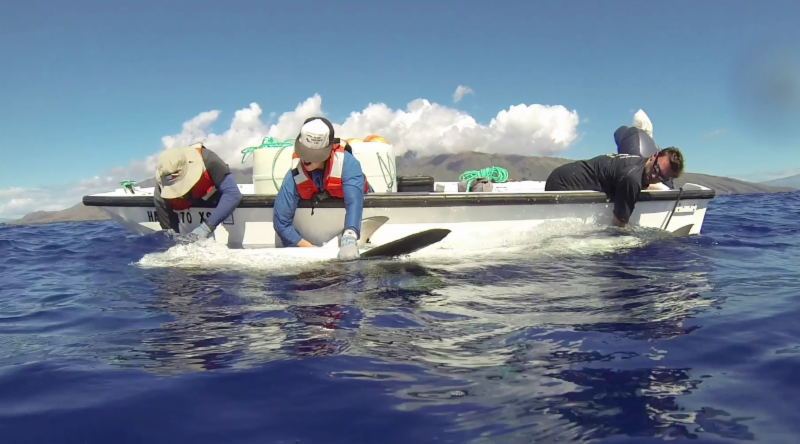
| Shark experts tagging a tiger shark. |
|
Ocean Sciences Meeting '16
Multiple PacIOOS Co-Investigators presented their research at the 2016 Ocean Sciences Meeting in New Orleans, Louisiana. Dr. Kim Holland, researcher and lead of the Hawai'i Institute of Marine Biology Shark Research Group, gave a talk on enhanced data throughput from animal-borne tags via land-based Argos-style receivers. The project is supported by the U.S. IOOS Ocean Technology Transition initiative, which sponsors the transition of emerging marine observing technologies. Dr. Jason Adolf, Chair and Associate Professor of Marine Sciences at the University of Hawai'i Hilo, presented a poster on potential climate change impacts in Hilo Bay based on water temperature, river flow and phytoplankton dynamics. Other Co-Investigators and staff presented research findings, such as sea surface currents analysis during the Tohoku Tsunami.
|
|
|
|
|
|
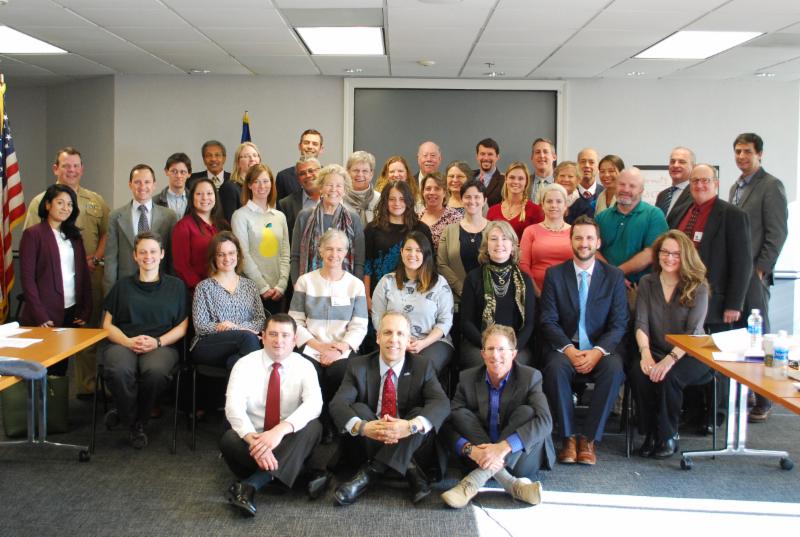
Participants of the annual U.S. IOOS Spring Meeting. |
U.S. IOOS Annual Spring Meeting
The U.S.
IOOS program office met with the eleven regional associations (RA) for the annual Spring Meeting in Washington, D.C. The focus of this year's meeting was to increase collaboration across NOAA's National Ocean Service (NOS) offices and other NOAA line offices to advance the goals of ocean observing. Potential areas for collaboration include
Next Generation Navigational Services, Water Levels, and Ecological Forecasting.
The IOOS Association Board of Directors, a non-profit organization formed by the RAs in support of the U.S. IOOS, also met to coordinate messaging and efforts across the regions.
|
|
|
|
|
|
| Hawai'i's shorelines increasingly experience flooding and coastal erosion. |
|
Regional Coastal Resilience Grant
The University of
Hawai'i Sea Grant Program was awarded $845,160 in
grant funding from NOAA's National Ocean Service to help build resilience to coastal hazards and climate change in Hawai'i. The project
aims to develop new tools to better understand risks and vulnerability and to support stakeholder resilience planning, policy development, and decision-making. This partnership effort will leverage several ongoing initiatives to increase the number of communities incorporating new strategies into coastal community management and disaster recovery plans. Established partnerships with government agencies and other stakeholder groups will be used to share project results statewide and with other island communities in the Pacific region.
PacIOOS will support this project by developing a web-based mapping tool to improve decision-makers' access to coastal hazards exposure and vulnerability information, including impacts related to climate change and sea level rise.
|
|
|
|
|
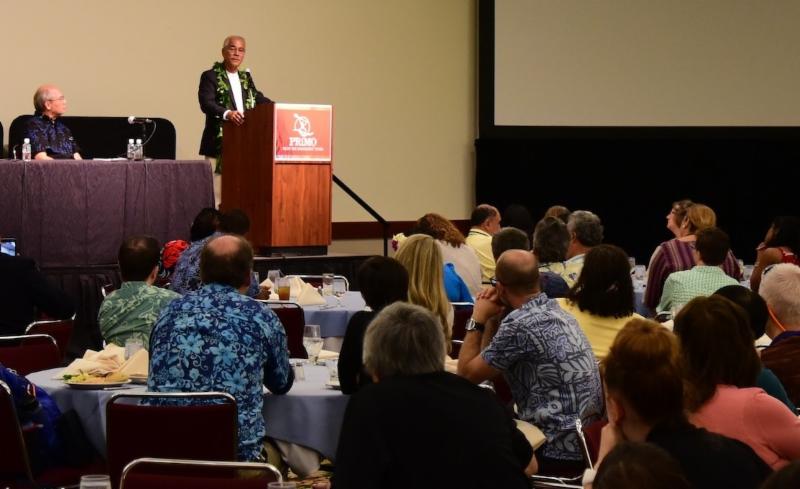
Former President of the Republic of Kiribati, Anote Tong, provides keynote remarks to conference participants. |
Each year, the Pacific Risk Management 'Ohana (PRiMO) gathers government, non-profit, academia, and industry partners for a three-day conference. This year's theme was "Voyage to Resilience - Creating Value through Partnerships," which brought together about 200 participants from across the Pacific. PacIOOS staff participated to learn about new tools and methods, better understand regional challenges with regards to climate change, resiliency and preparedness, and to connect with Pacific partners. Various keynote speakers addressed the audience, including His Excellency Enele Sosene Sopoaga, Prime Minister, of the Republic of Tuvalu, and His Excellency Anote Tong, Former President of the Republic of Kiribati.
|
|
|
Increasing Lab & Field Capacity
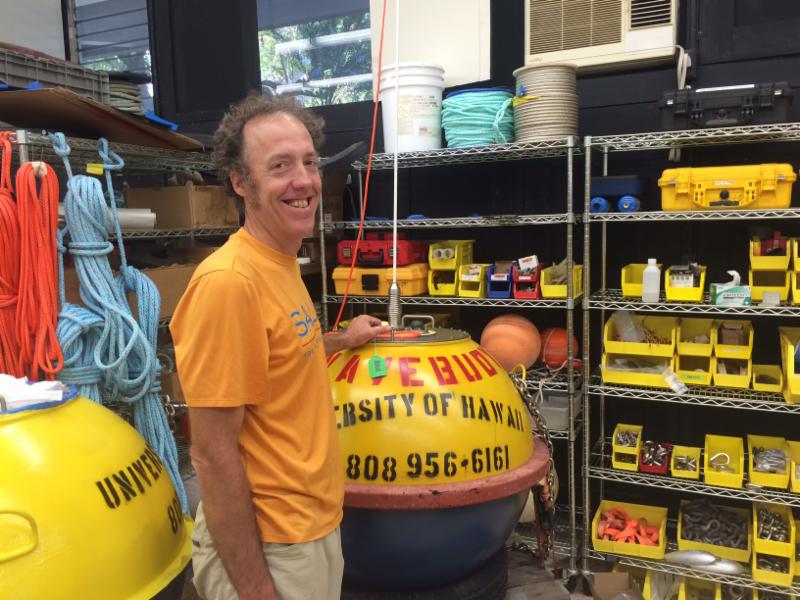
We are excited to welcome Dan Fitzgerald, our latest addition to the PacIOOS team! As the Oceanographic Instrument Research Associate, Dan will primarily work with the PacIOOS wave buoy lab to maintain the network of 13 wave buoys across the Pacific Islands region. Wave buoy recoveries and redeployments require extensive preparation work in the lab, including testing of electronic systems and acoustic releases, splicing of lines and refurbishing the buoys. Dan's assistance will be instrumental both in the lab and in the field.
Dan is no stranger to the University of Hawai'i (UH) at Mānoa. After earning his undergraduate degree in Oceanography at Humboldt State University, California, Dan worked as a chemist before becoming a marine technician for the Hawai'i Ocean Time-Series. For more than 10 years he then served as a marine technician for the UH research vessels Kilo Moana and Ka'imikai-O-Kanalaloa. Dan also has extensive experience working with marine electronics, including the installation and repair of a variety of radios, radars, sonars and satellite communications equipment. When Dan is not at work, he likes to spend his time on the water, hike with the Hawai'i Trail and Mountain Club, or make music with his band, Butter Side Down. Welcome on board, Dan!
|
|
|
Based within the School of Ocean and Earth Science and Technology at the University of Hawaiʻi at Mānoa, PacIOOS is the Pacific Islands regional component of the U.S. Integrated Ocean Observing System (
IOOS®
). PacIOOS is a partnership of data providers and users working together to enhance ocean observations and develop, disseminate, evaluate, and apply ocean data and information products designed to address the environmental, economic, and public safety needs of stakeholders who call the Pacific Islands home. For more information on PacIOOS, please visit
www.pacioos.org
.
|
|
|
|
|
Copyright © 2013. All Rights Reserved.
|
|
|
|