Alzheimer's Updates & News for Families and Caregivers | |  | | 📣 Alzheimer's of Central Alabama Announcements | | | |
🚨 Walk Theme Vote Update!
🌺 Luau: 22 votes
🦸 Superheroes: 46 votes
Can your favorite take the lead?
Your vote will influence our decorations, activities, costumes, music, and the overall feel of the 2026 Walking to Remember on Saturday, November 7.
Voting ends July 29th at 12 noon!
| | | 📰 News You Can Use: FDA Approves At-Home Starting Option for Leqembi | |
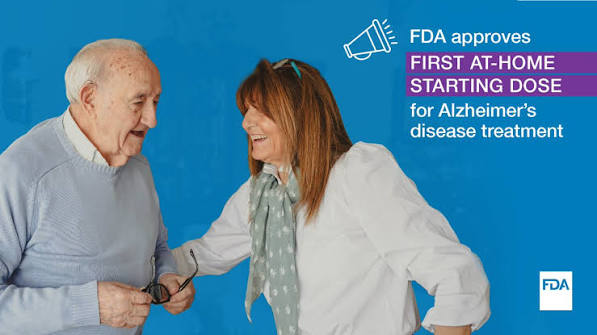
The U.S. Food and Drug Administration has approved a new under-the-skin version of Leqembi that allows eligible patients to begin treatment at home. Previously, patients started Leqembi through intravenous infusions and could transition to at-home injections only after 18 months.
Leqembi is not appropriate for everyone with Alzheimer’s. Treatment is intended for people in the mild cognitive impairment or mild dementia stage who have confirmed amyloid in the brain. It is designed to slow disease progression, not restore lost memory or cure Alzheimer’s.
The medication also carries serious risks. Patients require careful medical evaluation, brain imaging and ongoing monitoring. The FDA recommends testing for the APOE ε4 gene variant before treatment to help assess risk.
The at-home formulation was not evaluated in a separate large clinical outcomes trial. Its approval was based on evidence from the intravenous treatment, along with findings that the injected formulation produced comparable drug levels and amyloid reductions.
Families interested in this treatment should talk with a dementia specialist about eligibility, risks, availability and insurance coverage.
| | | 🌟 Happenings: Advancing Dementia Risk Reduction Webinar | |
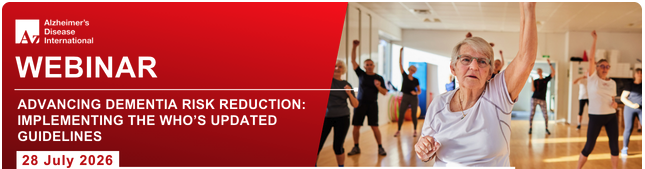
Alzheimer’s Disease International will host a free webinar on Tuesday, July 28, at 7 a.m. Central. Experts will discuss the updated World Health Organization (WHO) guidance and practical approaches to dementia risk reduction.
Read more about the WHO Guidelines below in 🧠 Brain Health.
Advancing Dementia Risk Reduction: Implementing the WHO's Updated Guidelines
📅 Tuesday, July 28, 2026
⏰ 7:00-8:00am CT
💻 Online through Zoom
✅ Free, registration required
|
💬 Caregiver Corner: Protecting During Extreme Heat | |
Older adults are more vulnerable to heat-related illness, and dementia can make it harder for someone to recognize thirst, notice temperature changes or explain that they feel unwell. Caregivers may need to take a more active role in preventing overheating and dehydration.
A few simple precautions can help:
- Offer water regularly instead of waiting for the person to ask.
- Keep the home cool and use fans or air conditioning when possible.
- Plan outdoor activities for the cooler parts of the day.
- Choose lightweight, loose-fitting clothing and a hat.
- Never leave anyone in a parked car, even briefly.
- Ask a health care provider whether medications or fluid restrictions require special precautions during hot weather. Do not change medications without medical guidance.
Watch for unusual tiredness, dizziness, headache, nausea, rapid pulse, muscle cramps, hot or red skin, or a sudden change in thinking or behavior. Move the person to a cooler place and seek medical guidance. Confusion, fainting, seizures or loss of consciousness may signal heat stroke and require immediate emergency help.
| 🧠 Brain Health: WHO Releases Updated Guidance on Reducing Dementia Risk | |
The World Health Organization released updated dementia risk-reduction guidelines on July 15. The guidance reflects a growing body of research showing that some dementia risk is connected to factors that can be changed or managed across a person’s life.
WHO highlights physical activity, tobacco cessation, reduced alcohol use, a healthy diet, social engagement and management of high blood pressure, diabetes and high cholesterol. The guidelines also address hearing care and reducing exposure to air pollution.
This does not mean dementia is always preventable or that someone is responsible for developing it. Age, genetics, access to health care, environmental conditions and many other factors also influence risk. Healthy habits can support overall health and may reduce risk, but they cannot guarantee that a person will not develop Alzheimer’s or another dementia.
The WHO also advises against using vitamins or supplements to reduce dementia risk when no nutritional deficiency has been diagnosed.
Read the full "Risk reduction of cognitive decline and dementia" report here.
| 💪 Activity of the Week: Create a Summer Soundtrack | |
Music can provide a comfortable way to connect without relying on memory or conversation. This week, create a short playlist of songs connected to summer, family gatherings, vacations or a favorite time in your loved one’s life.
What you need:
- A phone, radio, record player or other music source
- Three to five familiar songs
- An optional family photograph or keepsake
Try it:
Play one song at a time. Invite your loved one to listen, hum, clap, tap a foot or move with the rhythm. If conversation comes naturally, ask a gentle question such as, “Does this song remind you of anything?” Avoid turning the activity into a memory test.
Adapt it:
- Keep the volume low if the person is sensitive to sound.
- Use shorter song clips if attention is limited.
- Offer a scarf or simple instrument for movement.
- For someone with limited mobility, encourage tapping, humming or simply listening.
- Stop or change the music if it causes distress.
The goal is not to remember song titles or lyrics. It is to enjoy a moment together.
| | | ❓ Newsletter & Website Feedback | | Send us an email with your comments and questions. | |
| |
🤝 How You Can Help
Every contribution makes a difference - support Alzheimer's of Central Alabama.
| | | | |
Our Company | Contact Us | FAQs | Privacy Policy |
| | | |