Welcome to our December 2023 edition, Gregg!

Visit F5TornadoSafaris.com

Happy holidays, Gregg!


After watching reports of the tornadoes that killed six people and injured dozens more around Clarksville, Tenn. a few weeks ago, it seems like there's no off-season for tornadoes in this country. Where does the U.S. rank as far as tornado activity around the world?


Allyson Barnes

York, PA


Right back at you with the season's greetings, Allyson!


If you're looking for a short answer, here it is: America is king where twisters are concerned. Always has been, and climate change seems only to be widening the gap between the U.S. and the rest of the world.


We average more than 1,150 confirmed tornadoes annually here in the states; that's more than Canada, Australia and all the European countries combined. We also have the most powerful and destructive tornadoes; Alabama alone averages as many fatalities from tornadoes -- 14 a year -- as any European nation.


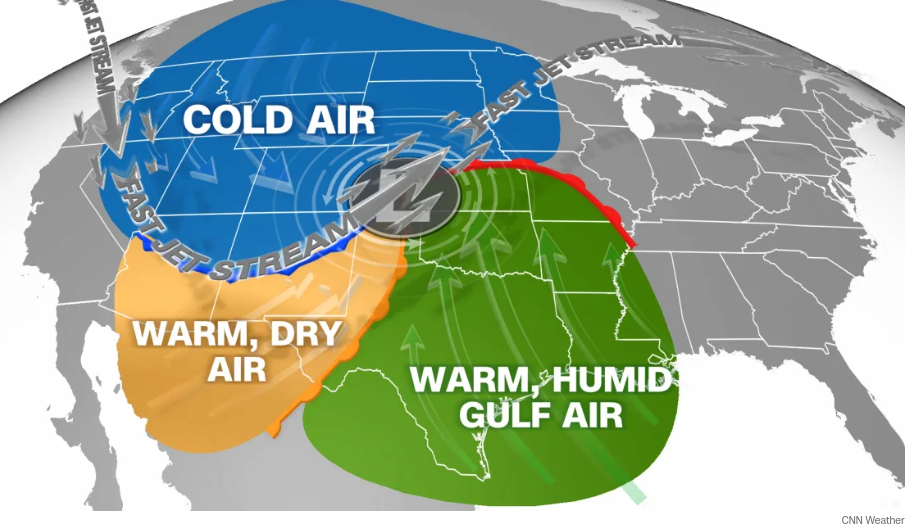
Low pressure systems in the U.S. pull warm, moist air from the Gulf of Mexico and cool, dry air aloft from the Rocky Mountains and the desert southwest. There's no better tornado laboratory on the planet.


So when you sign up to join us for either of our 7-day chasing tours in May, you're signing up for an expertly guided tour of the most awe-inspiring meteorology on Earth!

Questions? Ask Gregg!

Roommate and Loyalty Discounts are based on remitting $750 down payment. Balance due by March 1, 2024.

Maximum discounts per client = $500.

SIgn up for a 2024 Tornado Safari

Have a friend, collegue or loved one who digs the thrill of the chase? Sign 'em up for our mid-monthly email newsletter, and they'll be eligible for our monthly drawing for $50 in free F5! merchandise!

Sign up a friend for our newsletter
Check out all our merch!

Let's face it: There's a lot of down time between our adrenaline-pumped chases each May. Half the fun is revisiting old road haunts and discovering new locations to eat, drink and be merrily entertained. Because F5! goes where the wind blows, we've cataloged hundreds of towns, restaurants, bars and hospitality venues over approximately one million square miles of the Great Plains in the past 24 years. Each month, we'll revisit some of our favorites.


RECENTLY FEATURED:


November 2023 Issue: Enchanted Highway (Regent, ND)

October 2023 Issue: Carlsbad Caverns (Carlsbad, NM)

September 2023 Issue: Garden of Eden (Lucas, KS)

August 2023 Issue: UFO Capital of the World (Roswell, NM)

July 2023 Issue: The Big Texan (Amarillo, TX)

Located south of the board-flat Texas Panhandle, north of the oil-rich Permian Basin and just 70 miles from the New Mexico border, Lubbock, Tex. occupies a unique place on the Great Plains, standing sentry over the northeastern edge of the largest desert in North America, the Chihuahuan.


In every direction, the potential for tempestuous weather runs high. So Lubbock's Texas Tech University was a natural fit for the nation's first doctoral program in Wind Science & Engineering in 2007 (the school added a bachelor's degree in the field four years later).


The National Wind Institute at Texas Tech has one of the world's largest tornado vortex simulators, a 200-meter weather observation tower and a fleet of 48 rapidly deployable weather stations (known as "sticknets").


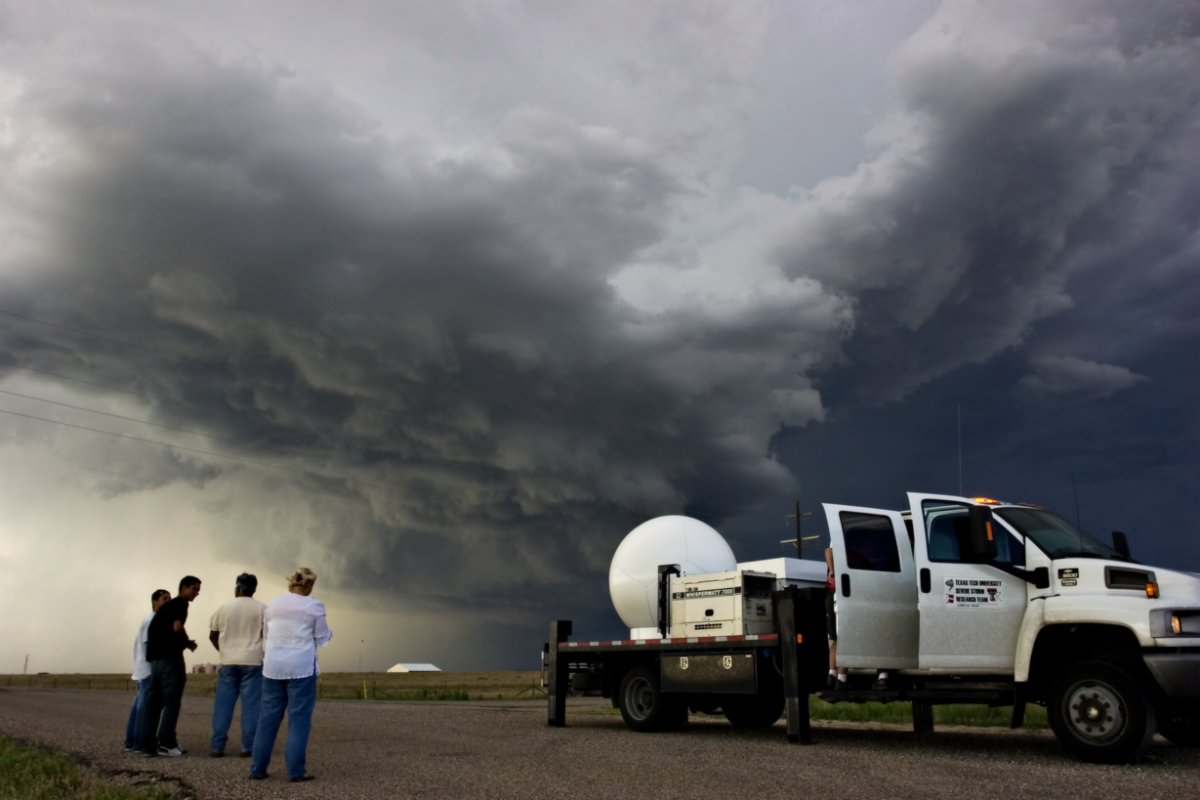
On our way through Lubbock as we chased a storm into New Mexico seven months ago, the F5! Tornado Safaris team was treated to the latest in tornado technology: a pair of Ka-Band Doppler Radar Trucks (one of which is pictured above). We thought of a better name, given the vehicles' provenance at Texas Tech: Red Raider Radar.


By any name, they are impressive, able to produce sophisticated, four-dimensional mapping of atmospheric events that never before existed in mobile units -- in essence bringing the laboratory to the storm.


Among the most enlightening and unexpected aspects of our May trip to Texas Tech was a local historical angle on the name of our organization.


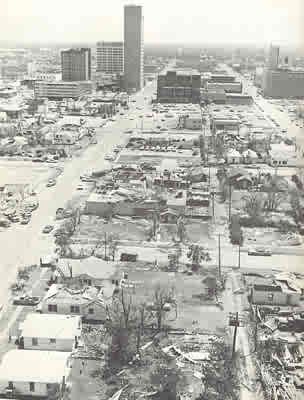
On May 11, 1970, the Lubbock Tornado killed 26, which today ranks No. 11 on the list of Texas' deadliest twisters (it only grazed the fringes of the Tech campus). The city's 274-foot Great Plains Life Building -- now known as the Metro Tower -- is believed to be the tallest structure ever to survive a direct hit from an F5 tornado.


At the time, however, there was no such designation. "F5" is the highest rating on the F-Scale, or Fujita Scale, developed by University of Chicago researcher and meteorologist Tetsuya "Ted" Fujita. The F-Scale, however, did not become the widely accepted way to rate a tornado's speed and destructive power until 1971, the year after the Lubbock Tornado.


In its aftermath, Ted Fujita deployed from Chicago to Lubbock and spent considerable time there developing his rating theory. Thus did the Lubbock Tornado become the world's first documented F-5 twister.

The 274-foot Great Plains Life Building, top center, is believed to be the tallest structure ever to survive a direct hit from an F5 twister. Much of the rest of the city was described as a state of "complete devastation" in the wake of the May 11, 1970 Lubbock Tornado.