|
Located south of the board-flat Texas Panhandle, north of the oil-rich Permian Basin and just 70 miles from the New Mexico border, Lubbock, Tex. occupies a unique place on the Great Plains, standing sentry over the northeastern edge of the largest desert in North America, the Chihuahuan.
In every direction, the potential for tempestuous weather runs high. So Lubbock's Texas Tech University was a natural fit for the nation's first doctoral program in Wind Science & Engineering in 2007 (the school added a bachelor's degree in the field four years later).
The National Wind Institute at Texas Tech has one of the world's largest tornado vortex simulators, a 200-meter weather observation tower and a fleet of 48 rapidly deployable weather stations (known as "sticknets").
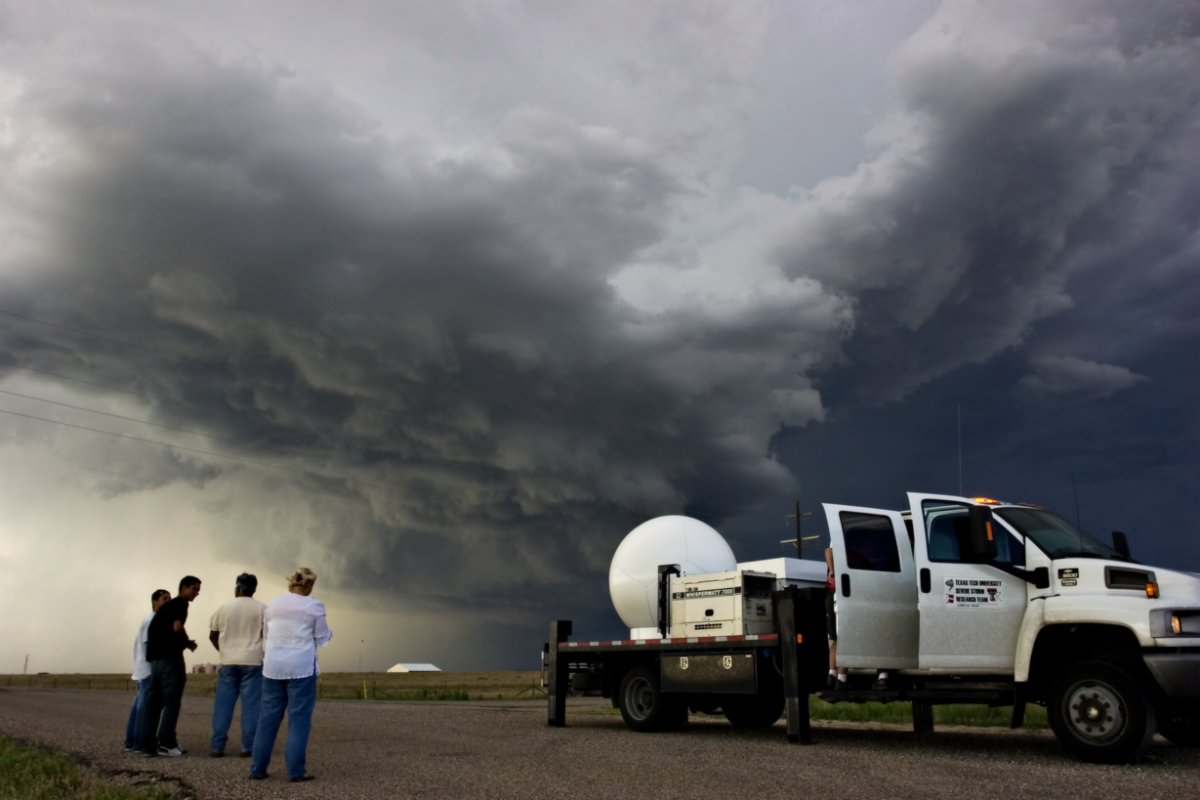
On our way through Lubbock as we chased a storm into New Mexico seven months ago, the F5! Tornado Safaris team was treated to the latest in tornado technology: a pair of Ka-Band Doppler Radar Trucks (one of which is pictured above). We thought of a better name, given the vehicles' provenance at Texas Tech: Red Raider Radar.
By any name, they are impressive, able to produce sophisticated, four-dimensional mapping of atmospheric events that never before existed in mobile units -- in essence bringing the laboratory to the storm.
Among the most enlightening and unexpected aspects of our May trip to Texas Tech was a local historical angle on the name of our organization.
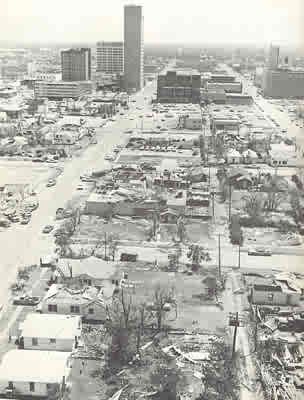
On May 11, 1970, the Lubbock Tornado killed 26, which today ranks No. 11 on the list of Texas' deadliest twisters (it only grazed the fringes of the Tech campus). The city's 274-foot Great Plains Life Building -- now known as the Metro Tower -- is believed to be the tallest structure ever to survive a direct hit from an F5 tornado.
At the time, however, there was no such designation. "F5" is the highest rating on the F-Scale, or Fujita Scale, developed by University of Chicago researcher and meteorologist Tetsuya "Ted" Fujita. The F-Scale, however, did not become the widely accepted way to rate a tornado's speed and destructive power until 1971, the year after the Lubbock Tornado.
In its aftermath, Ted Fujita deployed from Chicago to Lubbock and spent considerable time there developing his rating theory. Thus did the Lubbock Tornado become the world's first documented F-5 twister.
|