Princeton in the service of a new nation
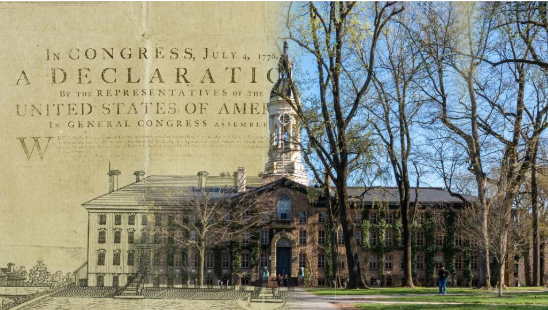
In the 1770s, Princeton was a sleepy crossroads a hard day’s ride up the King’s Highway from Philadelphia. But that didn’t stop the town and The College of New Jersey — today’s Princeton University — from playing an outsize role in the founding of our nation.
“Princeton witnessed a kaleidoscope of revolutionary experiences,” said Michael Blaakman, an associate professor of history at Princeton. “Students and professors were swept up in colonial resistance and seized by revolutionary fervor, becoming leading advocates for the patriot cause and theorists of republican government.
“The town and campus were occupied by the British, ravaged by battle, overrun by competing armies, and turned briefly into the fledgling nation’s makeshift capital,” he said. “The people of 18th-century Princeton — patriot and loyalist, free and enslaved — experienced these events in wildly different ways, but all saw their world transformed.”
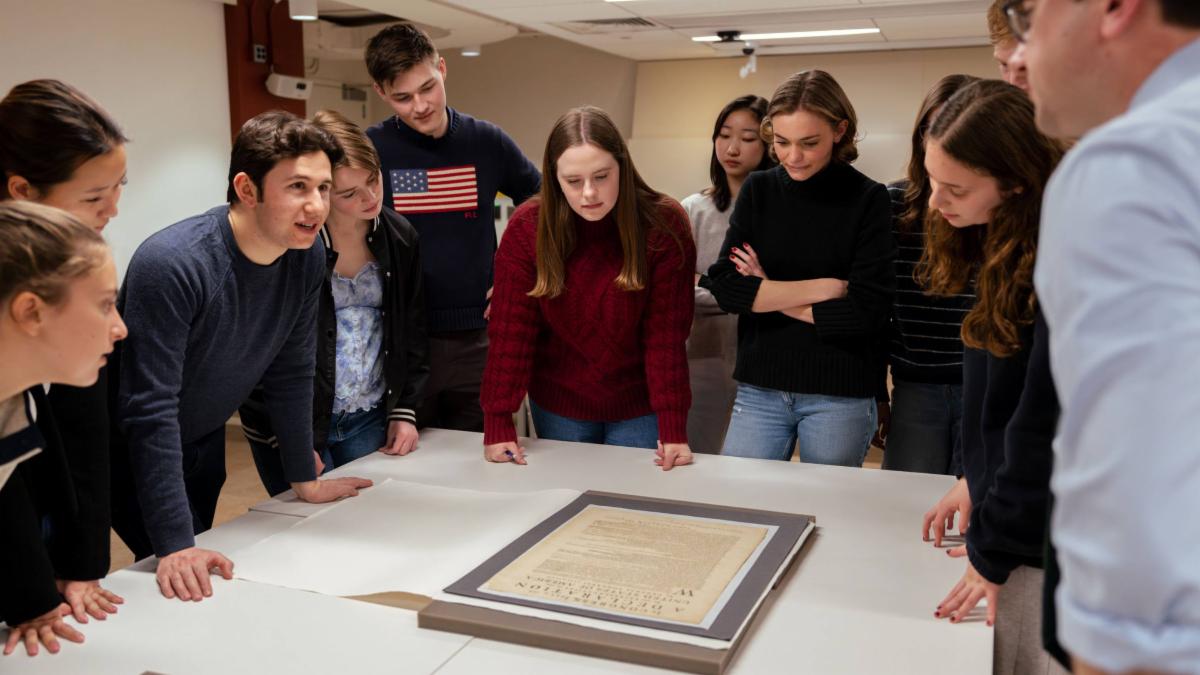
As the nation marks its semiquincentennial — the 250th anniversary of the Declaration of Independence on July 4, 1776 — we take a look back at the University’s remarkable Revolution-era history as told through historical records (many of which are housed at the Princeton University Library), in reference works, and by the library’s marquee “‘Nursery of Rebellion’: Princeton and the American Revolution” exhibition and its curators, Blaakman and Gabriel Swift. Continue reading
More about America 250 at Princeton University:
Princeton is commemorating America 250 with exhibitions and events on campus and in the community
This is America 250 at Princeton University: YouTube Series
|