America's Looming Financial Cliff

Newsletter 506


My Column in Today's


Dear Friends:


I'm an optimist with a simple philosophy: When something is broken, don’t wring your hands. Fix it.


It is past time for the U.S. Congress to share that outlook.


Instead, partisan feuding crowds out problem-solving. Disagreement is inevitable; paralysis is a choice. We elect people to solve problems and improve Americans’ lives. Yet through political gridlock, Congress has steadily surrendered its authority to the executive and judicial branches, weakening its ability to lead. Too much time and energy are being wasted on inconsequential issues and partisan political grandstanding.


The consequences for these distractions are especially dangerous to our nation’s finances and future.


America faces many threats, from foreign adversaries to those angry anarchists within our borders working to destabilize or destroy our country. But I believe the greatest threat to our economic and national security is our mounting national debt.


I was recently with David Walker, former U.S. Comptroller General. He was blunt about our stakes: “A debt crisis would likely result in a global depression. It would embolden our adversaries and increase foreign conflicts. It would reduce America’s international standing. And it would result in major domestic tranquility problems.”


Walker adds, “The truth is the federal government has grown too big, promised too much, subsidized too many, and lost control of the budget and is not managed to achieve real results.”


Federal spending has grown from 2.5% of our economy in 1913 to nearly 25% today — roughly a tenfold increase in its share of the economy. 


With our national debt exceeding $40 trillion and interest costs consuming $1 trillion or more of the annual federal budget, the warning signs are surrounding us. Our $40 trillion national debt is just the beginning. Total liabilities and unfunded obligations top $147 trillion, up $11 trillion in the last year, and up from $20 trillion since 2000. Yet Congress keeps enacting new spending. 


As Comptroller General Walker states, “Doing nothing is irresponsible, unethical, and immoral.”


Debt reduction should be the top voter issue in this Election, rather than putting up with the focus on petty politics and name-calling. It’s time for our Congress members to get serious.


The Solutions


Congress has the authority — and the responsibility — to avert a fiscal crisis. I do not believe Washington will stop overspending without immense pressure from citizens and the states. We must use our constitutional authority to demand a balanced federal budget.


Earlier this month, I met at Harvard Law School with former Comptroller General Walker, constitutional scholars, academics, legislative leaders, and civic activists to discuss using an Article V convention to curb federal power. I successfully championed South Carolina’s call for this Constitutional remedy, resulting in our state helping lead this national effort.


Our U.S. Constitution provides a path: Two-thirds of state legislatures can require Congress to call a convention of states to propose amendments to it. Any amendment would then require ratification by three-fourths of the states, the same path that is required when Congress proposes to amend the Constitution.

America’s Financial Cliff is Looming


The warning lights on the financial dashboard are blinking red.


For example, Social Security’s trustees project that reserves supporting retirement and survivor benefits will be depleted in late 2032 — only six years from now. Without congressional action, its continuing revenues would cover only 78% of required payments, leaving a 22% shortfall.


Many young Americans doubt Social Security will ever be there for them. With timely reforms, it would be. Future retirees may qualify at a different age, with benefits calculated under a revised formula.


Phasing in reforms prudently over time can protect current retirees while preserving benefits for future generations. We all deserve confidence that Social Security will be there when we need it. That’s a win.


That Social Security deadline does not predict when a broader debt crisis might strike. But it demonstrates the cost of delay. Growing fiscal pressure could also threaten funding for Medicaid, Medicare, and other entitlement programs Americans rely on.


What's the fastest way to get Washington’s fiscal house in order?


Speaking at the Harvard conference, Former New Hampshire Gov. Chris Sununu summed up the looming federal fiscal crisis this way: “It is truly a cliff. It's going to be bloody; it's going to be horrible. You're going to have massive hyperinflation, which is the worst tax on the poor. By not dealing with this, you're creating an inflationary process that is going to hit low-income and working-class Americans extremely hard.”


Sununu says building on the Department of Government Efficiency’s (DOGE) work is a starting point for reducing federal spending. “You can easily cut $350-400 billion out of the current budget. It is so wasteful and so bloated. There's a lot of savings to be had.”


States Will Be Squeezed


Most assuredly, balancing the federal budget will also cause states to budget more efficiently because federal budget cuts will shift some costs to the states to fill the void. But the federal government needs to agree – we’ll send you the money, but we’ll also send you the control. We can’t have federal bureaucrats micromanaging our state spending.


Federal spending cuts will force states to clearly define their priorities and make difficult choices: raise taxes, reduce services, or find savings elsewhere.


Although I am not seeking reelection, House Speaker Murrell Smith has reappointed me to represent the South Carolina House on the National Federalism Commission (NFC). I have served for four years as a delegate to this bipartisan organization, which works to strengthen the role of states in our constitutional system.


As a member of the NFC policy committee, I am helping assess how federal belt-tightening would affect state budgets. My analysis begins at home. With help from House Ways and Means analysts, I compiled an overview of federal funding coming to South Carolina.


The Impact on SC


Federal dollars support healthcare, food assistance, highways, schools, and disaster recovery. Healthcare is most at risk because it receives the largest amount of federal money.


The S.C. Department of Health and Human Services administers Medicaid, which accounts for nearly $11 billion in annual spending, with 90% sent from Washington. Major services include coordinated care, nursing home care, and long-term community care.


The S.C. Department of Social Services reports approximately $1.6 billion in direct federal awards, including $991 million for SNAP food assistance. There is additional federal support for childcare, Temporary Assistance for Needy Families, and foster care.


The S.C. Department of Transportation reports $1.3 billion in federal grants annually for highways, freight corridors, and other transportation-related improvements.


The S.C. Department of Education reports $782 million in federal awards, including nearly $480 million for school meals. Other substantial awards support disadvantaged students, special education, and school improvement.


Public health, environmental protection, behavioral health, and services for people with developmental disabilities also receive significant federal support. Disaster recovery adds hundreds of millions more in federal dollars, although those awards fluctuate and tend to span several years.


These examples represent the largest streams of federal funding flowing into South Carolina. They show how deeply Washington’s spending decisions affect our state—and why federal cuts will bring difficult choices close to home.


Demand a Fix Now, Before it’s Too Late


Washington is addicted to spending, deficits, and debt. Many in Congress are shopaholics, freely spending your hard-earned tax dollars. Unless Congress changes course, we risk a national economic meltdown. When federal lawmakers delay tough decisions, they must face consequences. This isn’t about party politics. It’s about math.


Those consequences will reach directly into every South Carolina home, classroom, hospital, and highway. Preparing for that risk is part of responsible state leadership. Demanding action from Washington is every citizen’s responsibility.


I believe America’s best days are ahead — but a bright future requires fiscal discipline and leaders willing to make tough choices. Citizens must demand both. We must insist on a credible plan to put the nation’s finances in order. We must make those in Congress accountable for fiscal discipline and positive results.


Washington won’t break its spending addiction until Americans stop accepting the excuses and demand fixes.

Vote For Tommy Paradise


If you live in House District 86, I respectfully ask that you vote for TOMMY PARADISE to succeed me. He is a lifelong Aiken County resident who has spent his entire life serving citizens. He retired from Aiken Public Safety as a Lieutenant after 25 years in law enforcement. He was the County Administrator for Edgefield for 5 years, and currently serves as the Planning Director for booming North Augusta. He’s a Conservative Republican who will represent your common-sense values. When elected, he is planning to retire from that position and be a full-time legislator.

Standing with Chairman Shannon Erickson


Last week I trekked to South Carolina’s Low Country, where I was proud to rally support for my friend, Rep. Shannon Erickson, at the Beaufort Tea Party. Shannon chairs the House Education Committee and is so good for South Carolina that California Governor Gavin Newsom has plowed money into the opponent's campaign to defeat her.

October Highlights

A Night to Remember


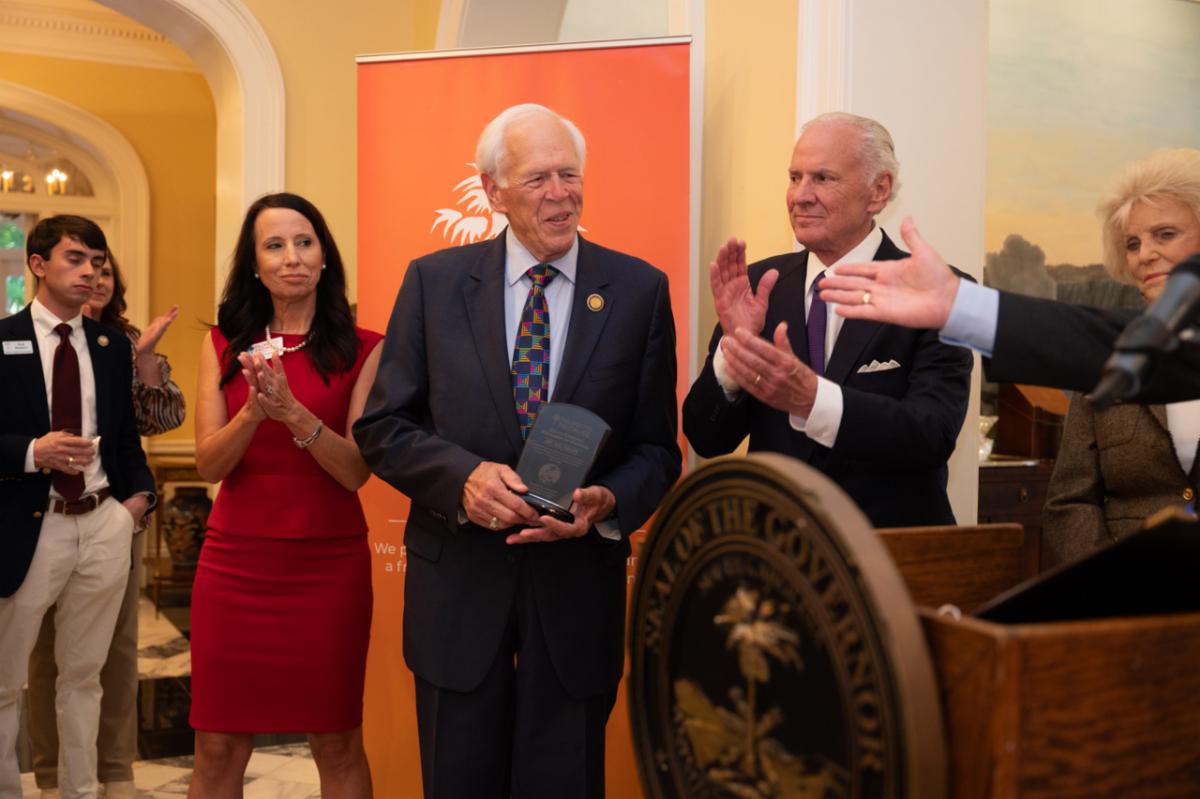
The eve of October started at the Governor’s Mansion, where I was humbled and honored to receive Palmetto Promise Institute’s inaugural Statesman of Freedom award. The evening also brought another honor — the announcement of my election to Palmetto Promise's Board of Directors.


As I retire from elected office, I’m turning from politics to policy — working alongside the talented staff of South Carolina’s conservative think tank to advance freedom and develop sound policies for our state. A new chapter, with the same commitment to South Carolina.

Vet School Debuts


An October highlight was the dedication of South Carolina’s first College of Veterinary Medicine located at Clemson University. It is much needed! More than one-third of SC counties have fewer than 5 veterinarians. Training veterinarians in-state aims to improve retention and serve agriculture, livestock, rural communities, and pet owners. The inaugural class has 80 students, including 60 South Carolinians. They are expected to graduate in 2030. Every student in the inaugural class received scholarship funding. 

Doing the Most Good 


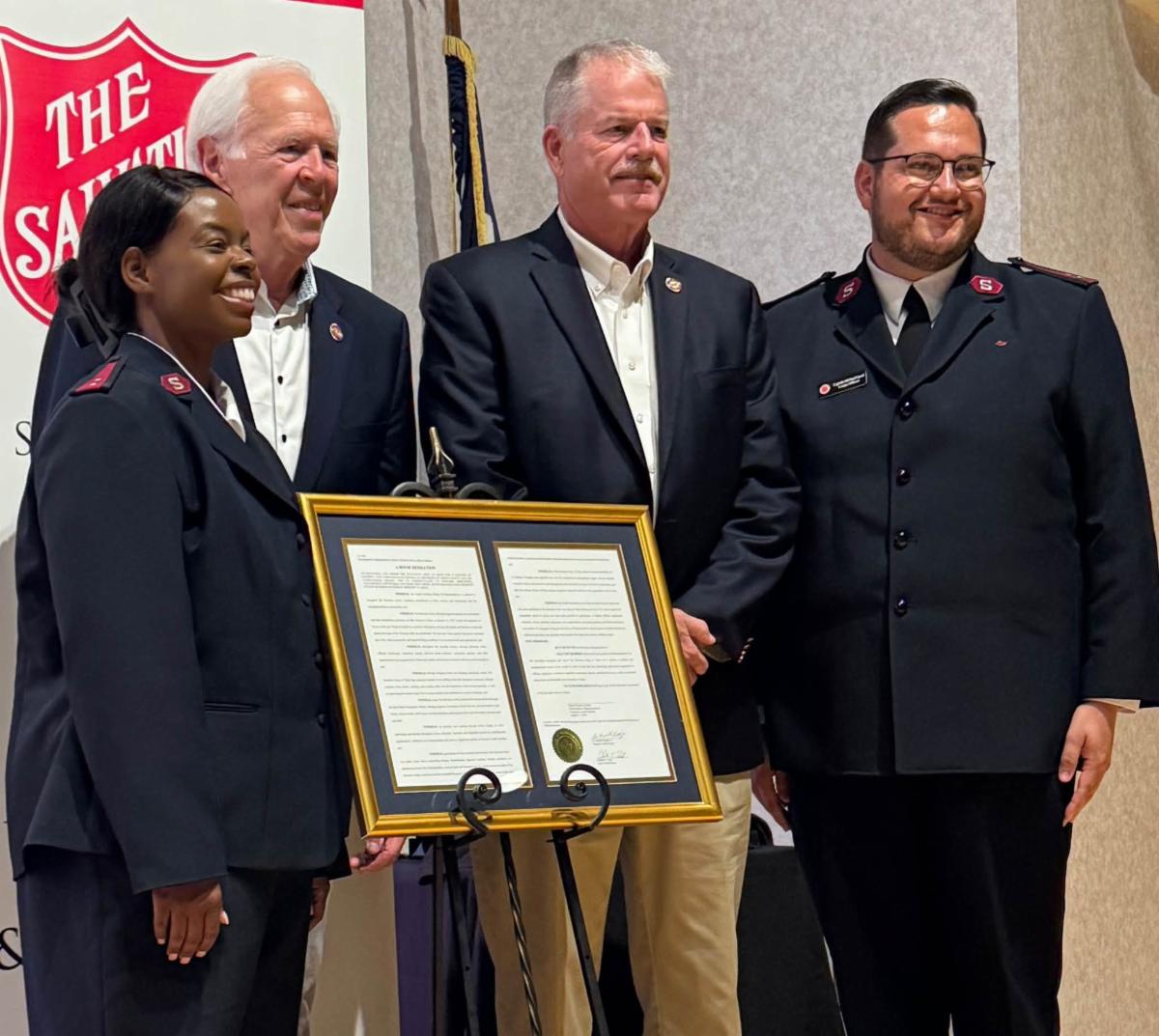
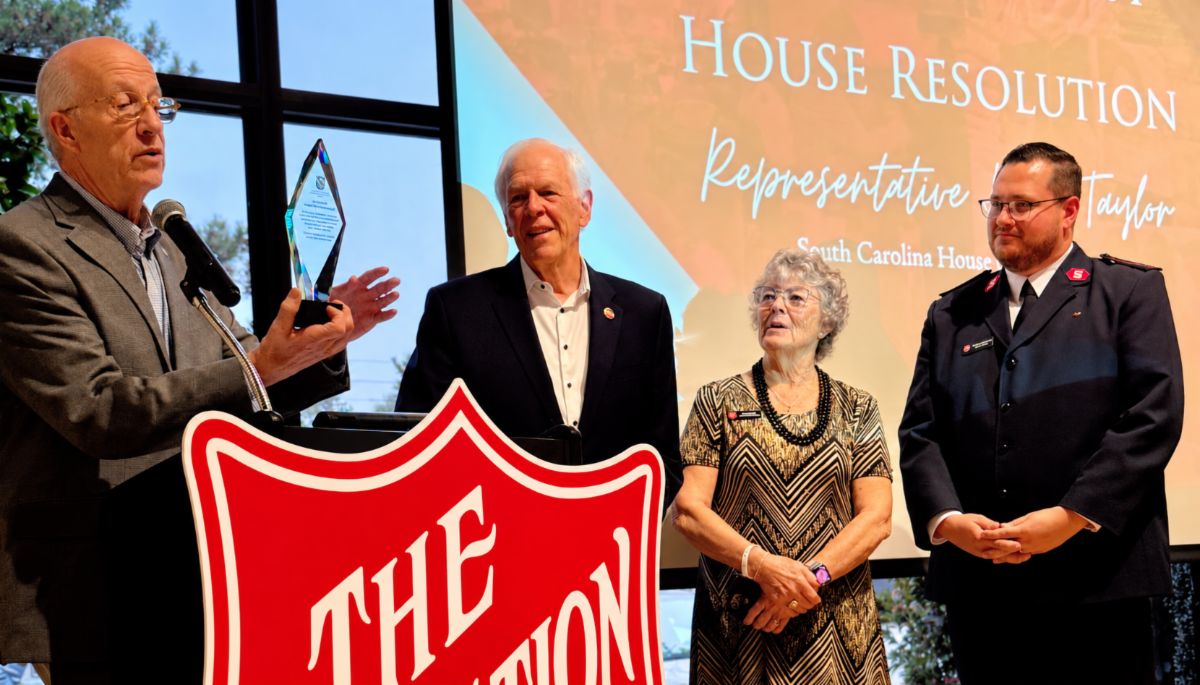
On October 9, the Salvation Army of Aiken honored volunteers and supporters with a look back on 99 years of serving the community and a look forward to major developments to further enhance services to those in need. It was the Behind the Red Shield Appreciation Breakfast. The event also marked the beginning of the 100th anniversary of the Salvation Army of Aiken. Rep. Charlie Hartz joined me in presenting a Resolution from the S.C. House of Representatives marking the century of service.


This past year, the local Salvation Army served more than 105,000 people: 40,000 meals served, more than 6,700 nights of lodging provided, 4,300 Angel Tree recipients, and nearly 3,000 social services cases. 

From the Aiken Standard: Advisory Board Chair Clarke McCants III surprised Rep. Taylor and his wife, Donna, for their years of service in the Salvation Army with an award recognizing Rep. Taylor’s 16 years of service in the legislature, from which he is retiring after this term. Both of the Taylors serve on the advisory board.

Smooth Landings


In October, Aiken Regional Airport celebrated the completion of an $8 million project to resurface its primary runway. Work began in June and included removing the existing asphalt, the regrading of the runway, and the use of a portable concrete plant to pour a high-strength surface ranging from 6 to 13 inches thick, depending on the terrain.


“Airports like Aiken are incredibly vital to our aviation system,” said Gary Siegfried, executive director of the South Carolina Aeronautics Commission. He called the airport “a true gem,” citing its runway of more than a mile and its Instrument Landing System.

Pastoral Faith & Patriotism


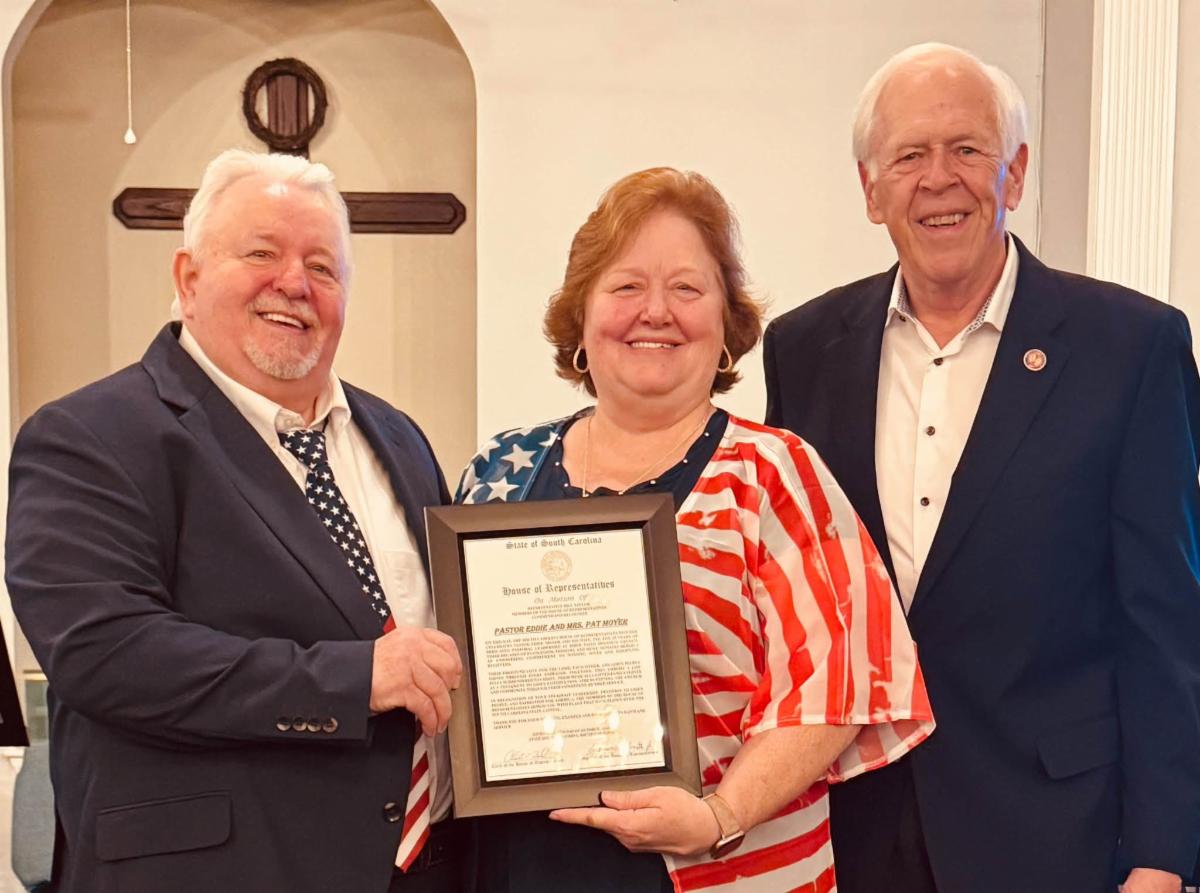
Faith and patriotism were on full display during my visit to Bible Faith Holiness Church on Highway 1 North in Aiken. The church celebrated Pastor Eddie Moyer and his wife, Pat, for 25 years of dedicated pastoral leadership. Their love of the Lord and devotion to our country have inspired their congregation for a quarter century. 


I was honored to present them with recognition from the South Carolina House of Representatives, along with U.S. and South Carolina flags flown over the State House.

STILL At Your Service


It has been the honor of a lifetime to serve the citizens of House District 86. Although I am retiring from the General Assembly, I remain on duty through the November election and am always available to assist constituents. If I can help, please contact me.

Photo of the Week

Aiken is a magical town that’s fueled by charitable giving. Local galas support charity fundraising.


Last week’s ‘Dancing With the Aiken Stars’ was the mega-gala supporting 12 local charities.


During the wrap-up of the evening, the Aiken Legislative Delegation honored Betty Ryberg, the driving force of the event, with a Resolution from the General Assembly. 

In your Service,


Bill Taylor 

Representative

South Carolina General Assembly

Bill@taylorschouse.com 

www.Taylorschouse.com


803-270-2012

Newsletter not paid for by taxpayer funds. 
 Legal Notice: This newsletter is not a solicitation for contributions to any SC registered lobbyist. 
X Share This Email
LinkedIn Share This Email