|
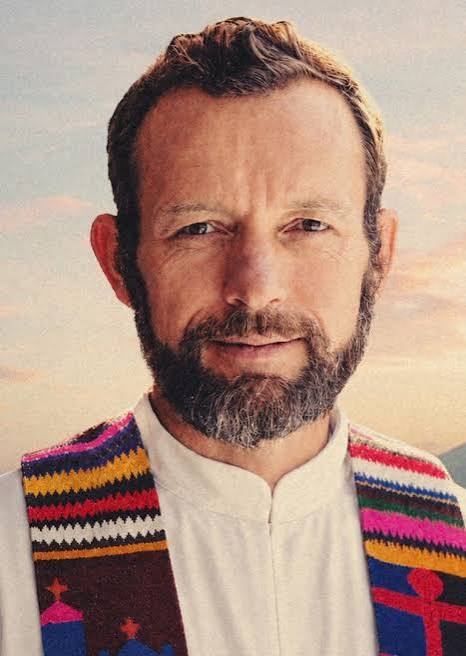
During the movie, "American Martyr," I felt like my heart was back in Santiago Atitlán, Guatemala. I almost could smell the coffee beans growing on the ashy mountainside, the drying corn bundled on the boy's bent- over back, and copal resin smoke lingering in the crisp, mountain air.
I remember profound, soulful eyes gazing at me – those ancient eyes of indigenous peoples who have claimed their land for themselves and their ancestors since the pre-Columbian era. Just above Santiago Atitlán, I heard the birdsound of the Resplendent Quetzal's whimpering calls and cackling sounds of agitation.
Seeing the movie, I felt my heart fill again with awe and terror. It brought vivid memories of my first pilgrimage to San Lucas Tolimán, in 1997. It was an immersion visit to indigenous Tz'utujil people of Mayan descent near Lake Atitlán.
Three years prior, I had begun working for Isaiah Ministries, the support and preaching arm of the Christian Foundation for Children and Aging, (now Unbound). Isaiah Ministries urged me to make a pilgrimage to Guatemala to meet the staff and peoples served by the organization.
Because there were only 5 pilgrims on this 10- day journey, Christmas Day through New Years, we were hosted by Bob Hentzen, co-founder of CFCA and welcomed as his family. Some spontaneous excursions were to visit homes of Tzʼutujil women, sitting in dirt- floored homes to watch them weave with colorful hand dyed yarn, using a back- strap loom; a boat ride across Lake Atitlán paddled by Hentzen's son, Cesar; and a stop at Santiago Apostol Church in Santiago Atitlán.
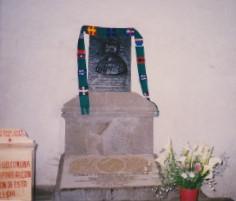
I walked through the church and then into the rectory where Stanley Rother, "Father Francisco," lived and worked and was martyred. I felt in my heart an indescribable ache – awe and terror at the same time. The bullet hole in the floor – the faint blood stains. The simple altar which held his heart, and still remains in Santiago Atitlán. (Pictured above)
The Resplendent Quetzal is the national animal of Guatemala and is considered sacred by the indigenous peoples. According to myth, the bird song went silent at the time of the Spanish conquest, grieving the loss of freedom.
The Mayans believe she will not sing again until the land is entirely free. I wonder if the quetzal also now grieves for the loss of their friend and shepherd, Stanley Rother.
--Jan
|