|
Ampersand Insights, July 2026
Our latest company news, investment updates, leadership perspectives, and industry insights.
(View Newsletter as Web Page)
| |
AMP-26 Fund Close
We are pleased to share that we have closed the firm’s latest fund, Ampersand 2026 (“AMP-26”) Limited Partnership, with $1.5 billion in limited partner commitments. AMP-26 is Ampersand's twelfth primary fund since 1992, and we are proud to report that it was oversubscribed, closing at its hard cap in a single close less than five months after launch.
We are deeply grateful for the exceptional support we received from both long-standing and new investors across a diverse and global pool of endowments, foundations, pension plans, insurance companies and family offices. This is a meaningful milestone for our firm, and one that reflects the trust and confidence our limited partners have placed in our team and our strategy.
With AMP-26, we will continue our strategy of partnering closely with founders and management teams to grow market-leading companies that deliver mission-critical tools and services to the healthcare and life sciences ecosystem. We will pursue both majority and minority investments in companies with $10 to $200 million of revenue and positive EBITDA. Our goal, as always, is to be the partner of choice for the exceptional entrepreneurs and leaders building the next generation of healthcare businesses.
We look forward to the work ahead.
Warm regards,
Herb Hooper
Managing Partner, Ampersand Capital Partners
| | |
New Investment: Beacon Intelligence
Ampersand welcomed Beacon Intelligence (“Beacon”) to our growing portfolio on June 30. Beacon is a pharma services business providing proprietary data analytics for decision making in drug discovery and development. The company aggregates and structures data from more than 40,000 sources, including regulatory filings, patent registries, academic publications, and direct outreach to scientific experts against a proprietary set of scientific taxonomies and disease terms that define how drugs, targets, and clinical endpoints relate to one another. The result is a platform that pharmaceutical R&D teams rely on to understand the competitive landscape for the drug programs they are building: which companies are pursuing similar targets, how prior programs have succeeded or failed, and where whitespace exists for differentiation. Today, Beacon serves 24 of the top 30 global pharma companies, with customers including some of the world's most active drug developers in oncology, neuroscience, cell therapy, and other high-growth modalities.
What makes Beacon exceptional is the depth and defensibility of its data. Unlike broader life sciences information platforms, Beacon's historical focus within preclinical intelligence, where data is less standardized and the science highly dynamic, has led to a highly differentiated level of specificity and depth that no competitor has matched. This focus over the years has shaped the proprietary ontology underlying Beacon’s platform, which has been built and refined over a decade through constant research and thousands of KOL and customer conversations. This ontology creates a data asset that is genuinely difficult to replicate, even by AI tools, and ultimately serves as the critical source of truth to biopharma clients feeding their R&D teams, decision support tools, even AI platforms.
Ampersand invested in Beacon alongside Corten Capital (“Corten”), a London-based B2B software and data-focused private equity firm, to carve out and acquire Beacon from parent company Hanson Wade Limited. Ampersand will hold a board seat and partner closely with Corten and Beacon's management team on the company's growth strategy, with a particular focus on expanding Beacon's US commercial presence, deepening penetration within the top global pharma accounts, and supporting disciplined M&A to broaden the platform's capabilities over time. This investment reflects Ampersand's growing conviction in life sciences R&D data and analytics as a strategic adjacency to our core pharma and laboratory services portfolio.
"We believe Beacon has built something genuinely rare - a data platform that the world's leading pharmaceutical companies have made a core part of how they make R&D decisions," said David Anderson, General Partner at Ampersand Capital Partners. "The combination of deep scientific expertise, a proprietary ontology built over a decade, and exceptional customer entrenchment gives Beacon a very defensible position in a market that is growing alongside the increasing complexity of modern drug development. We are excited to partner with the Corten team and Beacon's leadership to support the company's next phase of growth."
| | Inside the In Vivo Shift: A Conversation with VIVEbiotech | |
|
For patients with rare genetic diseases and cancer, gene therapy ex vivo treatments often require extracting cells, engineering them in a lab, and reinfusing them into the patient - a process that can take weeks and cost hundreds of thousands of dollars per patient. In vivo delivery offers a different approach, administering the therapeutic vector directly to the patient and reprogramming cells in place. The results thus far have been impressive with sponsors reporting cost reductions approaching tenfold per patient, and the pipeline of in vivo programs is expanding quickly. Large pharma is taking notice: Eli Lilly recently agreed to pay up to $7 billion to acquire Kelonia Therapeutics, a developer of an in vivo lentiviral CAR-T platform, following early clinical data showing rapid, deep responses in multiple myeloma patients.
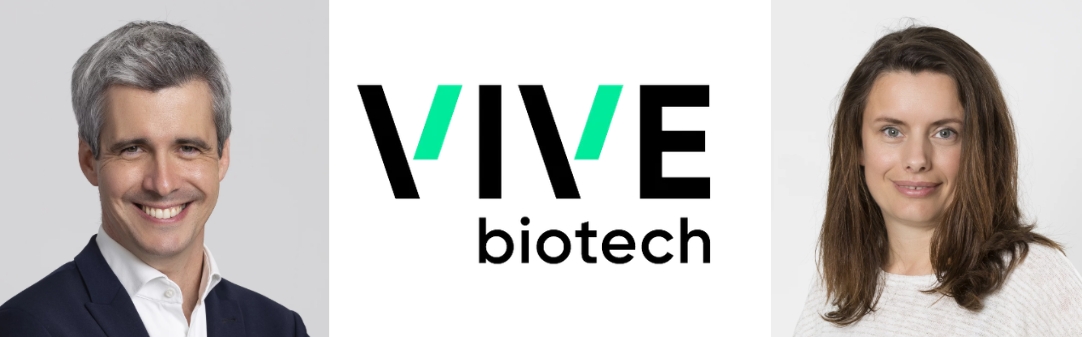
Since Ampersand’s investment in VIVEbiotech, a CDMO focused exclusively on lentiviral vector development and manufacturing for cell and gene therapy, VIVEbiotech has built on its position as one of the few CDMOs in the world authorized to release GMP-grade lentiviral vectors as final drug products. With 15 in vivo programs in its portfolio, several already FDA-cleared for clinical trials, VIVEbiotech sits at the center of one of the most consequential shifts in modern medicine. We sat down with CEO Jon Alberdi and CTO Marie Fertin to discuss what’s driving the in vivo shift, how VIVE is positioned to lead, and what sponsors need to know.
The CGT space has been dominated by ex vivo approaches for years. What factors are driving the industry's growing interest in in vivo cell and gene therapies?
(Jon Alberdi): Ex vivo has delivered transformative outcomes, but it carries real challenges such as manufacturing complexity, cost, logistics, and patient access. In vivo removes many of those steps by engineering cells directly inside the patient, simplifying logistics and cutting cost; sponsors are quantifying almost a tenfold decrease in cost per patient for some therapies. VIVEbiotech has worked in in vivo for close to a decade and today runs 15 in vivo programs, likely more than any other CDMO in the space, with interest growing across both emerging biotechs and large pharma.
Where do you see in vivo lentiviral vectors having the most transformative near-term impact - CAR-T, rare diseases, gene editing, or another area?
(Jon Alberdi): Most immediately in cell engineering - CAR-T and immune cell reprogramming, and in rare diseases, where long-term gene expression favors lentiviral vectors. Further ahead, we expect this to combine with gene editing, where targeted delivery will be critical.
(Marie Fertin): The different vector technologies aren't direct competitors as each suits different needs, whether transient or permanent expression, or RNA versus DNA cargo. Lentiviral vectors, originally engineered for ex vivo, have changed the game in recent years by moving into in vivo through vector engineering developed specifically for that use.
What are sponsors looking for in a manufacturing partner as they transition from ex vivo to in vivo programs? How are those expectations changing?
(Jon Alberdi): Sponsors are becoming significantly more demanding, because in in vivo the vector is the drug product itself, administered directly to the patient, raising the bar on quality and purity. Our development team has achieved up to a threefold improvement in purity levels compared to ex vivo. Beyond that, sponsors weigh experience, manufacturing scale, and regulatory knowledge, and increasingly want to collaborate with a partner early to align on quality and regulatory strategy.
What should sponsors be doing now to set their in vivo programs up for long-term success, particularly when it comes to selecting partners and planning for scale?
(Marie Fertin): In vivo lentiviral vector-based therapy is still a new field, so choosing a CDMO with deep, specialized knowledge of this specific vector (including its therapeutic modes of action) is important. Partnering with a CDMO that's already running multiple in vivo programs is a genuine de-risking decision, both technically and regulatorily.
In vivo lentiviral vectors come with more stringent manufacturing requirements than ex vivo applications. What capabilities should sponsors look for in a CDMO, and why are they so important?
(Marie Fertin): A key hurdle is the change in envelope (moving from the VSV-G tropism typical of ex vivo vectors to one that targets specific cell types), which can significantly affect the manufacturing process and product quality attributes. Our track record lets us address that early, at small scale and lower cost, building specific knowledge for each in vivo vector so programs reach the clinic without issues.
(Jon Alberdi): Regulatory experience matters too. Across our 15 programs, several already in the clinic, the constant feedback we get from agencies while supporting sponsors' dossiers is a real differentiator.
As more in vivo programs enter the clinic, how are regulatory expectations around manufacturing evolving, and what should developers be doing now to stay ahead of those requirements?
(Marie Fertin): The core difference is that the viral vector is now the final product administered to the patient, not just a tool for modifying cells beforehand. That raises the criticality of every quality attribute, since each bears directly on patient safety and efficacy. Regulators expect correspondingly stringent control of the manufacturing process throughout the supply chain.
Looking ahead, what do you think the in vivo cell and gene therapy landscape will look like over the next five years? What trends do you expect will shape the next wave of innovation and commercialization?
(Jon Alberdi): The next five years will mark the transition of in vivo therapies from a promising concept to a clinically validated, increasingly commercial reality, as advances in targeting technologies, vector engineering, and manufacturing improve safety, efficacy, and scalability. That said, ex vivo isn't going anywhere; the two will coexist depending on the therapy, scale, and purpose.
| | | | Alcami-Tjoapack Deal Creates a Trans-Atlantic CDMO and Supply Chain Platform | | | In early May, Ampersand completed the sale of Tjoapack, a global contract packaging organization serving the pharmaceutical and biotechnology industries, to Alcami Corporation (“Alcami”), a U.S.-based contract development and manufacturing organization. The merger combines Tjoapack’s European and U.S. packaging network with Alcami’s laboratory testing, drug product manufacturing, and cGMP storage capabilities, creating a transatlantic platform that now supports production of more than 80 commercial products worldwide, including EU-market Qualified Person release - a friction point for sponsors supplying both U.S. and European markets from a single CDMO relationship. | | | |
Ampersand invested in Tjoapack in 2020, partnering with CEO Dexter Tjoa to build a transatlantic contract packaging platform. Over the course of the partnership, Tjoapack doubled in size, expanded its Etten-Leur, Netherlands facility, and established a U.S. presence through the 2021 acquisition of a Knoxville, Tennessee contract packager, an acquisition Ampersand’s U.S. team helped diligence and integrate while COVID-era travel restrictions kept Dexter from crossing the Atlantic. Ampersand also helped recruit a new global CFO, U.S. President, and VP of Quality to deepen Tjoapack’s leadership bench and supported continued investment in packaging automation and capacity, including for injectable products.
“Tjoapack is a compelling example of Ampersand’s strategy in action. We identified a founder owned and built business with a strong reputation in the European market, and we partnered with management to build a more global platform by expanding into the US market,” said David Parker, General Partner at Ampersand. “We are proud of what the team has accomplished and excited about the future growth prospects for Tjoapack and Alcami joining forces to deliver value to customers.”
“Ampersand has been an invaluable partner as we scaled Tjoapack into a global organization,” said Dexter Tjoa, CEO of Tjoapack. “Their support enabled our U.S. expansion and sustained investment in the capabilities that matter to our customers. Joining Alcami is a logical next step in the company’s development.”
Speaking with PharmaSource about what the deal means for customers, Alcami Chief Strategy Officer Timothy Compton framed it as a resilience play for sponsors navigating a difficult trade environment. “The acquisition helps customers reduce reliance on a single geography or supplier handoff, and supports a more resilient pathway for supplying medicines globally.” He added that continuity comes first, “Tjoapack customers should expect services at existing sites to continue without interruption, with current contracts, personnel, and primary contacts remaining in place unless otherwise communicated,” with cross-site access to Alcami’s U.S. testing, manufacturing, and storage capabilities available to customers who want it.
| | | Ampersand has been ranked #6 for growth capital private equity performance globally by HEC Paris-Dow Jones, marking the fourth consecutive year the firm has ranked among the top firms worldwide in this annual assessment, which began in 2022. The ranking, led by Professor Oliver Gottschalg of HEC Paris in collaboration with Dow Jones, analyzed the performance of 183 growth capital firms and 440 funds raised between 2012 and 2021, with an aggregate equity volume of $351B. Ampersand’s performance places the firm in the top tier of the global growth capital landscape, underscoring its sustained, consistent performance across market cycles. | | |
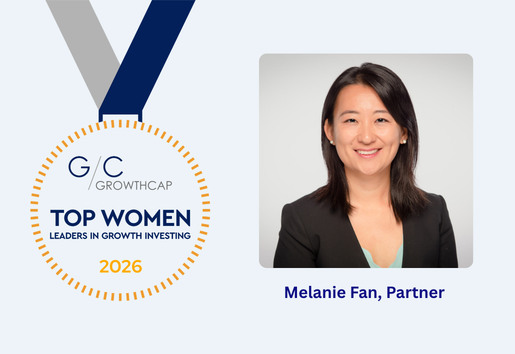
Melanie Fan, Partner, has been recognized as one of GrowthCap's Top Women Leaders in Growth Investing of 2026. Since joining Ampersand in 2018, Melanie has been a driving force across our healthcare and life sciences portfolio, leading complex carve-outs, platform builds, and international expansions with equal parts strategic rigor and operational hands-on partnership. This recognition is a reflection of the impact she makes every day for our portfolio companies and the broader life sciences community. We are incredibly proud of Melanie’s latest achievement.
| |
An Evening of Networking at BIO San Diego
More than 250 guests joined Ampersand and its portfolio companies for an evening of networking at the Altitude Roof Deck overlooking PETCO Park during BIO 2026 in San Diego with a Padres win as the backdrop. The evening brought together industry leaders, clients, and partners from across the life sciences ecosystem, including representatives from our portfolio companies Alcami, Avid Bioservices, BIOLOGOS, Biosynth, CurTec, Gannet BioChem, Genezen, NanoImaging Services, Phosphorex, ProtaGene, Resolian, Tjoapack, and VIVEbiotech. Thank you to everyone who joined us - the conversations and connections will carry on in the months ahead.
| | | | |
Connect With Us at Upcoming Events
Email info@ampersandcapital.com
| | |
ADLM (AACC)
July 26-30
Anaheim, CA
| |
Nordic Life Science Days
September 8-9
Stockholm, Sweden
| | |
BioProcessing Summit
August 10-13
Boston, MA
| |
Baird H.C. Conference
September 15-16
New York, NY
| | |
MEDevice (MD&M Event)
August 26-27
Boston, MA
| |
ChemOutsourcing
September 15-17
Boston, MA
| | | | | |