September 16, 2026 | Volume 6 | Issue 8 | As of Week 35 | | Welcome to the Florida Disease Activity Update from
the desk of Dr. Jonathan Day. | | |
It continues to be Clarke’s privilege to share Dr. Day's weekly analysis of arbovirus disease activity in Florida with mosquito control professionals and public health professionals across the state. Our shared goal with Dr. Day is to provide timely and actionable information that mosquito control and public health programs can use to make operational decisions and protect the public from vector-borne diseases.
An archive of all past newsletter issues remains available on the Clarke website.
| | |
Q. Rich from Okeechobee County, Florida, asks: “What conditions are necessary for an exceptionally active eastern equine encephalitis virus transmission year? Part 4-the 2010 EEEV transmission season.”
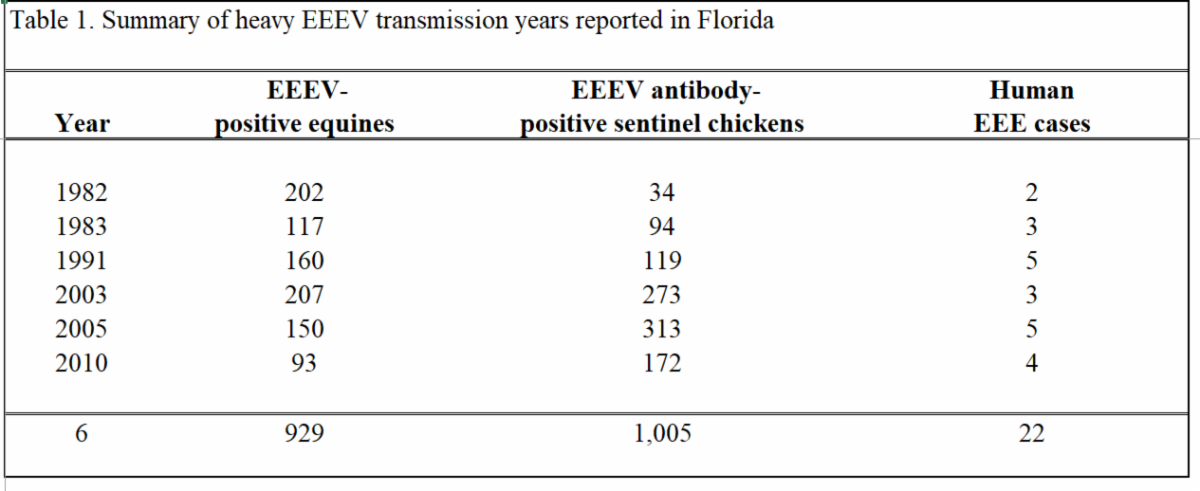
A. Since 1955, there have been six years of exceptionally heavy EEEV transmission reported in Florida: 1982, 1983, 1991, 2003, 2005, and 2010. The three most recent years include excellent spatial and temporal data for equines, sentinel chickens, and humans. Transmission of EEEV to equines, sentinel chickens, and humans during all six years is summarized in Table 1.
| |
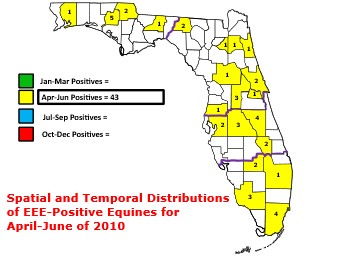
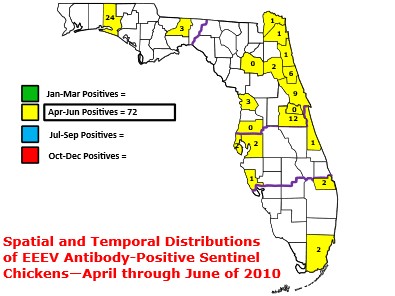
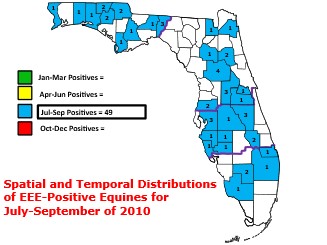
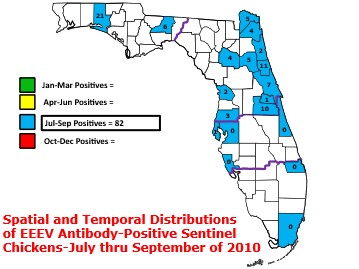
As was the case in 2005, the 2010 EEEV transmission season had a late start (Figures 1 and 3) compared with the 2003 transmission season (Figures 1 and 2 in Volume 6, Issue 5 of the Newsletter). Of the six most active EEEV transmission seasons, 2010 reported the fewest positive equines (Table 1 and Figures 1 and 3). However, the positive equines and sentinel chickens (Figures 2 and 4) were distributed widely throughout the state. This suggests that environmental conditions favoring the amplification and transmission of EEEV were favorable throughout the state. In addition, environmental conditions favoring the reproduction and dispersal of infected mosquito vectors were also favorable.
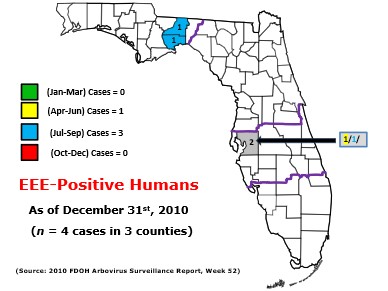
Of particular concern in 2010 were the four human cases (Figure 5), all of which were fatalities. The first occurred in Hillsborough County in early June with an infection date in late May. The second and third were in Wakulla and Leon Counties in early July, with infection dates in late June and early July. The final case was back in Hillsborough County in mid-July with an infection date in mid-July. Clearly, mosquitoes infected with EEEV were present throughout most of the state during the summer of 2010.
There has never been a focus of multiple human EEE cases reported in Florida. This is surprising since housing developments in Central Florida and the Florida Panhandle have spread into land adjacent to hardwood swamps where EEEV spends most of the year. Transmission of EEEV in Florida requires careful monitoring in the coming years because a focus or foci of human EEE transmission is definitely possible.
| | Figure 1. The spatial and temporal distributions of the 43 EEE-positive equines reported in Florida during April through June of 2010. | | Figure 2. The spatial and temporal distributions of 72 EEEV antibody-positive sentinel chickens in Florida during April through June of 2010. | | Figure 3. The spatial and temporal distributions of the 49 EEE-positive equines reported in Florida during July through September of 2010. | | Figure 4. The spatial and temporal distributions of 82 EEEV antibody-positive sentinel chickens in Florida during July through September of 2010. | | Figure 5. The spatial and temporal distributions of four human EEE cases reported in Floria during 2010. | | |
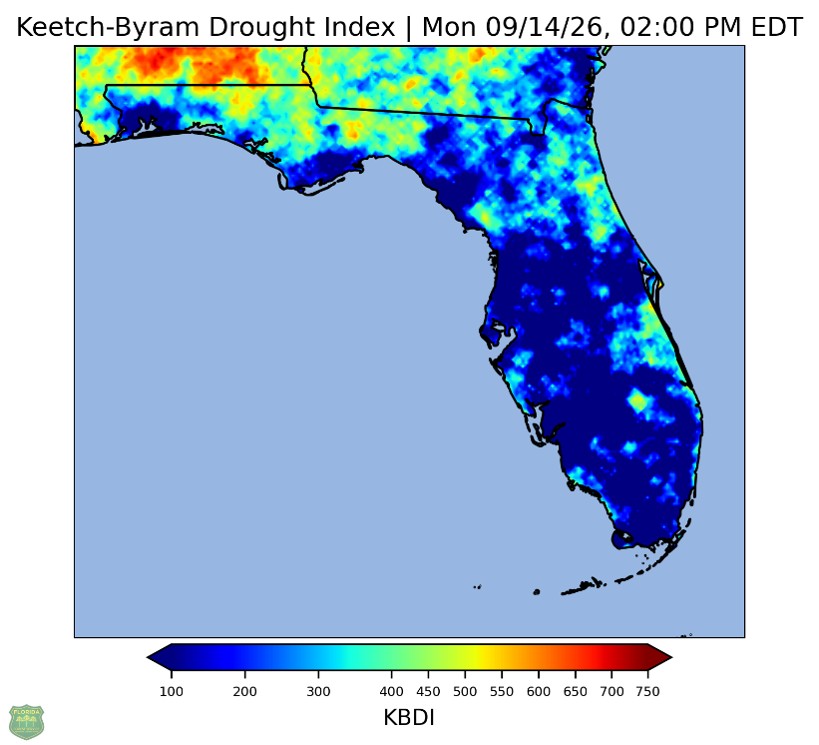
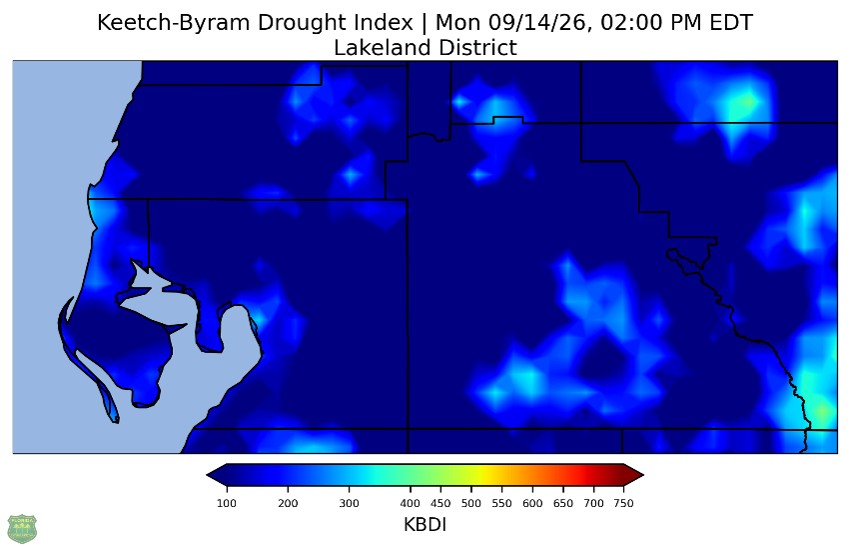
The ongoing transmission of dengue virus to the residents and visitors in the Tampa Bay area of Florida remains the most important vector-borne disease story in Florida. Environmental conditions in that region of Florida have created a perfect storm for dengue transmission. The first six months of 2026 were extremely dry along the Florida Gulf Coast. The primary vector of dengue in Florida (and throughout most of the world) is Aedes aegypti, a species that lays drought-resistant eggs during periods of dry weather. So, eggs were stockpiled during the first six months of the year, awaiting a break in the drought, which came about two months ago. Since then, the Tampa Bay region has been exceptionally wet and Ae. aegypti has flourished along with the dengue virus that this species transmits so effectively (Figures 6 and 7).
What will come relative to disease transmission in the Tampa Bay area in the coming months remains to be seen. But there are plenty of infected mosquitoes afoot in the region.
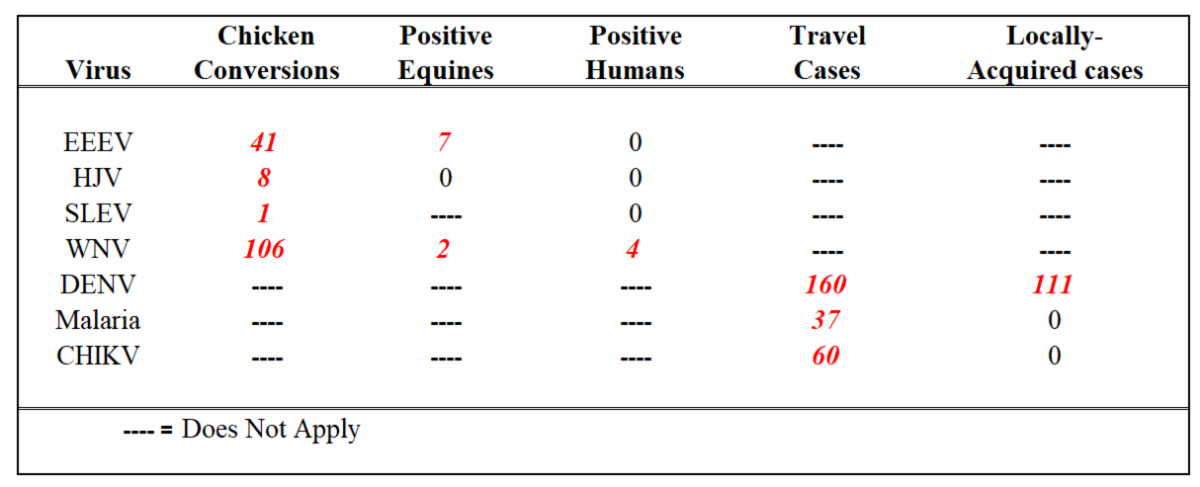
| | Figure 6. The Florida Keetch-Byram Drought Index for 9/14/26. | | Figure 7. The 9/14/26 Keetch-Byram Drought Index for the Lakeland District of Florida where there is currently a widespread outbreak of locally acquired dengue. | | The table below summarizes the current status of vector-borne disease transmission and pathogen introductions in Florida as of 9/5/26. | | |
Dengue Virus
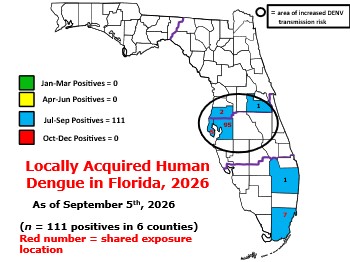
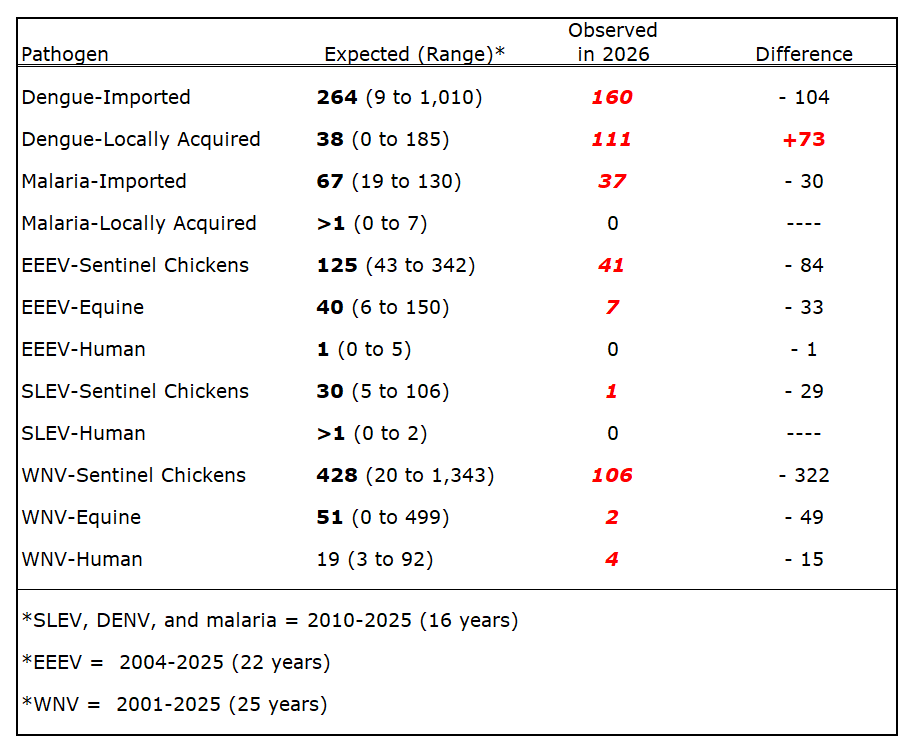
Thirty-eight new cases of locally acquired dengue were reported last week, 36 in Hillsborough County and one each in Pasco and Orange Counties. The statewide total of locally acquired dengue is now 111 cases (Figure 8).
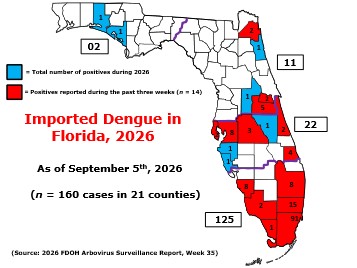
| | Figure 8. The spatial and temporal distributions of locally acquired dengue cases in Florida as of 9/5/26. | Twenty-four new travel-associated dengue cases were reported last week in Florida (Figure 9). The new cases were widely distributed throughout the state, placing many more Florida Counties at risk for future locally acquired dengue cases. | | Figure 9. The spatial distribution of 160 imported dengue cases reported in Florida as of 9/5/26. Counties shaded red indicate areas where new travel cases have been reported in the past three weeks and represent regions at increased risk of local dengue transmission in the coming weeks. | Two new DENV-2-positive mosquito pools were reported in Hillsborough County last week. Both were collected on 9/1/26 from pools of Aedes aegypti. Sixteen pools of DENV-2 have been collected in Hillsborough County so far this year, all from Ae. aegypti. | | |
Eastern Equine Encephalitis Virus
One new EEE-positive equine was reported in Washington County last week, bringing the Florida 2026 total to seven EEE-positive equines in seven counties.
| | |
Malaria
Two new travel associated human malaria cases were reported last week in Martin and Miami-Dade Counties, bringing the Florida total to 37 for 2026. Thirty-two of the cases were Plasmodium falciparum, two were P. ovale, and three were P. vivax. Most of the cases traveled to Florida from Africa.
| | |
St. Louis Encephalitis Virus
No additional indicators of SLEV transmission were reported this week.
| | |
West Nile Virus
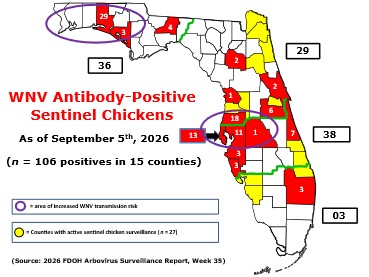
Twenty-six new WNV antibody-positive sentinel chickens were reported last week, bringing the 2026 Florida total to 106 positive sentinels that are widely dispersed throughout the state (Figure 10).
| | Figure 10. The spatial distribution of WNV antibody-positive sentinel chickens in Florida as of 9/5/26. | | |
Chikungunya Virus
Five new travel-associated cases of Chikungunya virus (CHIKV) were reported last week in Broward, Seminole, and Miami-Dade (3 cases) Counties.
| | A summary of the observed and expected number of imported and local mosquito-borne viruses and diseases in Florida as of 9/5/26 appears in the table below. | | The major discussion surrounding vector-borne disease transmission in Florida needs to remain focused on the Tampa Bay outbreak of DENV-2 (Figure 8). This outbreak is poised to become one of the largest in Florida history apart from the 1934 statewide epidemic. The focus of this epidemic needs to remain on the surveillance and control of the known vector, Aedes aegypti. This species is notoriously difficult to control, and the identification, location, and control of larvae in cryptic breeding sites remain one of the greatest challenges to modern mosquito control. The next couple of months will be very challenging for the residents and visitors in the Tampa Bay area. | | |
Human infection with EEEV is extremely rare, with approximately eight cases reported each year in the United States. The diagnosis and treatment of this disease is difficult. In a 2020 review, D’Onofrio addresses these challenges for nurse practitioners, who are among the first to encounter new EEE cases.
In recent years, transmission of EEEV to humans appears to be increasing. For example, in 2019 at least 38 cases were reported, most in the United States. By October 15, 2019, the CDC reported 34 EEE cases in seven states. This was the largest reported outbreak of EEE since outbreaks of EEE reported in the 1930s and 1950s. All 34 of the 2019 cases were hospitalized, and 12 died (for a case fatality rate of 35%). Most deaths occurred within 12 days of symptom onset. Males accounted for 83% of the deaths, and the median age for the fatalities was 72 years.
D’Onofrio concludes that “EEEV is a growing concern in the United States. Because we do not yet have a vaccine against EEEV, mosquito avoidance is currently the only strategy for illness prevention. It is unclear whether the current increase in EEEV cases is an outlier due to weather and bird migration changes or an ongoing upward trend. Nurse practitioners should consider EEEV as a differential diagnosis when patients present with encephalitis or meningitis. It is important that nurse practitioners stress prevention strategies to their patients, especially during EEEV peak seasons.”
Suggested Readings
D’Onofrio, LE. 2020. Eastern equine encephalitis virus: A current and future danger. The Journal of Nurse Practitioners 16 (2020) 744-746.
Click to read
| | | | Jonathan Day, Professor Emeritus of Medical Entomology at the University of Florida and stationed at the Florida Medical Entomology Laboratory in Vero Beach is a national expert on mosquitoes and other blood-feeding arthropods that transmit diseases to humans, domestic animals, and wildlife. In collaboration with other researchers, Dr. Day has developed an effective system for monitoring and predicting epidemics of mosquito-borne diseases. | | |
Acknowledgments: This analysis would not be possible without the tireless efforts of multiple agencies across Florida. At least 27 Florida agencies collect serum samples from sentinel chickens each week and mail them to the Florida Department of Health Tampa Branch Laboratory for analysis, compilation, and reporting. Data are summarized by researchers at the Florida Department of Health in Tallahassee and reported weekly as the Florida Arbovirus Surveillance Report.
Contributors to this summary and full report include: Andrea Morrison, PhD, MSPH, Rebecca Zimler, PhD, MPH, and Olga Ospina, MPH, Florida Department of Health, Bureau of Epidemiology; Lea Heberlein, DrPH, Peter Dumoulin, PhD, MS, Maribel Castaneda, and Amanda Davis, MT (AAB) MB (ASCP), and Brittany Rowlette, BS, Florida Department of Health Bureau of Public Health Laboratories, and Dr. Joe Fisch, Florida Department of Agriculture and Consumer Services, Division of Animal Industry, Tallahassee, FL.
Daily updates of the Keetch-Byram Drought Index (KBDI) are produced by the Florida Department of Agriculture and Consumer Services, Forest Service.
The U.S. Drought Monitor is jointly produced by the National Drought Mitigation Center at the University of Nebraska-Lincoln, the United States Department of Agriculture, and the National Oceanic and Atmospheric Administration. Map courtesy of NDMC.
The Newsletter is edited and distributed by Jordan Brown.
| | |
Clarke has been helping make communities more livable, safe and comfortable since 1946.
Learn more about our work in protecting public health on clarke.com.
| | | | |