|
Greetings!
It's been a while since our last Newsletter and much has transpired that has impacted the lives and fortunes of so many - including those of elephants. Despite the turmoil and unease in the world, we hope that you are doing well.
At ElephantVoices we have made good progress populating our comprehensive Elephant Calls Database - nearing 11,000 records of known elephants vocalizing in known contexts. During the last few months we have also we have attended a number of workshops and events related to elephant conservation, communication and welfare.
In early November, we were in Los Angeles to attend the Performing Animal Welfare Society (PAWS) International Captive Wildlife Conference. We then spent a few insightful days with collaborators at the University of Berkeley Department of Linguistics before flying to the East Coast to connect with board members in Washington DC and in Princeton, New Jersey and donors in New York City. We then attended a workshop at New York University organised by the More Than Human Life Project and the Cetacean Translation Initiative to discuss legal and ethical principles for advances in animal communication technologies. In essence, we were exploring necessary guardrails for the use of AI in studying the voices of non-human animals.
Most of December, January and half of February we worked in and from Kenya. In March, Joyce was in Los Angeles again to attend the final workshop of the Multispecies Constitution Project at the Berggruen Institute. In early April she spoke in London at the 'Still Life' exhibition by award-winning photo journalist Britta Jaschinski. The event, hosted at London’s Mall Galleries, was held in support of Humane World for Animals UK’s campaign to ban the import of trophies from endangered species.
Below you can read more about what we have summarised above.
| | Thank you so much for your support, | | Using linguistics and AI to translate elephant calls | | |
At ElephantVoices we are embarking on an exciting new stage in the study of elephant acoustic communication: A collaboration with the linguistics team led by Gašper Beguš, Associate Professor at the Department of Linguistics at UC Berkeley. Dr. Beguš is also the Linguistics lead at Project CETI - a non-profit organization working to decipher the communication of sperm whales.
United by a shared interest in understanding and translating the voices of other highly complex social species, we formalized a collaboration with the Berkeley linguistics team in June 2024.
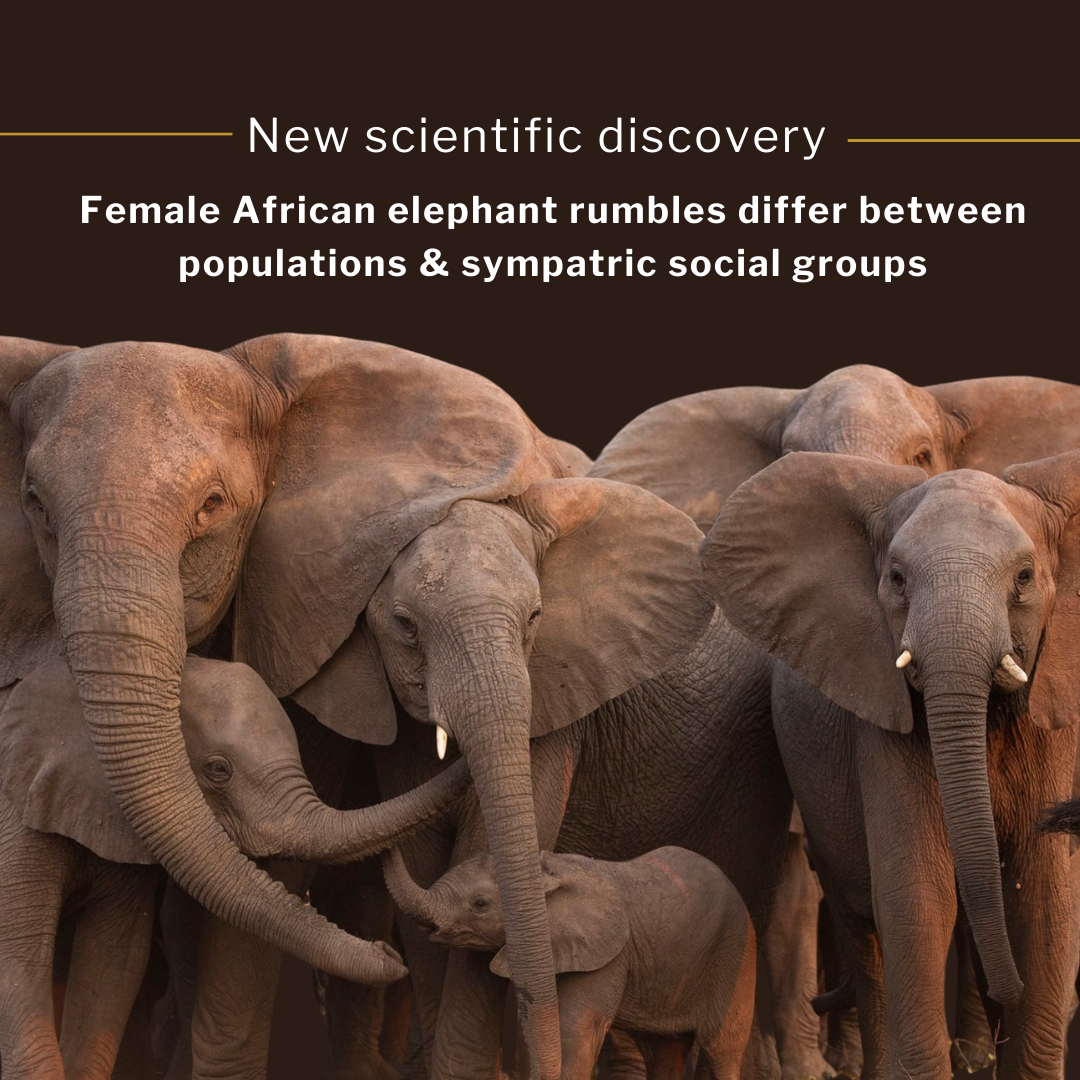
| | In November last year, Joyce met with Gašper and his team at the UC Berkeley Linguistics Department to exchange ideas and plan some next steps. We are very excited about this collaboration. Machine learning has already proved instrumental in revealing that elephants create and use names for one another (read about our work with Mickey Pardo here) and in showing vocal distinctiveness between populations (see below). We believe that using techniques borrowed from linguistics and harnessing AI will offer tools to better understand what elephants are saying to one another. | | Listen to Gašper speak about his research in this video. | | Female African elephant rumbles differ between populations & sympatric social groups | | |
Read our paper published in the Royal Society Publishing here. | |
|
Led by Mickey Pardo, a team of scientists from Colorado State University, Save the Elephants, ElephantVoices, and the Amboseli Trust for Elephants, used machine learning to look at the voices of individually known elephants from two Kenyan elephant populations: Amboseli and Samburu.
The team found clear evidence of vocal distinctiveness between individual elephants as well as between the two populations. Furthermore, we found evidence for more subtle vocal differences between social groups - both core group and bond groups - within a population. The term "core group" is essentially what people think of as an elephant family, though, due to heavy poaching in Samburu, some family members in the study were not related. We found that group membership was a better predictor of call similarity than genetic relatedness. This suggests that subtle vocal differences among social groups may be learned rather than inherited.
| | Shaping the future of interspecies communication | | |
In November, Joyce attended a workshop organized by NYU’s More-Than-Human Life (MOTH) Program and the Cetacean Translation Initiative (CETI) Project to discuss the ethical and legal dimensions of AI-assisted research into animal communication. As artificial intelligence and robotics continue to evolve, so too does our ability to understand the complex ways nonhuman animals communicate. And yet, such advances also open the possibility of misusing the technology to exploit them. As one of the earliest studies to comprehensively use AI to understand the communication of a non-human species, CETI felt compelled to envision a set of guardrails to protect non-humans.
As an expert in elephant communication and behavior, Joyce contributed her insights to help shape and strengthen the guiding principles and ethical frameworks discussed during the workshop. MOTH and CETI plan to publish the finalized guardrails and an accompanying perspectives piece in a leading scientific journal.
| | The Performing Animal Welfare Society (PAWS) International Captive Wildlife Conference | | |
In early November of last year, Joyce and Petter attended the Performing Animal Welfare Society (PAWS) International Captive Wildlife Conference in Los Angeles. During the two day conference we learned about the challenging animal welfare work carried out by so many dedicated individuals and celebrated PAWS 40th anniversary. We were thrilled to be able to join in the celebrations and reconnect with many old friends and colleagues.
For four decades, PAWS has made invaluable contributions to the welfare of captive elephants and other animals, offering sanctuary to hundreds. We are so grateful for the decades that PAWS has been a valued friend, collaborator and supporter to ElephantVoices. Thank you to PAWS for bringing together so many good people who work tirelessly to improve the lives of captive animals.
|
| |
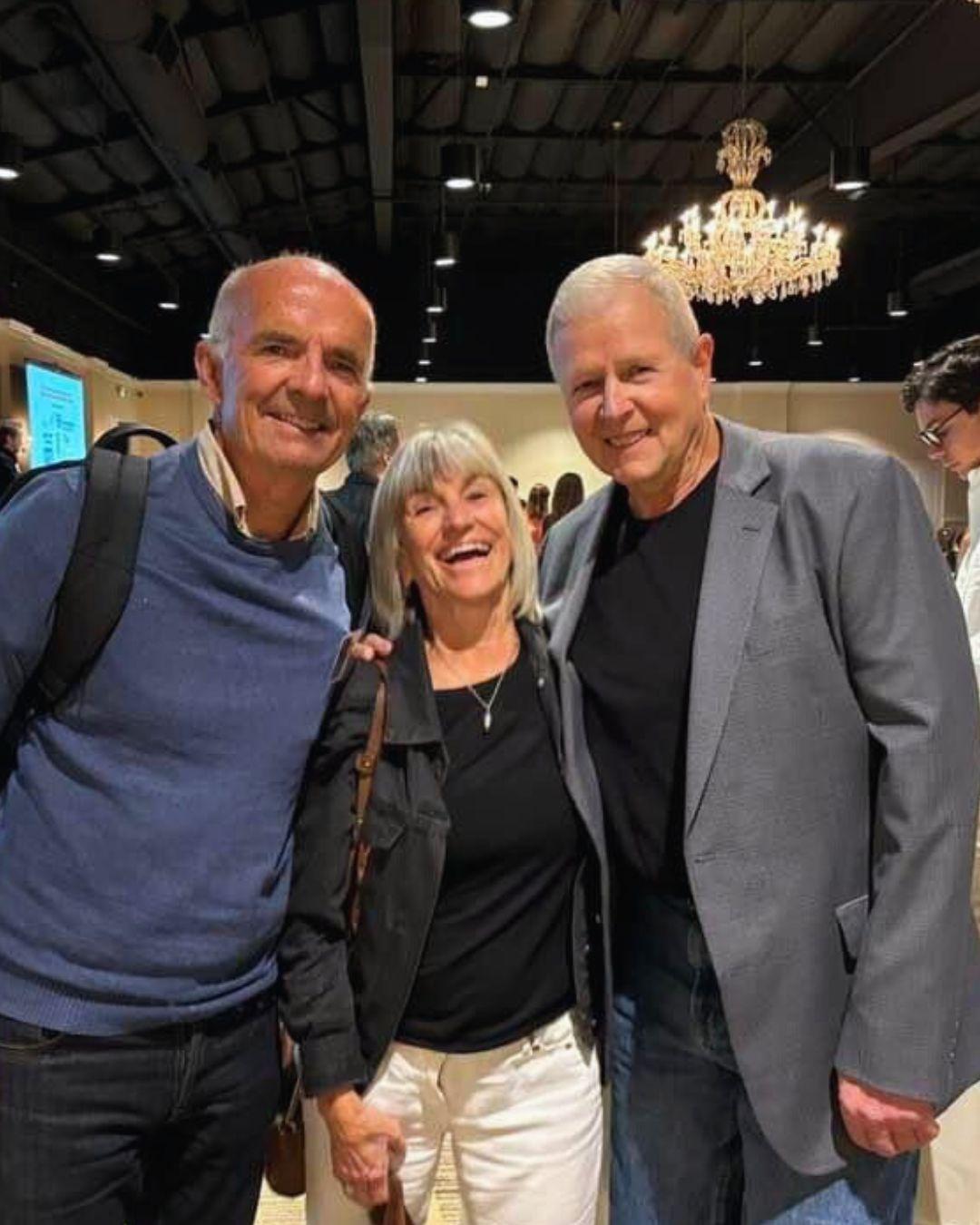
It was wonderful to see so many of our friends and colleagues, including PAWS’
Co-Founder and Chair Ed Stewart.
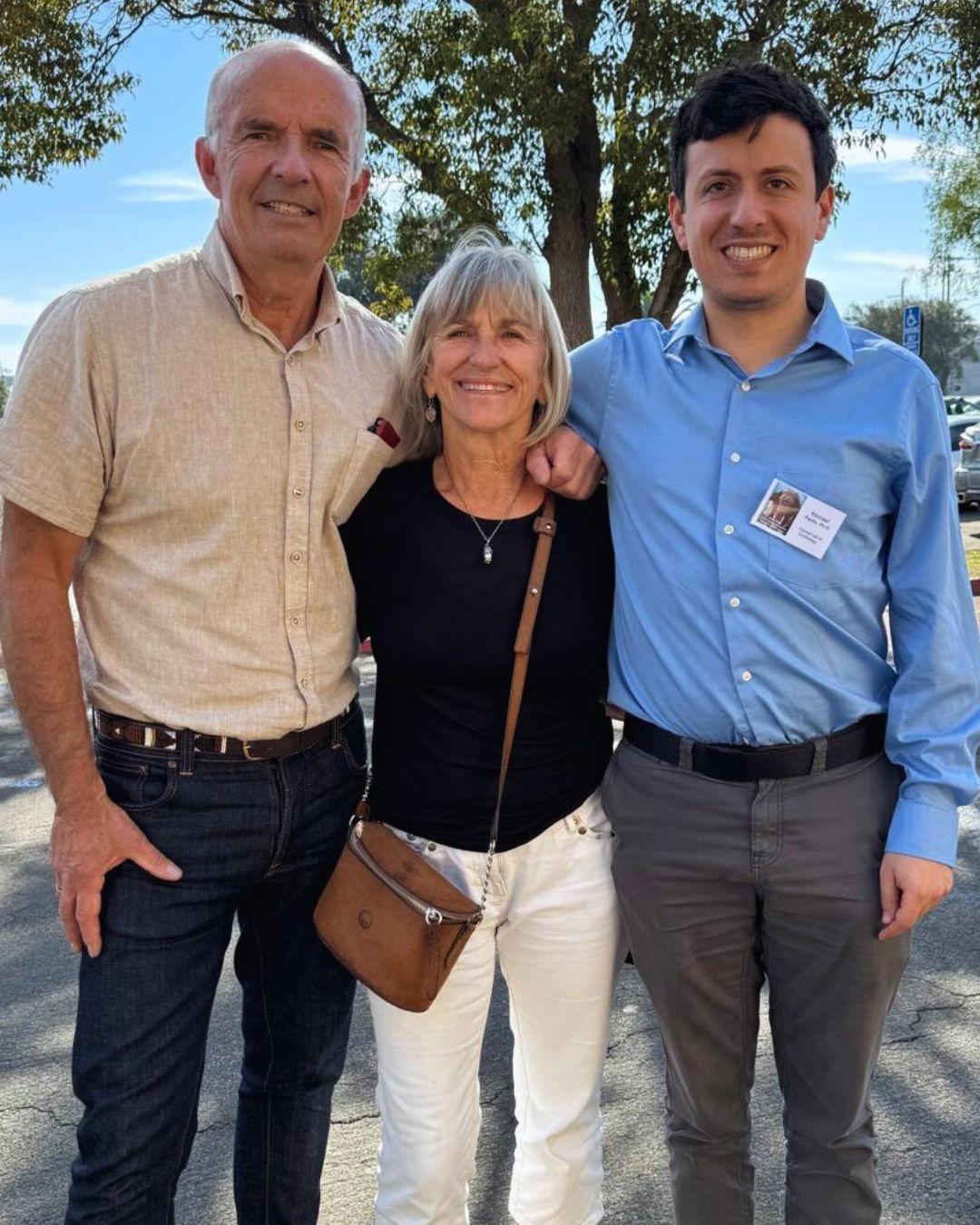
| | A special treat was finally meeting Dr. Mickey Pardo with whom we have collaborated on elephant communication for many years. | | |
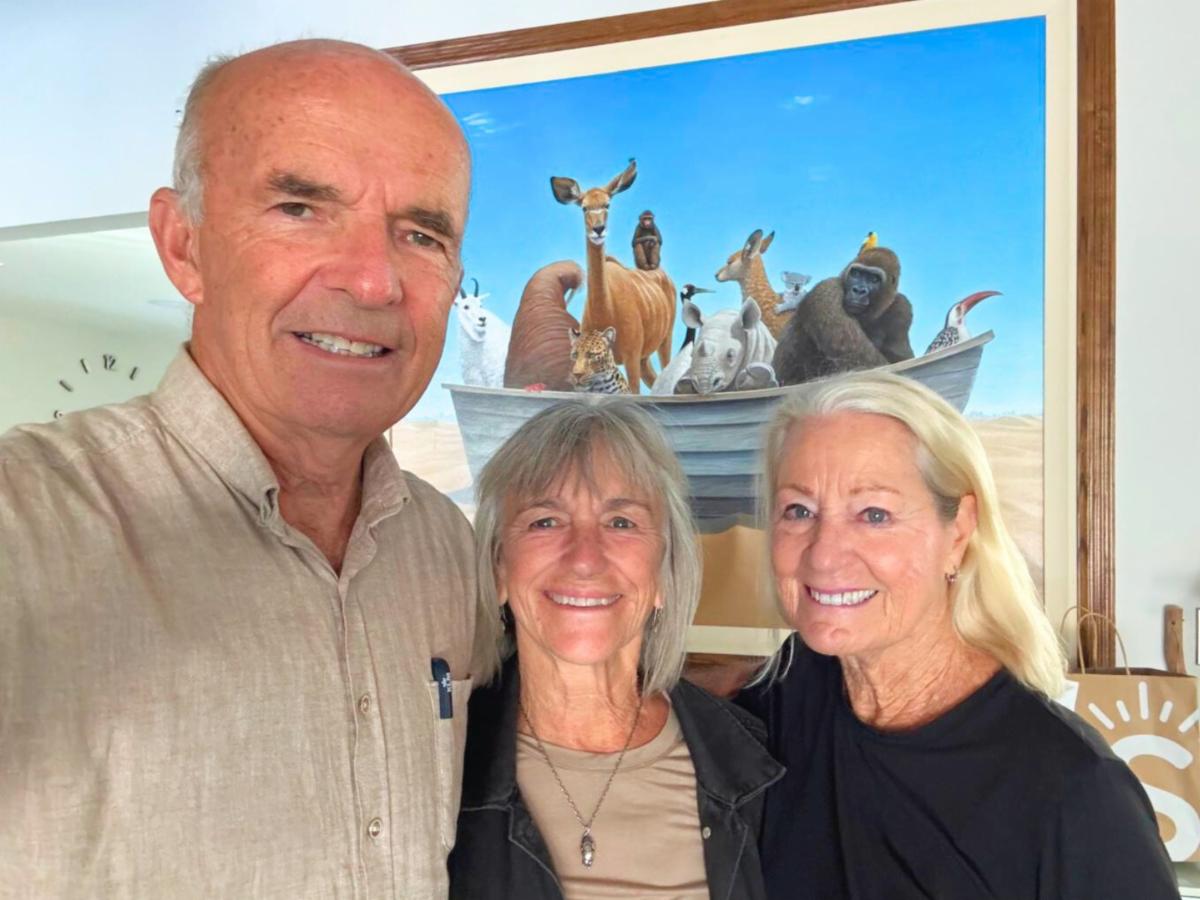
We really enjoyed catching up with Patty Shenker at the PAWS Conference and, afterwards, having the opportunity to stay with her and husband, Doug, and their sweet dogs.
Patty is a passionate and creative activist whom we love and admire. Her unwavering dedication to the well being and rights of animals is an inspiration. She was instrumental to a fledgling ElephantVoices close to 20 years ago, hosting fundraisers in her California home, supporting us and encouraging her friends to do the same.
Patty is a one of a kind - we are forever grateful to her. Thank you, Patty!
| | Joyce speaks out against elephant trophy hunting | | |
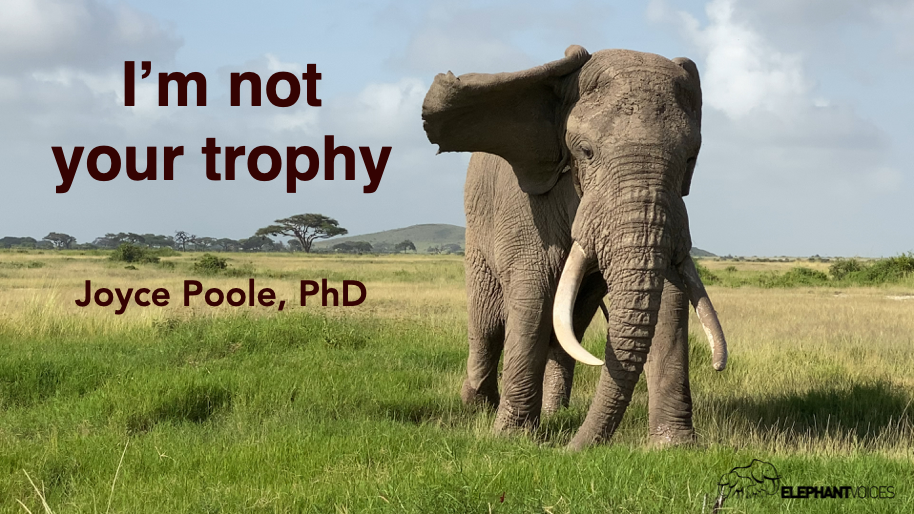
In early April, Joyce spoke at at London’s Mall Galleries at the opening of ‘Still Life’, a hauntingly powerful and shocking photo exhibition on wildlife trafficking by award-winning photojournalist Britta Jaschinski. The exhibit was in support of Humane World for Animals UK’s campaign to ban the import of hunting trophies from endangered species.
In her speech, Joyce used scientific data to debunk the many arguments put forth by hunters for killing elephants, ending her talk by saying,
“Our five decades of scientific study show that elephants are intelligent, long-lived, highly social animals capable of empathy and complex communication, including having names for one another. Their society is based on the wisdom of elders who are critical for leadership. Removing these individuals has consequences for the society as a whole and causes suffering. These are not emotional arguments, they are scientific facts.
It is, actually, hunters whose arguments are based on emotion and self interest. Hunters dress their arguments up in conservation language, but the truth is that they get a kick out of pulling the trigger, taking a life and putting a body part on the wall. We need to put a stop to trophy hunting of endangered or threatened species and support a UK ban on the import of trophies.”
Visitors to the exhibition also had the opportunity to write messages to the UK government in support of the ban, which will be delivered to Parliament this month.
| | The Multispecies Constitution Project | | |
What if constitutions didn’t just serve humans - but also spoke for forests, rivers, animals, and entire ecosystems?
The Multispecies Constitution Project challenges conventional ideas of governance by imagining a legal and political framework where nonhuman life is recognized as co-inhabitants of the planet - with rights, agency, and voice. Rooted in Indigenous knowledge systems, environmental justice, and creative legal thinking, the project asks: How might our laws evolve if we truly embraced our deep interconnection with the natural world?
Joyce took part in both the first meeting, in 2024, and the third meeting of the project this March. In the latest session, participants contributed their feedback to a working draft of the Multispecies Constitution. Through collaborative debate and collective authorship, Joyce and others are helping to shape language that reflects a vision of justice inclusive of all species.
As we continue to champion the voices of elephants, efforts like these remind us that the future of law should reflect the full web of life we share this planet with. You can read more about the Multispecies Constitution Project here and watch a short video about it below.
| | Thank you for being there for elephants! | | Follow us on Social Media to keep up to date on all things ElephantVoices. | | ElephantVoices is a registered 501(c)(3) charity in California and the District of Columbia. | | | | |